


Zen bonsai garden ideas can help you when your home or desk feels busy and stressful. You may want a small place that brings calm, balance, and inner peace.
A simple bonsai tree Zen setup can do that. It mixes the living art of Bonsai with the quiet spirit of Zen Buddhism. The result is a tiny meditation garden that fits right on your desk.
In a traditional Japanese Zen garden, also called Karesansui, nature is shown simply. You see sand, gravel, pebbles, river stones, and moss arranged to look like mountains, islands, and flowing water.
When you rake gentle sand patterns, you create the feeling of ocean waves. This quiet activity supports mindfulness, contemplation, and meditation.
Now imagine bringing that peaceful design into your room. A mini Zen garden with a bonsai tree can turn a small corner into a calm space. A tiny garden tray holds raked gravel, decorative stones, and soft moss.
Your bonsai tree grows slowly in a bonsai pot filled with proper bonsai soil. Over time, simple care like branch pruning, root pruning, and bonsai wiring shapes the tree into a living sculpture.
Many people choose beginner-friendly trees such as Juniper bonsai, Ficus bonsai, Chinese elm bonsai, Japanese black pine bonsai, or Jade bonsai. These trees work well for indoor Zen gardens and small desk Zen garden displays.
The design follows Japanese ideas like Wabi-sabi, Shibui, Ma, and Yūgen. These principles value simplicity, natural beauty, quiet space, and subtle elegance. A well-placed rock grouping with odd-number stone placement creates a natural miniature landscape.
Sometimes the display even follows the idea of borrowed scenery, where the background of the room becomes part of the garden.
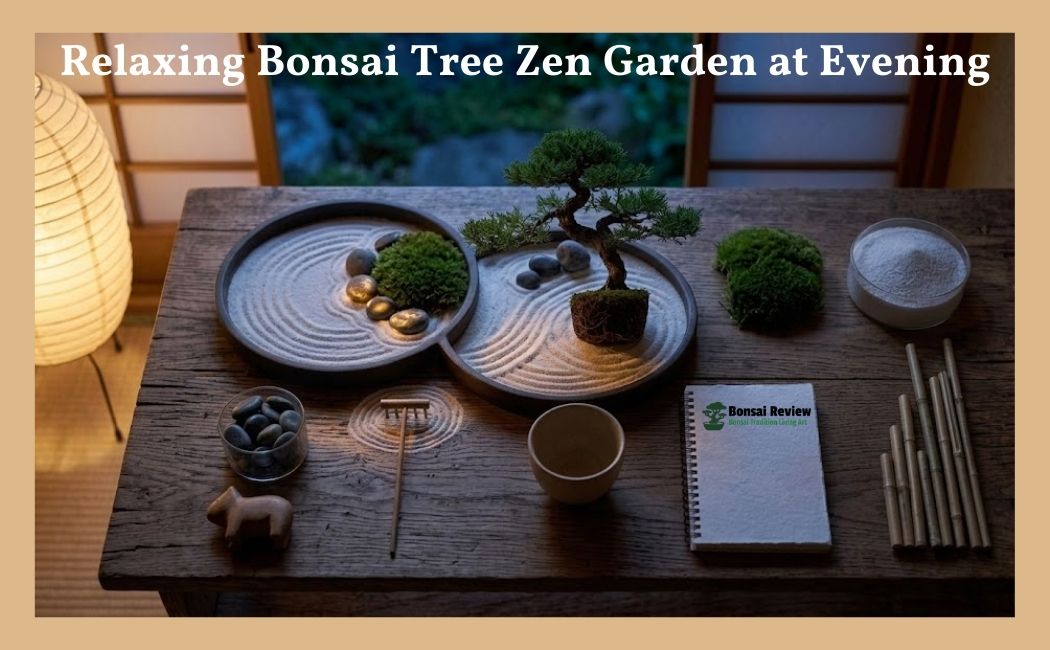
What Is a Zen Bonsai Garden?
A zen bonsai garden is a small meditation garden that mixes the living beauty of a Bonsai with the peaceful design of a Karesansui. This style grew from traditions associated with Zen Buddhism, in which gardens were designed to support quiet meditation, mindfulness, and contemplation.
In a classic Japanese Zen garden, nature is shown in a very simple way. Instead of real rivers or mountains, the garden uses sand, gravel, stones, and moss to represent them.
Carefully placed river stones may symbolize mountains or islands, while raked gravel patterns represent flowing water or ocean waves. This idea of a symbolic landscape allows a small garden to express the beauty of a much larger natural world.
When you add a bonsai tree to this design, the garden becomes a living miniature landscape. The tree grows slowly inside a bonsai pot filled with special bonsai soil, and its shape is guided through gentle care like branch pruning, root pruning, and bonsai wiring. Over time, the tree becomes the garden’s main focus.
The design of a Zen bonsai garden also follows important Japanese aesthetics such as Wabi-sabi and Ma. These ideas value simplicity, space, and natural beauty. Because of this, Zen gardens often use minimal elements, leaving open space around stones and plants to create a calm feeling.
Even a small desk Zen garden can follow these same principles. A shallow garden tray may hold decorative gravel, moss, and stone groupings arranged with odd-number placement for balance.
Some designs include small details like a stone lantern, bamboo fence, or water basin (tsukubai) to bring a traditional touch.
Today, many people create these gardens as indoor Zen gardens or mini meditation gardens. They fit easily on a desk, shelf, or quiet meditation corner at home. The garden becomes part of mindfulness décor, helping turn an ordinary workspace into a peaceful place for focus and reflection.
In the next section, you will see why so many people add a Zen bonsai garden to their home or desk, and how it can improve your mood, focus, and daily mindfulness practice.
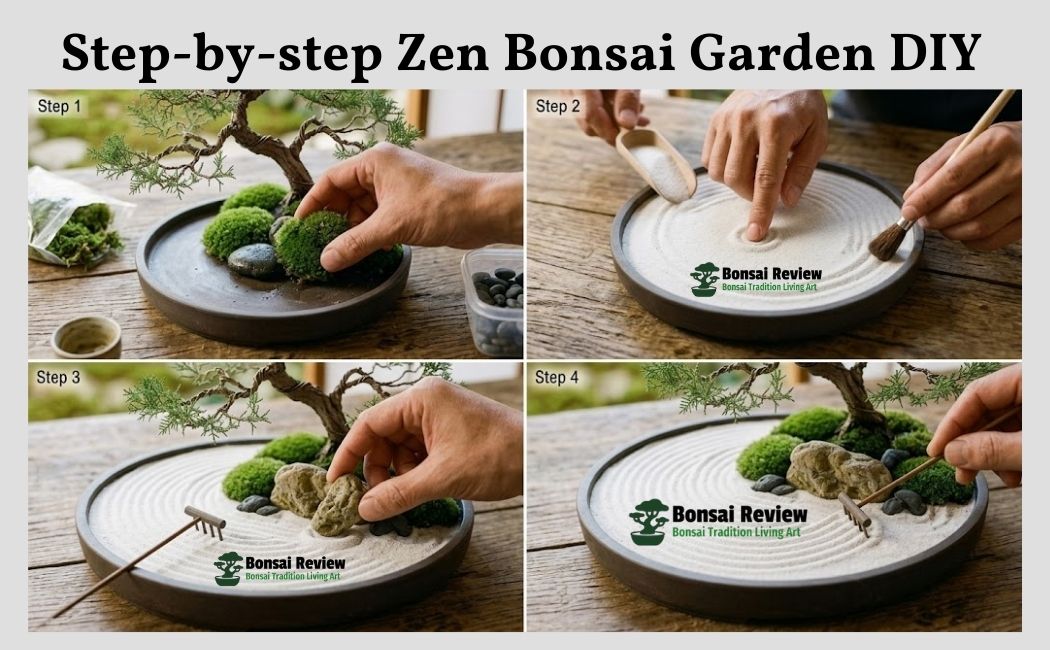
Zen Bonsai Garden DIY: Step-by-Step Setup for Home or Desk
Creating a zen bonsai garden DIY setup is simple when you follow the same ideas used in a traditional Karesansui. These gardens grew from the quiet practices of Zen Buddhism, where simple landscapes helped people focus on meditation, mindfulness, and calm reflection.
You do not need a large outdoor space. A small garden tray on your desk can become a peaceful mini meditation garden when you combine a living Bonsai with carefully placed sand, stones, and moss.
Follow these steps to build your own zen bonsai garden.
Step 1: Choose the Right Bonsai Tree
Your bonsai will be the main living element of the garden. Pick a tree that grows well indoors and is easy to maintain.
Popular choices include:
- Juniper bonsai
- Ficus bonsai
- Chinese elm bonsai
- Japanese black pine bonsai
- Jade bonsai
Plant the tree in a shallow bonsai pot using proper bonsai soil. Over time you may shape the tree with branch pruning, root pruning, and bonsai wiring.
Step 2: Select a Garden Tray or Base
A Zen garden usually sits inside a shallow container. This can be a wooden tray, ceramic dish, or stone base.
The tray will hold:
- decorative sand or gravel
- stone arrangements
- moss patches
- the bonsai tree
Keeping the design simple follows Japanese ideas such as Wabi-sabi and Ma, which value simplicity and open space.
Step 3: Add Sand or Decorative Gravel
Spread a thin layer of sand, gravel, or small pebbles across the tray. In a traditional Zen garden, this layer represents water.
Using a small Zen rake, draw raked gravel patterns that look like ocean waves or flowing rivers. This quiet activity can become part of a short breathing meditation.
Step 4: Arrange Stones and Rock Formations
Next, place river stones or natural rocks inside the garden. These stones symbolize mountains, islands, or cliffs.
Traditional Zen gardens often follow odd-number stone placement and natural rock grouping. This creates a balanced miniature landscape that feels organic and peaceful.
Step 5: Add Moss and Natural Details
Small patches of moss bring softness and life to the garden. Moss often represents forest areas in a Zen landscape.
You can also include small elements like:
stepping stones
- With a bamboo fence
- A stone lantern
- (Tsukubai) a water basin
These details add a traditional Japanese garden atmosphere.
Step 6: Create a Calm Display
Place your bonsai and garden tray in a quiet space. Many people set their desk Zen garden near a window or inside a peaceful meditation corner.
For a more traditional presentation, the bonsai may sit on a bonsai display stand beside accent plants like Kusamono or Shitakusa. In Japanese homes, this style of display often appears in a small alcove called Tokonoma.
When your garden is complete, it becomes more than decoration. The stones represent mountains, the raked sand shows flowing water, and the bonsai tree reflects living nature. Together they form a symbolic landscape that reminds you of balance, patience, and the flow of life.

Best Bonsai Trees for a Zen Bonsai Garden
Choosing the right tree is an important step when creating a Zen bonsai garden. The tree becomes the living center of your miniature landscape. In the art of Bonsai, the tree shape represents nature in a small form.
When placed in a calm Japanese Zen garden, also known as Karesansui, the bonsai works together with stones, gravel, and moss to create balance and harmony.
A good bonsai for a desk garden should be small, easy to care for, and suitable for indoor conditions. Some species grow slowly and respond well to branch pruning, root pruning, and bonsai wiring, making them ideal for beginners.
Below are some of the best bonsai trees for a mini Zen garden.
| Bonsai Tree | Why It Works Well for a Zen Garden? |
| Juniper bonsai | A classic bonsai is used in many traditional displays. Its needle-like foliage and twisted trunk create a natural mountain-tree look in a miniature landscape. |
| Ficus bonsai | One of the easiest indoor bonsai trees. It adapts well to indoor light and grows strong roots, making it perfect for desk Zen gardens. |
| Chinese elm bonsai | Known for its graceful branching and small leaves. It creates a very balanced shape that fits the peaceful style of a Zen garden. |
| Japanese black pine bonsai | A traditional tree often seen in Japanese gardens. Its strong trunk and layered branches give a powerful natural feeling. |
| Jade bonsai | A compact succulent bonsai that grows well indoors. Its thick leaves bring a fresh green look to a mini meditation garden. |
When placed in a shallow bonsai pot with proper bonsai soil, these trees grow slowly and develop character over time. Gentle care, such as watering, shaping branches, and observing the tree, becomes a small moment of mindful gardening each day.
The bonsai tree also follows Japanese design ideas like Wabi-sabi and Shibui. These principles value natural imperfection, quiet beauty, and simplicity. Because of this, a slightly curved trunk or uneven branch pattern often makes the tree more beautiful.
Once you choose the right bonsai tree, you can place it inside your garden tray with decorative gravel, river stones, and soft moss. The tree then becomes the focal point of your mini meditation garden, bringing life and calm energy to your desk or home.

Creative Zen Bonsai Garden Ideas for Home and Desk
Once you choose a bonsai tree and prepare your tray, the next step is designing a peaceful zen bonsai garden that fits your space. The goal is not to add many decorations. Instead, the design should follow the calm principles of Zen Buddhism and the quiet beauty found in Karesansui gardens.
Using simple elements like stones, sand, moss, and a bonsai tree, you can build a small miniature landscape that brings balance and harmony to your home or workspace.
Below are several creative ideas you can try.
1. Minimal Desk Zen Garden
A desk Zen garden works best with a very simple design. Place a small Bonsai inside a shallow garden tray filled with decorative gravel.
Add:
- one or three river stones
- a small patch of moss
- soft raked gravel patterns
The open space around the tree follows the Japanese idea of Ma, where empty space creates calm and balance.
2. Moss and Stone Meditation Garden
This design focuses on natural textures. Place the bonsai slightly to one side of the tray, then create a rock grouping using three stones.
Add moss around the stones to represent a small forest area. This type of garden reflects the idea of Wabi-sabi, where beauty appears in natural and imperfect forms.
When the moss slowly spreads, the garden begins to feel like a tiny mountain landscape.
3. Traditional Japanese Zen Display
For a more classic style, combine the bonsai with traditional garden elements.
You can include:
- a small stone lantern
- a bamboo fence
- small stepping stones
- a water basin (tsukubai)
Place the arrangement on a bonsai display stand or inside a quiet corner of the room. This setup is similar to traditional displays often placed in a Japanese alcove called Tokonoma. You may also add accent plants like Kusamono or Shitakusa beside the tree.
4. Modern Indoor Zen Garden
A modern indoor Zen garden often blends Japanese tradition with minimalist home décor.
Use:
- light-colored sand or gravel
- smooth black stones
- a small bonsai tree
- a wooden tray or ceramic base
This simple design reflects quiet elegance and the subtle beauty of Shibui and Yūgen. It works well in a meditation corner, study desk, or office shelf.
5. Mindfulness Raking Garden
Some Zen gardens are designed mainly for meditation. In this version, most of the tray contains fine sand, so you can draw patterns using a small Zen rake.
Slowly creating raked gravel patterns becomes part of a short breathing meditation. This simple action helps the mind relax and focus.
The bonsai tree and stones remain still while the sand patterns change, reminding you of the flow of nature and balance in life.
A well-designed Zen bonsai garden DIY setup does more than decorate your desk. It creates a peaceful mini meditation garden where you can pause, breathe, and observe nature in a small form.

How to Care for Your Zen Bonsai Garden?
Creating a Zen bonsai garden is only the first step. To keep it beautiful and peaceful, you need simple, regular care. A well-maintained garden continues to support mindfulness, meditation, and calm reflection.
1. Watering Your Bonsai Tree
Different bonsai species have different water needs. Beginner-friendly trees like Ficus bonsai and Jade bonsai need less frequent watering than Juniper bonsai or Chinese elm bonsai.
Tips for Zen Bonsai Garden Watering:
- Check bonsai soil regularly; it should be slightly moist, not soggy.
- Water slowly to avoid disturbing moss, sand, or gravel.
- Use a gentle watering can or spray bottle.
2. Pruning and Shaping
To maintain the tree’s shape and keep it miniature:
- Perform branch pruning to remove dead or overgrown branches.
- Use root pruning when repotting to encourage healthy growth.
- Apply bonsai wiring carefully to guide branch shapes.
Regular shaping supports the aesthetic of a miniature landscape and reinforces Japanese design ideas like Wabi-sabi and Shibui.
3. Maintaining Sand and Gravel
The sand or gravel layer represents water or flowing landscapes. Keeping it tidy is essential:
- Use a small Zen rake to redraw patterns.
- Remove debris, fallen leaves, or excess soil.
- Adjust stones or moss as needed to maintain balance and harmony.
This activity doubles as a mini mindfulness ritual, helping you pause and focus.
4. Caring for Moss
Moss adds life and softness to your mini Zen garden.
- Mist it lightly to maintain moisture.
- Avoid overwatering, which can encourage mold.
- Place your tray in indirect light to keep moss healthy without drying out.
Healthy moss enhances the symbolic miniature landscape, creating a sense of natural forest or garden floor.
5. Light and Placement
Indoor bonsai trees need light, but avoid harsh direct sunlight that can dry sand or scorch leaves.
- Place the garden near a window with indirect sunlight.
- Rotate the bonsai occasionally to ensure even growth.
- Keep the garden in a quiet space to maintain a calm atmosphere.
6. Daily Mindfulness Practice
Your zen bonsai garden is also a tool for daily mindfulness:
- Gently rake sand patterns.
- Observe your bonsai tree and stones.
- Take a few deep breaths while focusing on the miniature landscape.
Even a few minutes a day will reduce stress, improve focus, and reinforce a peaceful environment.
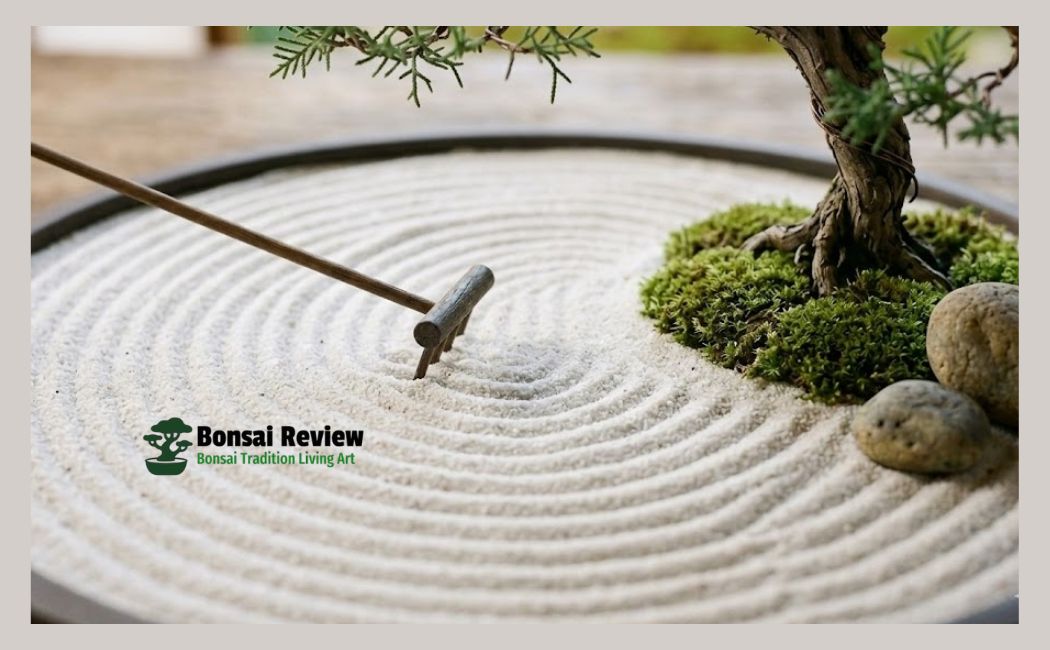
Common Zen Bonsai Garden Mistakes Beginners Make
Even with the best intentions, beginners often make mistakes when setting up or maintaining a Zen bonsai garden. Avoiding these common pitfalls ensures your miniature landscape remains calm, balanced, and beautiful, while keeping your bonsai healthy.
1. Overcrowding the Garden
A Zen garden is about simplicity and open space, following principles like Ma.
- Mistake: Adding too many stones, moss patches, or decorative items.
- Solution: Use only a few key elements.
For example, one or three river stones, a small bonsai tree, and minimal moss often create the most peaceful effect.
2. Choosing the Wrong Bonsai Tree
Not every bonsai works well in a desk or an indoor Zen garden.
- Mistake: Selecting a species that grows too large, needs full sunlight, or is difficult to maintain.
- Solution: Start with beginner-friendly trees such as Juniper bonsai, Ficus bonsai, and Chinese elm bonsai.
These bonsai adapt well to indoor conditions and are easier to shape with branch pruning, root pruning, and bonsai wiring.
3. Poor Drainage
- Mistake: Using a tray or pot that doesn’t drain well. Overwatering can lead to root rot and moss damage.
- Solution: Always use a bonsai pot with drainage holes and well-draining bonsai soil.
4. Neglecting Sand or Gravel
- Mistake: Ignoring the sand or gravel layer can make the garden look messy, and raked patterns disappear.
- Solution: Maintain the sand regularly with a Zen rake, removing fallen leaves and adjusting stones as needed. This also doubles as a mindfulness ritual.
5. Ignoring Bonsai Care
- Mistake: Forgetting daily or weekly care for your bonsai. Even a small tree needs attention.
- Solution: Check bonsai soil moisture, trim overgrown branches, and rotate the tree for even growth. Small actions maintain the miniature landscape and help the garden remain a peaceful meditation corner.
6. Overcomplicating the Design
- Mistake: Trying to replicate large Japanese gardens exactly in a small tray.
- Solution: Stick to essential elements: a bonsai tree, a few stones, moss, and sand patterns.
Follow the principles of Wabi-sabi and Shibui—simple, natural, imperfect beauty.
By avoiding these mistakes, your zen bonsai garden DIY setup will remain a peaceful and elegant mini meditation garden, perfectly suited for your home or desk.
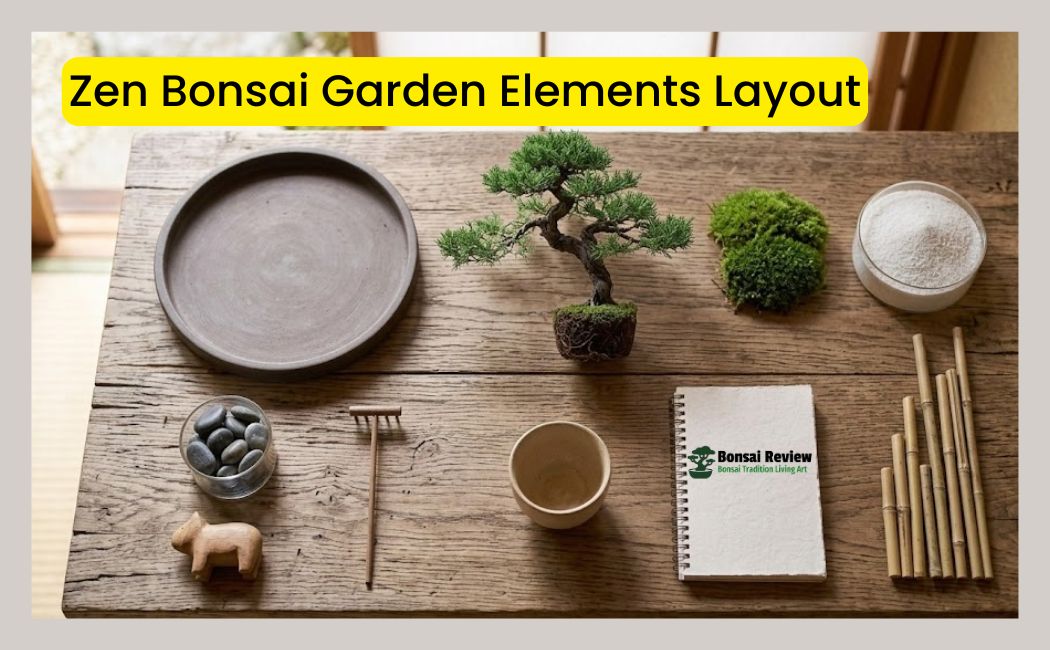
Using Your Zen Bonsai Garden as a Daily Mindfulness Ritual
A zen bonsai garden is more than decoration, and it’s a tool for cultivating calm, focus, and mindfulness. By interacting with your mini meditation garden each day, you turn simple care tasks into a peaceful ritual that strengthens your connection to nature and encourages mental clarity.
1. Begin with Quiet Observation
Start your daily ritual by simply observing the garden:
- Notice the shape of your Bonsai
- Observe the stone arrangement, moss patches, and raked gravel patterns
- Appreciate the balance of open space, following the principle of Ma
This quiet observation helps your mind slow down and focus on the present moment.
2. Gentle Sand Raking
Using a small Zen rake, redraw lines or patterns in the sand or gravel:
- Represent flowing water or ocean waves
- Adjust stone placement if necessary
- Let the rhythmic motion guide your breath and focus
This activity is a form of active meditation and encourages calm, mindful thinking.
3. Caring for the Bonsai Tree
Small daily actions maintain the tree and strengthen mindfulness:
- Check the bonsai soil moisture and water gently
- Trim new shoots with branch pruning
- Observe root and branch growth to ensure healthy development
These tasks foster patience, attention to detail, and respect for nature, reinforcing the Zen principles behind your garden.
4. Moss and Accent Plant Attention
- Mist moss lightly to keep it healthy
- Rotate accent plants like Kusamono or Shitakusa for even light exposure
- Keep the garden clean and tidy to enhance visual and mental clarity
5. Short Daily Reflection
End your ritual with a few quiet moments:
- Breathe deeply and reflect on the garden’s miniature landscape
- Focus on balance, simplicity, and harmony
- Let the flow of nature in your mini Zen garden inspire calm in your daily life
Even five minutes a day can reduce stress, improve focus, and support mental clarity, turning your desk or home space into a serene meditation corner.
Best DIY Zen Bonsai Garden Maintenance Checklist
To keep your Zen bonsai garden healthy, beautiful, and peaceful, following a simple maintenance routine is key. This checklist ensures that your mini meditation garden continues to support mindfulness, calm, and balance over time.
A. Daily Tasks for DIY Zen Bonsai Garden
| Task | Purpose |
| Observe the bonsai tree and garden layout | Supports mindfulness and helps notice changes in the tree, stones, or moss |
| Water the bonsai tree if the soil is dry | Keeps the tree healthy without overwatering |
| Mist moss lightly | Maintains soft, vibrant moss for a natural look |
| Check sand or gravel patterns | Refreshes the symbolic water patterns and maintains visual clarity |
B. Weekly Tasks for Living Art of Zen Garden Setup
| Task | Purpose |
| Prune new shoots and branches | Maintains bonsai shape and miniature landscape harmony |
| Adjust stone or moss placement | Keeps the garden balanced and visually pleasing |
| Remove debris from the ray | Prevents contamination and preserves cleanliness |
| Lightly rake sand patterns | Reinforces mindful gardening practice |
C. Monthly Tasks DIY Zen Bonsai Garden Maintenance Checklist
| Task | Purpose |
| Rotate the bonsai tree | Ensures even light exposure and symmetrical growth |
| Deep clean garden tray | Keeps the base tidy and prevents algae or mold buildup |
| Inspect bonsai wiring | Maintains branch shaping without damaging the tree |
| Fertilize bonsai (if needed) | Supports healthy growth and lush foliage |
D. Seasonal Tasks DIY Zen Bonsai Garden Care Checklist
| Task | Purpose |
| Repot the bonsai tree | Refreshes soil and supports root health |
| Check the light and temperature | Adjust indoor placement for seasonal changes |
| Review overall design | Add or remove accent plants like Kusamono or Shitakusa as needed |
By following this checklist, your Zen bonsai garden DIY becomes more than a decorative piece and becomes a living meditation tool. The combination of bonsai care, sand raking, and moss maintenance transforms your desk or home corner into a serene miniature landscape, helping you maintain focus, calm, and mindfulness every day.

Conclusion: Transform Your Space with a Zen Bonsai Garden
A Zen bonsai garden is more than just a decorative item; it’s a miniature meditation garden that brings calm, balance, and mindfulness into your home or workspace. By combining a living Bonsai with a simple Japanese Zen garden layout, you create a peaceful corner that supports meditation, focus, and reflection.
From selecting the right bonsai tree, such as a Juniper bonsai or Ficus bonsai, to arranging stones, moss, and sand patterns, every step helps you cultivate a sense of balance and harmony inspired by Zen philosophy.
Adding subtle Japanese design elements such as Wabi-sabi, Ma, and accent plants like Kusamono completes the serene atmosphere.
Maintaining your garden through simple daily, weekly, and monthly care reinforces mindfulness and patience, turning routine actions like watering, pruning, and raking sand into meditative rituals.
Even a small desk or corner of your home can become a calm meditation space, offering a brief escape from daily stress and a chance to reconnect with nature.
By following the steps in this guide, you can create your own Zen bonsai garden DIY that is not only visually beautiful but also supports your mental clarity, calm, and focus.
Whether for your desk, shelf, or a quiet meditation corner, this miniature landscape is a daily reminder of the flow of life, natural balance, and inner peace.
Relevant article: Which Bonsai Should You Buy for Meditation?
FAQs: Zen Bonsai Garden DIY Guide and Setup for Home & Desk.
1. What is a Zen bonsai garden?
A zen bonsai garden is a mini meditation garden that combines a living Bonsai with the minimalist design of a Karesansui. It uses sand, stones, moss, and a bonsai tree to create a symbolic landscape that supports mindfulness, meditation, and calm reflection.
2. Which bonsai trees are best for a desk Zen garden?
Beginner-friendly trees that work well indoors include: Juniper bonsai, Ficus bonsai, Chinese elm bonsai, Japanese black pine bonsai, and Jade bonsai. These bonsai trees grow well in small pots, respond to branch pruning, root pruning, and bonsai wiring, and fit perfectly in a mini Zen garden.
3. How do I make a Zen bonsai garden at home?
To create your own Zen bonsai garden DIY, as a beginner bonsai lover, choose a tiny tree in a shallow bonsai pot with proper bonsai soil, a garden tray or base, Sand or gravel, river stones, and moss. Optional accents like a stone lantern, bamboo fence, and water basin (tsukubai). Arrange the elements with odd-number stone placement and open space to follow Japanese aesthetics like Ma.
4. How do I care for my Zen bonsai garden?
Zen bonsai garden key care tips for water the bonsai tree when the bonsai soil is slightly dry. Mist moss lightly to keep it soft and green. Prune branches and roots to maintain the bonsai shape. Redraw sand or gravel patterns with a small Zen rake. Rotate the bonsai tree for even growth and place it in indirect light. Following daily, weekly, and monthly routines keeps your mini meditation garden healthy and visually balanced.
5. Can a Zen bonsai garden help with stress or focus?
Yes. Interacting with a zen bonsai garden encourages mindfulness, patience, and calm reflection. Activities like raking sand patterns, observing stones and moss, and caring for your bonsai create small meditation moments that can reduce stress, improve focus, and enhance a peaceful home or desk environment.
6. Can I create a Zen bonsai garden in a small space?
Absolutely. A desk Zen garden fits in even limited areas. Use a shallow garden tray, one bonsai tree, a few stones, some moss, and raked sand or gravel. Minimalist design ensures the garden feels open and serene, reflecting Japanese principles like Wabi-sabi and Shibui.
7. How often should I rake the sand or gravel?
Rake the sand or gravel whenever it looks messy or whenever you want a mindfulness moment. Daily raking is ideal for incorporating a short meditation ritual, while occasional raking keeps patterns neat and visually calming.