


How often to water a bonsai tree is the first question you ask when your Bonsai tree starts to look weak, dry, or yellow. You may feel confused because some people say to water every day, while others say to wait. This is where most beginners make mistakes.
The truth is simple. There is no fixed schedule. You must follow one rule: Check soil, not schedule. When you touch your Bonsai soil and feel low Soil moisture, then it is time to water. If you water too often, it leads to Overwatering. If you wait too long, your tree suffers from Underwatering.
You also need to understand how water moves through the soil. Good Drainage keeps roots healthy and supports proper Water absorption. Without this, your bonsai can quickly develop Root rot, which is one of the most common reasons trees die.
Your watering routine also changes based on your environment. High Temperature, low Humidity, strong Sunlight, and even Wind can make your bonsai dry faster.
This is why an Indoor bonsai, like a Ficus bonsai, needs different care than an outdoor tree like a Juniper bonsai or a Chinese Elm bonsai. Even a Jade bonsai holds water differently.
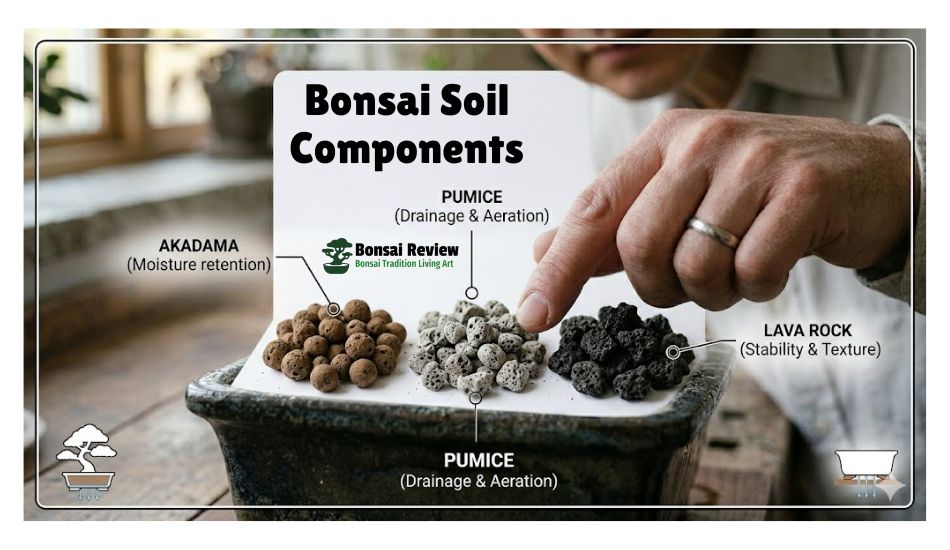
The soil mix also matters. Materials like Akadama, Pumice, and Lava rock help control water and prevent root problems.
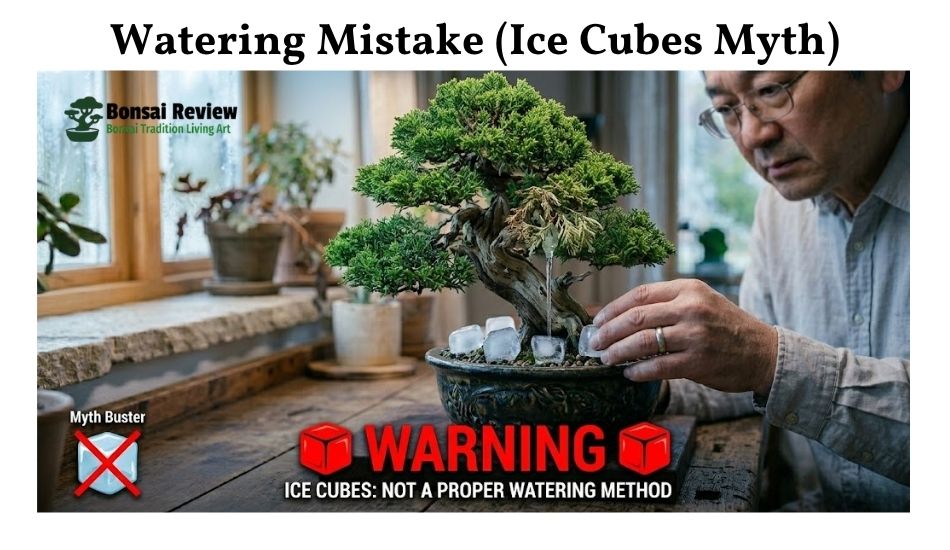
So instead of guessing or following myths like watering bonsai with ice cubes, you will learn a simple system. You will know when to water, how to water, and how to adjust in Summer, Winter, and Spring.
You will feel confident. You will stop guessing. And your bonsai will stay healthy and strong.
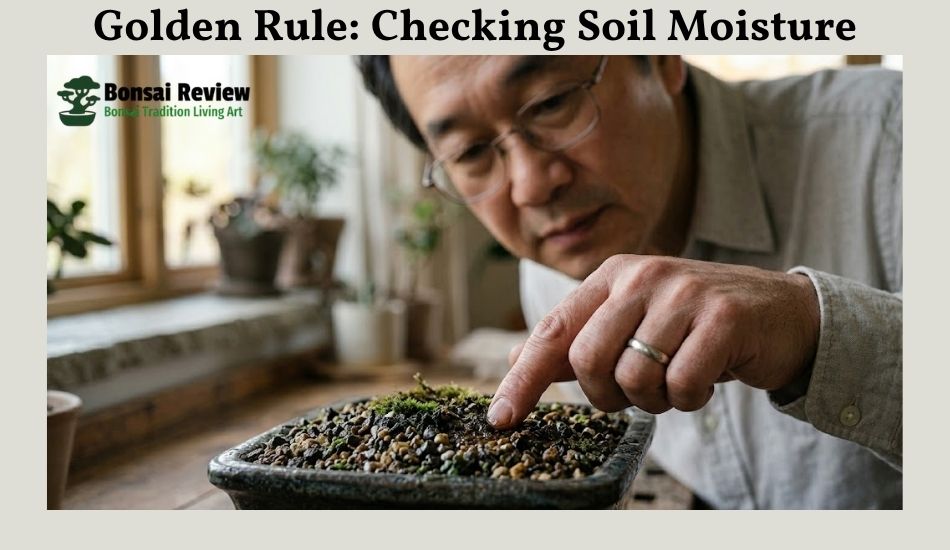
The Golden Rule: Check Soil, Not the Clock.
When you care for your Bonsai tree, the most important habit you build is simple. You do not follow a fixed time. You follow the rule: Check soil, not schedule.
Every day, you check the Bonsai soil with your finger. Push it about 1 cm deep. If you feel low Soil moisture, it means your bonsai is ready for water. If the soil still feels wet, you wait.
This small habit protects your tree from big problems. Watering too soon leads to Overwatering. Waiting too long causes underwatering. Both can damage roots and stop healthy Water absorption.
You will notice that soil dries at different speeds. High Temperature, strong Sunlight, and low Humidity make it dry faster. This is why your watering timing changes every day.
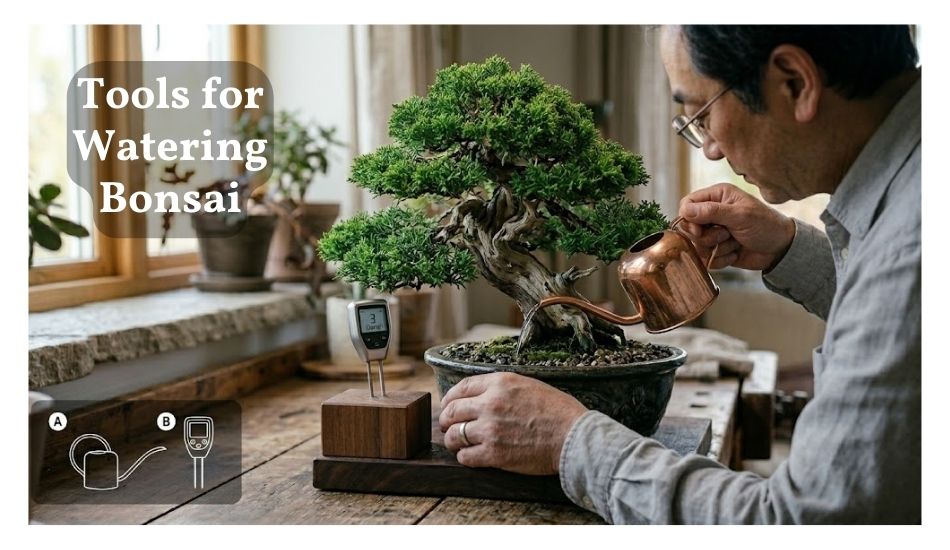
If you are unsure, you can also use a Moisture meter to check deeper moisture levels. But even without tools, your finger test works well.
Once the soil feels slightly dry, you water deeply using a Watering can. Keep watering until you see good Drainage from the bottom. This ensures all roots get water evenly.
When you follow this rule daily, you stop guessing. You start understanding your bonsai.
Easy & Simple Bonsai Watering Guide: What Is the Best Way to Water a Bonsai Tree Properly?
Now that you understand how to check your Bonsai tree, you may still wonder, “How often will I actually water it?”
Here is a simple guide to help you. Remember, this is not a fixed rule. You still follow Check soil, not schedule first.
1. General Watering Guide: Safe method, what your bonsai needs?
| Situation | How Often to Water a Bonsai Tree: You May Water. |
| Hot Summer days | 1–2 times a day |
| Mild weather | Once a day |
| Cold Winter | Every 2–4 days |
| Indoor bonsai | Every 2–3 days |
2. Why Simple Bonsai Watering Changes
Your watering depends on how fast the Bonsai soil loses moisture.
- High-temperature soil dries faster
- Strong Sunlight more water
- Low Humidity, faster drying
Small pots also dry very fast. So you may need to check more often.
3. Different Trees, Different Needs
Not all bonsai drink water the same way:
- Ficus bonsai likes steady moisture
- Juniper bonsai prefers slight drying before watering
- Jade bonsai stores water and needs less frequent watering
5. Important Reminder:
This table is only a guide. If you water without checking the soil, you risk:
- Overwatering
- Underwatering
Always check first, then water.
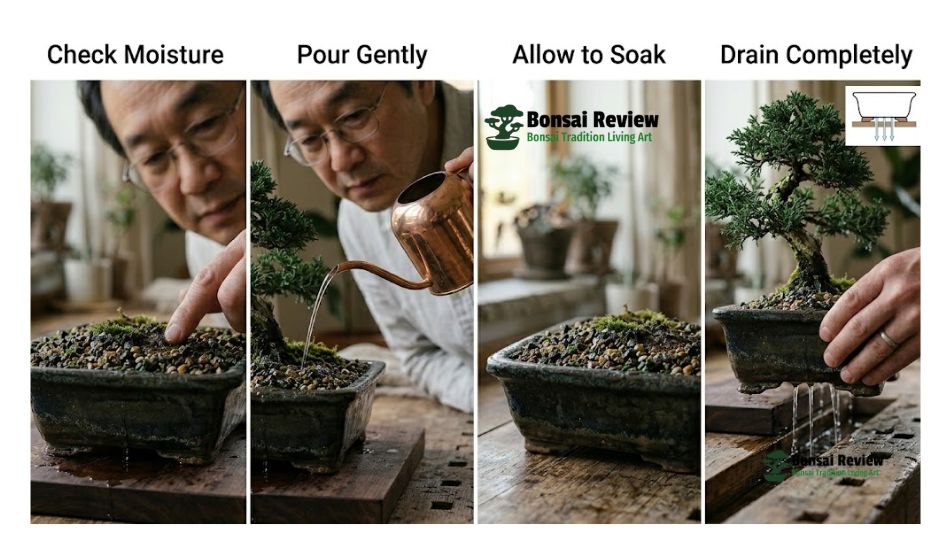
4 Step-by-Step: How to Water Your Bonsai Properly?
Now you know when to water your Bonsai tree. But many trees still get weak because the watering method is wrong. Follow this simple process. It keeps roots healthy and prevents damage.
- Step: Use the Right Tool: Start with a soft-flow Watering can. This helps you water gently without disturbing the Bonsai soil.
- Step: Water Slowly and Evenly: Pour water across the entire soil surface. Do not rush. Slow watering helps proper Water absorption.
- Step: Wait for Full Drainage: Keep watering until water comes out of the bottom. This shows good Drainage. This step is very important. It pushes out old air and gives fresh water to all roots.
- Step: Repeat One More Time: Wait a few seconds, then water again. This ensures the inner root system is fully hydrated.
What You Must Avoid?
- Do not splash water quickly
- Do not water only the top layer
- Never follow myths like watering bonsai with ice cubes
These mistakes block proper water flow and harm your bonsai.
Why This Method Matters?
If you water the wrong way, roots cannot breathe. This leads to:
- Overwatering
- weak roots and poor growth
- A serious disease like Root rot
Simple Rule For Beginner Bonsai Lovers: Water deeply. Let it drain. Then stop. When you follow this method, your bonsai stays strong, balanced, and healthy.
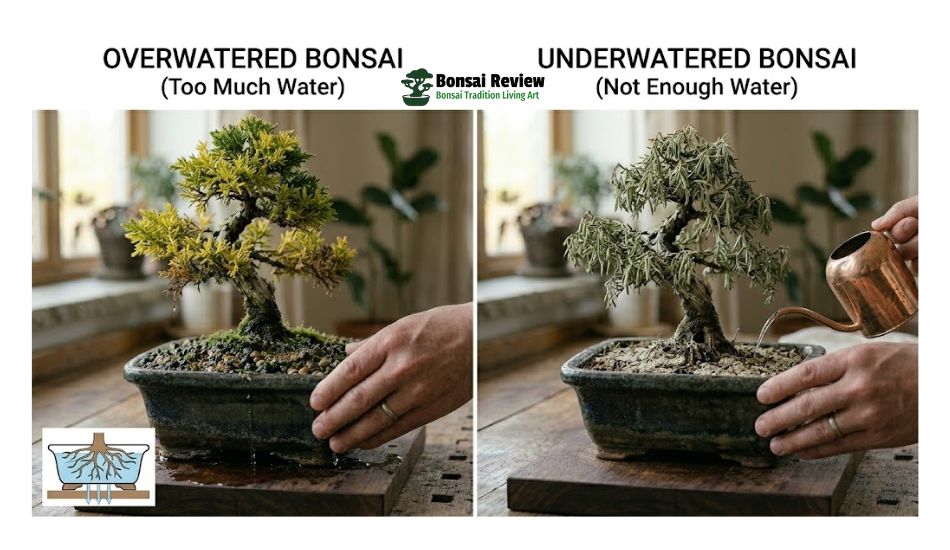
5 Signs Your Bonsai Needs Water Before It’s Too Late
Your Bonsai tree cannot speak, but the tiny plant shows clear signs when it needs water. If you learn to notice these early, you can prevent serious damage.
- Dry Soil Surface: Check your Bonsai soil. If the top layer feels dry and has low Soil moisture, your bonsai is ready for watering. This is the most reliable sign.
- Leaves Start Drooping: When your bonsai does not get enough water, leaves begin to fall or hang down. This is a clear sign of Underwatering.
- Leaves Look Dry or Wrinkled: Some bonsai types, like Jade bonsai, show wrinkled leaves when they lose water. This means the tree is already stressed.
- Pot Feels Very Light: Lift your bonsai pot. If it feels light, it means the water inside the soil is low. This affects proper Water absorption.
- Soil Dries Faster in Heat: High temperatures and strong Sunlight can dry soil quickly. Low Humidity makes it even faster. In these conditions, you may need to check your bonsai more often.
Important Reminder: Do not wait too long after seeing these signs. If you delay, your bonsai can become weak and stop growing properly.
Simple Habit: Check your bonsai daily. Touch the soil. Observe the leaves. This keeps your watering perfect without guessing.
Signs of Overwatering: The #1 Bonsai Killer
Many people think more water means a healthier Bonsai tree. But this is not true. Too much water is the fastest way to damage your tree. When you ignore the rule Check soil, not schedule, you risk Overwatering.
1. Yellow or Falling Leaves: If leaves turn yellow and drop, your bonsai may have too much water. Roots cannot breathe when the soil stays wet for too long.
2. Wet Soil That Never Dries: Check your Bonsai soil. If it always feels wet and has too much Soil moisture, it means poor balance. This blocks proper Water absorption.
3. Bad Smell from Soil: A sour or rotten smell is a warning sign. This often means roots are starting to rot.
4. Weak Growth and Soft Roots: Your bonsai may stop growing. Roots become soft and weak. This leads to serious diseases like Root rot.
Why Overwatering Happens?
- Watering without checking the soil
- Poor Drainage
- Using the wrong soil mix
How to Fix Overwatering?
- Let the soil dry slightly before watering again
- Improve drainage with materials like Akadama, Pumice, and Lava rock
- Always water deeply, then stop
Simple Rule: How Often to Water a Bonsai Tree?
- Wet soil all the time = danger
- Slightly dry soil = perfect time to water
If you control this, you solve the biggest problem beginners face.
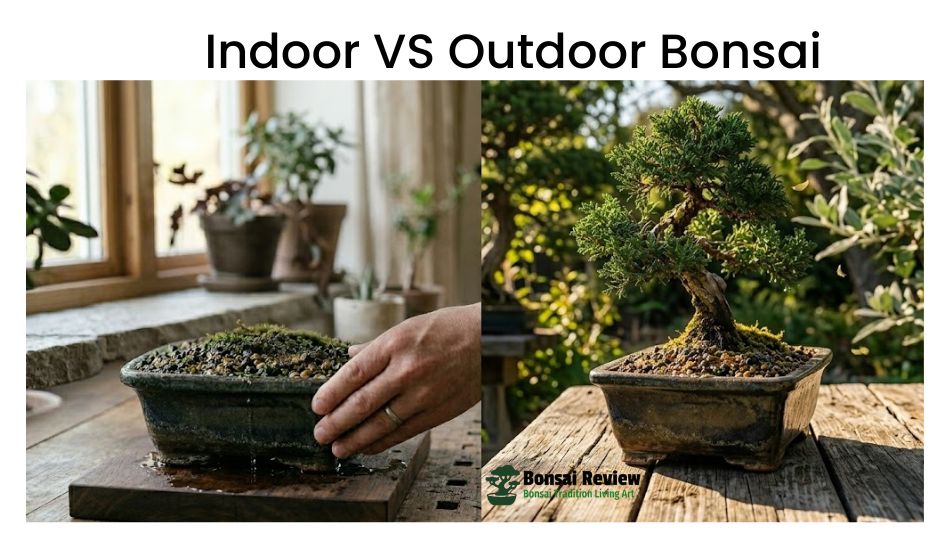
How Often to Water a Bonsai Tree: Indoor vs Outdoor Bonsai Watering.
Understanding where your Bonsai tree lives changes everything about watering comparison. Indoor and outdoor conditions are not the same, so water needs are also different.
How Often Do You Water a Bonsai Tree Indoors and Outdoors?
| Factor | Indoor Bonsai | Outdoor Bonsai |
| Environment | Indoor bonsai | Open air, natural light |
| Soil Dry Speed | Slow drying | Fast drying |
| Water Need | Less frequent | More frequent |
| Light Level | Lower Sunlight | Strong natural sun |
| Air Moisture | Higher stability in Humidity | Changes with the weather |
| Risk Level | Overwatering risk higher | Underwatering risk higher |
How Often to Water a Bonsai Tree: Indoor Bonsai Example?
- A Ficus bonsai is often kept inside homes.
- It stays at a stable temperature but with lower airflow.
So soil dries slowly, and overwatering becomes a real risk if you ignore the soil’s watering schedule.
How Often to Water a Bonsai Tree: Outdoor Bonsai Example
- A Juniper bonsai grows outside where wind, sun, and heat change daily.
- This increases water loss from soil and leaves,
So watering is needed more often. Indoor bonsai usually suffer from too much water. Outdoor bonsai usually suffer from too little water.
Simple Rule: How Often to Water a Bonsai Tree?
- Indoor check less often but carefully
- Check outdoors more often, especially in the heat
Always rely on checking the soil, not the schedule, before watering.
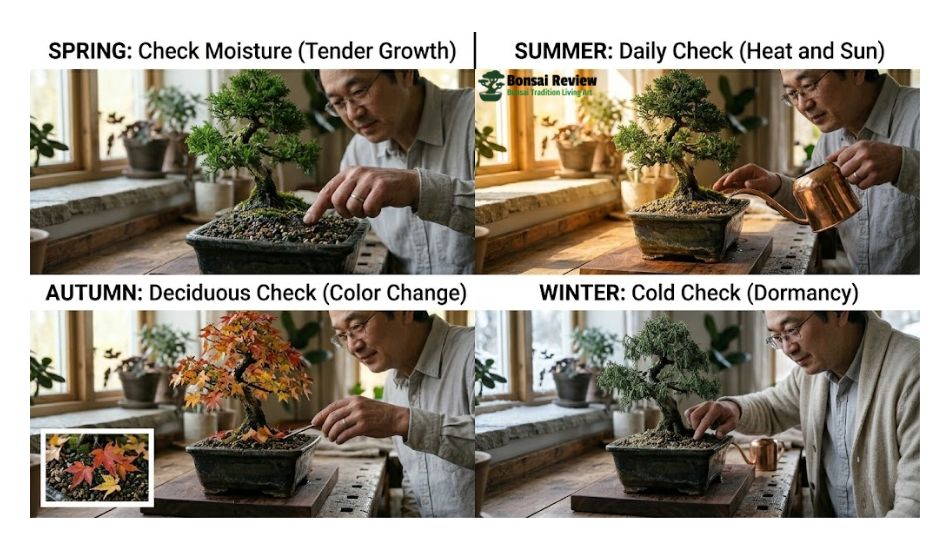
Simple Control Chart: Seasonal Bonsai Watering Guide
Water needs of your Bonsai tree change with the seasons. You must adjust your care based on the weather, not fixed timing. Always follow: Check soil, not schedule first.
Seasonal: How Often to Water a Bonsai Tree?
| Season | Water Need | Soil Dry Speed | What You Should Do |
| Summer | High | Fast | Check soil 1–2 times daily, water when dry |
| Winter | Low | Slow | Check every 2–4 days, avoid overwatering |
| Spring | Medium | Moderate | Check daily, adjust with growth speed |
Why Do Seasons Change Water Needs?
In hot months, high temperatures and strong sunlight dry the bonsai soil faster. In winter, low temperatures slow down water loss, and the plant uses less water due to reduced humidity changes and slower growth.
Example Behavior by Season
- A Ficus bonsai may still need steady watering in warm indoor conditions
- A Juniper bonsai may need much less water in winter dormancy
Never follow a fixed routine like “every day water” or “every 3 days water.”
Top Rule for Seasons:
- Seasons change the speed of drying.
- So you must change your watering speed too.
- Always check the soil first. Always adjust to the weather.
This leads to overwatering in winter and underwatering in summer
Simple Rule: How Often to Water a Bonsai Tree You Should Always Follow.
By now, you understand how to care for your Bonsai tree in different situations. The goal is not to follow fixed timing, but to understand your tree’s real need. Everything comes back to one core rule: Check soil, not schedule.
1. What You Must Remember?
| Area | Simple Action |
| Soil check | Touch the bonsai soil daily |
| Water timing | Only when the soil moisture is low |
| Water method | Water deeply until Drainage appears |
| Main risk | Avoid Overwatering and Underwatering |
Never rely on guessing. Always check the soil, understand the tree, and adjust with the weather. That is the safest way to keep your bonsai healthy for a long time.
2. Simple Real-Life Understanding
- A Ficus bonsai inside your home may stay moist longer.
- A Juniper bonsai outside may dry very fast in the sun and wind.
This is why every tree behaves differently based on Temperature, Sunlight, and Humidity.
3. One Big Mistake to Avoid
Never trust fixed schedules like “water every day.” This often leads to hidden damage like Root rot that you cannot see until it is too late.
When you understand your soil, you no longer guess. You simply respond to your tree’s needs at the right time. That is how a healthy bonsai grows for years with strong roots and balanced water life.
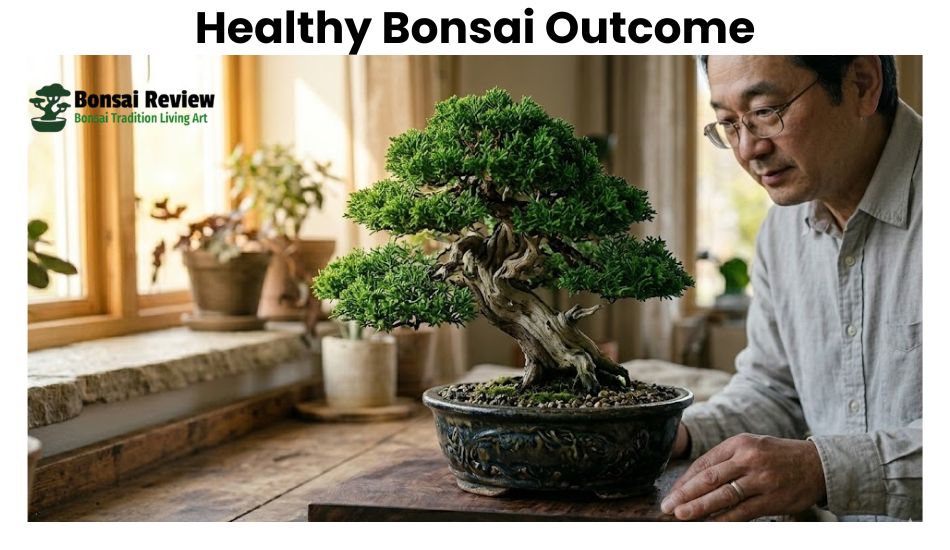
Conclusion: Simple Rule for Long-Term Bonsai Health.
Taking care of your Bonsai tree becomes easy when you stop guessing and start observing. The most important rule is always the same: Check soil, not schedule.
When the Bonsai soil feels slightly dry, and the Soil moisture is low, it is the right time to water. If you water without checking, you increase the risk of Overwatering or Underwatering.
Healthy watering is not about time. It is about understanding how your tree responds to its environment. Factors like Temperature, Sunlight, and Humidity all change how fast the soil dries.
Different trees also behave differently. A Ficus bonsai may need steady moisture, while a Juniper bonsai prefers drying between watering, and a Jade bonsai stores water for longer periods.
If you stay consistent with this simple method, you will avoid serious problems like Root rot and help your bonsai grow strong for many years.
Success is not simply observing your soil, understanding your tree, and watering only when it truly needs it.
Helpful article with more details: Bonsai Watering Schedule: Essential Tips for Healthy Growth.
FAQs: How Often to Water a Bonsai Tree Made Simple.
1. Do Bonsai need water every day?
No. You should not follow a fixed daily rule. Always follow the check soil, not the schedule. If the Bonsai soil is still moist, you wait. Water only when the Soil moisture becomes low.
2. How do I know if I am overwatering?
Signs include yellow leaves, soft soil, and weak growth. This leads to Overwatering and can cause serious damage like Root rot.
3. Can I underwater my bonsai?
Yes, if you forget to check it. Dry soil causes Underwatering. Leaves may droop or become dry, especially in hot Summer conditions.
4. Does every bonsai need the same water?
No. Different trees behave differently, like the Ficus bonsai needs steady moisture, the Juniper bonsai prefers slight drying, the Jade bonsai stores water, and needs less frequent watering.
5. Is an indoor bonsai easier to water?
Indoor trees like Indoor bonsai dry more slowly, so they need less frequent watering. But they also have a higher risk of overwatering if you ignore drainage. Good Drainage is always important.
6. Should I change watering in winter?
Yes. In Winter, the soil stays wet longer. So you must reduce watering and always check moisture first.