


How much does a bonsai tree cost? You want a bonsai tree. But before you buy one, you want to know the real price.
You don’t need a big budget to start. A small bonsai can cost as little as $20. A rare, old bonsai can cost more than $10,000. Most beginners spend somewhere in between.
So how much does a bonsai tree cost? Let’s break it down in plain terms, so you know exactly what to expect.
In the USA, you can find small beginner bonsai trees for around $20 to $50, while larger, older, or well-trained trees can cost $100, $500, or much more.
The price can change a lot based on the tree’s species, age, size, trunk, training, pot, and seller. Current U.S. listings show this wide range, with beginner trees and bonsai products available at different price points.
If you’re buying your first bonsai, you do not need to spend hundreds of dollars. A healthy Ficus, Juniper, Chinese Elm, or Dwarf Jade can give you a good place to start.
You can also choose a bonsai starter kit if you want the tree and basic supplies together. The key is knowing what you are paying for before you buy.
In this guide, you’ll see what a bonsai tree really costs, why some trees are much more expensive than others, what you can expect at different budgets, and whether a budget bonsai or a premium starter kit makes more sense for you.
How Much Does a Bonsai Tree Cost in the USA?
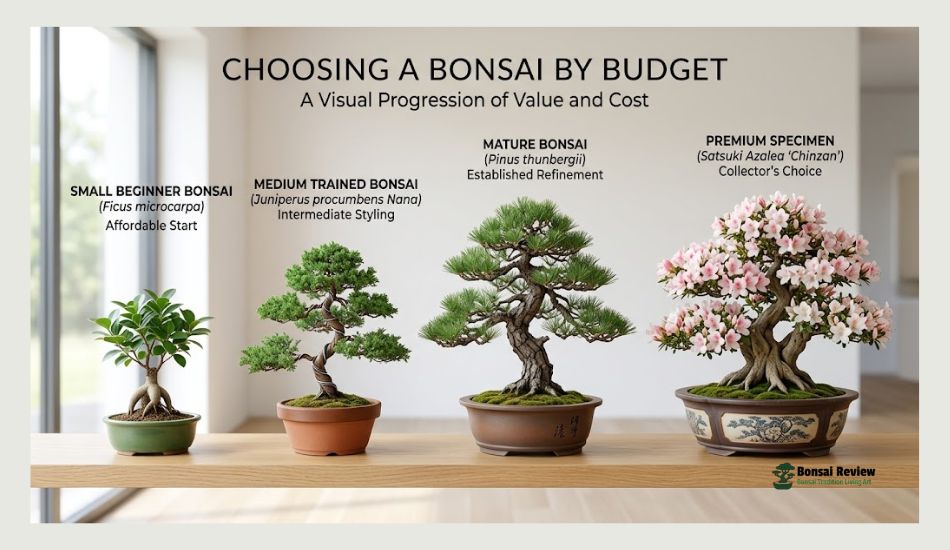
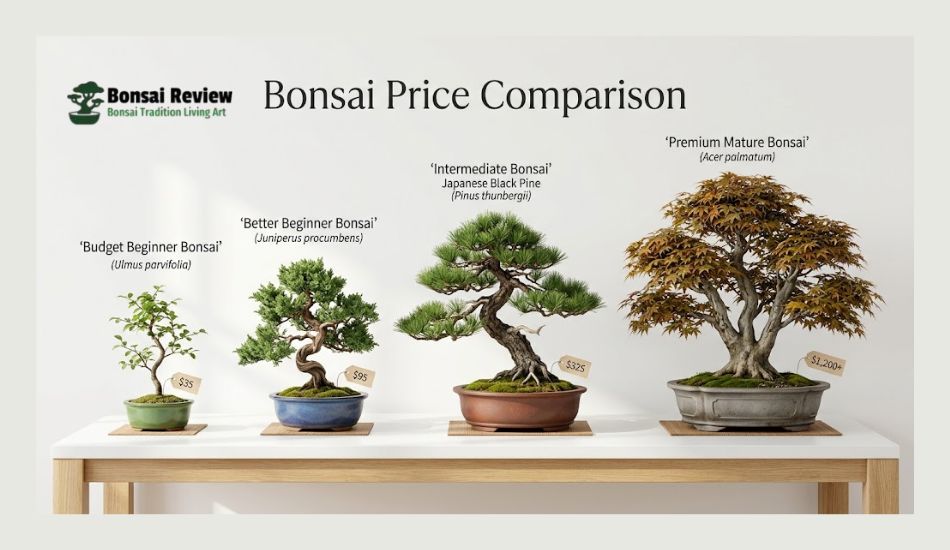
You can start your bonsai hobby without spending a lot of money. In the USA, a small beginner bonsai may cost about $20 to $50. A larger or better-trained tree may cost $50 to $100. Older bonsai trees with strong trunks, good branch shape, and years of training can cost $100 to $500 or more.
| Bonsai type | Typical price range | What you can expect |
| Small beginner bonsai | 20-50 | Young tree with basic training |
| Better beginner tree | 50-100 | Larger tree or better shape |
| Intermediate bonsai | 100-500 | More age and training |
| Premium bonsai | $500+ | Older, rare, or highly trained tree |
These prices are only a guide. You may see the same species at very different prices. A young Ficus bonsai may be affordable, while an older Ficus with a thick trunk and careful training can cost much more.
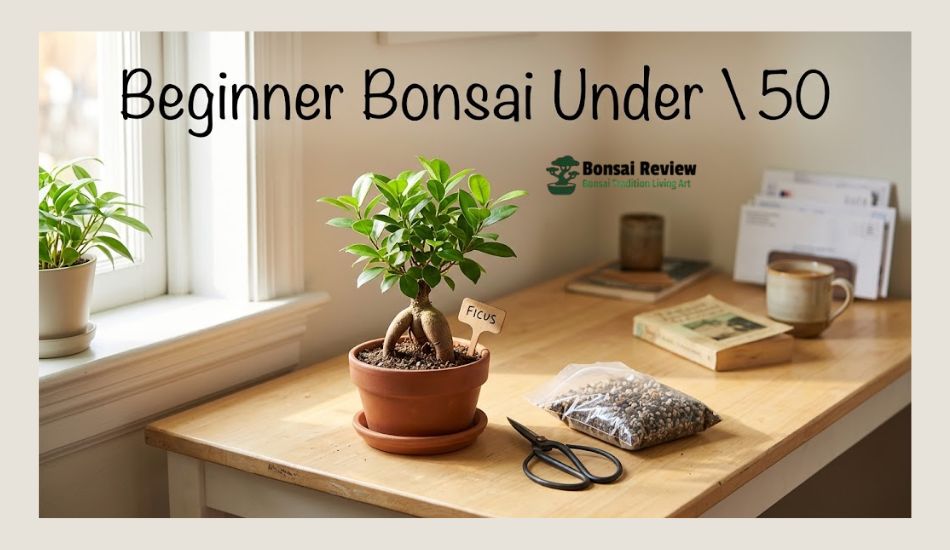
Your first bonsai does not need to be expensive. If you are new to bonsai, 20 to 50 healthy trees can be a smart starting point. You can spend more later when you understand pruning, watering, repotting, and training.
You should also look at the total starting cost, not just the tree price. A bonsai pot, soil, fertilizer, pruning tools, and other supplies can add to your first purchase. A starter kit can be useful when you want several basic supplies in one package.
The biggest question is not simply, “How cheap can you find a bonsai?” Instead, ask “What am I getting for the price?” That helps you avoid paying too much for a weak tree and helps you find a healthy bonsai that fits your budget.
The Quick Answer: How Much Does a Bonsai Tree Cost?
Here’s the short version, so you can skim it fast:
- Young starter tree: $20 to $50
- Small trained tree: $50 to $200
- Well-shaped tree with a nice pot: $200 to $1,000
- Mature, master-trained tree: $1,000 to $10,000+
Most first-time buyers land in the $20 to $60 range. That’s enough to get a real, living bonsai and start learning.
What Changes the Price $25 vs. $100 Bonsai: Is the More Expensive Tree Better?
A bonsai isn’t just a plant. It’s a plant that someone shaped, often for years. That’s why the price jumps around so much. Here’s what pushes the price up or down.
1. The Type of Dwarf Tree
Some trees are common and easy to grow. Others are slow and hard to find. Common trees cost less.
- Cheaper types: ficus, juniper, jade
- Pricier types: Japanese black pine, some maples, rare imported species
A simple ficus bonsai often sells for around $60. A trained juniper can cost much more, depending on its shape and age.
2. The Age of the Tree
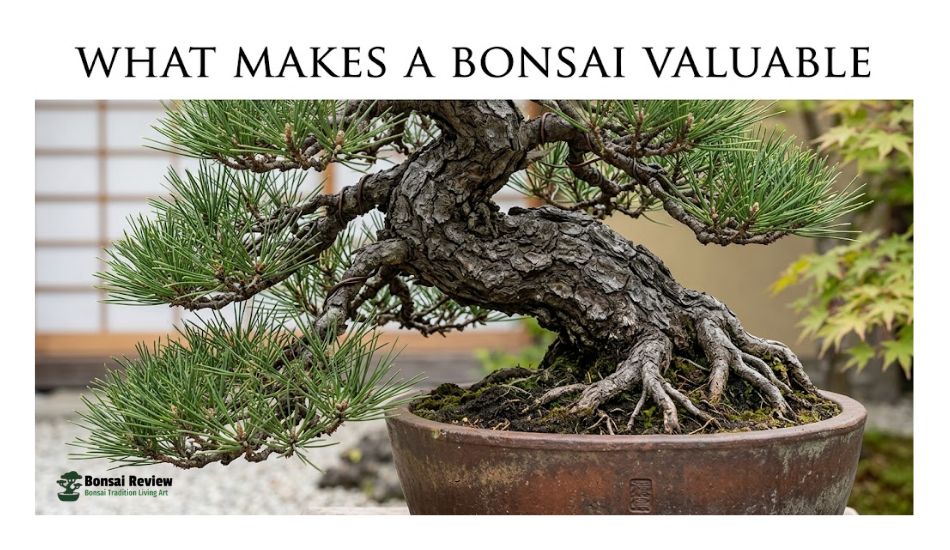
This is the biggest price driver. A tree takes years to grow a thick trunk and full branches. You’re not just paying for a plant. You’re paying for time.
A three-year-old juniper might cost $30. A forty-year-old pine, shaped by a skilled grower for decades, can cost thousands. The tree itself hasn’t changed much in size. But the years of careful pruning behind it have.
3. The Shape and Skill
Anyone can grow a tree. Not everyone can shape one well. A bonsai artist bends branches with wire, trims new growth, and guides the tree into a pleasing form over many seasons. That skill and labor gets built into the price.
4. The Pot
A basic plastic or ceramic pot might cost $10. A hand-made pot from a respected potter can cost $500 or more on its own. Serious collectors treat the pot as part of the art, not just a container.
5. Where It Comes From
Trees with a known history cost more. That includes trees collected from a specific mountain, trained by a well-known artist, or shown at a major bonsai exhibition. You’re paying for the story as much as the tree.
Starter Kits: Budget vs Premium
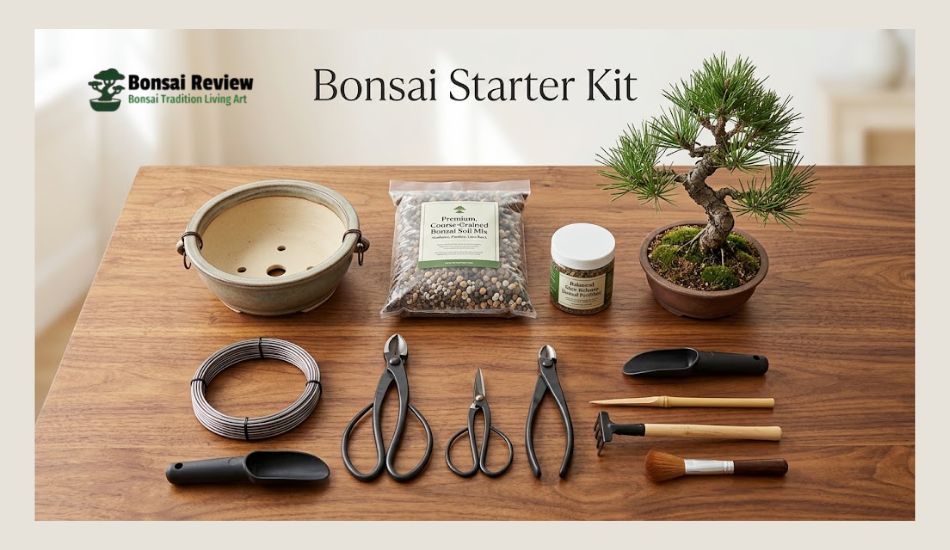
If you’re brand new, a bonsai starter kit is often the easiest way to begin. It usually includes a young tree, a pot, some soil, and basic tools in one box.
Budget Starter Kits
A budget kit usually costs between $25 and $50. You get a young tree, a simple pot, and a few basic tools. This is a smart choice if you just want to try bonsai before you commit more money. The tools may be thinner and wear out faster, but they’ll get you through your first year of pruning and shaping without any trouble.
Premium Starter Kits
A premium kit runs closer to $70 to $150. You get a healthier, older starter tree, sturdier steel tools, a better-quality pot, and sometimes a care guide written by an actual bonsai grower. If you already know you’ll stick with bonsai, the stronger tools save you money down the road, since cheap shears often need replacing within a year.
Which one should you pick? If you’re not sure bonsai is for you yet, start with the budget kit. If you already love plants and want to stick with it long-term, the premium kit pays for itself in tool quality alone.
Costs Beyond the Tree: Before You Buy a Bonsai, Know These Real Costs
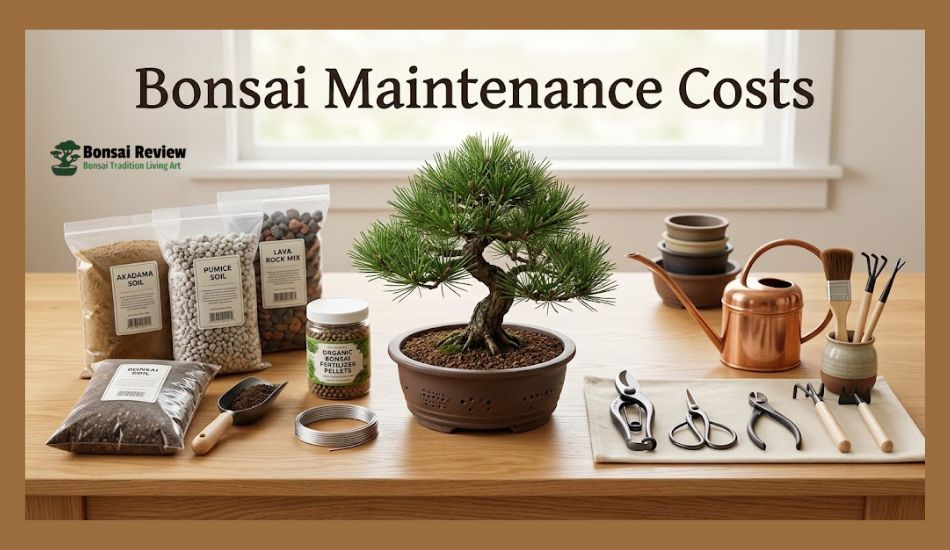
The tree itself is only part of the cost. Most beginners don’t expect these extra expenses:
| Item | Typical Yearly Cost |
| Basic tool set (shears, wire cutters) | $30 to $80 (one-time) |
| Wire for shaping branches | $15 to $40 |
| Bonsai soil mix | $15 to $30 |
| Fertilizer | $10 to $25 |
| Replacement pot (as tree grows) | $15 to $60 |
Budget about $50 to $100 for your first year of supplies, on top of the tree. After that, yearly costs usually drop, since you’ll already own the tools.
How to Avoid Paying Too Much for a Bonsai
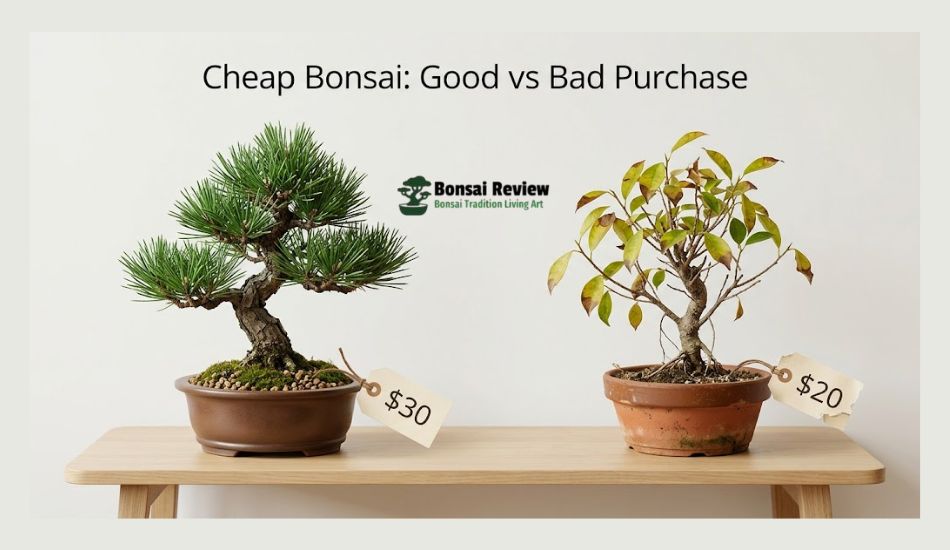
When you compare bonsai trees, the highest price is not always the best value. You should compare the tree, health, training, pot, species, and included supplies before you decide.
A $40 bonsai may be a better choice than a $100 tree if both are healthy and the lower-priced tree fits your needs. On the other hand, a higher price can make sense when you are getting an older tree, a thicker trunk, better training, or a quality starter kit.
Before you buy, ask yourself:
- Is the tree healthy?
- Do you know its species?
- Is it suitable for your growing space?
- Does the price match its size and training?
- Are the pot and supplies included?
- Have you compared similar trees from other sellers?
- Will you need to spend more after buying it?
Don’t pay extra just because a bonsai looks expensive. Look at what you are actually getting for your money. This simple check can help you find a bonsai that fits both your budget and your skill level.
Where to Buy a Bonsai Tree
- Home improvement stores carry young, affordable bonsai, usually $20 to $50.
- Online bonsai nurseries offer more variety, with prices from $30 up to several hundred dollars.
- Local bonsai clubs and shows are great for finding trained trees at fair prices, often from hobbyists selling their own collection.
- Specialty bonsai shops sell higher-end, older trees, usually starting around $150 and going up from there.
Costs Beyond the Tree
The tree itself is only part of the cost. Most beginners don’t expect these extra expenses:
| Item | Typical Yearly Cost |
| Basic tool set (shears, wire cutters) | $30 to $80 (one-time) |
| Wire for shaping branches | $15 to $40 |
| Bonsai soil mix | $15 to $30 |
| Fertilizer | $10 to $25 |
| Replacement pot (as tree grows) | $15 to $60 |
Budget about $50 to $100 for your first year of supplies, on top of the tree. After that, yearly costs usually drop, since you’ll already own the tools.
Relevant article: What Are the Best Bonsai Gift Ideas for Every Budget? ($25, $50 & $100+)
The Bottom Line: Why Do Some Bonsai Trees Cost $50 While Others Cost $500+?
The biggest question is not simply, “How cheap can you find a bonsai?” Instead, ask “What am I getting for the price?” That helps you avoid paying too much for a weak tree and helps you find a healthy bonsai that fits your budget. You don’t need thousands of dollars to start growing bonsai.
A young tree and a basic tool kit can cost less than a dinner out. The price only climbs if you chase older, rarer, or more artistically shaped trees later on. Start small, learn the basics, and grow your collection as your skill grows too.
FAQs: How Much Does a Bonsai Tree Cost in the USA? The Truth About Pricing.
1. Is a $20 bonsai tree a real bonsai?
Yes. A $20 tree is a real, living bonsai. It’s just young. It hasn’t been shaped for years yet, so the trunk is thin and the branches are simple. With patience and pruning, you can train it into a beautiful tree yourself.
2. Why are some bonsai trees so expensive?
Price mostly comes from age and skill. A tree that took forty years to shape costs more than one that took three years, even if they look similar in size. Rare pots and documented history add even more to the price.
3. Can I keep a bonsai alive on a small budget?
Yes. A basic tree, a simple pot, and a small tool set can cost under $60 total. The ongoing costs, like soil and fertilizer, stay cheap too, usually under $50 a year.
4. How much does the most expensive bonsai tree cost?
One centuries-old pine sold for $1.3 million at a bonsai show in Japan. That’s an extreme example. Most collectors will never spend anywhere close to that.
5. Do bonsai starter kits actually save money?
Yes, if you’re new. Buying the tree, pot, soil, and tools separately usually costs more than a bundled kit. A kit also takes the guesswork out of which tools you actually need.