


Bonsai pruning becomes much easier when you know what your tree needs before you pick up the shears.
If you are looking at long shoots, crowded branches, or growth that is changing your tree’s shape, you may wonder, “Should I cut this?” and “How much is too much?”
You do not need to remove a lot to make a bonsai look better. Maintenance pruning helps control new growth and keep the shape you already have. Structural pruning is different.
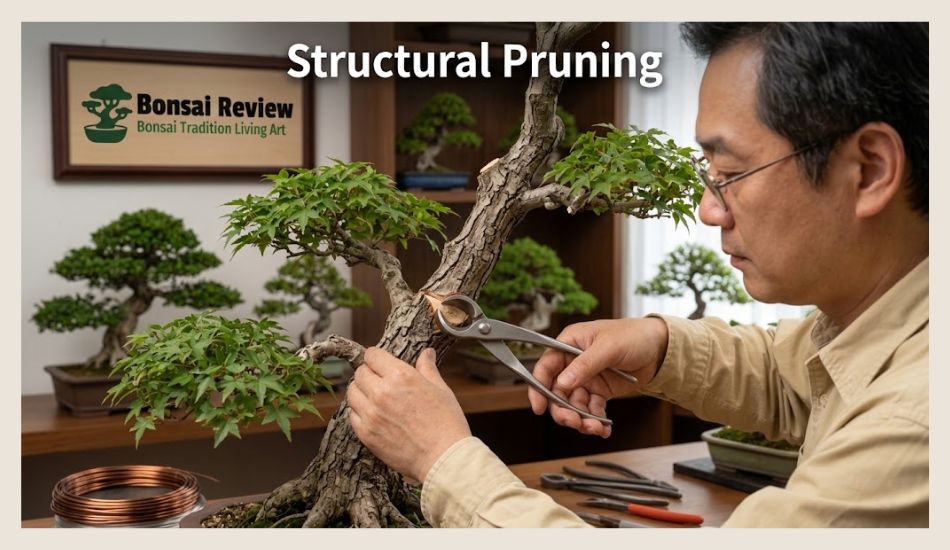
It removes larger or unwanted branches to improve the tree’s basic form. The right timing also depends on the bonsai species, such as Ficus bonsai or Juniper bonsai, because they respond to cuts in different ways.
When to prune, what to remove, where to make each cut, and how much growth to take off. Also see the bonsai pruning tools you need, along with before-and-after examples that show why a cut was made and how the tree looks after pruning.
However, you can make your next cut with a clear reason instead of guessing.
When Should You Prune a Bonsai?
Bonsai pruning is best done when your tree is actively growing and can recover from the cuts. But there is no single pruning month for every bonsai.
The right time depends on the tree species, your local climate, and the type of pruning you plan to do.
For many outdoor bonsai, late winter or early spring is a good time for structural pruning. The tree is coming out of dormancy, but strong new growth has not started yet.
You can see the branches more clearly, which makes it easier to decide what should stay and what should go.
For light trimming, you can often prune during the growing season. This helps keep new shoots short and keeps the tree’s shape neat.
Two types of pruning you need to know
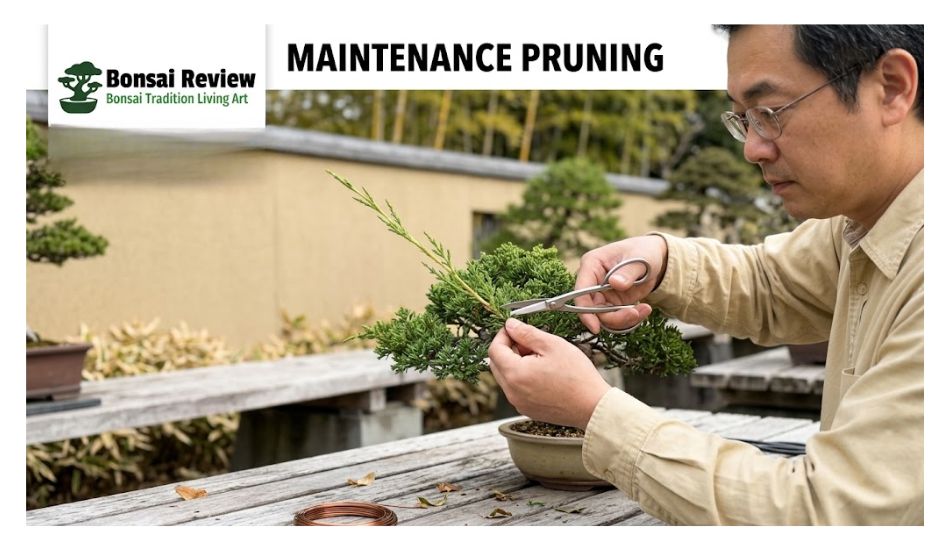
- Maintenance pruning removes small shoots, long new growth, and unwanted leaves or twigs. You use it to keep the shape you already have.
- Structural pruning removes larger branches that are dead, crossing, damaged, or growing in the wrong direction. This changes the tree’s basic shape, so you need to plan these cuts before using your shears.
Your tree’s species matters
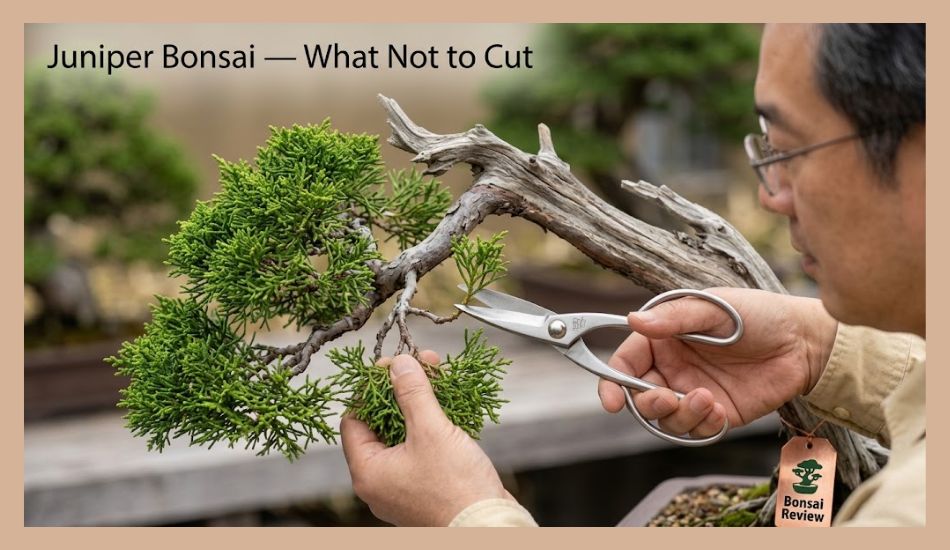
A Ficus bonsai, for example, can handle regular trimming during active growth. A Juniper bonsai needs a different approach because you should avoid cutting deeply into old, bare wood that has no green foliage.
Before you make a cut, check your tree’s species and growth pattern. Then look at the branch you want to remove and ask one simple question:
Will this cut improve the tree’s shape without removing more healthy growth than needed?
If the answer is yes, you can move to the next step: choosing what to cut and exactly where to make the cut.
What Should You Prune From a Bonsai?
Before you make any cut, look at the whole tree. You are not trying to remove as much growth as possible. You are trying to keep healthy growth that helps the tree look balanced.
Start with the branches that clearly cause a problem.
1. Remove dead or damaged growth
Dead twigs do not produce healthy leaves or flowers. Damaged branches can also spoil the tree’s shape.
You can remove these first. They are usually the easiest cuts for a beginner because you are not choosing between two healthy branches.
2. Remove branches that cross
Two branches that cross or rub against each other can create a crowded area.
Choose the weaker or less useful branch and remove it. This gives the remaining branch more space and makes the tree easier to see.
3. Remove branches growing in the wrong direction
A branch that grows straight toward the trunk, straight down, or directly across the front of the tree may not fit the design.
Do not remove it just because it looks different. First, turn the bonsai and check the tree from several sides. A branch that looks wrong from one angle may help the shape from another.
4. Shorten long new shoots
Fast-growing shoots can quickly change the shape of your bonsai. If a shoot has grown far beyond the outline you want, you can shorten it rather than removing the whole branch.
For simple maintenance pruning, leave enough healthy growth for the branch to continue growing. Avoid cutting back hard just to make the tree look smaller.
5. Keep useful branches
A healthy branch may help create the tree’s main structure, even if it looks a little messy today.
Before cutting, check:
- Does this branch help the tree’s shape?
- Is it growing in a useful direction?
- Is it healthy and producing new growth?
- Would removing it leave an empty area?
- Can you shorten it instead of removing it?
Once you know which growth needs attention, the next step is choosing the right bonsai pruning tool and making the cut in the correct place.
Where Should You Make a Bonsai Pruning Cut?
If a branch is useful, keep it. Good bonsai pruning is often about removing less, not more.
Once you know which branch needs pruning, look closely before you cut. The cut location matters as much as the cut itself. A good cut can guide new growth and help the wound heal cleanly.
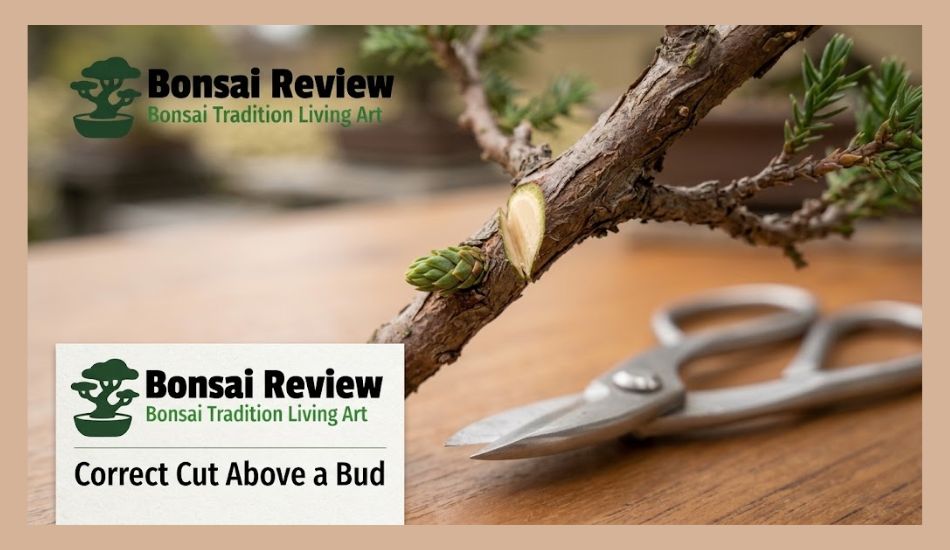
For a small shoot, look for a healthy leaf node or bud. This is the point where new growth can develop. Make your cut just above the node, leaving a small amount of stem rather than cutting directly through the bud.
Your cut should also follow the direction you want new growth to take. If the next bud points outward, cutting just above it can help keep new growth moving away from the center of the tree.
1. Use the branch collar for larger branches
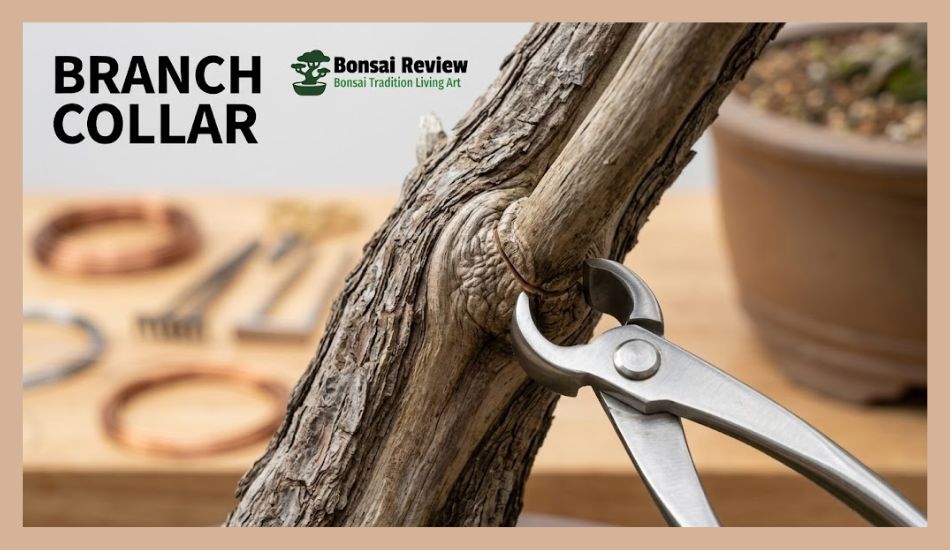
When you remove a larger branch, look for the slightly raised area where the branch joins the trunk or another branch. This is called the branch collar.
Do not cut into the trunk to make the area perfectly flat. Instead, make the cut just outside the collar. This protects the trunk tissue and gives the tree a better chance to close the wound.
2. Do not leave a long stub
A long piece of branch left behind can look untidy and may die back.
At the same time, do not cut deeper than needed. Your goal is a clean cut that removes the unwanted growth while keeping the useful tissue around it.
3. Check the cut before you make it
Hold your bonsai pruning shears next to the branch without cutting. Step back and look at the whole tree.
Ask yourself:
“If I make this cut here, will the remaining branch still look natural?”
This simple check can prevent many beginner mistakes.
For your first few cuts, take a photo before pruning. Then take another photo after the cut. A before-and-after comparison lets you see whether the cut actually improved the tree instead of relying only on how it looked up close.
How Much Should You Prune From a Bonsai?
The safest rule for a beginner is simple: prune a little, then stop and look at the tree again.
You do not need to remove every long shoot or make the tree look perfect in one session. Your bonsai needs healthy leaves and branches to keep growing. Removing too much at once can weaken the tree.
1. For light maintenance pruning
If you are only keeping the shape tidy, trim shoots that have grown beyond the outline you want.
Make a few cuts first. Then turn the tree and check it from the front, back, and sides. This helps you avoid taking too much from one area.
2. For larger branches
Be more careful with structural pruning. Removing a large branch changes the tree for a long time.
Before cutting, look at the branch from several angles. Decide where the tree will have space after the branch is gone. If you are unsure, leave the branch for now and study the tree again later.
3. Do not prune weak or stressed trees heavily
A bonsai that is already struggling may not recover well from major cuts.
If you see problems such as severe leaf loss, very dry soil, root problems, or pest damage, deal with the plant’s health first. Save major shaping work for when the tree is growing strongly.
A simple beginner rule
Use this order:
- Remove dead or damaged growth.
- Remove growth that clearly causes a problem.
- Shorten long shoots that have grown outside the desired shape.
- Stop and check the whole tree.
- Only then decide if another cut is needed.
Your goal is not to make the bonsai as small as possible. Your goal is to create a healthy shape with balanced growth.
Next, you need the right tool for each type of cut, because using the wrong tool can crush or damage a branch instead of making a clean cut.
Bonsai Pruning Tools: What You Actually Need
You do not need a large tool kit to start pruning. A few clean, sharp tools are enough for most beginner jobs.
1. Bonsai pruning shears
Bonsai pruning shears are your main tool for small shoots and thin branches. Their narrow blades help you reach crowded areas without damaging nearby growth.
Use them for routine maintenance pruning and small branch cuts.
2. Concave branch cutter
A concave cutter is made for removing branches close to the trunk or a larger branch. Its curved cutting head leaves a shallow hollow instead of a raised stub.
You do not need one for every small trim. It becomes more useful when you start doing structural pruning.
3. Bud or twig scissors
Small bonsai scissors can help when you need to trim fine twigs or work between leaves. They give you more control in tight areas.
4. Keep your tools clean and sharp
A dull blade can crush a branch instead of making a clean cut. Dirty tools can also spread problems from one plant to another.
Before pruning, wipe the blades clean. Make sure they open and close smoothly. If the cutting edge is damaged or dull, sharpen or replace the tool before working on your bonsai.
5. Match the tool to the branch
| What you are cutting | Useful tool |
| Small new shoots | Bonsai pruning shears |
| Fine twigs | Bonsai scissors |
| Larger structural branches | Concave cutter |
| Dead or damaged small growth | Sharp pruning shears |
Do not force a small pair of scissors through a thick branch. The right tool gives you a cleaner cut and better control.
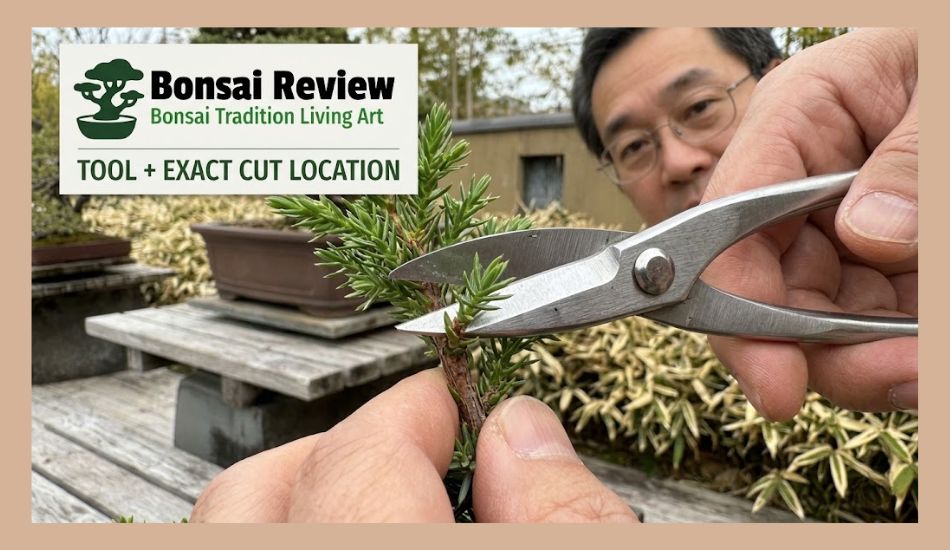
Before making your first cut, place the tool beside the branch and check the exact cut location. This small step can help you avoid cutting the wrong branch or removing more growth than planned.
How to Prune a Bonsai Step by Step
Once you know what to remove and have a clean, sharp tool ready, you can start pruning. Take your time. You can always make another cut, but you cannot put a branch back.
1. Check the tree first
Look at your bonsai from all sides.
Find dead branches, damaged growth, crossing branches, and long shoots that have grown outside the shape you want. Do not start cutting as soon as you see the first unwanted shoot.
2. Decide what stays
Choose the branches that give the tree its main shape.
If two branches compete for the same space, decide which one has the better position. Keep the stronger branch if it gives you a clearer shape.
3. Mark your first cuts
For a beginner, it can help to point at each branch before cutting. This gives you a moment to check your plan.
If you are making a larger cut, take a quick photo before you begin. You can compare it with the tree after pruning.
4. Make a clean cut
Hold the pruning shears firmly and make one clean cut.
For a small shoot, cut just above a healthy bud or leaf node. Choose a bud that points in a useful direction.
For a larger branch, make the cut just outside the branch collar. Do not cut into the trunk or leave a long stub.
5. Step back and look again
After a few cuts, put the tool down.
Look at the whole bonsai instead of focusing on the cut area. Turn the tree and check its balance. You may find that you have already removed enough.
6. Stop before you over-prune
You do not have to finish every shaping job in one day.
If the tree already has a good balance, stop. Give it time to respond before making more major cuts.
A good beginner pruning session should have a clear reason behind every cut. If you cannot explain why a branch needs to go, it is often better to leave it for now.
When to Prune Different Bonsai Species
You should not use the same pruning schedule for every bonsai. Your tree’s species and growing pattern affect when it can handle pruning.
1. Ficus bonsai
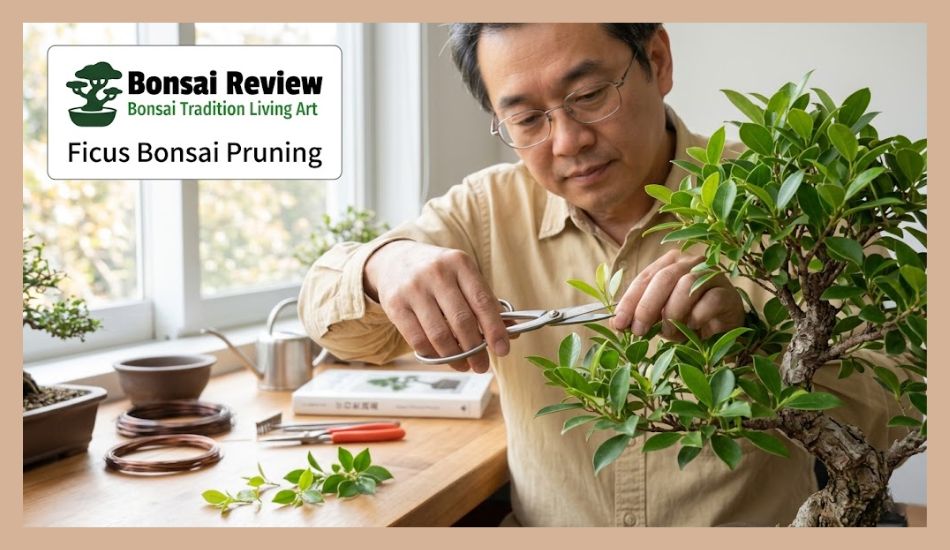
Ficus bonsai are popular indoor trees because they grow strongly in warm conditions. You can usually trim unwanted shoots during active growth.
If a Ficus has become too tall or crowded, start with light maintenance pruning. Avoid removing large amounts of healthy growth at once.
2. Juniper bonsai
Juniper bonsai need more care when you prune. Do not cut deep into a branch where there is no green foliage left.
Junipers may not produce new growth from old, bare wood. Before cutting, make sure the remaining part of the branch has healthy green growth.
3. Deciduous bonsai
Deciduous trees, such as maple, lose their leaves during their dormant period. Their bare branches make the structure easier to see.
Structural pruning is often easier when the tree has no leaves, but the best timing still depends on the species and your local growing conditions.
4. Tropical bonsai
Tropical bonsai can grow for much of the year when they receive enough warmth and light. This means you may have more opportunities for light maintenance pruning.
Still, active growth does not mean you should prune heavily every time you see a new shoot. Use the tree’s health and shape as your guide.
5. Check before you cut
If you are unsure about timing, identify your bonsai first. Then check whether it is:
- actively growing or dormant
- healthy or stressed
- producing new shoots
- carrying flowers or fruit
- an indoor tropical species or an outdoor temperate species
The safest pruning plan starts with the tree you actually have. Once you know its growth pattern, you can choose the right time and make fewer risky cuts.
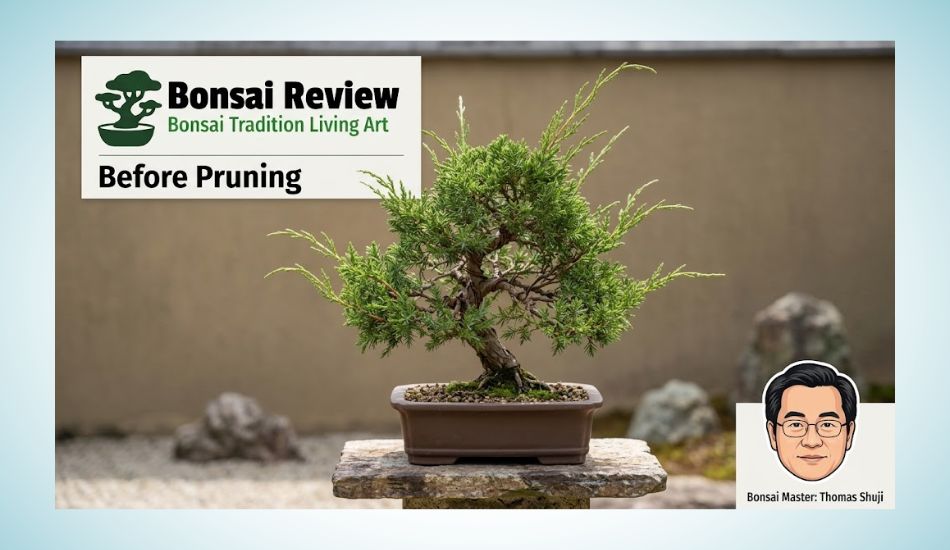
Bonsai Pruning Before and After: What to Look For
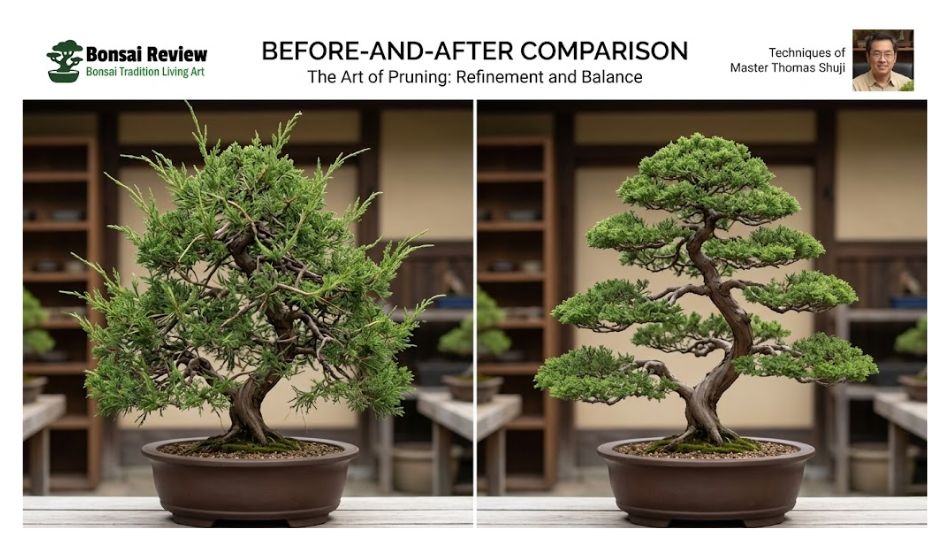
A before-and-after photo can show you more than a long explanation. It lets you see how a few careful cuts can improve the tree without removing too much growth.
Before you prune, take a photo from the same angle you plan to use after pruning. This makes the change easier to compare.
1. Before pruning
Look for the areas that make the tree look crowded.
You may see:
- Long shoots sticking outside the main shape
- Branches crossing each other
- Dead or damaged twigs
- Growth pointing toward the trunk
- Several branches competing for the same space
Do not assume every crowded branch needs to go. First decide which growth helps the tree’s structure.
2. Show the cut location
For your pruning photos, place the bonsai pruning shears next to the branch before cutting. Mark or point to the exact place where the blade will go.
This gives you useful visual proof. Your reader can see both the tool and the cut location, rather than only seeing the finished tree.
For a small shoot, show the healthy bud or leaf node just below the planned cut.
For a larger branch, show the branch collar and the point just outside it.
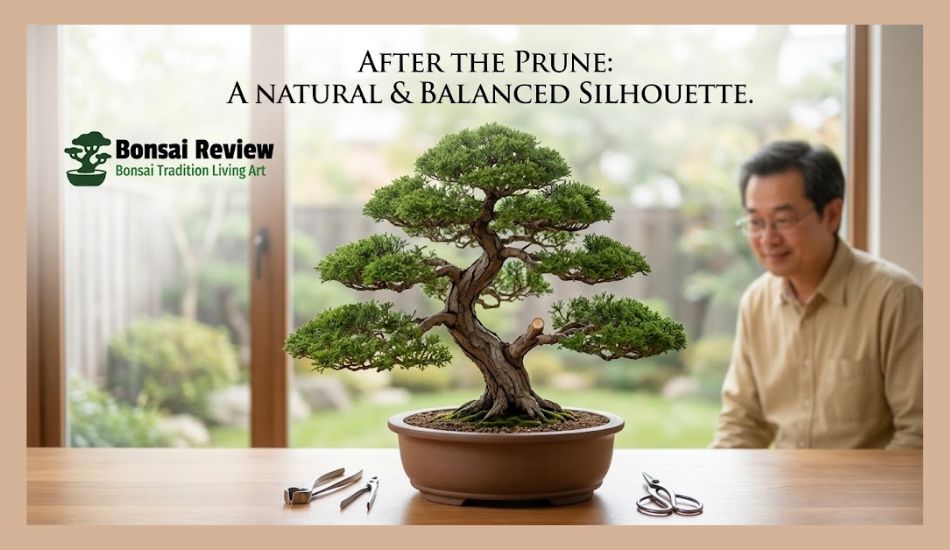
3. After pruning
Take the second photo from the same position.
The goal is not to make the tree look bare. You should be able to see that:
- The main branches have more space.
- Long shoots no longer distract from the shape.
- The tree has a clearer outline.
- Healthy growth remains.
- The trunk and main structure are easier to see.
If your after-photo shows large empty areas or a sudden loss of foliage, you may have removed too much.
The best before-and-after example shows the reason for every important cut. It helps you understand that bonsai pruning is not simply cutting branches. It is choosing which growth to keep and which growth no longer helps the tree.
Common Bonsai Pruning Mistakes to Avoid
Pruning mistakes are easy to make when you are new to bonsai. Most happen because you cut too quickly or remove more growth than the tree needs.
1. Cutting without a plan
Do not start by removing the first branch that looks out of place.
Look at the whole tree first. Decide what you want to improve, then make only the cuts that support that goal.
2. Pruning too much at once
Removing many healthy branches can leave your bonsai weak and unbalanced.
Start with the obvious problems. Step back after a few cuts. If the shape already looks better, stop.
3. Cutting too close to a bud
A cut made directly through a healthy bud can damage the growth point.
Leave a small amount of stem above the bud. This gives the new growth room to develop.
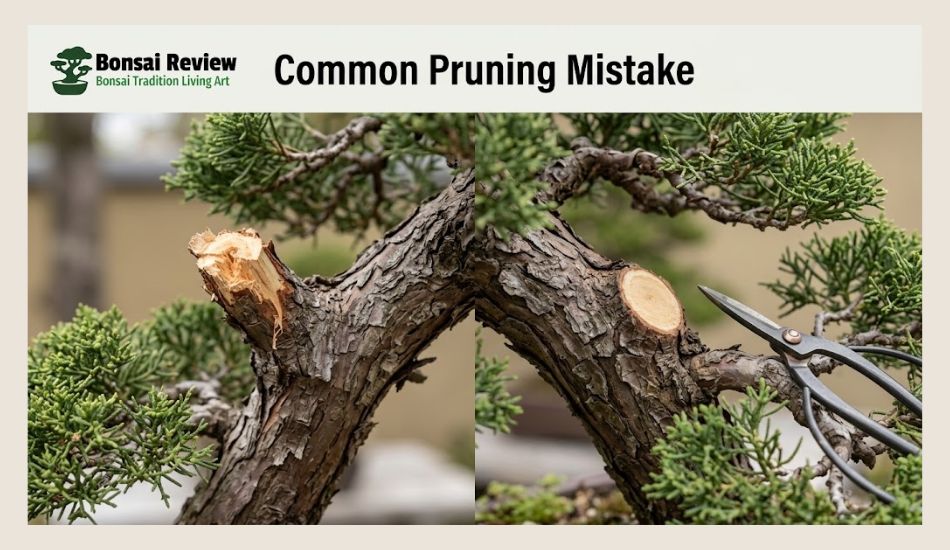
4. Leaving long stubs
A long branch stub can die back and leave an untidy area.
When removing a larger branch, make the cut in the correct place near the branch collar rather than leaving a large piece behind.
5. Cutting into old bare wood on a juniper
This is an important mistake to avoid with Juniper bonsai.
If a branch has no green foliage, do not assume new growth will appear after you cut it back. Keep healthy green growth when pruning a juniper.
6. Using dull or dirty tools
A dull blade can crush the branch instead of making a clean cut. Dirty tools can also move problems between plants.
Clean your tools before and after pruning and keep the cutting edges sharp.
7. Pruning a stressed tree heavily
If your bonsai is already weak, major pruning adds more stress.
Deal with problems such as poor watering, pests, root issues, or severe leaf loss before doing heavy structural work.
When you are unsure, make the smaller cut. You can always remove more later, but you cannot quickly replace a healthy branch you removed by mistake.
Bonsai Care After Pruning
Pruning does not end when you put the shears down. Your bonsai needs steady care while it responds to the cuts.
1. Give the tree normal care
After light pruning, keep your bonsai in its usual suitable growing spot. Give it the light, water, and airflow it normally needs.
Do not suddenly change everything because you pruned it.
2. Check the soil before watering
Do not water on a fixed schedule just because the tree was pruned.
Check the soil first. If the soil is dry and the tree needs water, water it thoroughly. If it is still wet, wait.
Too much water after pruning can create a different problem, especially if the roots are already struggling.
3. Avoid heavy work right away
If you have done major structural pruning, avoid adding more stress at the same time.
Do not immediately combine heavy pruning with other major work unless you know the species can handle it. For example, repotting and heavy root pruning at the same time as major branch removal can be too much for some trees.
4. Watch the new growth
Over the next few weeks, look for healthy new shoots and leaves.
You can also check the cut areas. A healthy tree should continue its normal growth pattern when the timing and pruning method were suitable.
5. Know when to stop
If the tree starts showing serious signs of stress after heavy pruning, do not keep cutting to fix its appearance.
Focus on basic care first. Let the tree recover before you make another major shaping decision.
Good after-pruning care is simple: keep the tree stable, watch its response, and give it time. Your next pruning session should begin only after you understand how the tree responded to the last one.
Quick Bonsai Pruning Checklist for Beginners
Keep this checklist beside you before you start pruning. It can help you slow down and avoid unnecessary cuts.
1. Before you cut
- Identify your bonsai species.
- Check that the tree is healthy enough for pruning.
- Look at the tree from several sides.
- Decide what you want to improve.
- Clean and sharpen your pruning tool.
- Find dead, damaged, crossing, or unwanted growth.
2. For each cut
Ask yourself:
A. Why am I removing this branch?
If you do not have a clear reason, leave it for now.
B. Where should the cut go?
Check the nearest healthy bud, leaf node, or branch collar.
C. Which direction will the new growth take?
Choose a bud that supports the shape you want.
D. Am I removing too much?
If you are unsure, make the smaller cut first.
3. After a few cuts
Put the shears down and step back.
Check whether the tree still looks balanced. Turn it around and look at the branches from different sides.
If the main problem is fixed, you may not need another cut.
4. Before you finish
Take an after-photo from the same angle as your before-photo. Compare the two images.
Your goal should be a tree with better spacing, a clearer shape, and enough healthy growth to keep developing.
Beginner rule: You should be able to explain every important cut you make. If you cannot explain it, wait.
Should You Cut a Bonsai Branch or Leave It?
Not every branch that looks messy needs to be removed. When you are unsure, take a closer look before making the cut.
A healthy branch may become useful as the tree grows. It can fill an empty space, add depth, or help create the shape you want.
1. Keep the branch when:
- It fills an empty part of the tree.
- It grows in a useful direction.
- It has healthy leaves or new growth.
- Removing it would leave a large gap.
- You are still unsure how it will fit the final shape.
2. Consider removing it when:
- It crosses and rubs against another important branch.
- It grows directly toward the trunk.
- It is dead or badly damaged.
- It creates a crowded area.
- It grows far outside the shape you want and cannot be shortened well.
3. When in doubt, wait
Waiting is often the better choice for a beginner.
Take a photo of the tree and look at it again after a few days. You may notice the shape more clearly when you are no longer focused on one branch.
You can also use temporary wire to understand how a flexible branch might sit before deciding to remove it.
Remember: pruning is permanent. Leaving a branch for now is not. If you later decide that the branch does not help the tree, you can still remove it at the right time.
How Often Should You Prune a Bonsai?
You do not need to prune your bonsai on a fixed weekly or monthly schedule. Prune when new growth starts changing the shape of the tree or when unwanted growth needs to be removed.
A fast-growing bonsai may need light maintenance several times during its growing season. A slower tree may need much less.
1. Check your bonsai regularly
Take a quick look at your tree every few days during active growth. You are not looking for reasons to cut. You are simply checking how the new shoots are developing.
If a shoot has grown beyond the shape you want, you can decide whether it needs trimming.
2. Light pruning is different from major pruning
- Light maintenance pruning can be repeated when new shoots become too long. You are mainly controlling growth and keeping the existing shape.
- Major structural pruning should not be repeated every few weeks. It removes larger branches and can take much longer for the tree to recover from.
3. Let the tree guide you
Your bonsai may need more pruning when:
- New shoots grow quickly.
- The outline becomes uneven.
- Branches start crossing.
- One area becomes much denser than another.
- New growth hides the tree’s main structure.
It may need less pruning when growth is slow or the tree is entering dormancy.
The best pruning schedule is based on your tree’s growth, not a calendar. Check the bonsai often, make small corrections when needed, and save major cuts for the right season and the right reason.
What If You Pruned Your Bonsai Too Much?
If you removed more growth than planned, do not try to fix the tree with more cuts. Stop pruning and give the bonsai time to recover.
A tree can often respond to pruning by producing new growth, but recovery depends on the species, season, health of the tree, and how much was removed.
1. Keep care steady
Return to the tree’s normal care routine.
Give it suitable light and water based on its needs. Do not keep changing its location or watering habits because the tree looks different after pruning.
2. Do not remove more branches
It can be tempting to cut more branches to make the new shape look even. Avoid this.
Wait and see how the remaining branches develop. New shoots may fill spaces that look empty now.
3. Watch for new growth
Over time, look for healthy buds and shoots. These can help rebuild the shape of the bonsai.
If one side grows faster than another, you can deal with that later. You do not need to correct everything in one pruning session.
4. Learn from the cut
Look at your before-and-after photos. Ask yourself:
- Did I remove more foliage than I intended?
- Did I cut a useful branch?
- Did I leave enough healthy growth?
- Could I have made a smaller cut?
This turns one mistake into a useful experience for your next pruning session.
Do not panic after one bad cut. The best response is usually to stop, provide steady care, and let the tree show you what it can do next.
A Simple Bonsai Pruning Routine You Can Repeat
You do not need a complicated pruning plan. Each time you work on your bonsai, follow the same basic order.
- Look: Start by checking the whole tree. Turn the pot and look at the branches from every side.
- Choose: Pick only the growth that needs attention. Start with dead, damaged, crossing, or clearly unwanted growth.
- Check: Before each cut, check the bud, leaf node, or branch collar. Make sure you know exactly where the blade will go.
- Cut: Use the correct sharp tool and make one clean cut. Avoid crushing or tearing the branch.
- Step back: After a few cuts, stop and look at the whole tree again. Check the balance before deciding whether to continue.
- Stop: Once the tree has the shape you want, finish the session. You do not need to remove every shoot that looks slightly out of place.
- Record: Take a photo after pruning. If you prune the same tree again later, you can compare the new growth with your earlier photos.
This simple routine helps you make purposeful cuts instead of random cuts. With practice, you will start to see which branches should stay, which ones need shortening, and which ones should be removed completely.
Your Beginner Bonsai Pruning Plan
If you are ready to prune your bonsai today, keep the process simple.
- First, check the tree: Make sure it is healthy and identify the growth that needs attention.
- Next, choose the cut: Start with dead, damaged, crossing, or clearly unwanted growth. Do not remove a healthy branch just because it looks slightly untidy.
- Then, check the cut location: Look for a healthy bud or leaf node on small shoots. For larger branches, find the branch collar.
- Use the right tool: Keep your pruning shears or other cutting tools clean and sharp.
- Make one clean cut: Do not crush, twist, or tear the branch.
- Step back and check: Look at the entire bonsai after a few cuts. If the shape is already balanced, stop.
- Take an after-photo: Compare it with your before-photo so you can see whether each major cut improved the tree.
The goal is simple: remove what the tree does not need while keeping enough healthy growth for the bonsai to continue developing.
Conclusion: What Is the Right Way to Prune a Bonsai for Beginners?
Bonsai pruning becomes easier when you stop thinking about how much you can cut and start thinking about what the tree actually needs.
Check the tree first. Remove dead, damaged, crossing, or unwanted growth. For small shoots, look for a healthy bud or leaf node before cutting. For larger branches, find the branch collar and make a clean cut just outside it.
Prune lightly when you are maintaining the shape, and take more time with major structural cuts. Your bonsai species also matters, so do not use the same pruning rule for every tree.
If you are unsure about a branch, leave it for now. You can always make another cut later, but you cannot put a removed branch back.
Take a before photo, show the tool and cut location, then take an after photo. With each pruning session, you will learn how your tree grows and which cuts give you the best result.
For a beginner, that is the real goal: make fewer, better cuts and let your bonsai show you what it needs next.
Helpful article: Best Bonsai Tools Set 2026 What You Really Need to Get Started
Bonsai Pruning FAQs: How Often Should You Prune a Bonsai Tree?
1. When is the best time to prune a bonsai?
The best time depends on the bonsai species and the type of pruning. Many outdoor trees are pruned during suitable parts of their growing cycle, while tropical bonsai can often receive light trimming during active growth. Check your species before making major cuts.
2. Can I prune my bonsai whenever I see long branches?
You can often trim small unwanted shoots during active growth, but you should not treat every long branch the same way. Large structural cuts need more planning and better timing.
3. How much should you cut off a bonsai?
Start with the smallest cut that solves the problem. Remove only the growth you need to remove, then step back and check the tree. Avoid heavy pruning when the tree is weak or stressed.
4. Where should I cut a bonsai branch?
For small shoots, make the cut just above a healthy bud or leaf node. For larger branches, cut just outside the branch collar rather than cutting into the trunk.
5. Can you prune a bonsai too much?
Yes. Removing too much healthy foliage or too many important branches can stress the tree and change its shape. If you are unsure, make fewer cuts and wait.
6. Should you remove dead branches from a bonsai?
Yes. Dead or badly damaged growth can usually be removed. Use a clean, sharp tool and avoid damaging healthy tissue around the branch.
7. Can you prune a Juniper bonsai back to bare wood?
Be careful. Juniper bonsai may not produce new growth from old, bare sections of branch. Keep healthy green foliage on the part of the branch you want to retain.
8. Should you prune a bonsai before or after repotting?
Avoid automatically combining major pruning and repotting. Both can stress the tree. The right approach depends on the species, season, health, and amount of work involved.
9. Do you need special tools to prune a bonsai?
You can handle many beginner cuts with a good pair of sharp bonsai pruning shears. Larger structural branches may need a concave cutter. The important point is to match the tool to the branch size.
10. What should you do after pruning a bonsai?
Return to normal care for the species. Keep the tree in a suitable environment, check the soil before watering, and watch the new growth. Avoid making more major cuts until you can see how the tree responds.