


Bonsai home décor is one of the easiest ways to make your room feel alive, calm, and beautiful. You may have a shelf, table, or corner that still looks empty even after adding pictures, lamps, or other decorations. A bonsai tree can help fill that space naturally.
A traditional living art bonsai home decor plant sitting alone on a windowsill can look like a reflection. The same tree, placed on a wooden stand, set in a glazed pot, and surrounded by smooth accent stones, looks like a piece you chose on purpose.
That difference is what bonsai home decor is really about. It is not just owning a small tree. It is choosing the right pot, stand, and finishing touches so the tree becomes part of your room’s design, not just another plant you forgot to water.
This guide walks you through how to style bonsai trees in any room, which containers and accents actually make a difference, and the small mistakes that make a beautiful tree look out of place. If you already own a bonsai or you are decorating around your first one, you will leave with a clear plan.
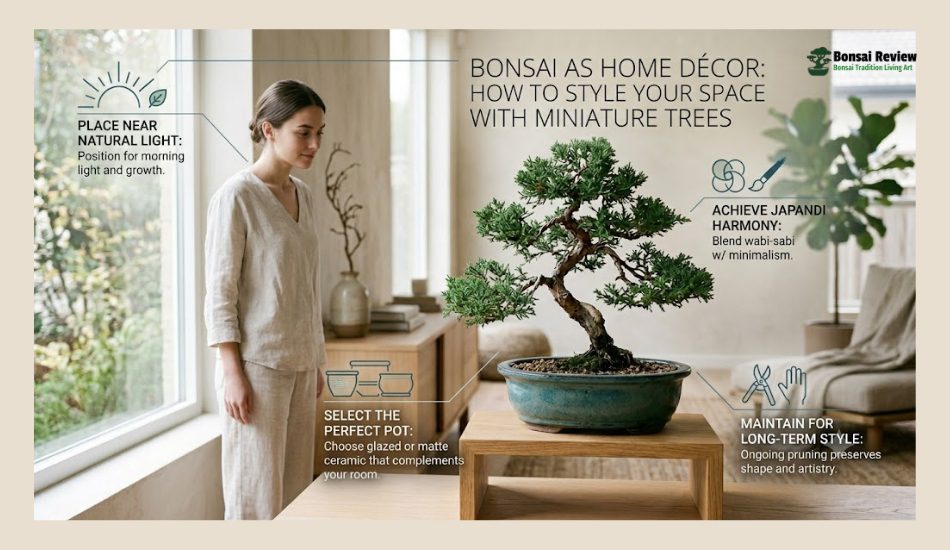
Why Is Bonsai Home Decor Becoming So Popular?
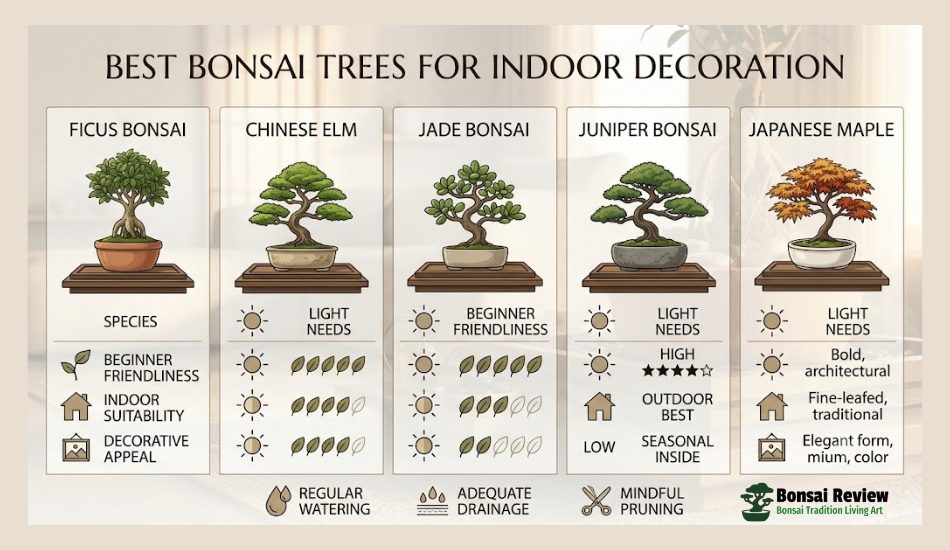
A bonsai is a miniature tree grown in a small pot. It brings the beauty of nature into your home without needing much space. That is why many people use bonsai in living rooms, bedrooms, home offices, and entryways. A simple display with a Ficus Bonsai, Chinese Elm, or Jade Bonsai can become a focal point that catches the eye.
The secret is not just the live tiny plant. The right ceramic bonsai pot, wooden stand, accent stones, moss, and humidity tray can make the display look complete.
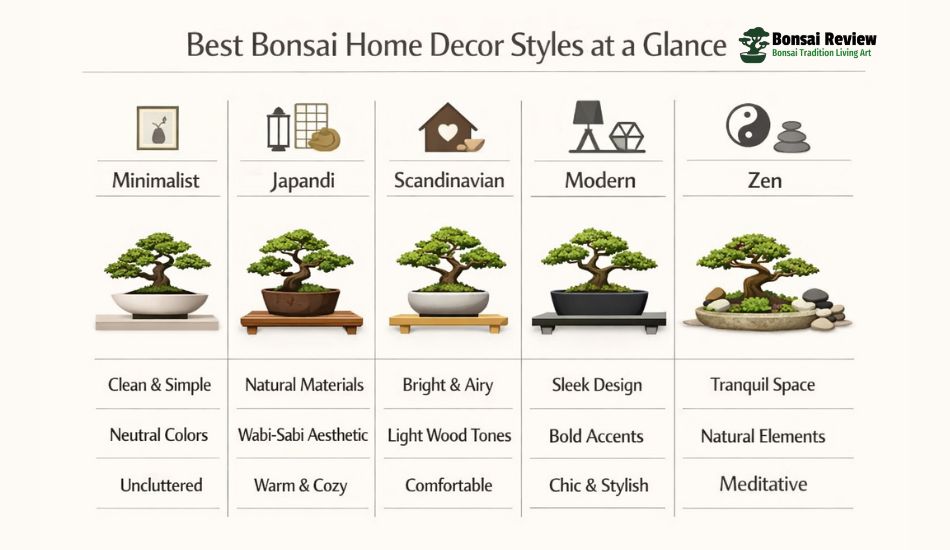
Bonsai also fits many popular styles, including minimalist decor, Japandi style, Scandinavian design, Zen-inspired spaces, and biophilic design.
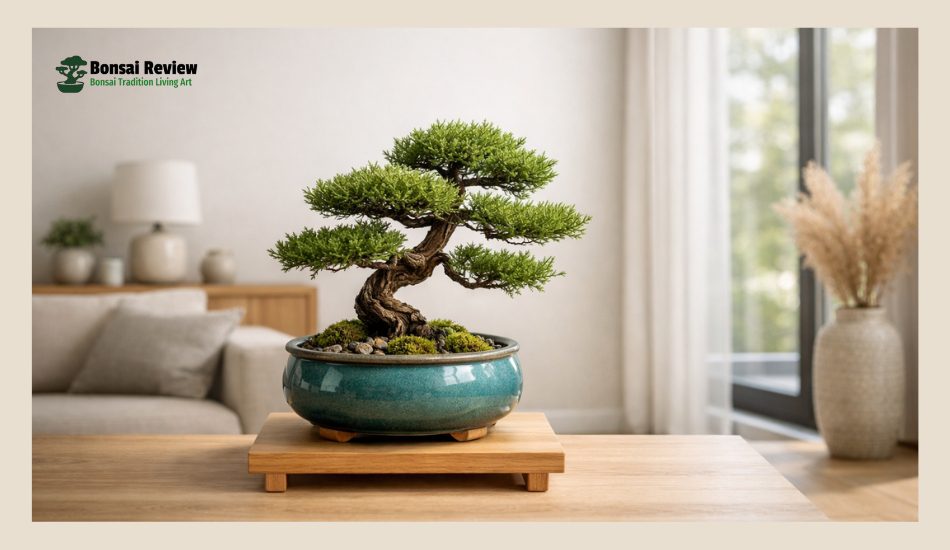
Quick Guide: How to Style Bonsai as Home Decor?
- Match the pot color and shape to your room’s color palette
- Raise the tree on a stand to give it presence, not just floor space
- Add accent stones or moss for a finished, gallery-style look
- Use a humidity tray to protect furniture and keep the display tidy
- Place the tree where it gets indirect light and stands out as a focal point.
If you want your home to look more peaceful and stylish without a major makeover, bonsai can be a simple solution. Where you will place a bonsai living art, how to style it, which trees work best indoors, and what accessories can help create a beautiful display.
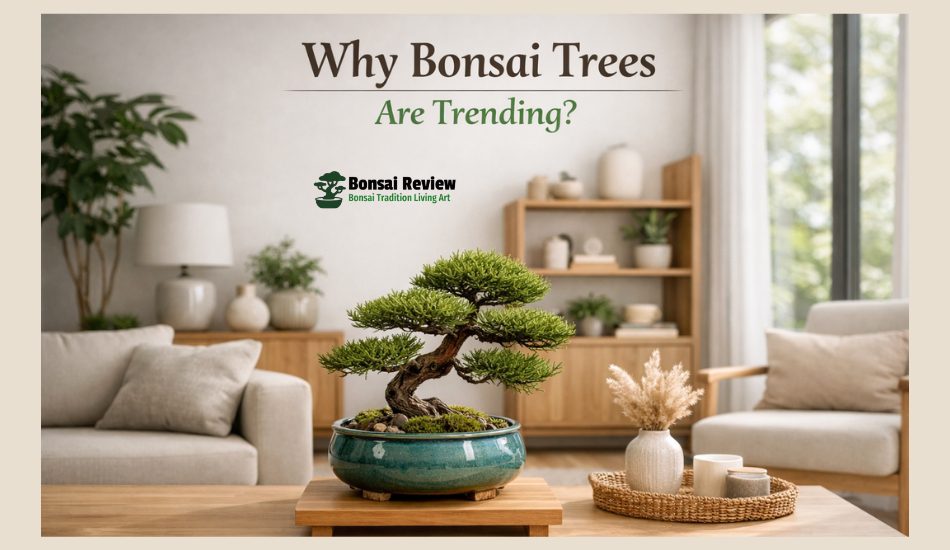
Why Bonsai Trees Are Trending in Home Décor?
The tradition of living art bonsai started in China over a thousand years ago as the art of growing trees in containers. And it was later refined into the detailed shaping practice most people picture today through Japanese horticulture. That history matters here for one reason: a bonsai was always meant to be displayed, not just grown.
This is different from a regular houseplant. A monstera or a pothos fills space. A bonsai is shaped, pruned, and positioned to be looked at, almost like a small sculpture that happens to be alive.
That is also why bonsai fits so naturally into the current wave of biophilic design, the idea of bringing natural elements into indoor spaces to make rooms feel calmer and more grounded. A well-styled bonsai gives you that effect in a single small footprint, which is part of why it works in apartments, offices, and minimalist homes where space is limited.
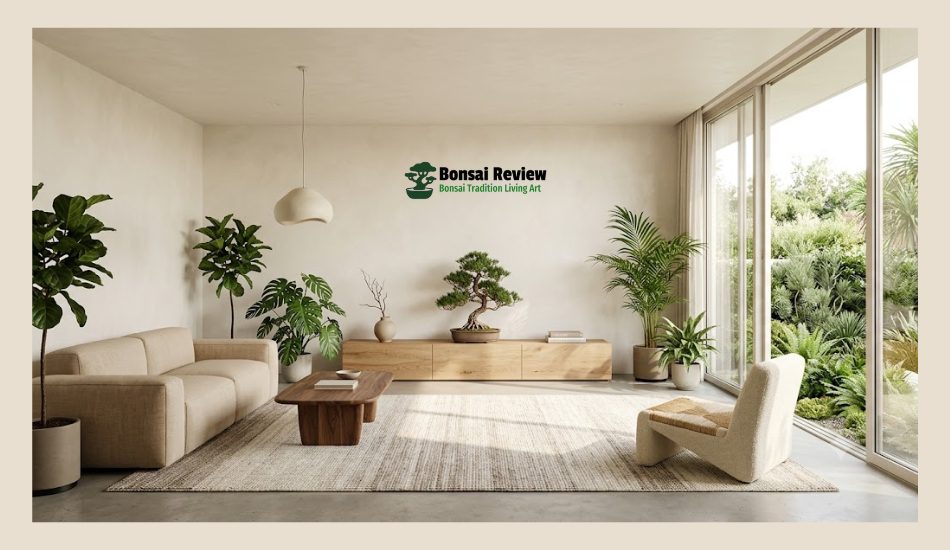
Can Bonsai Trees Fit Into Any Interior Design Style?
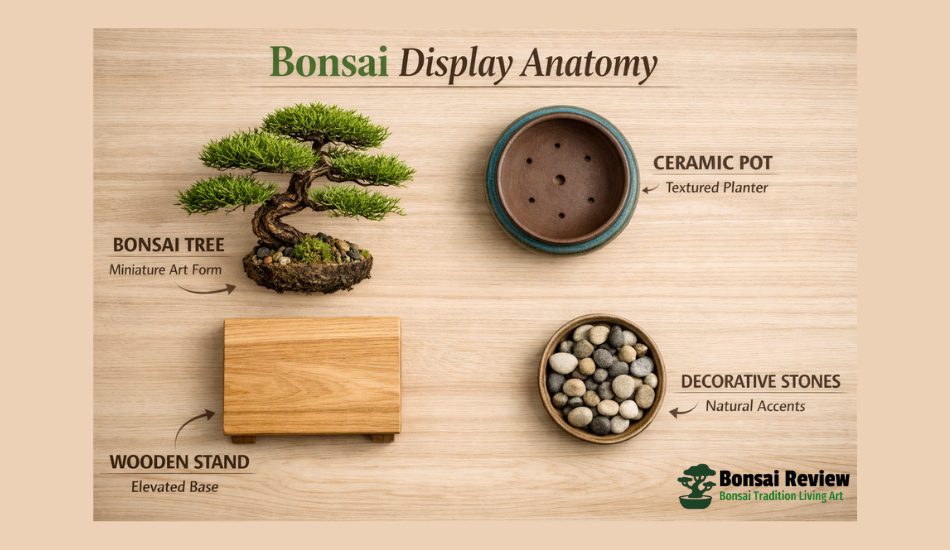
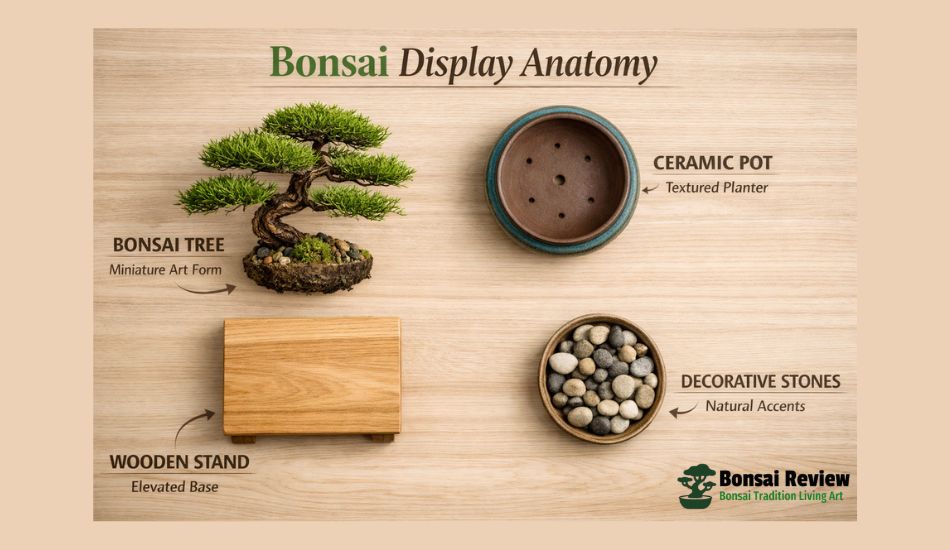
Most people focus only on the tree and forget that decor is about the whole picture. What Makes a Bonsai Display Look Decorative, Not Just “Planted”? Designers often think of a bonsai display as four parts working together:
- The tree itself: its shape, height, and leaf color
- The pot: the container that grounds the whole look
- The stand or base: what lifts it off the table
- The accents: stones, moss, or sand that finish the scene
When even one of these pieces is missing or mismatched, the bonsai reads as “just a plant.” When all four work together, it reads as styled decor. The next sections cover how to get each piece right.
How to Choose a Bonsai Style for Each Room?
Not every room calls for the same kind of bonsai display. Light, furniture style, and how the room is used all change what works best.
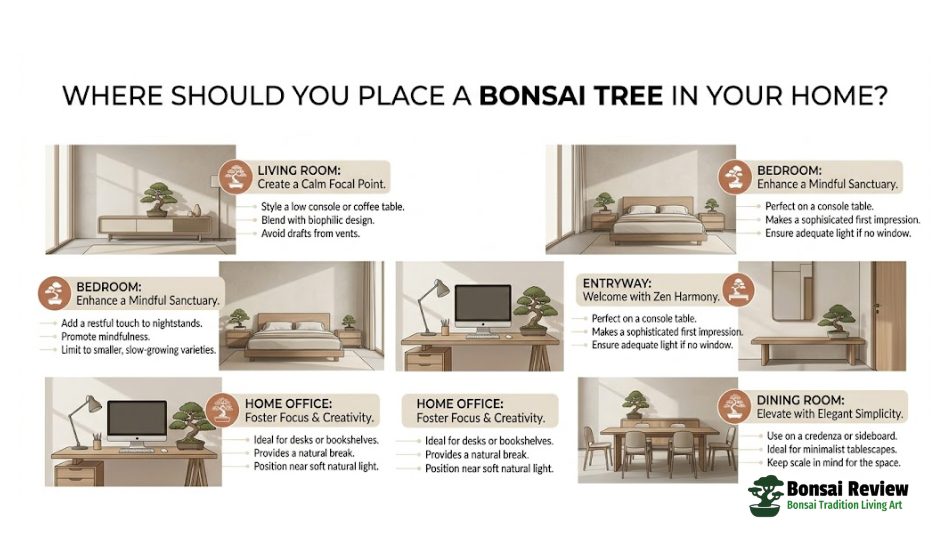
1. Living Room Bonsai Home Decor
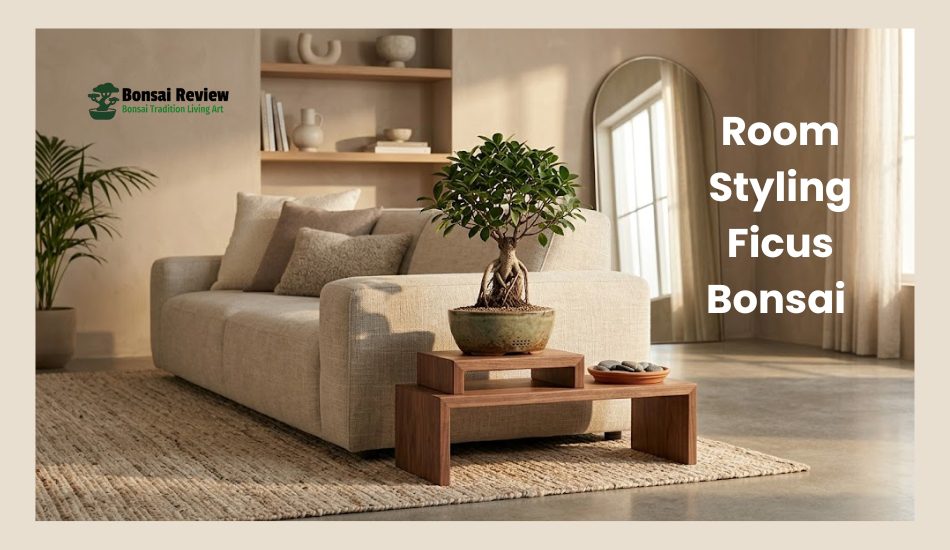
This is usually the best spot for a larger, more dramatic bonsai, since it is the room guests see first. A juniper or ficus bonsai on a low wooden stand next to a sofa or media console creates a natural focal point without crowding the space.
2. Bedroom Minimal Lighting with Bonsai Home Decor
Bedrooms call for something calmer. A smaller jade or ficus bonsai on a nightstand, paired with a simple unglazed pot, fits the quieter mood of the room better than a bold, sculptural shape.
3. Home Office Bonsai Simple Decor
A bonsai on a desk or shelf adds a calming visual break during work hours. Choose a compact pot that will not tip over near a keyboard, and keep the display simple so it does not compete with your workspace.
4. Kitchen or Dining Nook Special Space with Bonsai Home Decor
Bright kitchens with good natural light suit a bonsai well, especially on a windowsill or open shelf. A humidity tray here does double duty, since it also protects countertops from water rings.
5. Entryway Bonsai Home Decor
An entryway bonsai sets the tone for the whole home. A taller specimen on a pedestal stand, placed near the door, gives visitors a strong first impression without needing much floor space.
The Décor Essentials: Pots, Stands, Accent Stones, and Humidity Trays
This is where bonsai home decor really comes together. These four pieces are what separate a styled display from a plant that happens to be small.
1. Choosing the Right Pot for Your Bonsai
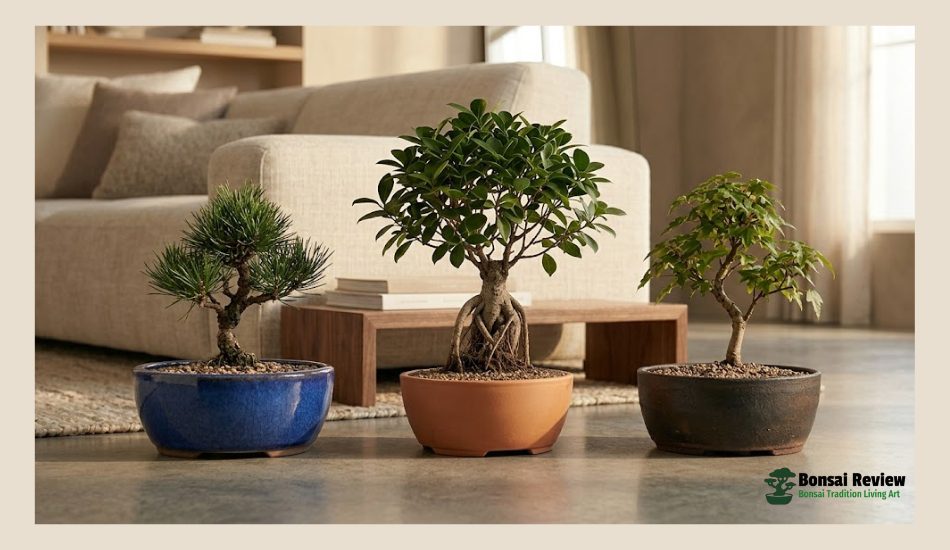
The pot is the single biggest factor in how decorative a bonsai looks. A good rule of thumb is that the pot’s width should be roughly two-thirds the spread of the tree’s canopy, so the tree always looks like the main subject.
Glazed ceramic pots in muted blues, greens, or earth tones tend to suit modern and Japandi-style rooms, while unglazed terracotta or stoneware works better in rustic or traditional interiors. Always check that the pot has drainage holes, since trapped water is one of the fastest ways to damage bonsai roots.
2. Elevating With Stands and Risers
A bonsai placed directly on a table often gets visually lost among other items. A simple wooden or stone stand raises it to its own level, literally and visually, and gives it the same kind of presence as a piece of art on an easel.
If you are styling more than one bonsai, using stands of slightly different heights creates a more natural, gallery-like arrangement than lining them up flat.
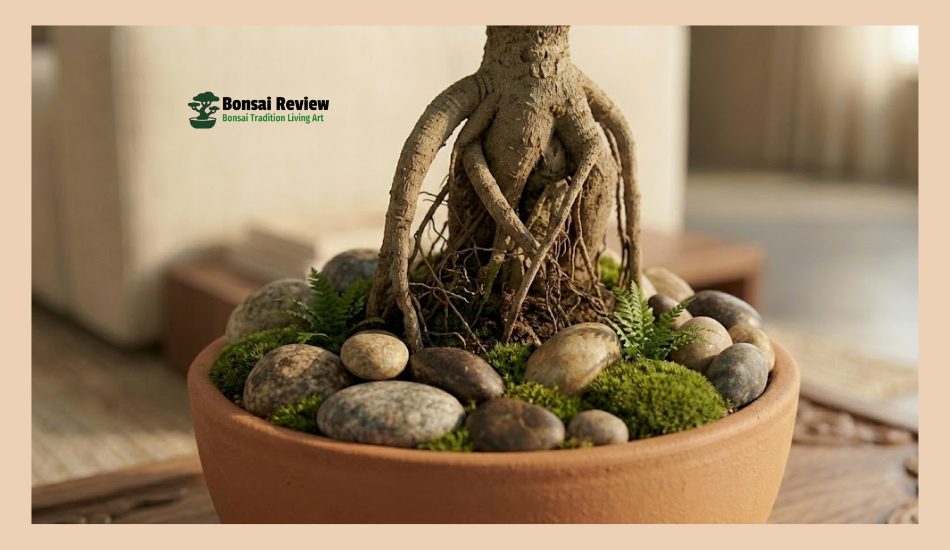
3. Accent Stones and Companion Planting
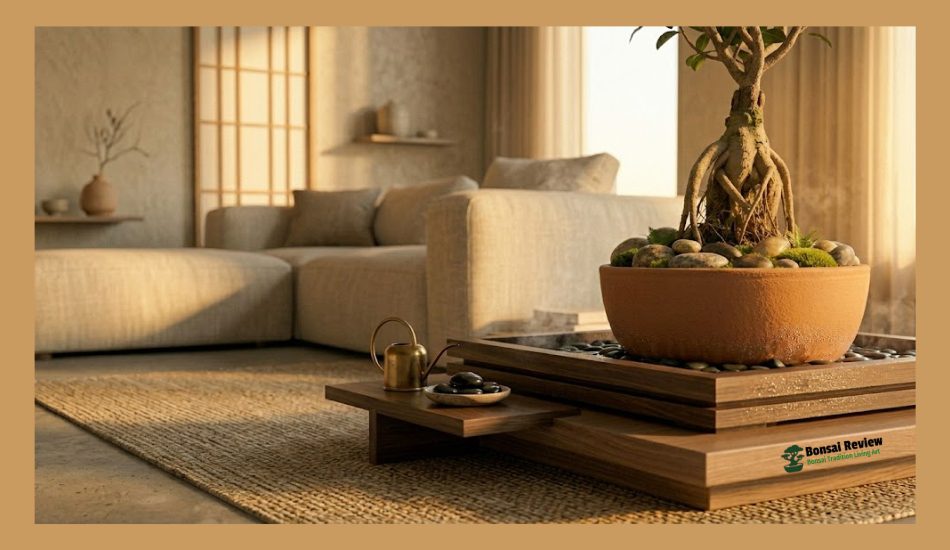
Smooth river stones, small moss patches, or fine gravel placed around the base of the trunk finish the display the way a frame finishes a painting. In Japanese garden tradition, carefully chosen stones called suiseki are sometimes displayed alongside bonsai for exactly this reason, to add texture and balance to the scene.
Keep this layer simple. One or two stone colors and a single moss type usually look more intentional than a busy mix.
4. Why Humidity Trays Are a Styling Must-Have, Not Just a Care Tool
Most indoor air is too dry for a bonsai, which can lead to crisp, browning leaf tips. A humidity tray, a shallow tray filled with water and pebbles that the pot sits above, raises moisture around the tree without waterlogging the roots.
From a decor standpoint, a humidity tray also protects shelves and furniture from water damage and gives the whole display a clean, finished base, instead of a pot sitting directly on bare wood.
Best Interior Design Styles to Pair With Bonsai
Bonsai is flexible enough to fit several design styles, not just traditional Japanese rooms.
- Japandi: Pairs naturally with bonsai’s clean lines and neutral pots, fitting the style’s mix of Japanese simplicity and Scandinavian warmth.
- Minimalist interiors: A single bonsai on a plain stand becomes the room’s one statement piece, which suits a less-is-more approach.
- Mid-century modern: Tapered stands and warm wood tones echo the era’s furniture lines.
- Boho or eclectic spaces: Textured stone trays and varied pot shapes add organic interest without looking out of place among other patterns.
- Wabi-sabi inspired rooms: Slightly irregular pots and natural stone accents support this style’s appreciation for imperfect, organic beauty.
What Bonsai Accessories Make a Display Look More Expensive?
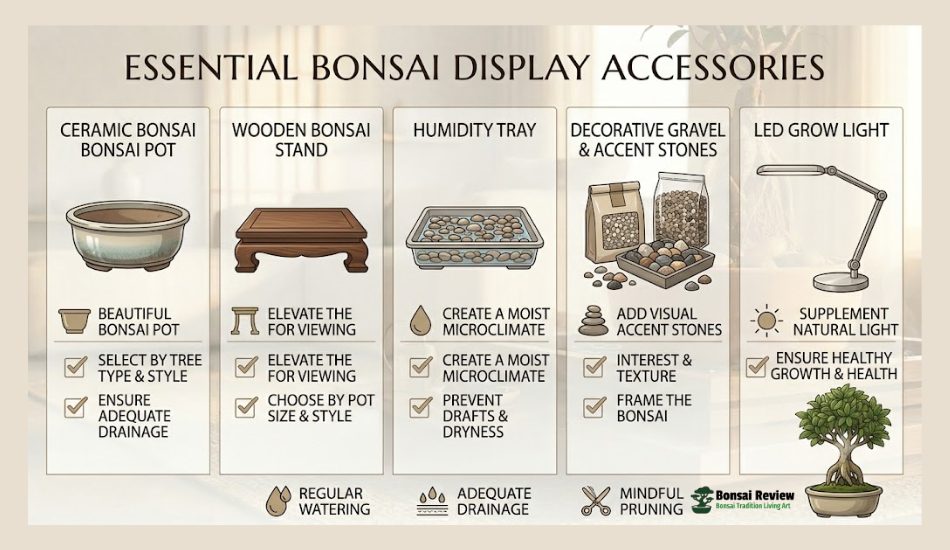
A beautiful bonsai tree is the star of the display, but the accessories around it can make the whole setup look more polished and high-end. You do not need a large budget. A few well-chosen pieces can turn a simple bonsai into a stylish home decor feature.
1. Ceramic Pots
The pot is often the first thing people notice after the tree itself. A quality ceramic bonsai pot instantly makes a display look more refined. Smooth finishes, clean lines, and colors that match your room can help create a balanced look.
For modern spaces, white, gray, or black glazed pots work well. If you prefer a natural style, unglazed earth-tone pots blend nicely with wood furniture and indoor plants. Always choose a pot that fits the size of the tree. A pot that is too large or too small can make the display feel awkward.
2. Wooden Stands
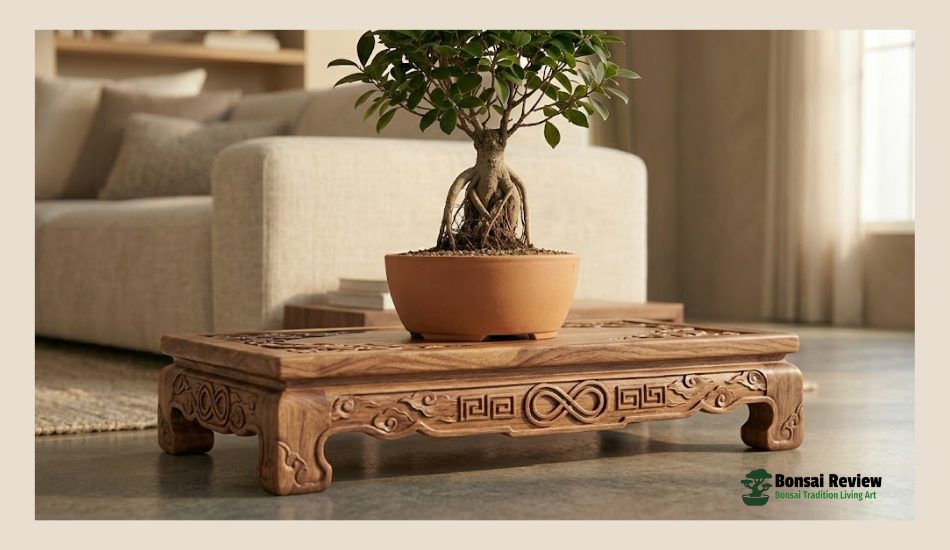
A bonsai stand lifts the tree and gives it more visual importance. Even a small stand can make a bonsai look like a carefully chosen design piece instead of just another plant.
Natural wood stands work especially well in minimalist, Japandi, Scandinavian, and Zen-inspired interiors. They also create separation between the tree and the table surface, helping the bonsai become a focal point.
3. Humidity Trays
Many people buy humidity trays for plant health, but they can also improve appearance. A well-designed tray creates a clean base under the bonsai while protecting furniture from water spots. When filled with decorative pebbles, a humidity tray looks neat and intentional. It hides excess water and adds another layer of texture to the display.
4. Decorative Gravel and Accent Stones
Decorative gravel can completely change the look of a bonsai arrangement. Small stones cover the soil surface and create a finished appearance. They also help the display look cleaner and more professional.
White gravel creates a modern feel. Black stones add contrast. Natural river pebbles work well in organic and nature-inspired spaces. Some bonsai owners also place a few accent stones beside the pot to create the look of a miniature landscape.
5. LED Grow Lights
Low light is one of the biggest challenges for indoor bonsai. An LED grow light solves that problem while helping your display stay attractive year-round.
Modern grow lights are much more stylish than older models. Many blend into shelves, plant stands, or home office setups without drawing attention. This allows your bonsai to stay healthy even in rooms that receive limited natural sunlight.
What Accessories Do You Need for a Bonsai Home Display?
If you want a display that looks elegant without spending too much, start with these essential recommended accessories for a beginner bonsai display:
| Accessory | Why It Helps |
| Ceramic Bonsai Pot | Creates a premium and finished appearance |
| Wooden Bonsai Stand | Adds height and makes the tree stand out |
| Humidity Tray | Protects furniture and improves presentation |
| Decorative Gravel | Covers soil and creates a clean look |
| Accent Stones | Adds texture and visual interest |
| LED Grow Light | Supports healthy growth in low-light rooms |
You do not need every accessory at once. A ceramic pot, wooden stand, and decorative gravel are often enough to make a bonsai display look far more expensive than it actually is. As your collection grows, you can add humidity trays, accent stones, and grow lights to create an even more impressive bonsai home decor setup.
How Can You Match Bonsai With Different Interior Design Styles?
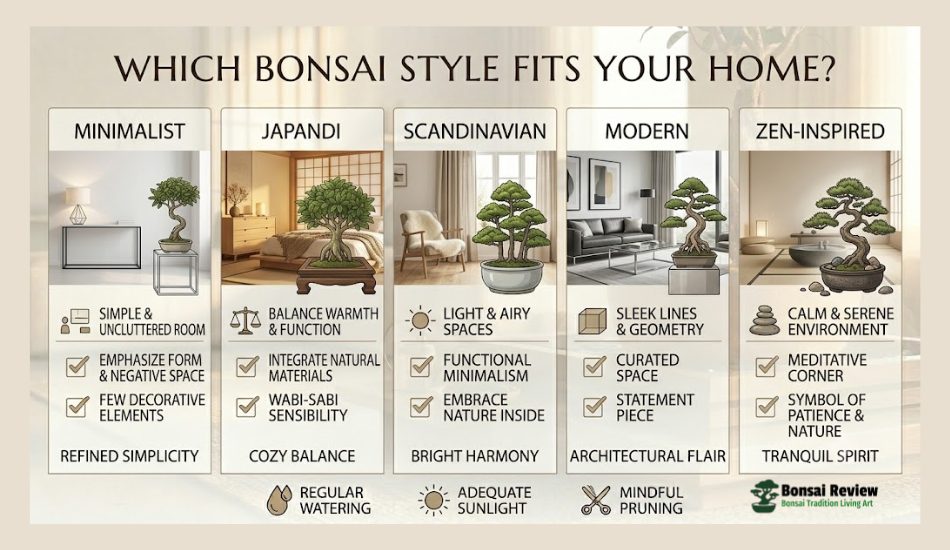
One reason bonsai home decor is so popular is that it works with almost any decorating style. Whether your home is simple, modern, cozy, or inspired by nature, the right bonsai can fit in beautifully. The key is choosing the right tree, pot, stand, and placement.
1. Minimalist Style
Minimalist spaces focus on simplicity and clean lines. Every item has a purpose, and clutter is kept to a minimum. A bonsai can become a natural focal point without making the room feel crowded. Choose a simple tree shape and place it in a plain ceramic pot with neutral colors such as white, black, gray, or beige. A single bonsai on a shelf, side table, or console table often creates the strongest visual impact.
Best choices:
- Ficus Bonsai
- Chinese Elm
- Simple ceramic pots
- Clean wooden stands
2. Japandi Style
Japandi combines Japanese simplicity with Scandinavian comfort. This style values natural materials, calm colors, and thoughtful design.
Bonsai fits naturally into a Japandi home because both share a love for balance and nature. A bonsai displayed on a wooden stand with accent stones, moss, and an earth-toned pot can create a peaceful and welcoming atmosphere.
Best choices:
- Chinese Elm
- Japanese Maple
- Unglazed ceramic pots
- Natural wood stands
- Decorative moss
3. Scandinavian Style
Scandinavian design focuses on light, warmth, and function. White walls, natural wood, and soft textures are common features.
A bonsai adds a touch of greenery without taking up much space. Place it near a bright window or on a floating shelf where it can receive natural light. Light-colored pots and simple accessories help maintain the airy feel that Scandinavian rooms are known for.
Best choices:
- Jade Bonsai
- Ficus Bonsai
- Light ceramic pots
- Wooden shelves
- White decorative gravel
4. Modern Style
Modern interiors often feature bold shapes, clean surfaces, and a simple color palette. A bonsai can soften these sharp lines while adding texture and life.
Look for trees with strong trunk movement and pair them with sleek ceramic pots. Black, white, or dark gray containers work especially well in modern homes. A bonsai displayed on an accent table or floating shelf can become a striking design feature.
Best choices:
- Ficus Bonsai
- Juniper Bonsai
- Glossy ceramic pots
- Metal or wood display stands
5. Zen-Inspired Spaces
Zen-inspired rooms are designed to promote calm, focus, and relaxation. Natural materials, open space, and balance play an important role.
Bonsai has deep roots in mindfulness and patient care, making it a perfect addition to a Zen-inspired setting. Pair the tree with accent stones, moss, a humidity tray, and soft natural lighting. Avoid overcrowding the area. A simple arrangement often creates the most peaceful feeling.
Best choices:
- Juniper Bonsai
- Chinese Elm
- Natural stone accents
- Moss-covered soil
- Wooden bonsai stands
6. Quick Style Matching Guide
| Interior Design Style | Best Bonsai Choices | Recommended Accessories |
| Minimalist | Ficus Bonsai, Chinese Elm | Simple ceramic pot, wooden stand |
| Japandi | Chinese Elm, Japanese Maple | Moss, natural wood stand, accent stones |
| Scandinavian | Jade Bonsai, Ficus Bonsai | Light-colored pot, decorative gravel |
| Modern | Ficus Bonsai, Juniper Bonsai | Sleek ceramic pot, display shelf |
| Zen-Inspired | Juniper Bonsai, Chinese Elm | Humidity tray, moss, natural stones |
The best bonsai display does not fight against your decorating style. Instead, it works with your furniture, colors, and natural light to create a space that feels balanced, welcoming, and connected to nature.
Where to Place Your Bonsai for the Best Visual Impact
Placement affects both how healthy the tree stays and how good it looks.
Most indoor bonsai do best near an east- or west-facing window, where they get bright, indirect light without the intense heat of direct afternoon sun.
Avoid spots near heating vents, air conditioners, or drafty doors, since sudden temperature swings stress the tree and can cause leaf drop.
For visual impact, place the bonsai at or near eye level rather than low on the floor, and give it some breathing room rather than crowding it next to other decor.
If you are grouping more than one, odd numbers (three is a common choice) tend to look more balanced than pairs.
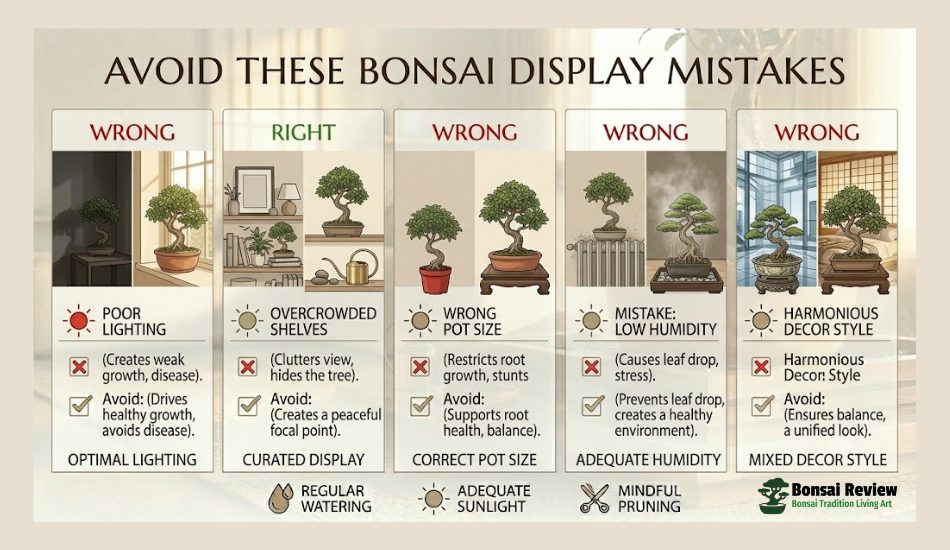
Common Tiny Plants Decorating Mistakes to Avoid Bonsai Home Décor.
A bonsai can make your home look stylish and peaceful, but a few decorating mistakes can ruin both the appearance of the display and the health of the tree. Before setting up your bonsai home decor, check these common problems and their simple solutions.
| Mistake | Why It’s a Problem | Better Solution |
| Poor Lighting | A bonsai may look beautiful in a dark corner, but many species need bright light to stay healthy. Low light can cause weak growth, yellow leaves, and poor tree health. | Place your bonsai near a bright window or use an LED grow light if natural sunlight is limited. |
| Overcrowding Shelves | Too many decorations around a bonsai make the display look cluttered. The tree loses its visual impact and no longer serves as a focal point. | Leave some negative space around the bonsai so the tree can stand out naturally. |
| Wrong Pot Size | A pot that is too large can make the tree look small and unbalanced. A pot that is too small may look cramped and restrict root growth. | Choose a bonsai pot that matches the tree’s size, style, and proportions. |
| Ignoring Humidity | Indoor air can become very dry, especially during winter or when air conditioning is used. Low humidity may stress some bonsai species. | Use a humidity tray filled with pebbles and water to help maintain moisture around the tree. |
| Mixing Decor Styles | A rustic bonsai display placed in an ultra-modern room may look out of place. Conflicting styles can make the space feel disconnected. | Match the bonsai pot, stand, and accessories to your existing interior design style. |
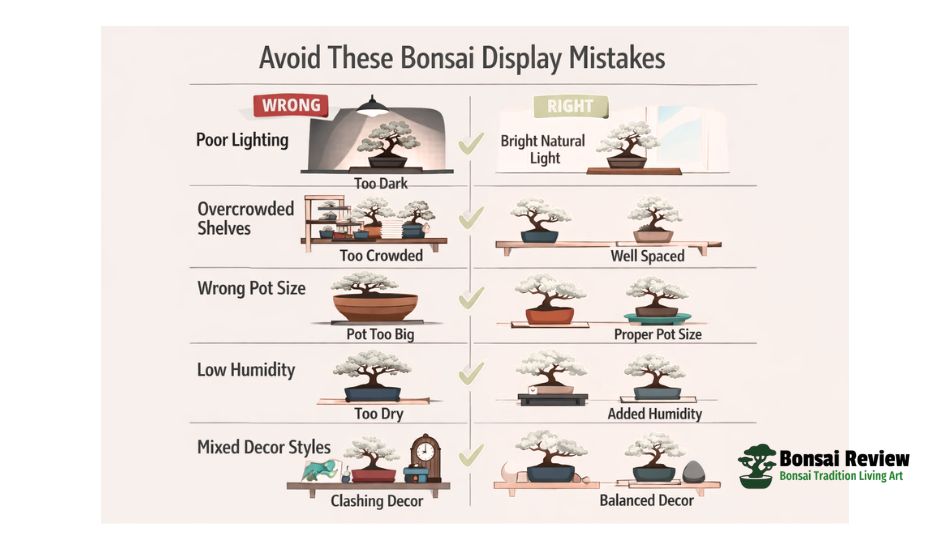
Bonsai Home Décor: Basic Common Styling Mistakes to Avoid.
A few small missteps are responsible for most “this doesn’t look right” bonsai displays.
- Using a pot that’s too large or too small for the tree, which throws off the proportions of the whole display
- Skipping the humidity tray, which risks both leaf damage and water marks on furniture
- Placing the tree in a random spot with no clear focal point, instead of giving it a dedicated stand or shelf
- Choosing a species that can’t handle your room’s light, such as an outdoor juniper kept in a dim hallway
- Overcrowding the display with too many decorative objects, which buries the tree instead of highlighting it.
Quick Bonsai Home Décor Basic Rule
When styling a bonsai display, remember three simple principles:
- Give the tree enough light.
- Keep the display clean and uncluttered.
- Choose accessories that match your room’s design style.
A healthy bonsai always looks more attractive than a struggling one. When you balance plant care with good design, your bonsai becomes a natural focal point that enhances the entire room.
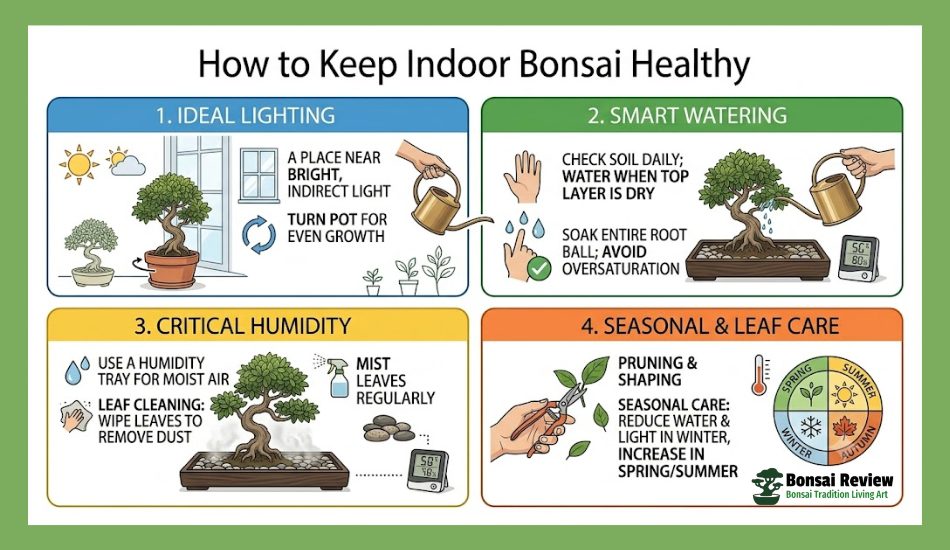
How Do You Keep a Decorative Bonsai Healthy Indoors?
A bonsai used for home decor should do more than look good. It should stay healthy and continue growing for years. Many indoor bonsai problems happen because people focus on appearance and forget about the tree’s basic needs.
The good news is that indoor bonsai care is not difficult. When you provide enough light, water, and humidity, your bonsai can remain a beautiful part of your home decor for a long time.
1. Light Requirements
Light is the most important factor for indoor bonsai health. Even the most attractive bonsai display will struggle if the tree does not receive enough sunlight.
Most indoor bonsai species, such as Ficus Bonsai, Jade Bonsai, and Chinese Elm, grow best near a bright window. South-facing and east-facing windows often provide the strongest natural light.
If your room receives limited sunlight, an LED grow light can help. This is especially useful in apartments, home offices, and rooms with shaded windows.
Signs your bonsai needs more light:
- Yellowing leaves
- Weak growth
- Long, thin shoots
- Leaf drop
2. Watering Basics
Many beginners either water too much or too little. Both can damage a bonsai tree. Instead of watering on a fixed schedule, check the soil first. Touch the top layer of soil with your finger. If it feels slightly dry, it is usually time to water. Water thoroughly until excess water drains from the bottom of the pot. This helps ensure the roots receive enough moisture.
Simple watering tips:
- Check soil daily
- Avoid letting soil stay completely dry
- Do not leave roots sitting in standing water
- Use pots with drainage holes
3. Humidity Management
Indoor air is often drier than outdoor air. Heating systems, air conditioners, and fans can reduce humidity around your bonsai. Low humidity may cause brown leaf edges, slow growth, or leaf drop in some species.
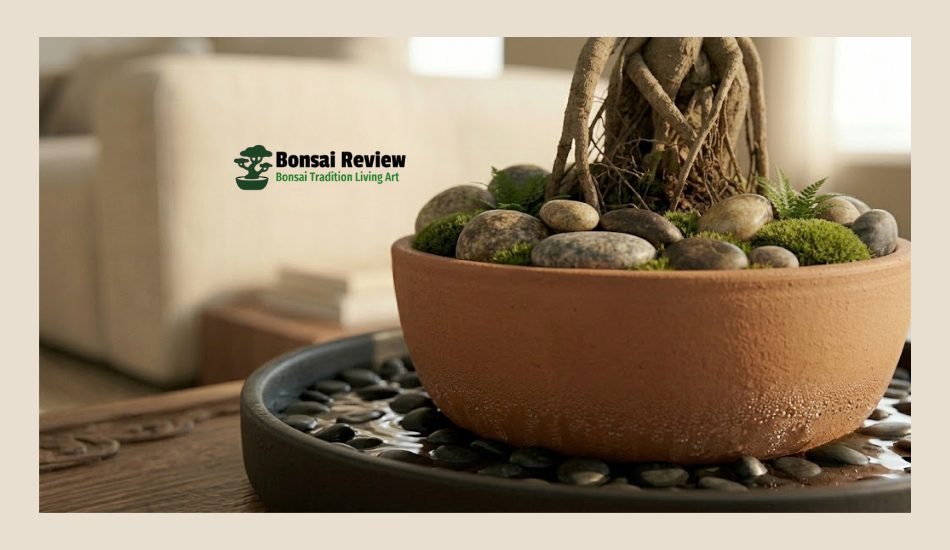
A humidity tray filled with pebbles and water can help increase moisture around the tree. Grouping indoor plants may also improve local humidity levels. For tropical bonsai species such as Ficus Bonsai, maintaining humidity is especially important.
4. Cleaning Leaves
Dust can collect on bonsai leaves over time. Dirty leaves not only reduce the beauty of the display but can also block sunlight from reaching the leaf surface. Gently wipe larger leaves with a soft damp cloth. For smaller-leaf species, lightly misting or rinsing the foliage can help remove dust buildup. Regular cleaning helps your bonsai look fresh, healthy, and attractive as a decorative feature.
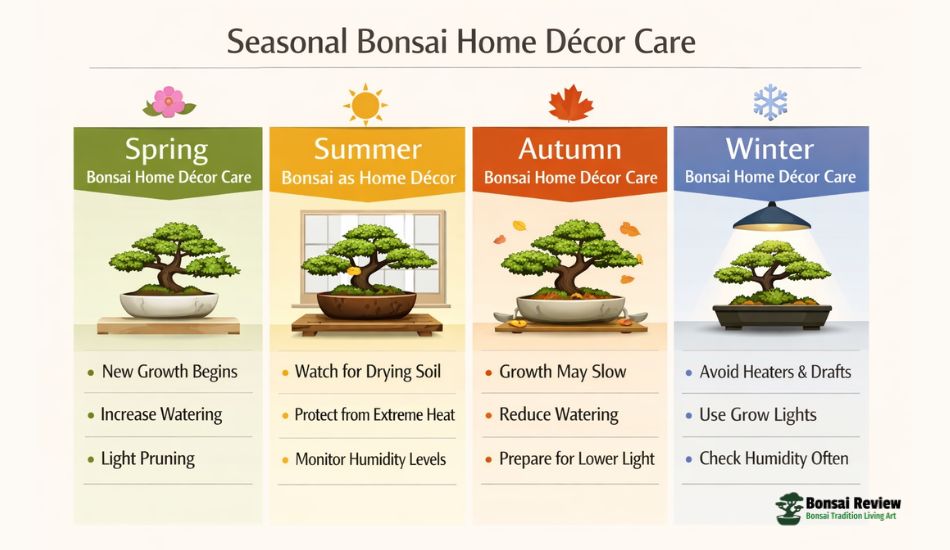
5. Seasonal Care: Bonsai Home Décor
Bonsai care changes throughout the year. Light levels, temperature, and watering needs often shift with the seasons.
Spring: Bonsai Home Décor Care
- New growth begins
- Watering may increase
- Light pruning can be performed
Summer: Bonsai as Home Décor
- Watch for faster soil drying
- Protect bonsai from extreme heat near windows
- Monitor humidity levels
Autumn: Bonsai Home Décor Care
- Growth may slow
- Reduce watering as needed
- Prepare for lower light conditions
Winter: Bonsai Home Décor Most Caring
- Keep trees away from heaters and cold drafts
- Use grow lights if sunlight becomes limited
- Check humidity more often
Indoor Bonsai Home Décor Care Checklist:
| Care Task | What to Do |
| Light | Place near a bright window or use an LED grow light |
| Watering | Water when the top layer of soil begins to dry |
| Humidity | Use a humidity tray or group plants together |
| Leaf Cleaning | Remove dust with a damp cloth or gentle rinse |
| Seasonal Care | Adjust watering, light, and humidity throughout the year |
A healthy bonsai always looks better than a neglected one. When you give your tree the right light, water, humidity, and seasonal care, it becomes more than a decoration. It becomes a living part of your home that adds beauty, balance, and natural charm every day.
How to Keep Your Bonsai Looking Display-Worthy Year-Round?
Styling is not a one-time task. A few simple habits keep the display looking sharp. Wipe dust off the leaves every few weeks so the green stays vibrant under indoor lighting. Rotate the pot slightly every month so the tree grows evenly instead of leaning toward the light source.
Trim stray shoots regularly to maintain the shape you originally styled it for, and refresh the moss or top dressing if it starts looking patchy or faded.
Many people also swap small accent details with the seasons, such as lighter stones in spring and deeper, warmer tones in fall, which keeps the display feeling current without changing the tree itself.
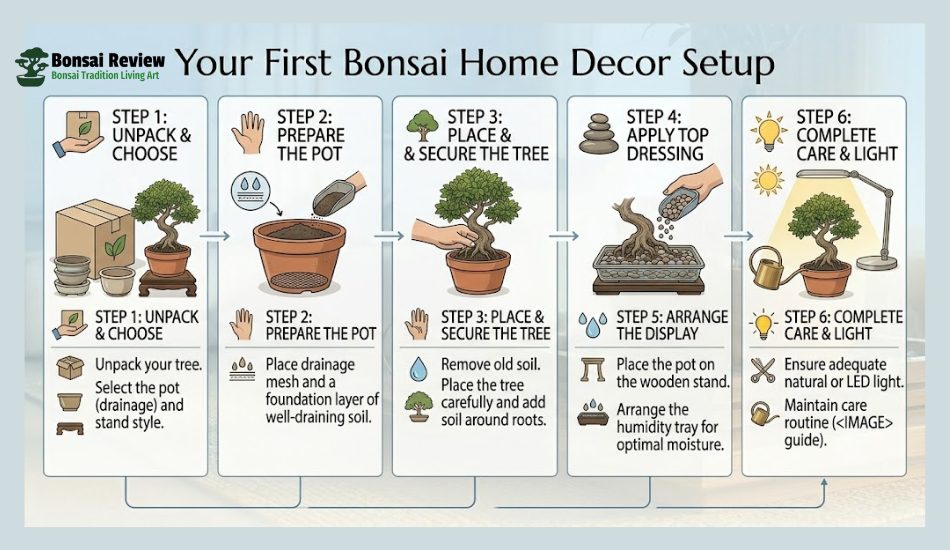
Best Bonsai Home Decor Setup for Beginners
Starting with bonsai home decor can feel confusing. You may wonder which tree to buy, where to place it, and what accessories you actually need. You do not need an expensive setup to create a beautiful bonsai display.
This beginner-friendly setup focuses on simplicity, style, and easy maintenance. It works well in apartments, living rooms, bedrooms, and home offices.
Step 1: Choose an Easy-Care Bonsai Tree
Your first bonsai should be attractive and beginner-friendly. Indoor species are usually the easiest choice because they adapt well to home environments.
Good beginner bonsai trees:
- Ficus Bonsai
- Jade Bonsai
- Chinese Elm
- Fukien Tea Bonsai
These trees are forgiving and can tolerate small care mistakes better than many advanced species.
Step 2: Pick the Right Location
Before buying accessories, decide where the bonsai will live. Look for a spot that receives bright, indirect sunlight for most of the day. Good locations include:
- Living room side table
- Home office desk
- Entryway console table
- Floating shelf near a window
- Bedroom dresser
Avoid placing bonsai near heaters, air conditioners, or dark corners.
Step 3: Upgrade the Display Pot
Many bonsai come in basic nursery containers. Replacing them with a decorative ceramic bonsai pot can instantly improve the display’s appearance. Choose a pot that matches your home’s style:
| Home Style | Recommended Pot |
| Minimalist | White, gray, or black ceramic pot |
| Japandi | Natural earth-toned ceramic pot |
| Scandinavian | Light-colored ceramic pot |
| Modern | Sleek glazed ceramic pot |
| Zen-Inspired | Simple unglazed ceramic pot |
Step 4: Add a Wooden Bonsai Stand
A bonsai stand creates height and helps the tree become a focal point. Even a small wooden stand can make the display look more intentional and professional. Natural wood works well with most decorating styles and adds warmth to the arrangement.
Step 5: Use Decorative Gravel or Moss
Covering exposed soil makes the bonsai look cleaner and more finished.
You can use:
- White decorative gravel for modern spaces
- Black stones for contrast
- Natural river pebbles for organic designs
- Decorative moss for a softer appearance
This small upgrade often makes the biggest visual difference.
Step 6: Protect Furniture With a Humidity Tray
A humidity tray serves two purposes. It protects furniture from water damage and helps improve humidity around the bonsai. Choose a simple tray filled with decorative pebbles to keep the setup attractive and functional.
Step 7: Add a Grow Light if Needed
If your room does not receive enough sunlight, an LED grow light can keep the bonsai healthy without changing the look of your decor. Many modern grow lights are compact and blend easily into bookshelves, desks, and plant displays.
Beginner Bonsai Shopping Checklist: Can a Bonsai Tree Make Your Home Look More Stylish?
| Item | Priority | Why You Need It |
| Beginner-Friendly Bonsai Tree | Essential | The centerpiece of the display |
| Ceramic Bonsai Pot | Essential | Improves style and appearance |
| Wooden Bonsai Stand | Recommended | Adds height and visual impact |
| Decorative Gravel or Moss | Recommended | Creates a finished look |
| Humidity Tray | Recommended | Protects furniture and boosts humidity |
| LED Grow Light | Optional | Helpful for low-light rooms |
| Accent Stones | Optional | Adds texture and decorative detail |
Example Beginner Bonsai Home Decor Setup
Imagine a small Ficus Bonsai placed in a white ceramic pot on a wooden stand beside a bright living room window. A layer of decorative gravel covers the soil, while a humidity tray sits underneath to protect the table. A few accent stones complete the arrangement.
The entire setup takes up very little space, yet it creates a natural focal point that makes the room feel calmer, warmer, and more inviting.
You do not need a large collection or expensive accessories to enjoy bonsai home decor. One healthy bonsai, a quality pot, and a simple stand are often enough to transform an ordinary corner into one of the most attractive spots in your home.
Final Thoughts: How Do You Create a Luxury Bonsai Display on a Budget?
A bonsai tree becomes home decor the moment you stop treating it like just another plant. The right pot keeps it proportional, a stand gives it presence, accent stones finish the look, and a humidity tray protects both the tree and your furniture.
Start with one well-chosen display in a room you actually spend time in, get the placement and light right, and build from there. A single styled bonsai often makes more of a design statement than a shelf full of ordinary houseplants ever could.
Relevant article: Which Bonsai Indoor Tree Grows Best in U.S.-Style Homes?
FAQs: How Do You Style a Bonsai Tree for Modern Home Decor?
1. Is a bonsai tree good for home decor?
Yes. Bonsai trees work well as home decor because they double as a living design feature and a focal point. Unlike most houseplants, they are shaped and trained specifically to look intentional, which makes them a natural fit for shelves, entryways, and tabletops where you want a styled, decorative look.
2. Do indoor bonsai trees need direct sunlight?
Most indoor bonsai species, like ficus or jade, prefer bright, indirect light rather than direct sun, which can scorch their leaves through a window. An east- or west-facing window usually provides enough light. If your space is darker, consider a grow light rather than forcing the tree into direct sun.
3. What size pot should I use to display a bonsai indoors?
A good guideline is choosing a pot roughly two-thirds the width of the tree’s canopy spread. This keeps the tree looking proportional rather than lost in an oversized pot or crowded by one that’s too small. The pot should also have drainage holes to prevent root rot.
4. Can I use any type of stone as a bonsai accent?
Smooth, rounded stones in neutral tones tend to look the most polished and are less likely to scratch the pot or trunk. Avoid sharp-edged decorative rocks, which can look out of place and may damage surface roots. Stick to one or two stone colors for a clean, intentional finish.
5. Do bonsai trees really need a humidity tray indoors?
Yes, especially in homes with heating or air conditioning, which dry out indoor air. A humidity tray raises moisture around the tree, helping prevent dry, browning leaf edges. It also protects furniture from water damage, making it both a care tool and a practical decor accessory.
6. How often should I refresh a bonsai’s decorative display?
There’s no strict schedule, but checking the display every few months works well. Dust the leaves, top off or replace faded moss, and rotate the pot for even growth. Many people also swap accent stones seasonally to keep the display feeling fresh without disturbing the tree itself.