
Bonsai mindfulness is becoming a gentle answer to the stress and hurry many people feel in daily life. You may spend hours on screens, rush from task to task, and end the day tired but not calm.
That is why more people now turn to small indoor trees and the slow rhythm of care, a shift linked to the rise of Slow living.
When you water, trim, and observe a bonsai, you step into the quiet attention found in Zen practice and the beauty of Wabi-sabi, where natural imperfection is accepted.
Science behind Horticultural therapy shows that nurturing plants can lower stress and restore focus.
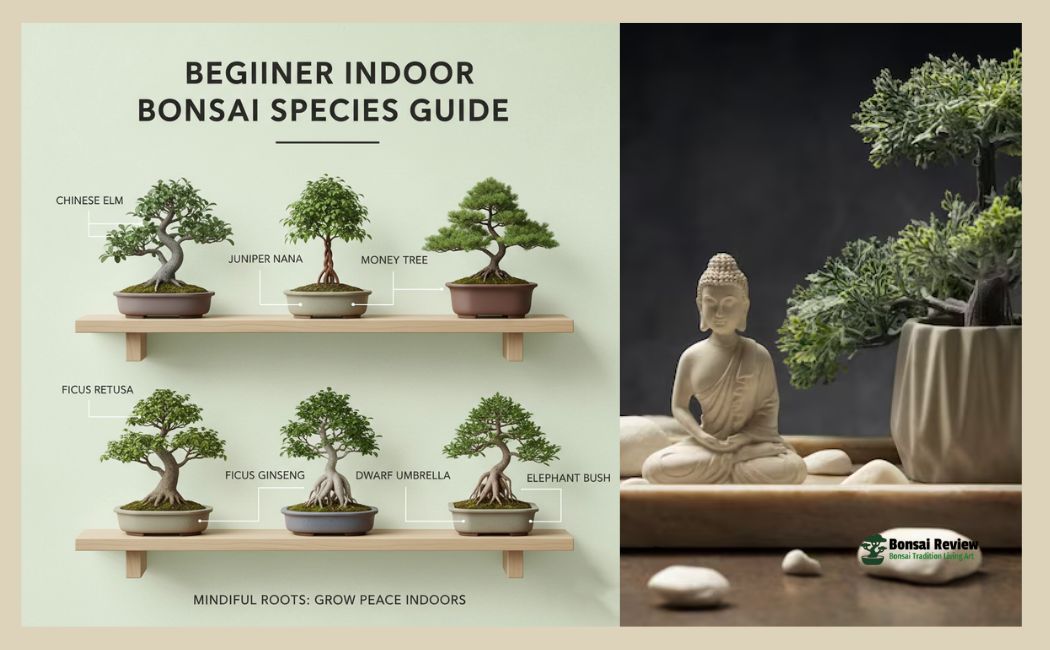
Which is why beginner-friendly indoor species like Chinese elm, Juniperus procumbens ‘Nana‘, Pachira aquatica, Ficus retusa, Ficus ginseng, Schefflera arboricola, and Portulacaria afra are now popular choices for calm indoor spaces.
Many beginners start with a Gift-ready bonsai or a complete Bonsai starter kit, since these provide an easy, ready-to-begin ritual with a small living art tree, simple tools, and a daily moment of quiet care that gently brings your attention back to the present.
What Is Bonsai Mindfulness?
Bonsai mindfulness is the practice of caring for a small tree with calm attention, slow hands, and patient observation. You are not just growing a tiny plant. You are shaping a living art form over time, which turns simple care into a quiet ritual.
This idea comes from Zen, where focus rests on one gentle action at a time, and from Wabi-sabi, which values natural change and imperfect beauty.
When you trim a leaf, adjust a branch, or touch the soil, your mind settles into the present moment. This is why bonsai care is often described in Horticultural therapy as a form of active meditation.
Your senses engage together sight, touch, and movement, which helps shift attention away from worry. Over weeks and months, the slow growth of the tree mirrors your own slowing pace.
Making bonsai mindfulness not a one-time activity but an ongoing relationship between you and a living, changing form.

Why Bonsai Care Calms the Mind?
When life feels fast and crowded, your mind often stays in constant alert mode. Bonsai care gently interrupts that state. The slow, repeated actions of watering, trimming, and turning the pot give your attention one clear place to rest.
This kind of focused, hands-on activity is known in Horticultural therapy to lower stress and steady breathing because your senses engage together in a calm loop of touch and sight.
As you care for a small tree, you naturally enter the quiet focus described in Zen practice, where awareness returns to simple movement.
The dwarf tree also changes slowly, which reflects the idea of Wabi-sabi that growth is gradual and never perfect. This perspective eases pressure to achieve fast results, replacing urgency with patience.
Over time, this gentle routine retrains attention. You pause more easily, notice small details, and feel grounded by caring for something alive.
That is why bonsai mindfulness works not as a quick escape, but as a steady habit that softens stress through repeated, quiet moments of care.
What Makes a Bonsai Good for Stress Relief Indoors?
Not every bonsai creates a calm experience for beginners. Some species need strict outdoor seasons or very precise care, which can add pressure instead of ease.
A bonsai that supports relaxation indoors has qualities that forgive small mistakes and grow at a gentle pace. This is why beginner species used in Horticultural therapy settings are chosen for resilience and soft visual form rather than rarity or difficulty.
A stress-friendly indoor bonsai usually has flexible watering needs, steady growth, and foliage that responds well to light pruning.
Trees like Chinese elm and Ficus retusa tolerate indoor light and recover well from beginner care, while succulent bonsai such as Portulacaria afra handle missed watering without distress.
These forgiving traits allow your focus to stay on the sensory rhythm of care rather than the fear of harm.
The visual structure also matters. Balanced branching and small leaves reflect the harmony valued in Wabi-sabi and the calm attention of Zen practice.
When a tree looks stable and natural, your mind reads it as safe and settled. This is why the best indoor bonsai for mindfulness are not the rarest or oldest trees, but the ones that invite steady, confident interaction every day.

Top 7 Best Beginner Indoor Bonsai for Stress Relief & Mindfulness
Choosing a tree for bonsai mindfulness is less about rarity and more about how the tree responds to gentle, regular care.
The species below are widely recommended because they tolerate indoor conditions, recover from beginner mistakes, and visually express the calm balance valued in Wabi-sabi and Zen.
Each one supports the slow, sensory routine used in Horticultural therapy for stress reduction.
1. Chinese Elm Balanced and Forgiving
A beginner bonsai lover’s first choice is the Chinese elm. Small leaves and fine branching create a soft, natural silhouette. It adapts well to indoor light and responds gently to pruning, which makes shaping feel calm rather than risky.
Mindfulness moment: observe leaf texture while misting.
2. Juniper Nana Classic Miniature Landscape
The best outdoor tiny plant is Juniperus procumbens ‘Nana’. Dense green foliage forms miniature forest shapes that feel grounding to look at. Its slow growth encourages patience, occasional trimming rather than constant work.
Mindfulness moment: trim one tip at a time with steady breathing.
3. Money Tree Bonsai Soft Indoor Presence
An easy indoor tiny bonsai plant is the Money Tree (Pachira Aquatica). Rounded leaves and upright form give a gentle, stable appearance. It tolerates indoor air and irregular watering, reducing worry for beginners.
Mindfulness moment: water slowly until the soil darkens evenly.
3. Ficus Retusa Resilient Beginner Tree
Ficus retusa best beginner bonsai tree with glossy leaves and flexible branches make it forgiving and easy to shape. It thrives indoors and quickly shows new growth, reinforcing confidence in care.
Mindfulness moment: wipe each leaf clean with a damp cloth.
4. Ficus Ginseng Sculptural Roots
Ficus ginseng’s thick exposed roots create a grounded, stable look that many beginners find reassuring. Hardy nature allows relaxed care without constant monitoring.
Mindfulness moment: trace root lines with your eyes while breathing slowly.
5. Dwarf Umbrella Bonsai Soft Canopy Form
The dwarf umbrella (Schefflera arboricola) leaf clusters form a rounded canopy that visually softens a room. It tolerates pruning and adapts well to indoor humidity.
Mindfulness moment: rotate the pot and notice light patterns.
6. Elephant Bush Bonsai Succulent Calm
The elephant bush (Portulacaria afra) has small succulent leaves that store water, so missed watering rarely harms it. The gentle branching invites slow shaping without urgency.
Mindfulness moment: pinch a tiny shoot between fingers and release.
Choosing Your First Bonsai for Mindfulness
After seeing beginner-friendly species, the next step is choosing the dwarf tree that fits your space and comfort level. The best bonsai for mindfulness is not the rarest or most artistic one of the trees you can care for without worry.
In Horticultural therapy, calm engagement comes from confidence and gentle repetition, so your choice should feel approachable from the start.
1. Consider light: If your room has soft, indirect light, forgiving indoor species like Ficus retusa or Schefflera arboricola adapt easily.
If you have brighter light near a window, balanced growers such as Chinese elm or Juniperus procumbens ‘Nana’ develop fuller shape. For those who prefer very low-stress watering, succulent bonsai like Portulacaria afra provide extra tolerance.
2. Consider the visual connection: Some people feel calm from rounded leaves, others from fine branching or exposed roots. This response reflects the harmony valued in Wabi-sabi and the quiet balance of Zen. When a tree’s form feels stable and natural to you, interaction becomes slower and more attentive.
3. How do you want to begin? Many beginners choose a Pre-styled S-shaped bonsai or a complete Bonsai starter kit, so the structure and tools are already prepared. This removes early uncertainty and lets you focus immediately on the mindful routine of watering, observing, and gentle shaping, turning your first bonsai into a calm daily companion rather than a complex project.
Gift-Ready Bonsai: A Mindfulness Ritual in a Box
Bonsai mindfulness isn’t just for personal practice, but also becomes a thoughtful way to give calm and focus to someone else.
Many beginners and gift-givers choose Gift-ready bonsai or a Bonsai starter kit because they include everything needed to start a daily mindfulness routine.
These kits often feature beginner-friendly indoor species like Chinese elm, Juniperus procumbens ‘Nana’, or Pachira aquatica, along with soil, pots, and pruning tools, making it easy to begin without worry.
Giving a bonsai is giving more than a tree, offering a small, daily pause for reflection and calm. The act of watering, trimming, and observing a living plant mirrors the principles of Zen and the acceptance of imperfection in Wabi-sabi.
For someone feeling stressed, a gift-ready bonsai or starter kit turns a miniature tree into a gentle, hands-on ritual that restores focus, encourages patience, and brings a little more serenity into daily life.
Simple Daily Bonsai Mindfulness Routine
Once you have your beginner indoor bonsai, creating a daily routine helps turn care into calm practice.
| Step | Action | Focus & Mindfulness Tip | Recommended Bonsai Species / Kits |
| First Steps | Observe Your Tree | Sit quietly, take slow breaths, notice shape, leaves, and soil texture. Anchor your attention in the present. | Ficus retusa, Juniperus procumbens ‘Nana’, Pachira aquatica |
| Second Steps | Water Mindfully | Feel the water as it moistens the soil, note the pot’s weight, and listen to the gentle drops. | Any beginner indoor bonsai |
| Third Steps | Prune with Care | Make each cut intentional and slow, reflecting Zen calm and Wabi-sabi imperfection. | Bonsai starter kit or pre-styled S-shaped bonsai |
| Fourth Steps | Observe Growth | Watch buds, new leaves, and subtle branch changes over time. Connect with slow, natural growth. | Any beginner-friendly indoor bonsai |
| Fifth Steps | Repeat Daily | Turn care into a short, calming ritual that improves focus, patience, and mindfulness. | Bonsai starter kit or gift-ready bonsai |
How Bonsai Changes Stress Over Time?
As you continue practicing bonsai mindfulness with indoor trees like Chinese elm, Ficus ginseng, or Portulacaria afra, the benefits accumulate in subtle but meaningful ways.
Daily engagement retrains your attention, helping you pause more easily and notice small details, from new leaves to the changing curve of a branch. This repeated gentle focus aligns with Mindfulness and the principles of Zen, reinforcing calm mental patterns.
Over weeks, you may notice lower tension, steadier breathing, and a slower pace in everyday tasks. Caring for your bonsai also nurtures patience and acceptance, echoing the impermanence and natural imperfection valued in Wabi-sabi.
Even brief moments with your dwarf tree watering, pruning, or observing growth provide a consistent micro-break that helps restore focus, reduce stress, and cultivate a grounded sense of presence.
In this way, bonsai mindfulness is not a quick fix but a daily companion, offering lasting mental benefits while you nurture a living miniature work of art.

Common Beginner Fears and Calm Answers
Starting a bonsai mindfulness practice can feel intimidating, but most worries fade once you understand what truly matters. Many beginners ask:
1. Will I kill my bonsai?
Indoor species like Ficus retusa, Juniperus procumbens ‘Nana’, and Pachira aquatica are forgiving and recover well from occasional mistakes, allowing you to learn without fear.
2. Is a bonsai hard to care for?
Bonsai mindfulness focuses on slow, gentle actions rather than perfection. Using a Bonsai starter kit gives you all the tools and guidance needed, making care simple and structured.
3. Do I need special skills?
You only need patience and attention. Each watering, pruning, or leaf-cleaning moment is a mini-meditation, guided by the calm principles of Zen and the acceptance of imperfection in Wabi-sabi.
4. Can I keep bonsai indoors?
Yes, these beginner-friendly species thrive in indoor conditions, letting you enjoy the sensory routine and stress-reducing benefits without worrying about outdoor climates.
By addressing these fears upfront, beginners can focus on the relaxing, mindful experience of bonsai care instead of stress about mistakes, creating a safe, enjoyable path into this slow-living practice.
Conclusion: Bonsai Mindfulness: Best Indoor Bonsai Trees & Starter Kits for Calm at Home
Bonsai mindfulness shows that calm doesn’t come from doing more, but from slowing down, paying attention, and nurturing life with patience.
By caring for beginner indoor species like Chinese elm, Juniperus procumbens ‘Nana’, or Pachira aquatica, you create a gentle daily ritual that reduces stress, steadies your focus, and connects you with the simple rhythms of nature.
Using a Bonsai starter kit or a Gift-ready bonsai makes starting this practice easy, giving you everything you need for mindful care.
Over time, the small acts of watering, pruning, and observing growth teach patience, acceptance, and presence, turning a miniature tree into a companion for calm.
A small tree, a slower mind, bonsai reminds you to slow down, breathe, and live fully in the moment. Your first tiny tree is not a plant start of a mindful habit that grows alongside you.
Helpful article: What Are the Spiritual Benefits of Bonsai Trees?
FAQ: Gift-Ready Bonsai for Beginners Indoor Trees That Promote Mindfulness.
1. Is bonsai good for mental health?
Yes. Caring for indoor bonsai engages Mindfulness and Horticultural therapy principles, which can reduce stress, improve focus, and encourage a sense of presence.
2. What is the bonsai mentality?
It reflects the patience and quiet attention found in Zen, and embraces Wabi-sabi, valuing natural imperfection and gradual growth.
3. Are bonsai trees good for anxiety?
Yes. The daily tactile and visual interaction with species like Chinese elm or Ficus retusa promotes focused attention and gentle mindfulness, easing anxious thoughts.
4. Is it lucky to keep a bonsai at home?
In Japan, bonsai can symbolize harmony, patience, and balance. While luck is cultural, the main benefit comes from daily mindful interaction and presence.
5. What did Mr. Miyagi say about bonsai?
From The Karate Kid, Mr. Miyagi emphasized that bonsai is about care, patience, and respect, lessons central to mindfulness practice.
6. How much is an 800-year-old bonsai tree worth?
Extremely valuable. While most beginners won’t own such trees, the principle shows that bonsai is treasured for longevity, patience, and care, reflecting the same slow-living values applied to indoor beginner trees.