


Do bonsai trees need sun? Yes. Your bonsai needs enough light to grow healthy leaves and strong branches. But what if your room gets little sunlight? You may notice slow growth, falling leaves, or long, weak branches. In this case, an LED grow light can help provide the light your tree needs.
A sunny window may work for some indoor bonsai, but it may not provide enough light all year. A full-spectrum LED grow light can support tropical bonsai such as Ficus, Jade, and Fukien Tea. The right lamp, distance, and daily light hours all matter.
In this guide, you will learn which grow light to buy, how far to place it from your bonsai, and how many hours to run it each day. You will also learn how to set up a timer and track your tree’s growth over 60 days.
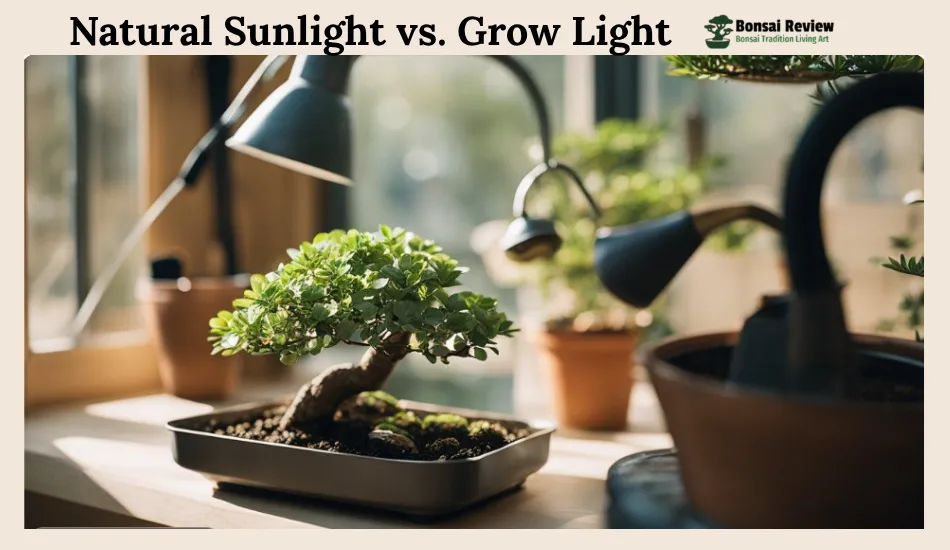
Do Bonsai Trees Need Direct Sunlight? Understanding Grow Lights for Indoor and Outdoor Bonsai.
Yes, your bonsai needs sunlight to make food and grow. But the amount of light depends on the tree species.
Some bonsai trees can grow indoors with bright window light and an LED grow lamp. Others need outdoor sunlight and fresh air. Before choosing a grow light, you must know which type of bonsai you have.
Do Indoor Bonsai Trees Need Sunlight?
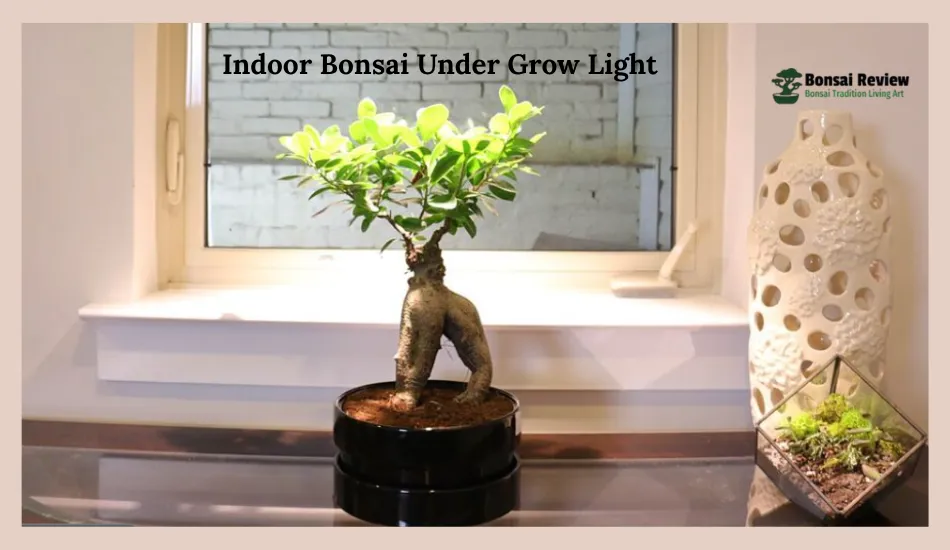
Tropical and subtropical bonsai trees can grow indoors if they get enough light.
- Ficus Bonsai: Needs bright light. Place it near a sunny window or under an LED grow light.
- Jade Bonsai: Needs strong light for healthy growth. A sunny window or grow light can help.
- Fukien Tea Bonsai: Grows best with bright light and steady warmth.
- Chinese Elm Bonsai: Needs plenty of light. Its indoor or outdoor care depends on the tree’s climate and seasonal needs.
Do Outdoor Bonsai Trees Need Sunlight?
Some bonsai trees need outdoor conditions. A grow light cannot fully replace natural sunlight, fresh air, and seasonal changes.
- Juniper Bonsai: Needs outdoor sunlight and should not be kept indoors all year.
- Japanese Maple Bonsai: Needs outdoor light and seasonal winter rest.
- Pine Bonsai: Needs outdoor conditions and plenty of natural light.
Which should you choose? If you have a Ficus or Jade bonsai in a room with weak sunlight, an LED grow light can help. But if you have a Juniper or Pine, move it outdoors rather than relying on an indoor lamp.
How Much Light Does an Indoor Bonsai Need?
Your indoor bonsai needs enough light each day to support healthy growth. But how many hours does it take? The answer depends on the tree species, light strength, and growing conditions.
Most tropical indoor bonsai need around 10–14 hours of good light each day when using an LED grow light. This is a starting range, not a fixed rule for every tree.
Do Bonsai Trees Need Sun? Recommended Daily Light Hours
| Bonsai species | Daily light target |
| Ficus | 10–14 hours |
| Jade | 10–14 hours |
| Fukien Tea | 10–12 hours |
| Chinese Elm | 10–14 hours |
Do Bonsai Trees Need Sun? Does Your Bonsai Get Enough Light?
Look for these signs:
- Slow growth: Your tree produces very few new leaves.
- Long branches: New shoots grow thin and stretch toward the window.
- Falling leaves: Your bonsai loses leaves due to poor light or other care problems.
- Pale leaves: New growth may look weak or lose its normal color.
These signs can point to low light, but they can also have other causes.
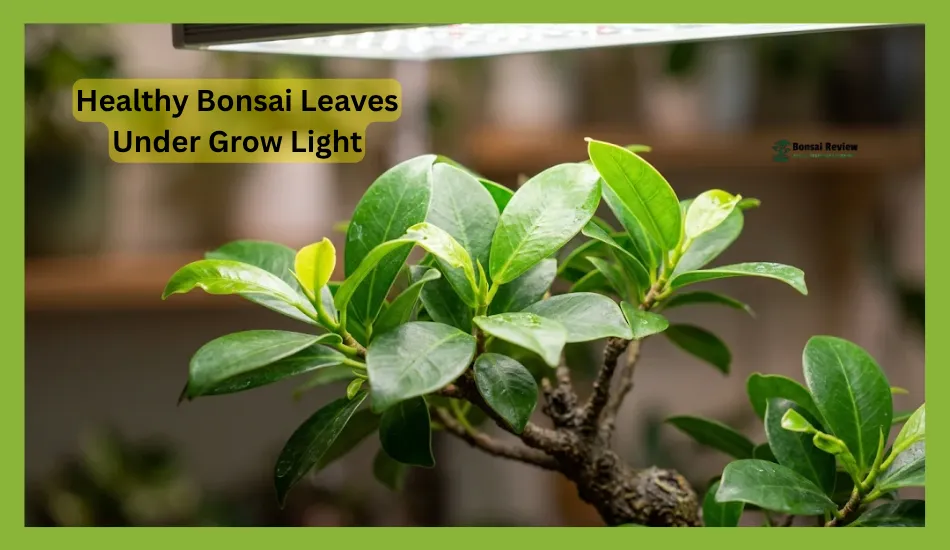
Should You Leave a Grow Light On All Day?
No. Your bonsai also needs darkness to follow a normal day-and-night cycle.
Use a timer to keep the light schedule steady. Start with 10–12 hours daily, then check your tree’s response. Adjust the schedule based on its species, growth, and lamp strength.
Important: More light hours do not always mean better growth. The lamp’s strength and distance from the leaves matter just as much.
Best Types of Grow Lights for Indoor Bonsai
Choosing the right grow light can help your indoor bonsai get enough light when sunlight is weak. But not every lamp works well for bonsai. You need a light that covers the leaves, provides enough intensity, and does not produce too much heat.
Here are the main types of grow lights to compare before buying.
1. Full-Spectrum LED Grow Light
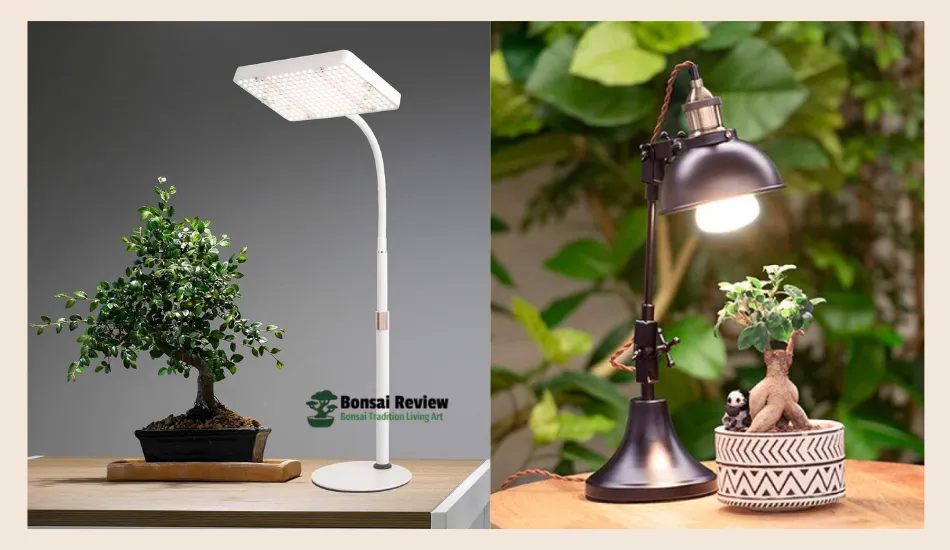
A full-spectrum LED grow light is a good choice for many indoor bonsai trees. It provides light across several parts of the visible spectrum.
Best for: Ficus, Jade, Fukien Tea, and other tropical indoor bonsai.
- Uses less power than many older grow lamps.
- Produces less heat than many traditional bulbs.
- Comes in different sizes and shapes.
- Works well with a daily timer.
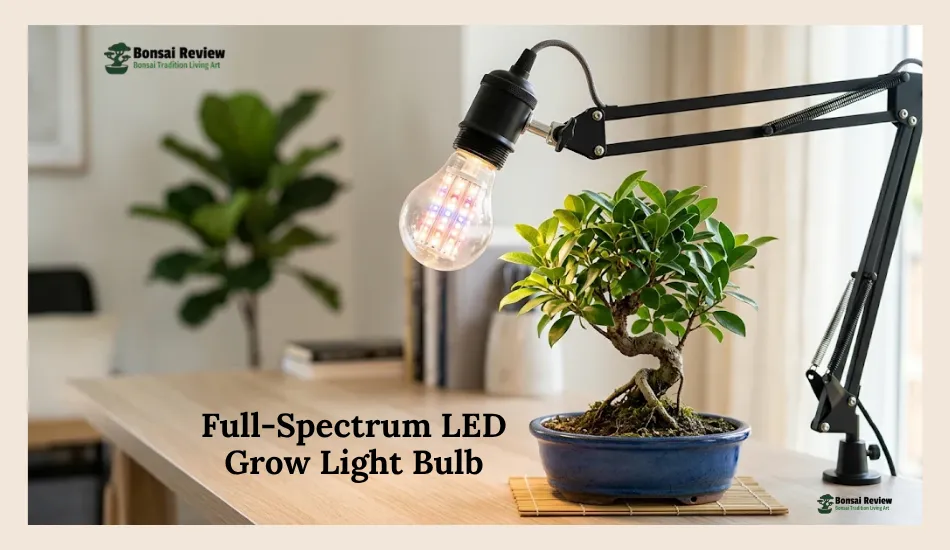
2. LED Grow Light Bulb
A grow light bulb fits many standard lamp holders. It is a simple option if you have one or two small bonsai trees.
Best for: Small bonsai placed on a desk, shelf, or windowsill.
- Easy to install.
- Takes up little space.
- Often costs less than a large grow light.
- Covers a small area, depending on the bulb and reflector.
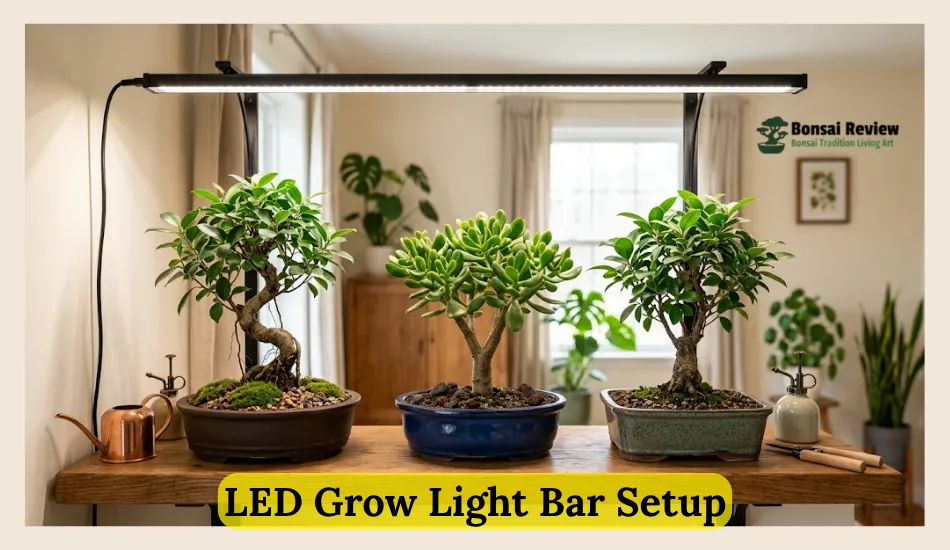
3. LED Grow Light Bar
An LED grow light bar spreads light across a wider area. It works well when you keep several bonsai trees on one shelf.
Best for: Two or more small indoor bonsai trees.
- Covers a longer growing area.
- Fits under shelves or cabinets.
- Gives more even light when placed correctly.
- Can be used with a timer.
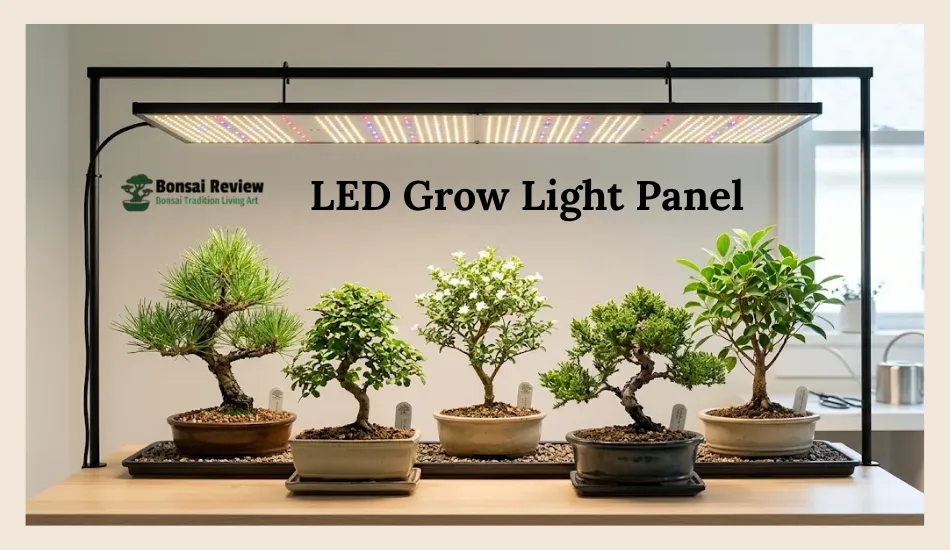
4. LED Grow Light Panel
An LED panel can cover a larger growing space. It is useful when you have several bonsai trees that need extra light.
Best for: A larger indoor bonsai collection.
- Covers a wider area.
- Offers different power levels.
- Can provide strong light.
- Needs enough space for proper placement.
Which Grow Light Should You Buy?
| Grow light type | Best use | Main advantage |
| Full-spectrum LED | Most indoor bonsai | Broad light spectrum |
| LED bulb | One small tree | Simple setup |
| LED bar | Bonsai shelf | Wide coverage |
| LED panel | Several trees | Large coverage area |
My recommendation: Start with a full-spectrum LED grow light for one indoor bonsai. Choose an LED bar for a shelf with several trees. Check the lamp’s PPFD, coverage area, and power use before buying. Wattage alone does not show how much useful light reaches your bonsai.
What to Look for When Buying a Bonsai Grow Light
Before you buy a grow light, check its light strength, coverage, power use, and adjustable settings. A cheap lamp may look bright but still provide too little light for your bonsai.
Use these five points to compare grow lights.
1. Full-Spectrum LED Light
Choose a full-spectrum LED grow light. It provides a range of light that supports photosynthesis and healthy plant growth.
Check the product details before buying. Look for:
- Full-spectrum LED technology.
- White or balanced light.
- A clear PPFD rating.
- A suitable coverage area.
2. PPFD and Light Intensity
PPFD tells you how much useful light reaches your bonsai leaves each second. It is measured in micromoles per square meter per second (µmol/m²/s).
Do not choose a lamp based on wattage alone. A 30W lamp and another 30W lamp may deliver different light levels.
Check the PPFD at the distance where you plan to place the lamp.
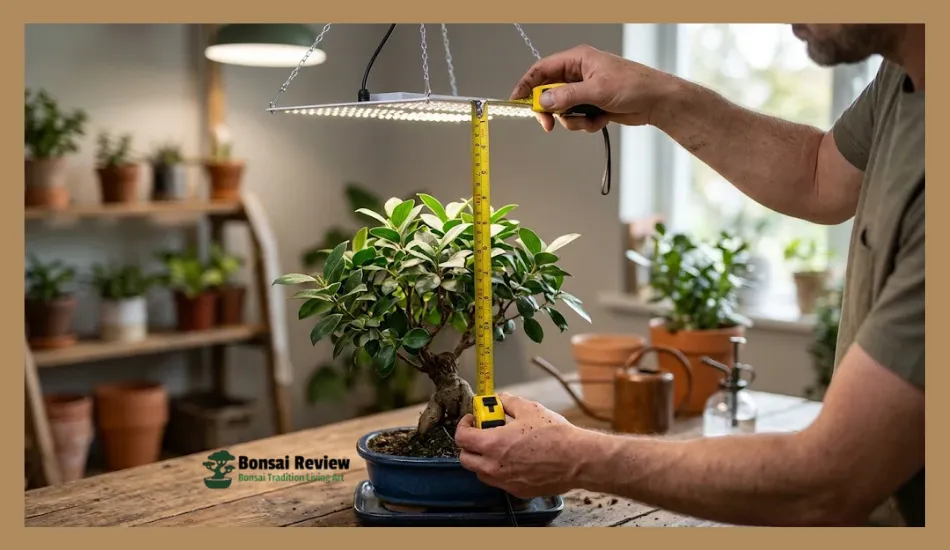
3. Adjustable Height and Distance
Choose a lamp that lets you change its height or position. This helps you control the light that reaches the bonsai canopy.
A flexible stand or adjustable arm makes daily care easier.
4. Built-In Timer
A timer helps your bonsai receive light at the same time each day.
Look for these settings:
- 8-hour timer.
- 10-hour timer.
- 12-hour timer.
- Automatic on/off function.
A separate plug-in timer can also work if your lamp has no built-in timer.
5. Low Heat and Power Use
LED grow lights usually produce less heat than older grow lamps. However, some powerful LED lamps can still warm nearby leaves.
Check the lamp temperature during use. Keep the light away from leaves if you notice heat damage.
Grow Light Buying Checklist
| Feature | What to check |
| Light type | Full-spectrum LED |
| Light strength | PPFD rating |
| Coverage | Suitable for your bonsai |
| Height | Adjustable stand |
| Timer | Automatic on/off |
| Heat | Low heat near leaves |
| Power | Energy-efficient design |
Buying tip: Choose a grow light based on your bonsai’s size and light needs. A small bulb may work for one Ficus, while a long LED bar may be better for several trees on one shelf.
How Far Should a Grow Light Be From Your Bonsai?
The distance between your grow light and bonsai leaves affects how much light your tree receives. If the lamp is too far away, your bonsai may not get enough light. If it is too close, strong light or heat may damage the leaves.
For most small indoor bonsai, start by checking the lamp manufacturer’s recommended distance. The correct distance depends on the lamp’s power, PPFD, and coverage.
Recommended Starting Distance
| Grow light type | Starting distance |
| Small LED grow bulb | 12–18 inches |
| LED grow light bar | 12–18 inches |
| Medium LED panel | 18–24 inches |
| Powerful LED panel | Follow the manufacturer’s PPFD guide |
These are starting points, not fixed rules. Always check the light level at the top of your bonsai canopy.
How to Set the Correct Distance
Follow these simple steps:
- Place your bonsai on a stable table or shelf.
- Position the grow light above the tree.
- Measure from the lamp to the top of the leaves.
- Check the manufacturer’s recommended distance.
- Turn on the lamp and observe your bonsai.
- Adjust the height if the leaves show signs of stress.
Signs Your Grow Light Is Too Close
Watch your bonsai for these problems:
- Brown or dry leaf edges.
- Leaves that look bleached or faded.
- Unusual leaf curling.
- Excess heat around the canopy.
These signs can have other causes, so also check watering and room conditions.
Signs Your Grow Light Is Too Far Away
Your bonsai may show:
- Long, thin branches.
- Slow new growth.
- Pale leaves.
- Growth leaning toward the light.
These signs may indicate low light, but they are not proof on their own.
Practical tip: If your lamp has a PPFD chart, use it to check light intensity at different distances. This gives you a better starting point than guessing from the lamp’s height alone.
How to Set Up a Grow Light for Indoor Bonsai
Setting up a grow light is simple. You need the right lamp, a stable position, and a daily lighting schedule. Follow these steps to give your bonsai steady light.
Step 1: Choose the Right Location
Place your bonsai near a window if possible. Natural daylight and an LED grow light can work together.
Choose a spot with:
- Good air movement.
- Enough space around the tree.
- Easy access for watering.
- A safe place for the lamp and power cable.
Step 2: Install the Grow Light
Place the LED grow light above the bonsai canopy. Use an adjustable stand, clip, or shelf mount.
Keep the lamp stable. Make sure it cannot fall onto your tree.
Step 3: Set the Lamp Distance
Measure the space between the lamp and the top leaves.
Start with the distance recommended by the manufacturer. Check the PPFD rating if available. Adjust the height when needed.
Step 4: Set a Daily Lighting Schedule
Use a timer to turn the lamp on and off at the same time each day.
For many tropical indoor bonsai, 10–12 hours is a useful starting schedule. Adjust it based on the tree species, natural daylight, and lamp strength.
Step 5: Check Heat and Leaf Condition
Run the lamp and check the leaves after a few hours.
Look for:
- Brown leaf edges.
- Dry or curled leaves.
- Unusual fading.
- Excess heat near the canopy.
If you notice these signs, check the lamp distance and watering before making changes.
Step 6: Track Your Bonsai Growth
Take a photo on the first day. Repeat the photo every week from the same angle.
Record these details:
| What to record | Example |
| Lamp model | Your LED grow light model |
| Lamp distance | 15 inches |
| Daily light hours | 12 hours |
| Bonsai species | Ficus |
| Leaf condition | Green and healthy |
| New growth | New leaves and shoots |
Important: Keep your setup steady for the first few weeks. Change one setting at a time so you can see how your bonsai responds.
Best Grow Light Schedule for Indoor Bonsai
Your bonsai needs a regular light schedule to grow well. Leaving the grow light on all day is not the answer. Your tree also needs darkness to follow its natural day-and-night cycle.
The best schedule depends on your bonsai species, natural sunlight, and light strength.
Daily Grow Light Schedule
Use this schedule as a starting point for tropical indoor bonsai.
| Time | What to do |
| 7:00 AM | Turn on the grow light |
| 12:00 PM | Check leaf condition |
| 7:00 PM | Turn off the grow light |
| Night | Keep the tree in darkness |
This gives your bonsai 12 hours of artificial light and 12 hours of darkness.
Should You Use a Grow Light With Natural Sunlight?
Yes. You can use an LED grow light to support natural window light.
- Bright window: Use extra light only if your tree needs it.
- Low-light room: Use a grow light to provide more daily light.
- Dark corner: Move your bonsai closer to a window and add a suitable grow light.
Do not count weak room lighting as useful sunlight.
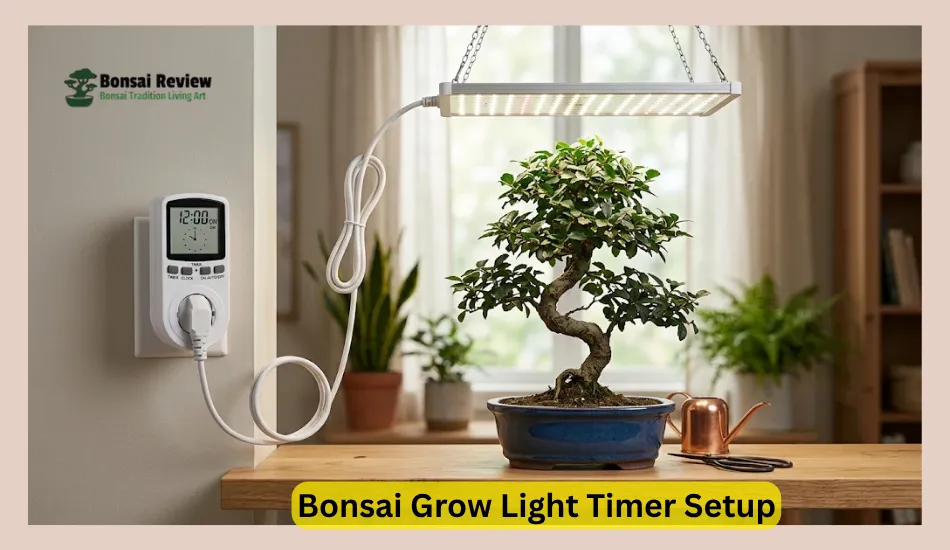
How to Use an Automatic Timer
An automatic timer makes daily care easier.
- Plug the timer into a safe power outlet.
- Connect your grow light to the timer.
- Set the starting time.
- Set the switch-off time.
- Check that the lamp follows the schedule.
Important: Keep the schedule steady. Do not keep changing the light hours every day. Watch your bonsai for new growth, leaf color, and signs of stress before making changes.
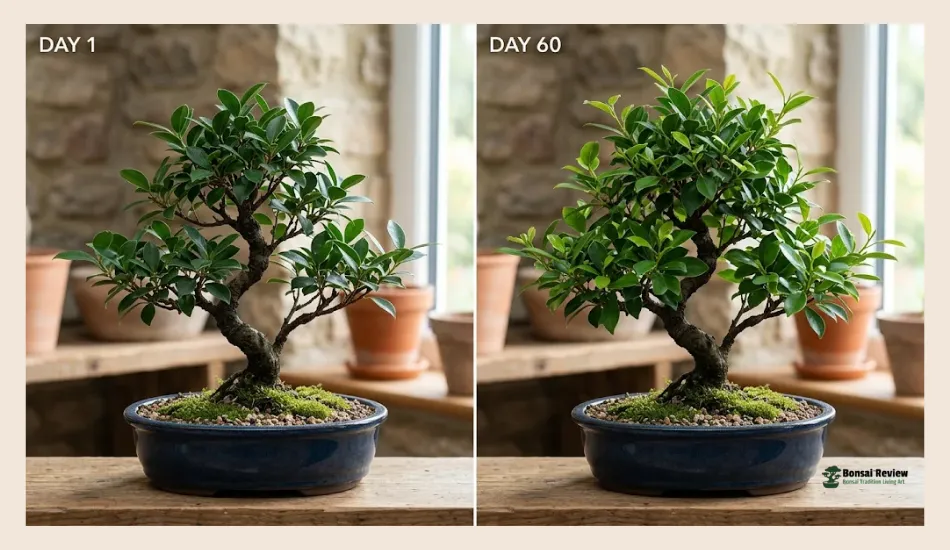
60-Day Grow Light Test: Track Your Indoor Bonsai Growth
A grow light may help your bonsai grow better, but you need to check the results. A 60-day test can show how your tree responds to a new light setup.
Use the same lamp, distance, and daily hours during the test. Record any changes in leaf color, new shoots, and leaf loss.
What You Need for the Test
- One indoor bonsai, such as a Ficus.
- One full-spectrum LED grows light.
- A ruler to measure lamp distance.
- A timer for daily light hours.
- A notebook or spreadsheet.
- A phone or camera for weekly photos.
Do Bonsai Trees Need Sun? 60-Day Bonsai Growth Record
Use this table to record your results.
| Test period | What to check |
| Day 1 | Record lamp model, distance, and light hours |
| Day 7 | Check leaf color and leaf condition |
| Day 14 | Look for new leaves and shoots |
| Day 30 | Compare growth with your first photo |
| Day 45 | Check branch growth and leaf health |
| Day 60 | Compare the final results with Day 1 |
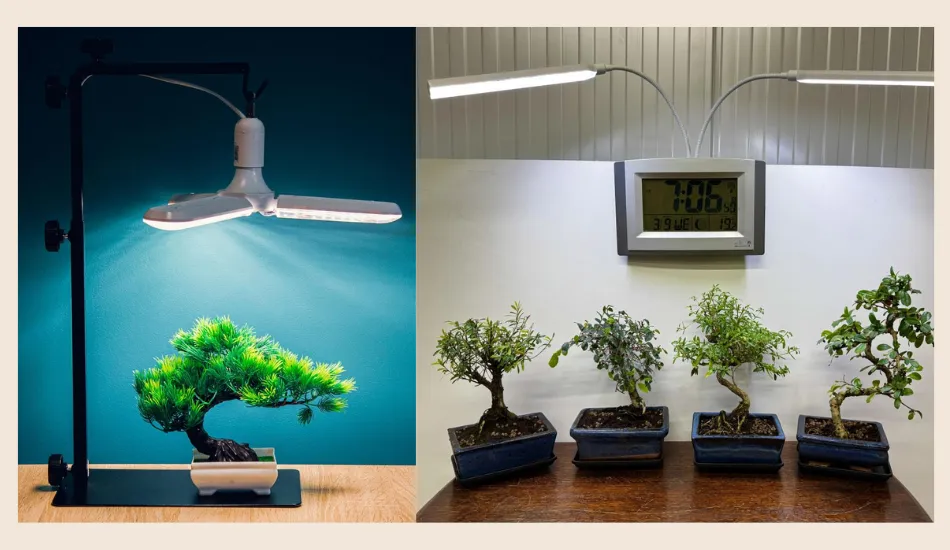
Record Your Grow Light Setup
| Setup details | Your results |
| Bonsai species | Ficus |
| Lamp brand and model | Add your model |
| Lamp type | Full-spectrum LED |
| Lamp distance | Add measured distance |
| Daily light hours | 12 hours |
| Start date | Add date |
| End date | Add date |
What Results Should You Look For?
Check these signs during your 60-day test:
- New leaves: Look for healthy new leaf growth.
- Leaf color: Check whether leaves keep their normal green color.
- New shoots: Look for fresh growth on branches.
- Leaf loss: Record how many leaves fall.
- Branch growth: Check whether new branches look healthy or weak.
Take one photo every seven days from the same angle. This makes it easier to compare changes.
How to Compare Your Results
At the end of 60 days, compare your final photo with the first one.
Ask yourself:
- Did your bonsai produce new leaves?
- Did the number of weak or falling leaves change?
- Did new shoots grow?
- Did the lamp cause any leaf damage?
- Did the tree respond well to the daily light schedule?
Important: Do not claim that the grow light improves growth unless your photos and records support it. Watering, temperature, fertilizer, and seasonal changes can also affect bonsai growth.
A real 60-day record gives readers useful proof. It also helps you decide whether your current grow light is suitable for your bonsai.
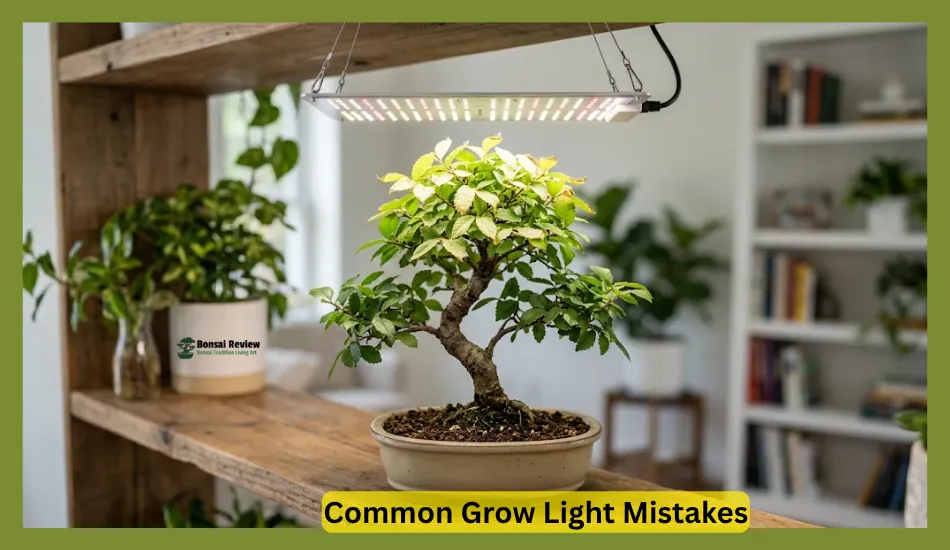
Common Grow Light Mistakes to Avoid
A grow light can help your indoor bonsai, but poor use can harm your tree. The wrong lamp, distance, or light schedule may cause weak growth or leaf damage.
Avoid these common mistakes when setting up your bonsai grow light.
1. Choosing a Weak Grow Light
A lamp may look bright to your eyes but still provide too little light for your bonsai.
Solution: Check the PPFD rating and coverage area before buying. Choose a lamp that suits your tree’s size.
2. Placing the Lamp Too Far Away
Light becomes weaker as the distance from the lamp increases. Your bonsai may not receive enough light.
Solution: Follow the manufacturer’s distance guide. Measure the light level at the top of the leaves if possible.
3. Keeping the Light On All Day
Your bonsai needs a regular day-and-night cycle. Constant light is not a good growing plan.
Solution: Use an automatic timer. Start with a suitable daily schedule for your tree species.
4. Placing the Lamp Too Close
A powerful grow light can create too much heat or light stress.
Solution: Check the leaves and canopy temperature. Raise the lamp if you notice signs of stress.
5. Ignoring Natural Sunlight
A grow light does not mean you should ignore natural daylight. Some bonsai also need outdoor conditions and seasonal changes.
Solution: Learn the light needs of your bonsai species before choosing an indoor setup.
6. Buying a Lamp Based Only on Wattage
A higher wattage does not always mean better light for your tree.
Solution: Compare PPFD, coverage area, light distribution, and power use before buying.
7. Changing the Setup Too Often
Moving the lamp or changing the light schedule every few days makes it harder to understand how your bonsai responds.
Solution: Keep your setup steady and record changes over time.
Quick tip: Check your bonsai leaves every week. Healthy new growth, normal leaf color, and steady development are more useful signs than how bright the lamp looks.
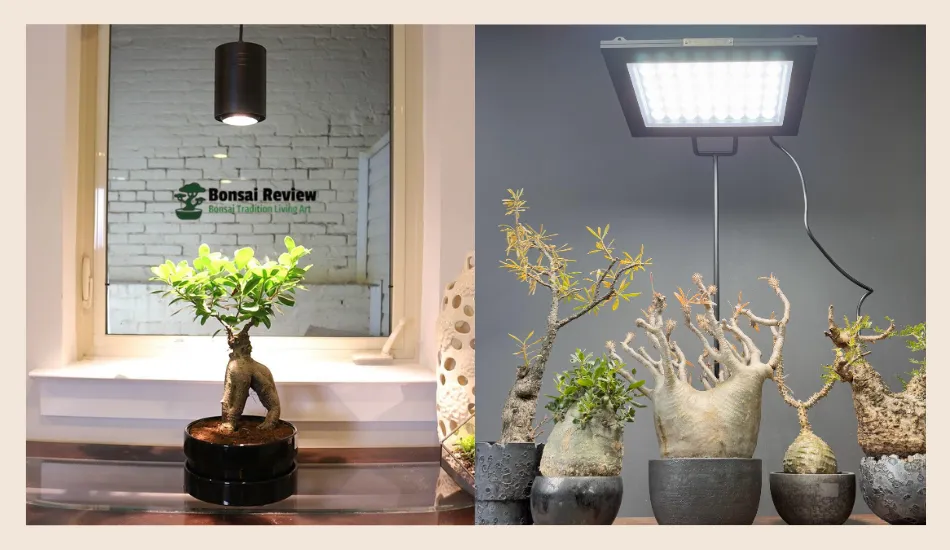
Can Grow Lights Replace Sunlight for Bonsai Trees?
No. A grow light can provide extra light for indoor bonsai, but it cannot replace every benefit of natural sunlight and outdoor conditions.
Your bonsai needs the right growing conditions for its species. Some trees can grow indoors with a suitable LED grow light. Others need outdoor sunlight, fresh air, and seasonal changes.
When Can You Use a Grow Light?
A grow light can help when:
- Your room gets very little natural sunlight.
- Your bonsai sits far from a bright window.
- Winter days provide less natural light.
- Your indoor Ficus or Jade needs extra light.
- You want to keep a steady daily light schedule.
Which Bonsai Trees Can Benefit From Growing Lights?
| Bonsai species | Can I use an indoor grow light? |
| Ficus | Yes, useful for indoor growth |
| Jade | Yes, needs strong light |
| Fukien Tea | Yes, needs bright light |
| Chinese Elm | Yes, when grown indoors with proper seasonal care |
| Juniper | Not as a replacement for outdoor growing |
| Japanese Maple | Not as a replacement for outdoor growing |
| Pine | Not as a replacement for outdoor growing |
Why Do Outdoor Bonsai Still Need Natural Conditions?
Outdoor bonsai need more than light from a lamp.
- Fresh air: Outdoor conditions support normal plant growth.
- Seasonal changes: Many temperate trees need changes in temperature and day length.
- Winter rest: Some species need a cold period to stay healthy.
- Natural environment: Outdoor light and weather help support their normal growth cycle.
What Is the Best Choice for Your Bonsai?
If you grow a tropical Ficus indoors, use a bright window with a full-spectrum LED to grow light when needed.
If you grow a Juniper, Pine, or Japanese Maple, keep it outdoors in suitable conditions. Do not try to keep these trees healthy indoors with a grow light alone.
Remember: Choose your lighting setup based on your bonsai species, not just the room where you want to keep it.
Relevant article: What Are the Best Sunlight-Indoor Plants for Your Home?
Conclusion: Choose the Right Grow Light for Your Indoor Bonsai
Do bonsai trees need sun? Yes. Your bonsai needs enough light to grow healthy leaves and strong branches. If your room does not get enough natural sunlight, a full-spectrum LED grow light can help.
Choose a lamp based on your bonsai species, light strength, and growing space. Check the PPFD rating, keep the correct distance from the leaves, and use a timer for a steady daily schedule.
Start with a simple setup. Record your lamp model, distance, and daily light hours. Take weekly photos and check your bonsai’s growth over 60 days.
Most importantly, remember that not every bonsai belongs indoors. Tropical trees such as Ficus can grow indoors with proper light and care. Juniper, Pine, and Japanese Maple need suitable outdoor conditions.
Give your bonsai the right light, follow a steady care routine, and watch how it responds.
FAQs About Do Bonsai Trees Need Sunlight?
1. Do bonsai trees need direct sunlight?
Yes. Bonsai trees need enough light for photosynthesis. Some indoor tropical bonsai can grow with bright window light and an LED grow light. Outdoor species need suitable natural sunlight.
2. Can I grow a bonsai tree without sunlight?
Some tropical bonsai can grow indoors with a suitable full-spectrum LED grow light. However, ordinary room lights are usually too weak to support healthy growth.
3. How many hours should a bonsai grow light stay on?
Many tropical indoor bonsai can start with 10–12 hours of growth light daily. Adjust the schedule based on the species, lamp strength, and natural daylight.
4. What is the best LED grow light for indoor bonsai?
A full-spectrum LED grow light is a good starting choice. Compare its PPFD, coverage area, power use, and adjustable height before buying.
5. How far should an LED grow light be from a bonsai tree?
The distance depends on the lamp’s strength and design. Follow the manufacturer’s recommendations and check the PPFD at the top of your bonsai canopy.
6. Can I leave my bonsai grow light overnight?
No. Your bonsai needs a regular period of darkness. Use an automatic timer to provide a steady light and dark cycle.
7. Can grow lights help a bonsai with falling leaves?
Yes, if low light is causing the leaf loss. However, overwatering, underwatering, temperature changes, and pests can also cause falling leaves. Check these problems before changing your lighting setup.
8. Are full-spectrum LED grow lights better than regular LED bulbs?
Full-spectrum grow lights are designed to support plant growth. Regular household LED bulbs may not provide enough useful light, especially when placed far from the tree.
9. Can a grow light keep a Juniper bonsai alive indoors?
A grow light cannot replace the outdoor conditions a Juniper needs. Keep your Juniper outdoors with suitable sunlight and seasonal changes.
10. Are grow lights expensive to run?
LED grow lights are usually energy-efficient. Your running cost depends on the lamp’s wattage, daily hours, and electricity rate. You can estimate the daily electricity use with this formula:
Daily electricity use (kWh) = Lamp watts × Hours used ÷ 1,000
For example, a 30W lamp running for 12 hours uses 0.36 kWh per day. Multiply this by your local electricity rate to estimate the cost.