


How to mix bonsai soil is easier when you know which materials to use and how much water your tree needs. If your bonsai soil stays wet for days or dries out too fast, the mix may not be right for your tree. You can make your own bonsai soil at home with a few simple materials.
In this guide, you’ll learn how to mix bonsai soil step by step. You’ll see how akadama, pumice, and lava rock work together to support healthy roots, hold some water, and let extra water drain away.
You’ll also learn how to choose the right particle size, test drainage, and adjust your mix for indoor and outdoor bonsai trees. You’ll know how to make a soil mix that fits your tree, your local climate, and your watering habits.
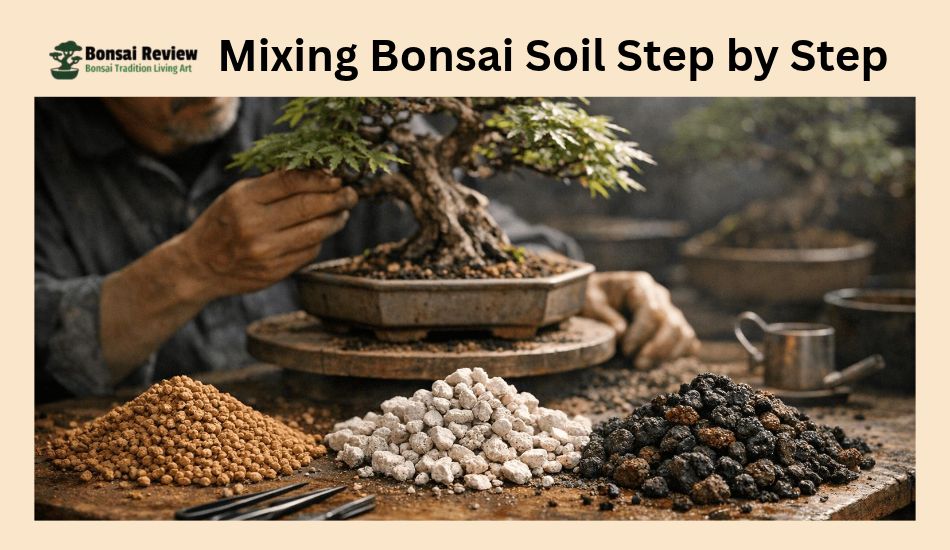
What Do You Need to Mix Bonsai Soil?
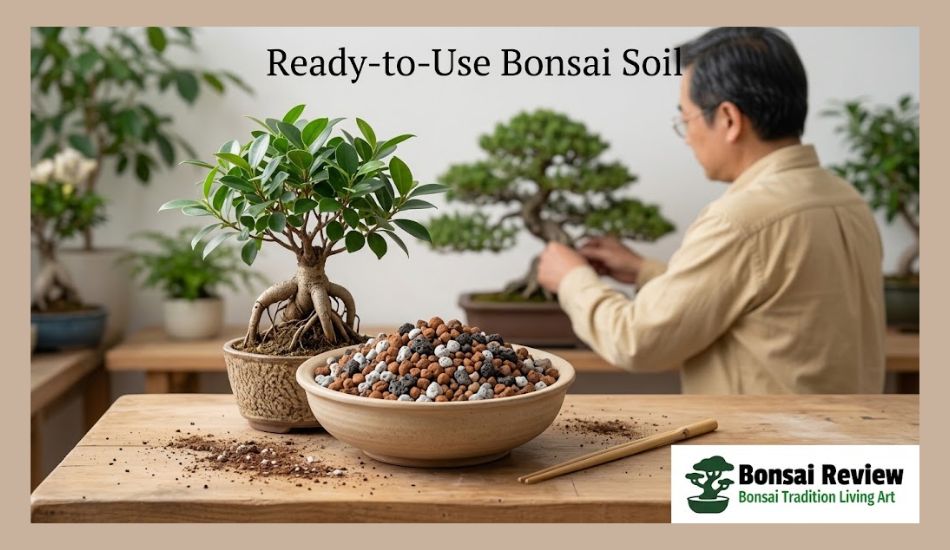
Before you mix bonsai soil, you need to know what each material does. Good bonsai soil must hold enough water for the roots. It must also let extra water drain out and allow air to reach the roots.
Regular garden soil is often too dense for a bonsai pot. It can hold too much water and leave little air around the roots. A mix made for bonsai helps you control water, air, and root growth.
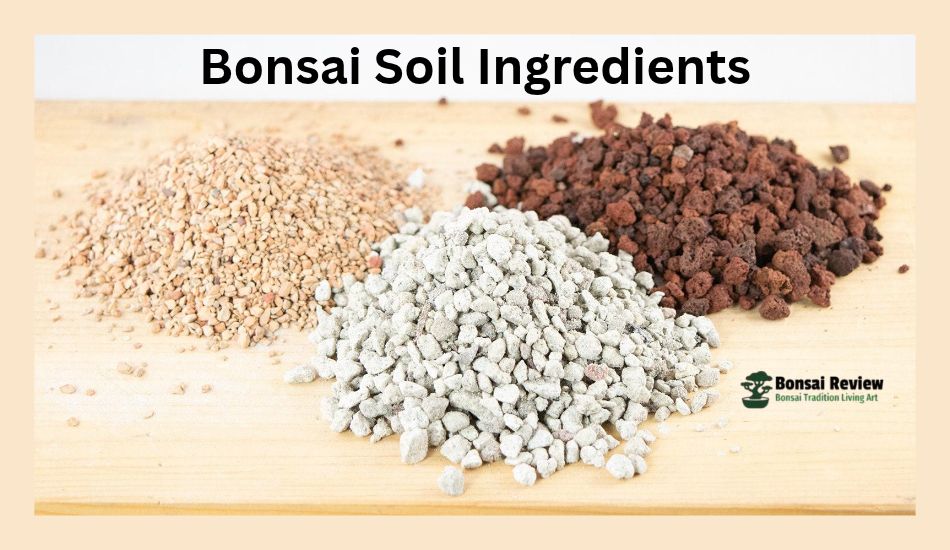
The 3 Main Materials for Bonsai Soil
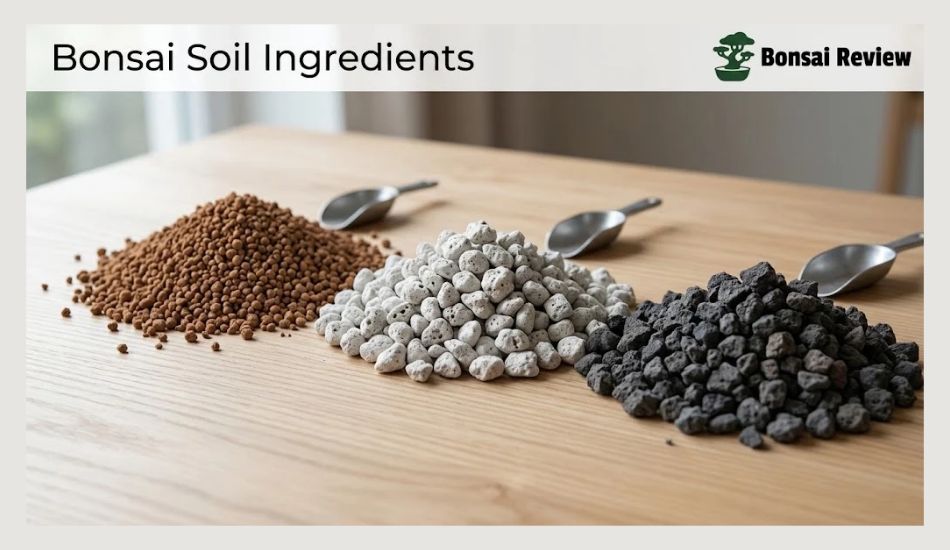
1. Akadama
Akadama is a hard, clay-based soil material from Japan. It holds water and nutrients for your tree. It also allows air to reach the roots. Over time, it can break down into smaller pieces, so you may need to replace it.
2. Pumice
Pumice is a light, porous volcanic rock. It holds some water inside its tiny holes while allowing extra water to drain. It also helps keep the mix open, which gives roots more room to grow.
3. Lava Rock
Lava rock is a rough, porous volcanic rock. It helps create air spaces in the soil and improves drainage. Unlike akadama, it does not break down as quickly.
What If You Cannot Find Akadama?
You do not need to stop if akadama is hard to find or costs too much. You can use pumice and lava rock with another suitable soil component that holds water. For example, pine bark fines can add moisture retention and organic matter.
Choose small, firm pieces that fit your bonsai pot. Avoid fine garden soil, dusty materials, and large chunks that leave little room for the roots.
Beginner tip: Buy bonsai soil materials separately if you want to test different mixes. This lets you change the amount of each material to suit your tree and watering routine.
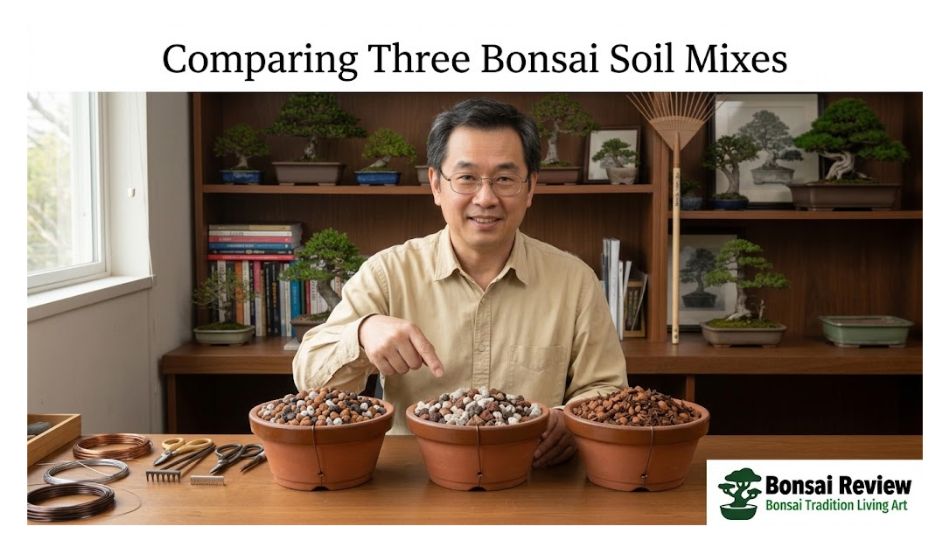
Choose the Right Bonsai Soil Mix for Your Tree
Not every bonsai tree needs the same soil mix. Some trees need more water, while others need a mix that drains faster. Your local climate, pot size, and watering habits also affect your choice.
If you are new to bonsai, start with a simple mix. You can change it later when you learn how quickly your tree uses water.
Three Bonsai Soil Mixes You Can Make at Home
You can start with these three mixes. Each one has a different balance of water retention and drainage.
| Soil material | Balanced mix | Fast-draining mix | Moisture-holding mix |
| Akadama | 50% | 30% | 60% |
| Pumice | 25% | 35% | 20% |
| Lava rock | 25% | 35% | 10% |
| Pine bark fines | 0% | 0% | 10% |
| Total | 100% | 100% | 100% |
These are starting points, not fixed rules. Use clean, screened materials of a suitable size. Adjust the mix based on how fast it dries and how your tree responds.
Which Mix Should You Choose?
- Balanced mix: Choose this as a starting point for many bonsai trees. It holds some water while allowing extra water to drain away.
- Fast-draining mix: Try this when your tree uses water quickly or your growing area stays wet for a long time. Check the soil often because it may dry out faster.
- Moisture-holding mix: Consider this when your climate is hot and dry or your bonsai dries out too quickly. Pine bark fines can help hold moisture, but too much fine material may reduce airflow.
Does Your Bonsai Grow Indoors or Outdoors?
Indoor bonsai trees may dry out slowly when they receive little sunlight or have poor airflow. Outdoor trees may dry faster in direct sun and wind.
Do not choose a soil mix based on location alone. A sunny window, a shaded porch, and a hot outdoor garden can have very different drying rates.
Start with the balanced mix. After watering, check the soil each day. If it stays wet for too long, you may need a more open mix. If it dries too fast, you may need a mix that holds more water.
Important: Juniper bonsai trees are best grown outdoors. A fast-draining soil mix cannot make a juniper suitable for long-term indoor growing.
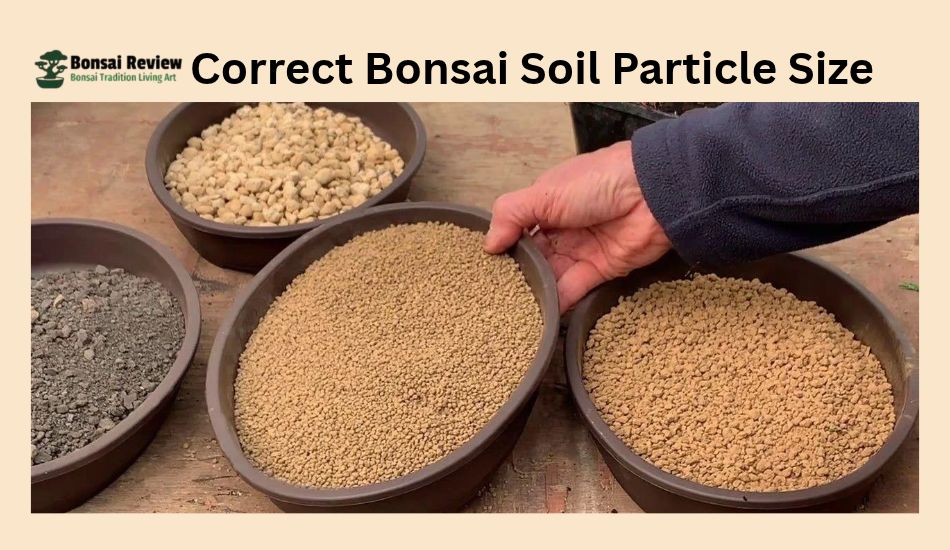
Choose the Right Particle Size for Bonsai Soil
The size of your soil particles affects how water moves through your bonsai pot. It also affects how much air reaches the roots.
If your soil contains too much dust or fine material, water may drain slowly. If the pieces are too large, the mix may dry too fast and leave less room for small roots.
What Size Should You Use?
For many small bonsai trees, particles around 2–6 mm are a useful starting point. The best size depends on your tree, pot, and growing conditions.
| Particle size | Best use | What to know |
| Under 1 mm | Usually remove | Fine dust can block air spaces |
| 2–4 mm | Small bonsai pots | Works well for many young trees |
| 3–6 mm | Medium bonsai pots | A useful size for many established trees |
| Over 6 mm | Larger trees or drainage layers when suitable | May be too large for small root systems |
These sizes are general guides, not strict rules. Match the particles to your tree’s roots and pot size.
How to Screen Your Soil Materials
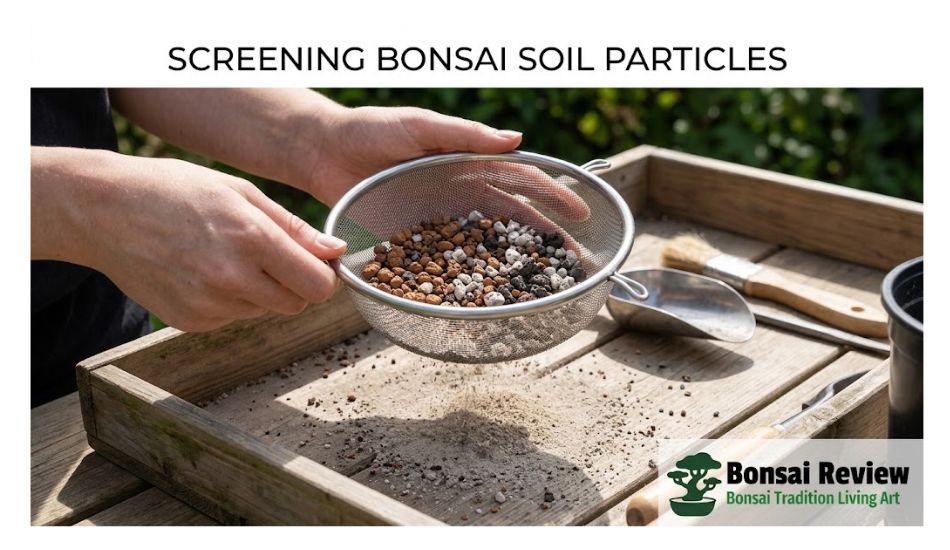
Screening means sorting soil materials by size. It helps you remove dust and pieces that are too large.
Follow these steps:
- Place each material in a separate tray.
- Use a soil sieve or mesh screen to remove fine dust.
- Remove pieces that are too large for your pot.
- Check that most particles are close to the size you need.
- Keep the prepared materials separate until you are ready to mix them.
Screen akadama, pumice, and lava rock before mixing. Handle the materials gently so you do not crush them into smaller pieces.
Why Dust Removal Matters
Fine dust can fill the spaces between larger particles. This may slow drainage and reduce airflow around the roots.
You can rinse dusty materials if needed. Let excess water drain before mixing, and check that the material does not break down easily.
Beginner tip: Do not use ordinary garden soil or fine sand as a quick replacement for bonsai soil. These materials can pack tightly and reduce the air spaces that bonsai roots need.
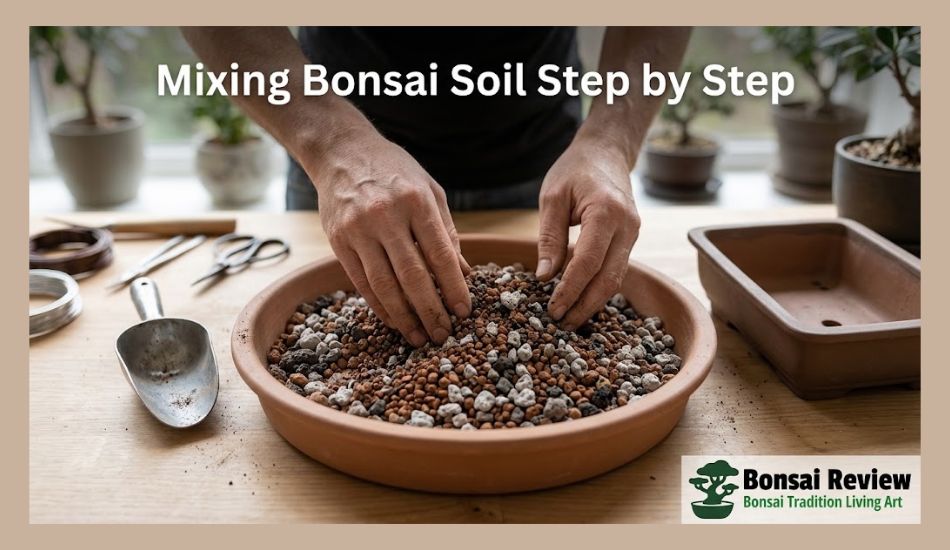
How to Mix Bonsai Soil Step by Step
Now that you have chosen your materials and particle size, you can make your own bonsai soil mix. You do not need special skills or costly tools. A small bucket, a sieve, and a measuring cup are enough to get started.
For your first batch, use the balanced mix of 50% akadama, 25% pumice, and 25% lava rock.
Step 1: Gather Your Materials
You will need:
- Akadama
- Pumice
- Lava rock
- A sieve or soil screen
- A clean bucket or mixing tray
- A measuring cup or small container
Use the same container to measure each material. This keeps your mix close to the right ratio.
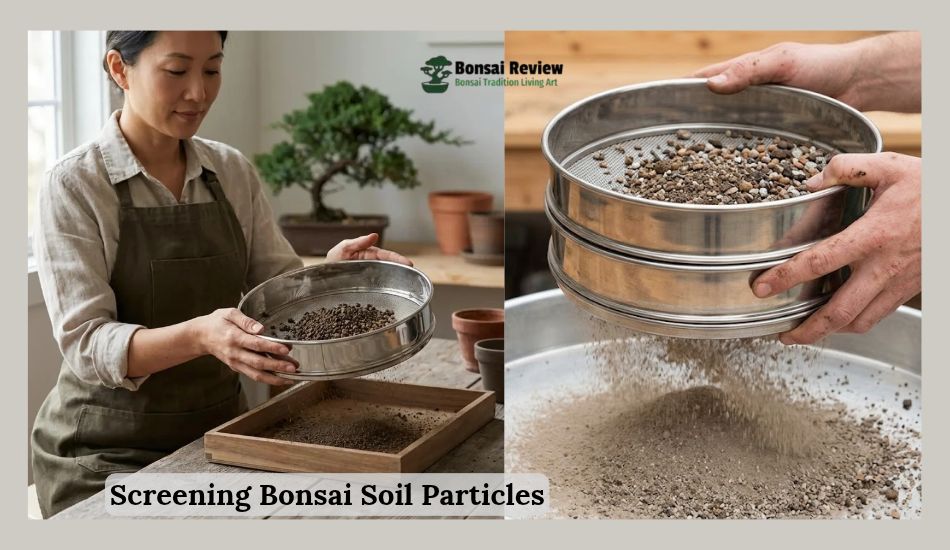
Step 2: Screen Each Material
Pour each material through a sieve. Remove fine dust and pieces that are too large for your bonsai pot.
This step helps keep the mix open. It also makes the particle size more even, so water can move through the soil more easily.
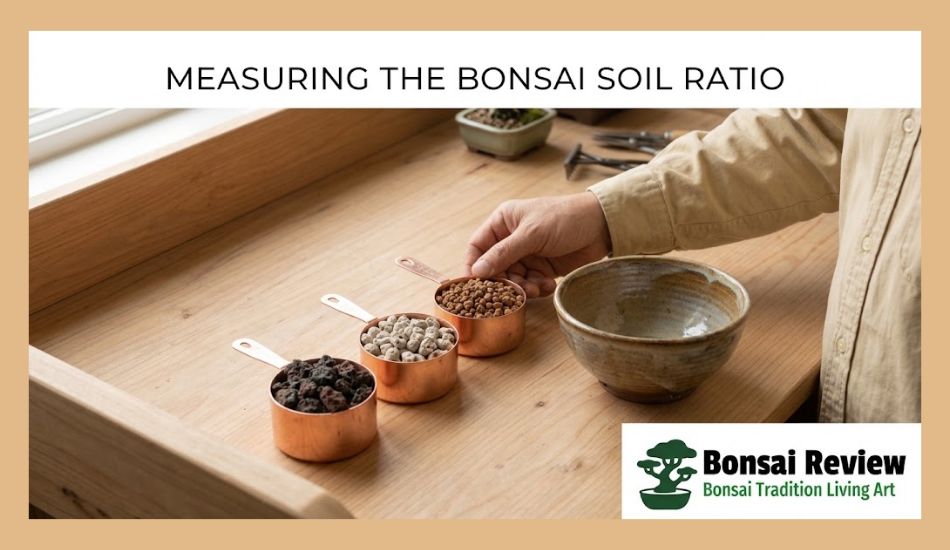
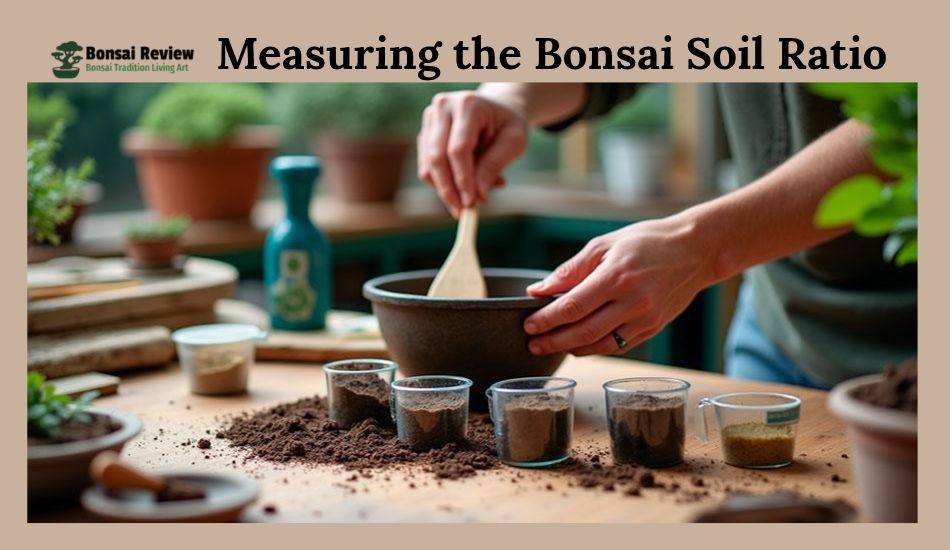
Step 3: Measure the Ingredients
For a small batch, measure the materials like this:
| Material | Amount |
| Akadama | 2 cups |
| Pumice | 1 cup |
| Lava rock | 1 cup |
| Total | 4 cups |
This gives you a mix of 50% akadama, 25% pumice, and 25% lava rock by volume.
You can make a larger batch by using the same ratio. For example, use 4 cups of akadama, 2 cups of pumice, and 2 cups of lava rock.
Step 4: Mix the Materials
Add all three materials to your clean bucket or tray. Stir them gently until the particles are spread evenly.
Check the mix by hand. You should see all three materials throughout the batch, not one material gathered in a single spot.
Do not crush the particles while mixing. Broken pieces and extra dust can change how the soil holds water and drains.
Step 5: Check the Moisture
Your bonsai soil does not need to be soaking wet before you use it.
If the materials are very dusty, rinse them as needed and allow excess water to drain. Keep the mix loose rather than pressing it into a tight mass.
Step 6: Test the Mix Before Potting
Place a small amount of your mix in a pot with drainage holes. Slowly pour water over the surface.
Watch how the water moves through the mix. It should enter the spaces between the particles and drain from the holes below.
If water drains very slowly, check for dust, fine particles, or broken material. If the mix dries too quickly after watering, you may need to adjust the ratio.
Beginner tip: Do not change the whole batch after one test. First, check the drainage and moisture over several watering cycles. Then adjust the mix based on how it performs.
How to Test Your Bonsai Soil Mix at Home
Your bonsai soil may look good in a bucket, but you still need to test how it handles water. A simple test can help you spot problems before you use the mix for your tree.
You will compare three soil mixes to see which one drains well and holds enough moisture for your growing conditions.
What You Need for the Test
Gather these items:
- Three small pots with drainage holes
- Three trays to catch excess water
- A measuring cup
- A timer or stopwatch
- Water
- Your three soil mixes
- A notebook to record your results
Use pots of the same size and fill each one with the same amount of soil. This makes your results easier to compare.
Step 1: Prepare Three Soil Mixes
Label your pots A, B, and C.
- Mix A: 50% akadama, 25% pumice, and 25% lava rock.
- Mix B: 30% akadama, 35% pumice, and 35% lava rock.
- Mix C: 60% akadama, 20% pumice, 10% lava rock, and 10% pine bark fines.
These mixes give you three different starting points. Mix A is balanced, Mix B has more pumice and lava rock, and Mix C contains more akadama and some pine bark fines.
Step 2: Add the Same Amount of Water
Place each pot over a separate tray. Slowly pour the same measured amount of water over each mix.
Start your timer when you begin pouring. Watch how quickly water starts to leave the drainage holes and whether it spreads across the soil surface.
Do not judge the mix by drainage time alone. Particle size, soil moisture, pot shape, and the way you pour water can all affect the result.
Step 3: Record Your Results
Use this table to record what happens during your test.
| Test result | Mix A | Mix B | Mix C |
| Time until water first drains | ___ sec | ___ sec | ___ sec |
| Water drains freely | Yes / No | Yes / No | Yes / No |
| Water pools on the surface | Yes / No | Yes / No | Yes / No |
| Moisture after 24 hours | ___ | ___ | ___ |
| Your notes | ___ | ___ | ___ |
Record your own results instead of relying on a set drainage time. There is no single time that proves a bonsai soil mix is right for every tree.
Step 4: Check the Soil After 24 Hours
Touch the soil near the top of each pot. Then check the moisture a little deeper with a clean wooden stick.
Record whether each mix feels dry, slightly moist, or very wet. Repeat the check after another day if needed.
A mix that drains freely but stays slightly moist may work well for your tree. A mix that remains wet for too long may need more open particles or less fine material. A mix that dries very fast may need more moisture retention or more frequent watering.
Step 5: Choose the Best Mix for Your Conditions
Compare your notes. Do not choose a mix only because it drains the fastest.
Your goal is to find a mix that lets extra water escape while keeping enough moisture for healthy roots. The right balance depends on your tree species, pot size, weather, and watering routine.
Important: This home test compares how the mixes behave in pots. It does not prove which mix will grow a tree best over the long term. Test your chosen mix with care and watch how your bonsai responds after potting.
Common Bonsai Soil Mixing Mistakes to Avoid
Making bonsai soil is simple, but a few mistakes can affect root health. The good news is that you can avoid most of them before you fill your bonsai pot.
1. Using Too Much Fine Dust
Fine dust can fill the gaps between soil particles. This may slow drainage and reduce airflow around the roots.
How to fix it: Screen akadama, pumice, and lava rock before mixing. Remove excess dust and very small particles.
2. Adding Regular Garden Soil
Garden soil can become dense inside a shallow bonsai pot. It may hold too much water and leave less air around the roots.
How to fix it: Use a suitable bonsai soil mix with stable particles. If you add organic material, choose a type that works for your tree and growing conditions.
3. Choosing Particles That Are Too Large
Large pieces can leave big gaps in a small pot. This may reduce contact between the soil and fine roots.
How to fix it: Match the particle size to your pot and root system. For many small bonsai trees, particles around 2–4 mm are a useful starting point.
4. Using the Same Mix for Every Tree
A mix that works well for one bonsai may not work as well for another. Tree species, climate, sunlight, and watering habits all affect soil needs.
How to fix it: Start with a balanced mix, then adjust it based on how quickly the soil dries and how your tree responds.
5. Packing the Soil Too Tightly
Pressing the soil down hard can reduce the air spaces between particles. Roots need both water and air to grow well.
How to fix it: Add soil around the roots in small amounts. Use a chopstick to guide the mix into empty spaces, but do not crush or tightly pack the particles.
6. Ignoring Drainage Holes
Even a good soil mix cannot drain well if the pot’s drainage holes are blocked.
How to fix it: Check that the holes are open before potting. Secure mesh over the holes to stop soil particles from falling out, but do not block water flow.
7. Watering by a Fixed Schedule
Your bonsai may need water every day in hot weather but much less often in cool conditions. A fixed schedule can leave the roots too wet or too dry.
How to fix it: Check the soil moisture before watering. Water thoroughly when needed, and let excess water drain from the pot.
Beginner tip: If your bonsai soil stays wet for too long, do not add more water just because the surface looks dry. Check the moisture deeper in the pot first.

How to Adjust Your Bonsai Soil Mix for Different Trees
Your bonsai soil mix should match your tree’s needs. Some trees use water fast, while others need the soil to stay moist for longer. Your climate and growing space also affect how the mix performs.
Use these tips to adjust your mix without making it too complex.
1. Soil Mix for Ficus Bonsai
Ficus bonsai trees are popular with beginners. They grow well indoors in a bright spot, but they still need good airflow around their roots.
- Start with a balanced mix of akadama, pumice, and lava rock.
- Add a little more moisture-holding material if the soil dries too fast.
- Avoid dense soil that stays wet for long periods.
Best for: Beginners who grow ficus bonsai indoors in a bright spot.
2. Soil Mix for Juniper Bonsai
Juniper bonsai trees need outdoor growing conditions, plenty of light, and good airflow. They usually benefit from soil that drains well.
- Start with a free-draining mix.
- Use enough pumice and lava rock to keep the soil open.
- Check moisture often during hot, dry weather.
Best for: Outdoor bonsai growers who want a mix that allows extra water to drain.
3. Soil Mix for Chinese Elm Bonsai
Chinese elm bonsai trees can grow indoors in some conditions, but they generally do best outdoors where they receive natural light and seasonal changes.
- Start with a balanced soil mix.
- Adjust water retention based on your climate.
- Check the soil more often during hot or windy weather.
Best for: Beginners who want a tree that can adapt to different growing styles when its needs are met.
4. Soil Mix for Pine Bonsai
Pine bonsai trees generally need excellent drainage and careful watering. Their soil needs can vary by species and growing conditions.
- Choose a stable, open soil mix.
- Avoid heavy garden soil that holds too much water.
- Learn the needs of your pine species before changing the mix.
Best for: Growers who can provide outdoor light and manage watering with care.
Quick Guide to Choosing Your Mix
| Your growing condition | What to consider |
| Hot, dry weather | A mix that holds enough moisture |
| Cool, damp weather | A more open mix with good drainage |
| Small bonsai pot | Smaller, even particles |
| Large bonsai tree | Particle size suited to the pot and root system |
| Soil dries too quickly | Slightly increase moisture retention |
| Soil stays wet too long | Check particle size, dust, drainage holes, and watering habits |
These are starting points, not fixed recipes. Do not change your soil mix based on tree species alone. Your local weather, pot, and watering routine matter too.
Beginner tip: Change one part of your mix at a time. This makes it easier to see which change helps your bonsai soil hold water or drain better.
How to Store Your Extra Bonsai Soil Mix
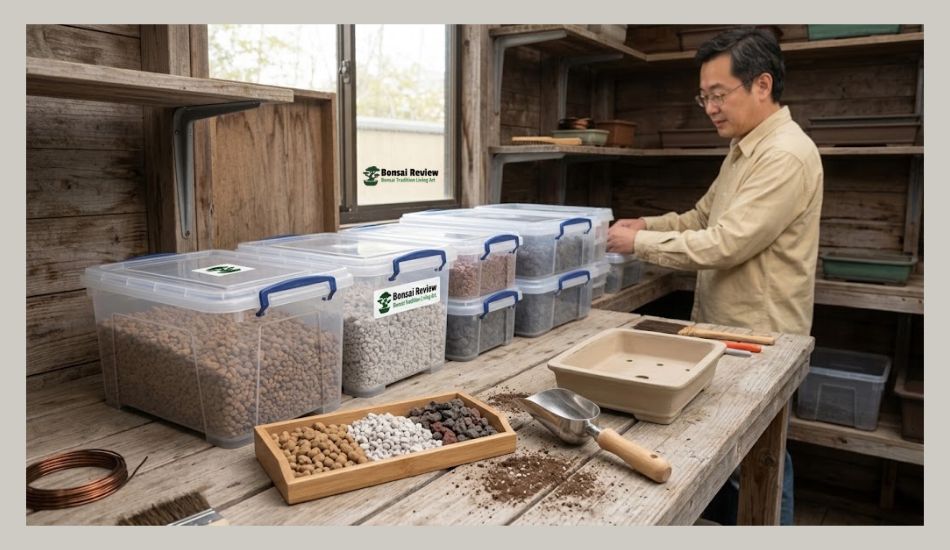
If you make more bonsai soil than you need, you can save the extra for your next potting job. Good storage helps keep the mix clean, dry enough for storage, and ready to use.
Choose the Right Storage Container
Use a clean bucket with a lid or a sturdy plastic storage box. Make sure the container is large enough to hold the mix without crushing the particles.
Keep your soil away from garden dirt, fallen leaves, and other materials that may carry pests or plant disease.
Follow These Simple Storage Tips
- Remove extra water: If you rinsed the materials, let excess water drain before storing them.
- Keep the mix clean: Use a clean scoop when taking soil from the container.
- Protect it from rain: Store the container in a dry, covered place.
- Avoid crushing the particles: Do not place heavy items on top of the mix.
- Label your mix: Write down the ingredients and their ratios so you can make the same mix again.

Can You Reuse Leftover Bonsai Soil?
Unused soil that has stayed clean and has no signs of pests or disease can often be used again. Check it before adding it to a new pot.
Do not reuse old soil from a sick bonsai without first finding out what caused the problem. Soil from a tree with root rot, serious pest damage, or a soil-borne disease may carry harmful organisms.
If the particles have broken down into fine material, screen the mix again. Replace materials that have become too soft or compacted.
Beginner tip: Write the mix ratio and the date on your storage container. This makes it easier to track which mix worked best for your trees.
When Should You Replace Your Bonsai Soil?
Even a well-made bonsai soil mix can break down over time. Some particles become soft and small. This can reduce the air spaces around the roots and slow water drainage.
You do not need to replace your soil on a fixed schedule. Check its condition and your tree’s health before deciding.
Signs Your Bonsai Soil Needs Attention
Look for these common signs:
- Water drains slowly: Water stays on the surface or takes much longer to pass through the pot than before.
- Soil particles break down: Akadama and other materials may crumble into fine pieces over time.
- The soil feels dense: The mix may have lost some of its air spaces.
- Roots fill the pot: A dense root mass may need pruning and fresh soil during repotting.
- The tree grows poorly: Weak growth can have many causes, so check light, watering, pests, and root health before blaming the soil.
One sign alone does not always mean you need to repot. Check the full growing conditions first.
How Often Should You Report a Bonsai?
The timing depends on the tree species, age, growth rate, and climate. Young, fast-growing trees often need repotting more often than older trees.
Some trees may need fresh soil every one to two years, while others can go longer. Check your tree’s roots and soil condition rather than following a strict calendar.
For most trees, repotting is best done when the tree can recover well from root work. The right season varies by species and local climate.
What to Do When You Repot
- Choose a fresh soil mix suited to your tree.
- Remove the tree from its pot with care.
- Check the roots for dead, damaged, or unhealthy sections.
- Remove old soil as needed without causing unnecessary root damage.
- Add fresh soil and work it gently around the roots.
- Water thoroughly and let excess water drain.
Avoid heavy root pruning unless your tree needs it and you know how to do it safely.
Beginner tip: Do not repot a weak or sick bonsai just because the soil looks old. First, find the cause of the problem. Repotting can add stress to a tree that is already struggling.
Conclusion: Make the Right Bonsai Soil Mix for Your Tree
Learning how to mix bonsai soil helps you give your tree the right balance of water, air, and root support. You can start with 50% akadama, 25% pumice, and 25% lava rock. Then adjust the mix to suit your tree, pot size, and local weather.
Remember to screen your materials, choose the right particle size, and test how the soil drains. Watch how quickly the mix dries after watering. If it stays wet for too long or dries too fast, make small changes until you find the right balance.
Mix a small batch, test it in a pot, and record your results. This simple test will help you choose a soil mix that works for your bonsai before you repot your tree.
Related article: Bonsai Soil Mix: What to Buy and How to Mix It
FAQs About Mixing Bonsai Soil Begainner’s Guide.
1. Can I make bonsai soil at home?
Yes. You can mix bonsai soil at home with materials such as akadama, pumice, and lava rock. Screen the materials, measure the right amounts, and test how the mix drains before using it.
2. What is the best ratio for bonsai soil?
A good starting point for many bonsai trees is 50% akadama, 25% pumice, and 25% lava rock. However, the best ratio depends on your tree, pot size, climate, and watering habits.
3. Can I mix bonsai soil without Akadama?
Yes. You can use pumice and lava rock with another suitable material that holds moisture, such as pine bark fines. Choose materials that stay firm and leave enough space for air and water to move through the mix.
4. Can I use regular potting soil for bonsai?
Regular potting soil may hold too much water or become compacted in a shallow bonsai pot. Some potting mixes can work when used in a suitable blend, but check how well they drain and hold air before using them.
5. Do I need to wash bonsai soil before mixing?
Not always. Screen each material to remove excess dust. If the material is very dusty, you can rinse it and let the extra water drain before mixing.
6. What particle size is best for bonsai soil?
For many small bonsai trees, particles around 2–4 mm are a useful starting point. Medium-sized trees may suit particles around 3–6 mm. Choose a size that fits your pot and root system.
7. How do I know if my bonsai soil drains well?
Water the mix in a pot with open drainage holes. Watch whether water passes through the soil without long-lasting surface pooling. Then check the moisture over the next day or two to see how quickly the mix dries.
8. Should indoor and outdoor bonsai use different soil mixes?
They may need different mixes because their growing conditions can vary. Indoor trees may dry more slowly in low light, while outdoor trees may dry faster in sun and wind. Choose your mix based on the tree and its actual drying rate.
9. Can I reuse old bonsai soil?
You can often reuse unused soil that has stayed clean and shows no signs of pests or disease. Soil taken from an unhealthy tree needs more care. Remove broken-down particles and avoid reusing soil that may carry root disease.
10. How often should I change bonsai soil?
There is no single schedule for every tree. Young trees may need repotting every one to two years, while older trees may go longer. Check root growth, soil breakdown, and drainage to decide when repotting is needed.