


The Best Soil For Bonsai Tree roots need air, water, and good drainage to grow well. If your bonsai soil stays wet for days or dries out too fast, your tree may struggle. Yellow leaves, weak growth, and root rot can follow.
Regular garden soil may hold too much water and pack down inside a small bonsai pot. Your bonsai lives in a tiny pot. It has very little soil. So the soil has a big job.
Many new growers use plain potting soil. It feels easy. But the roots stay wet. They can’t get air. Then the tree gets sick.
In this guide, you will learn what to buy. You will learn how to mix it. And you will test three mixes at home to see which one drains best.
Best Soil for Bonsai Tree: How to Mix It Easily for Beginners
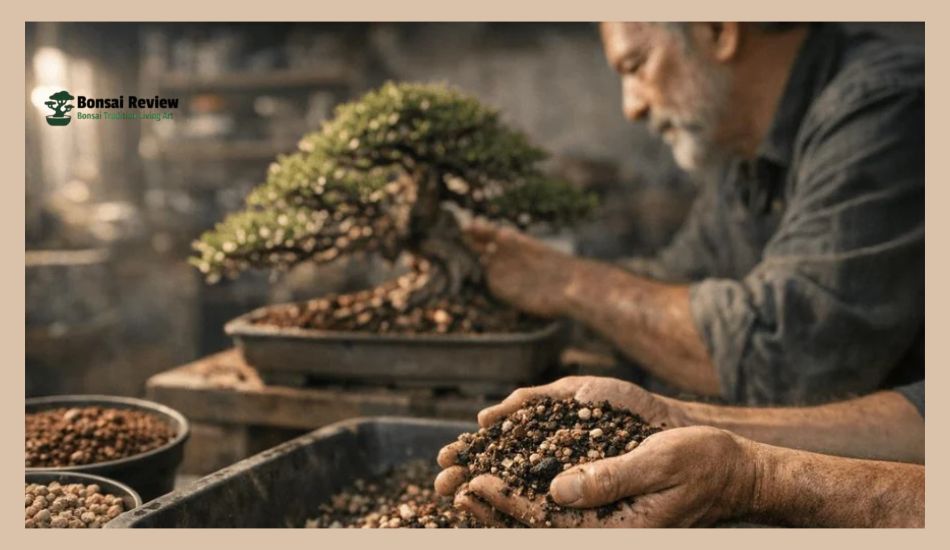
The best soil for a bonsai tree drains fast. It holds a little water. And it lets air reach the roots.
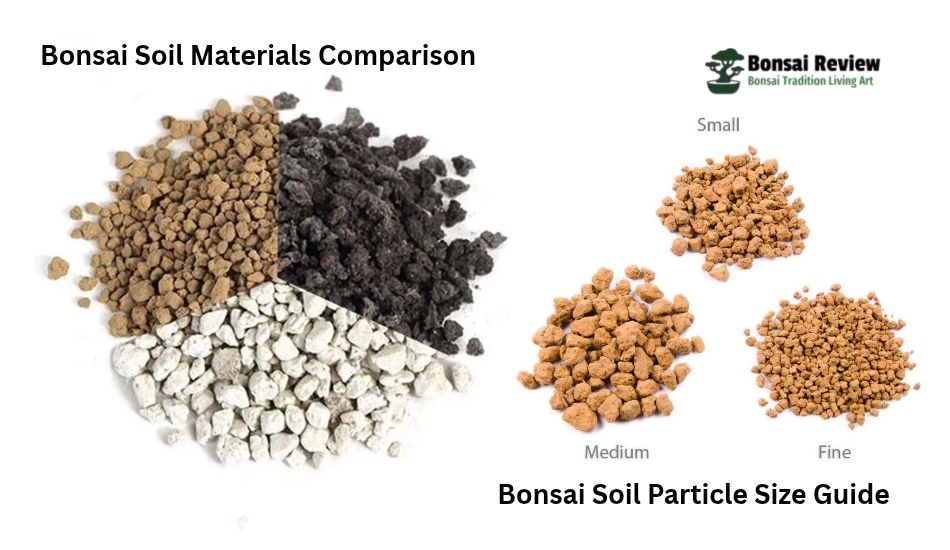
Most growers use three things: akadama, pumice, and lava rock. Mix one part of each. Many growers call this Boon’s mix. It is a safe place to start.
Then change it to fit your tree. A thirsty tree needs more akadama. A tree that hates wet feet needs more pumice and lava.
Why Plain Potting Soil Fails
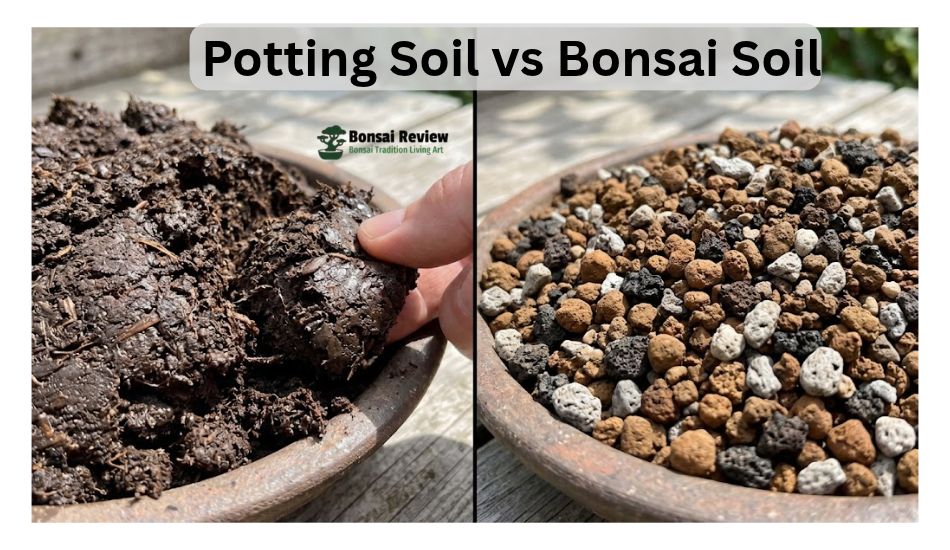
Potting soil holds water for too long. When it dries, it can turn hard. Hard soil is tough to water well.
Soil with no real structure also has little air. Roots need air as much as water. Without it, your tree can get very sick.
Bonsai soil is different. It is made of small, hard bits. Water slips through the gaps. Air slips in behind it.
One more thing. A pot that is too big for the tree keeps roots wet, even in a good mix. So pick a snug pot.
What to Buy: Your Best Soil For Bonsai Tree Shopping List
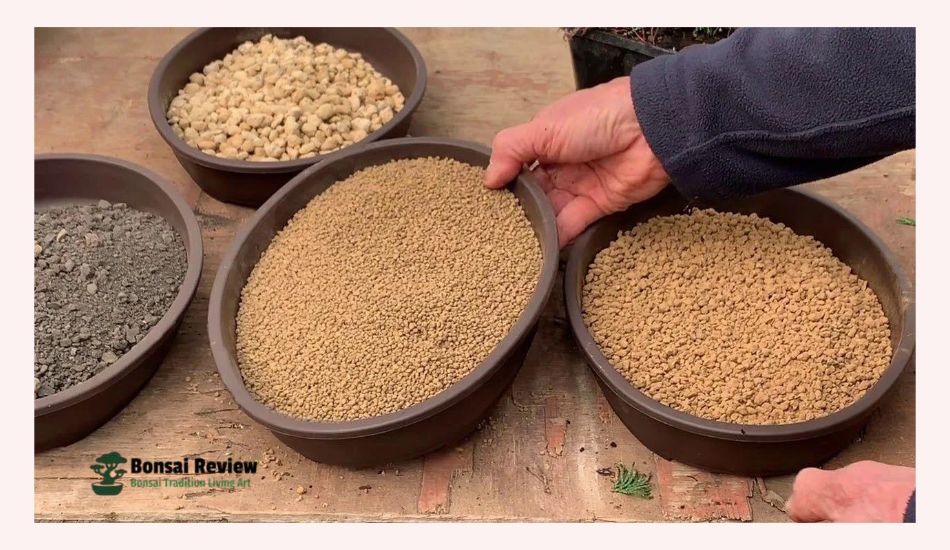
Here are the parts you will see in shops. Some you need. Some are just nice to have.
| Soil part | What it is | What it does | Watch out |
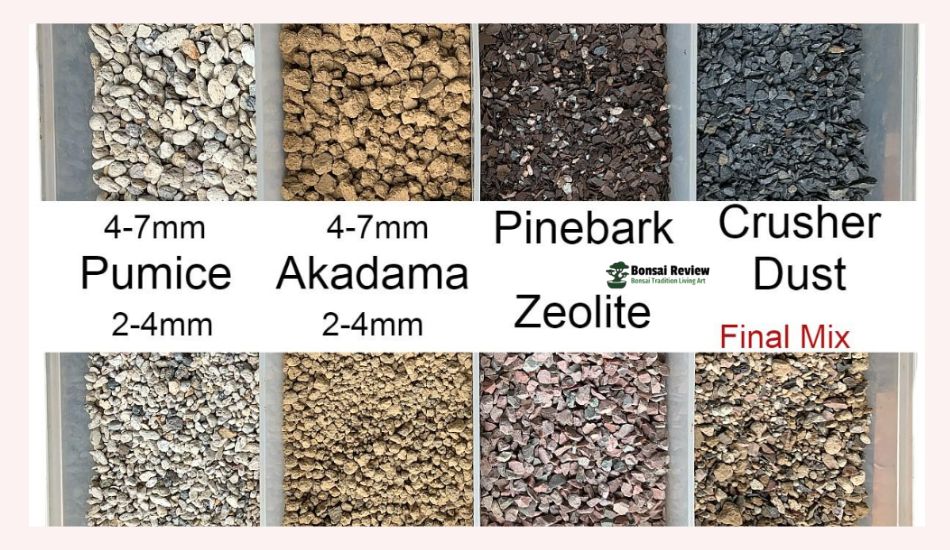
| Akadama | Soft, baked clay from Japan | Holds water and food. Roots love it. | Costs more. Breaks down in about two years. |
| Pumice | Light, airy volcanic rock | Let’s air. Stops soil from packing down. | Sizes vary a lot. Sift it. |
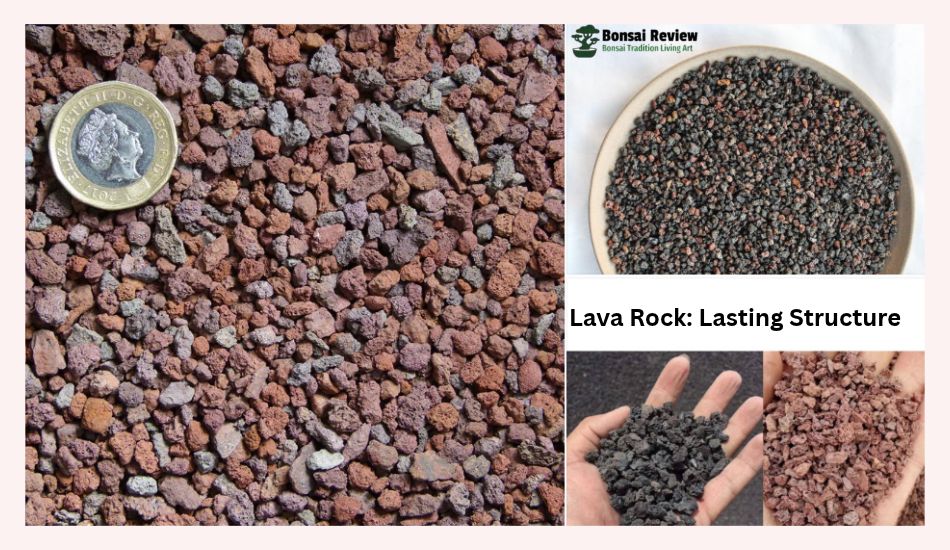
| Lava rock (scoria) | Rough red or black rock | Helps water drain. Roots grip it well. | It is not the same as akadama. |
| Kanuma | Pale, soft soil | Made for azaleas. | Only needed for azaleas. |
| Fine gravel or grit | Small, hard stones | Helps water move through. Often cheap. | Holds almost no water. |
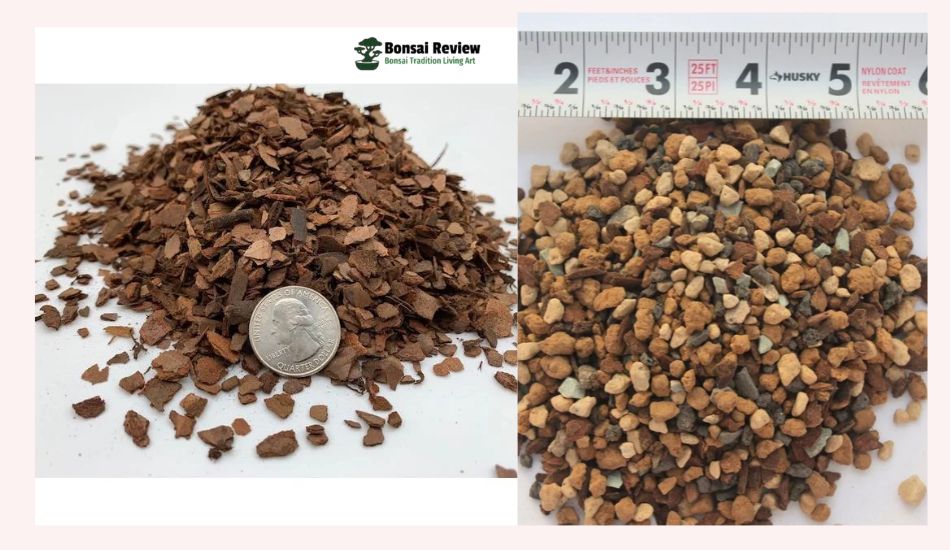
| Pine bark | Tiny bits of bark | Holds extra water for thirsty trees | Breaks down. Use a little. |
| Perlite | Light white bits | A cheap stand-in for pumice | So light it can wash away. |
Not sure what to grab first? Buy pumice and lava rock. They are the base of most good mixes. Add akadama if you can.
Beginner tip: If your bonsai soil stays wet for several days, check your watering habits, pot drainage holes, and soil texture before adding more drainage material. If the soil dries within hours on a hot day, you may need a mix that holds more water.
Next, let’s look at which bonsai soil materials you should buy and how to choose them without wasting money.
Particle Size: The Part Most Guides Skip
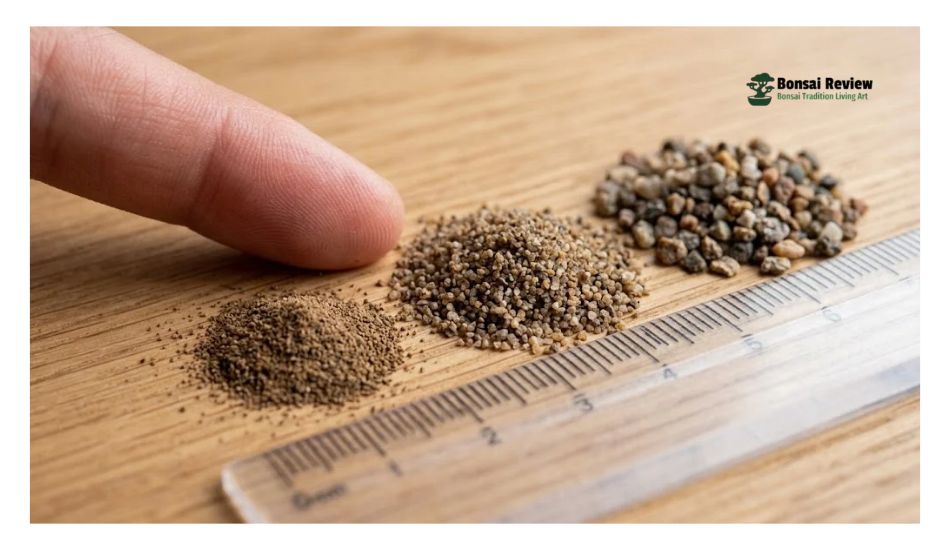
Particle size means how big each bit of soil is. It matters a lot. In fact, many growers say size matters more than what the bits are made of.
Here is why. Small bits slip into the gaps between big bits. The gaps fill up. Then water can’t leave. Your fancy mix acts like mud.
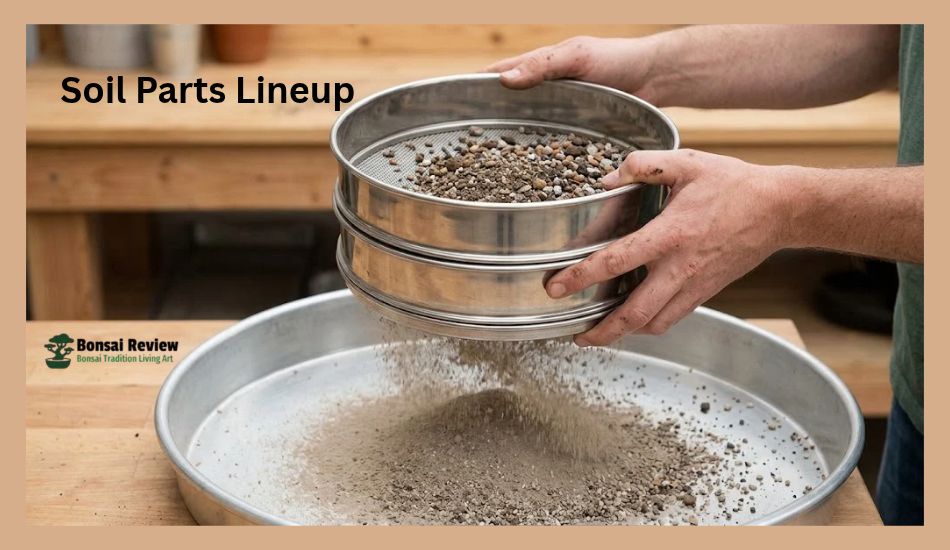
So you sift. Sifting means shaking soil through a screen. You throw out the dust. You throw out huge chunks.
Most bonsai sieve sets have three screens: 2 mm, 5 mm, and 7 mm. That is about the width of a grain of rice, a pea, and a bigger pea.
Here is a simple guide:
- Under 2 mm: Dust. Throw it out.
- 2 to 5 mm: Great for small trees and shallow pots.
- 5 to 7 mm: Good for bigger trees and deeper pots.
- Over 7 mm: Too big for the main mix. Some growers use it as a bottom layer in large pots.
One more rule. Smaller bits hold the wet zone higher in the pot. So small soil needs a deeper pot. In a shallow pot, use bigger bits.
You don’t need to be perfect. Just remove the dust and the giants.
Which Mix for Which Tree?
There is no single mix for every tree. Here are common recipes that growers share. Treat them as a start, not a law.
| Tree type | Mix (by parts) |
| Most trees, to start | 1 akadama, 1 pumice, 1 lava rock |
| Maples and other trees that drop leaves | 2 akadama, 1 pumice, 1 lava rock |
| Pines and junipers | Equal parts of akadama, pumice, and lava. Or use more pumice and lava. |
| No-akadama option | 1 pumice, 1 lava rock |
| Tropical trees, like ficus | 30% to 50% akadama. The rest is pumice and lava. |
| Young trees still growing | 25% akadama or less |
| Trees that like more water | 1 pine bark, 1 gravel, 1 lava, 1 pumice |
| Azaleas | 100% kanuma |
Let your tree guide you. If the soil stays wet too long, use less akadama. If it dries too fast, add more.
How to Mix Bonsai Soil in 6 Steps
- Gather your parts: Pick a recipe from the table above.
- Sift each part: Use your screens. Keep the size you want. Toss the dust.
- Use one scoop for all: Say one scoop is one part. Count the scoops.
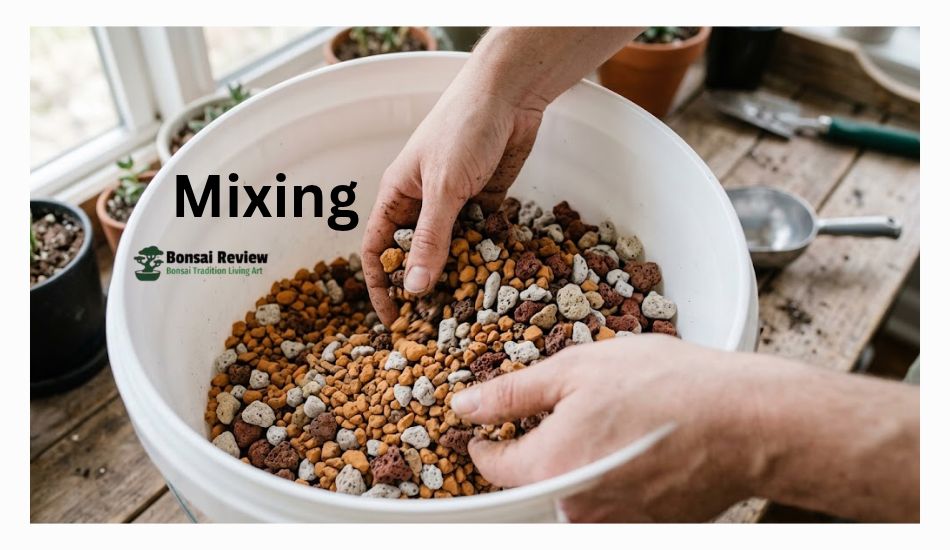
- Pour into a bucket: Mix with your hands or a trowel until it looks even.
- Cover the pot holes: Use mesh so soil can’t fall out.
- Pot your tree: Work the soil gently between the roots. Water well.
Old soil can work too. Some growers sift it again and mix it with fresh pumice, lava, or bark.
Important: These materials are not a complete recipe for every tree. Tropical bonsai, such as Ficus, may need a different balance from outdoor junipers or pines. Your local heat, humidity, pot size, and watering routine also matter.
Test 3 Mixes at Home: Drainage Time and Particle Size
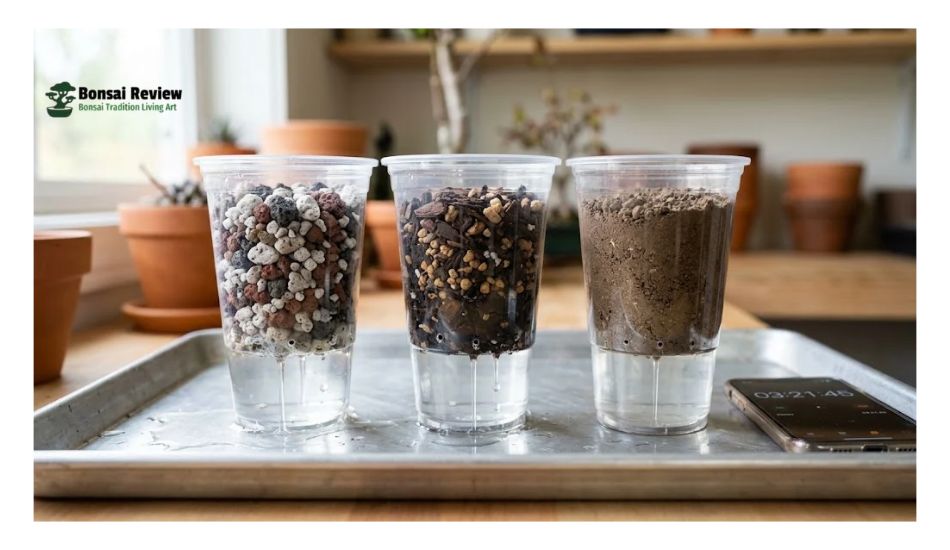
Reading is good. Testing is better. This test takes about 30 minutes. It shows you which mix drains best.
The three mixes
- Mix A (classic): 1 akadama, 1 pumice, 1 lava rock
- Mix B (no akadama): 1 pumice, 1 lava rock
- Mix C (budget): 1 pumice, 1 perlite, 1 succulent mix
What you need
- Three plastic cups with the same size holes poked in the bottom
- Sieves (2 mm, 5 mm, 7 mm)
- A measuring cup
- A stopwatch (your phone works)
- A kitchen scale
The steps
- Sift all parts. For Mixes A and B, keep the bits between 2 mm and 5 mm. Do the same for Mix C when you can.
- Fill each cup to the same line.
- Weigh each full cup. Write it down. This is the dry weight.
- Pour 200 ml of water slowly over each cup. Start the stopwatch when you finish pouring.
- Stop the watch when the water slows to one drip every few seconds.
- Weigh each cup again. Subtract the dry weight. That is how much water the mix kept.
Your results table Best Soil For Bonsai Tree
| Mix | Bit size | Drain time | Water kept (grams) |
| A: Classic | 2–5 mm | [add your seconds] | [add your grams] |
| B: No akadama | 2–5 mm | [add your seconds] | [add your grams] |
| C: Budget | [add your size] | [add your seconds] | [add your grams] |
How to read it
- A fast drain time with little water kept means a dry mix. It suits pines and junipers.
- A slower drain with more water kept means a mix that holds moisture. It suits maples and trees that like water.
- If one cup drains much slower than the others, check for dust. Small bits may be clogging the gaps.
Run the test again with unsifted soil. You will likely see the difference right away.
Change How You Water
Your mix changes how often you water. A fast-draining mix dries sooner. So you may water more often.
Don’t follow a calendar. Check the soil instead. Water when the top feels just dry. Then water until it runs out of the holes.
Whatever mix you pick, you still need to learn how to water and feed it.
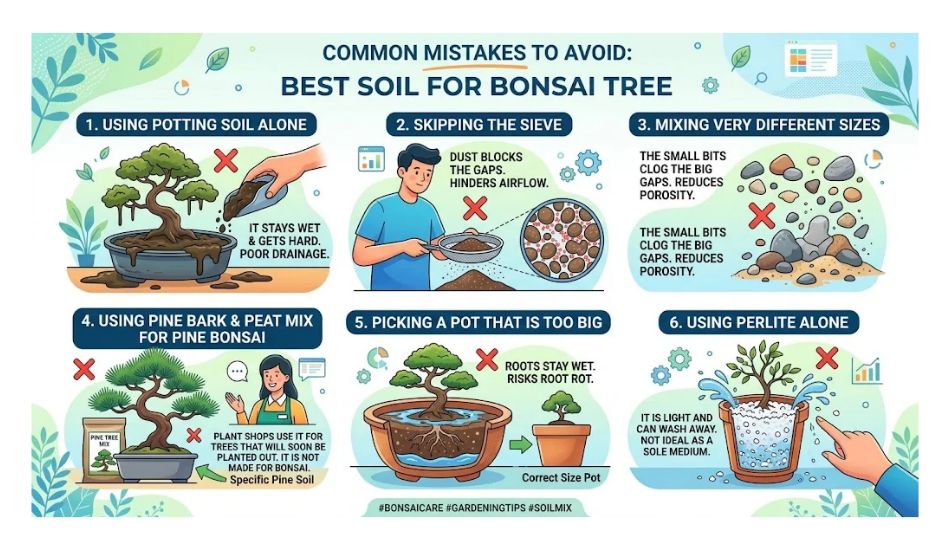
Common Mistakes to Avoid Best Soil For Bonsai Tree
- Using potting soil alone: It stays wet and gets hard.
- Skipping the sieve: Dust blocks the gaps.
- Mixing very different sizes: The small bits clog the big gaps.
- Using a pine bark and peat mix for pine bonsai: Plant shops use it for trees that will soon be planted out. It is not made for bonsai.
- Picking a pot that is too big: Roots stay wet.
- Using perlite alone: It is light and can wash away.
Where to Buy and How to Save Money
Bonsai clubs, bonsai nurseries, and bonsai supply shops are your best places to buy akadama. Pumice and lava rock are often easier to find.
Akadama costs more. If your budget is tight, try the no-akadama mix of pumice and lava. Many growers get great results with it. One grower even started his first tree in 100% lava rock, and it did fine.
Potting up big trees gets costly fast. Buy in bulk and sift at home.
How Much Bonsai Soil Do You Need?
You do not need to buy a large bag of bonsai soil for one small tree. First, estimate how much soil your pot can hold. Then buy enough material for your mix, with a little extra for spills and future use.
The amount depends on your pot’s size, depth, and root ball.
1. Estimate the Soil Volume
For a rectangular bonsai pot, use this simple formula:
Volume = Length x Width x Depth
Measure in centimeters. Divide the result by 1,000 to get liters.
Example: Your pot is 30 cm long, 20 cm wide, and 5 cm deep.
3 x 20 x 5 = 3,000 cm3
3,000 /1,000=3 liters
Your pot has a maximum geometric volume of about 3 liters. The actual amount of new soil you need may be lower because the root ball takes up space.
2. Calculate the Materials for Your Mix
For a basic mix of equal parts akadama, pumice, and lava rock, divide the total soil volume by three.
| Total mix | Akadama | Pumice | Lava rock |
| 1.5 liters | 0.5 L | 0.5 L | 0.5 L |
| 3 liters | 1 L | 1 L | 1 L |
| 6 liters | 2 L | 2 L | 2 L |
| 9 liters | 3 L | 3 L | 3 L |
These amounts are measured by volume, not weight. If you are repotting an existing tree, estimate the space left after placing the root ball in the pot.
3. Use This Simple Bonsai Soil Calculator
Enter your pot measurements to estimate its volume and the amount of each material for a 1:1:1 mix.
Best Soil For Bonsai Tree Calculator
Use the inside measurements of your pot. The root-space adjustment is an estimate.
- Inside length (cm)-30
- Inside width (cm)-20
- Inside depth (cm)-5
- Space taken by roots (%)-15
- Estimated full pot volume 3.00 liters
- Estimated new soil needed 2.55 liters
For an equal-parts mix;
- Akadama = 0.85 L
- Pumice = 0.85 L
- Lava rock = 0.85 L
Note: This calculator treats the pot as a rectangular box. Real bonsai pots may have sloping sides or rounded corners. The root-space percentage is only an estimate, so check the amount needed during repotting.
4. How Can You Keep Costs Down?
- Buy only what you need. Small bags are useful when you have one or two bonsai.
- Compare the price per liter. A larger bag may cost less per liter, but only if you will use it.
- Avoid poor-quality substitutes. Fine garden soil may seem cheaper but can cause drainage problems in a shallow pot.
- Store unused materials properly. Keep them in a clean, dry place and protect them from dirt and debris.
Quick Bonsai Soil Checklist
Use this checklist before you put your bonsai in a new mix.
Before you use your mix
0 of 7
- The soil materials suit my tree species.
- The particles are a suitable size for my pot and roots.
- I have removed excess fine dust.
- The mix holds some moisture but lets extra water drain.
- The pot’s drainage holes are open.
- I have tested a small batch before mixing more.
- I know how to check soil moisture before watering.
Remember: Good bonsai soil does not need to be costly or complicated. Start with suitable materials, use the right particle size, and watch how your tree responds. Your own drainage and moisture tests can help you make better choices over time.
Final Verdict: Which Bonsai Soil Mix Should You Choose?
The best soil for a bonsai tree is the mix that gives your roots enough air and water without staying soggy. You do not need to buy every soil product available. Start with a simple mix, test how it drains, and adjust it to suit your tree.
Here is the easiest way to choose:
- If you are a beginner: Start with equal parts akadama, pumice, and lava rock.
- If you want a lower-cost mix: Try equal parts pumice and lava rock, then check how quickly it dries.
- If your soil dries too fast: Consider adding more akadama or another suitable water-holding material.
- If your soil stays wet too long: Check the particle size, fine dust, drainage holes, and watering habits before changing the recipe.
Do not choose your soil by drainage speed alone. Compare all three test mixes under the same conditions. Record when water first comes out, when the main flow slows, and how much moisture remains afterward.
Most importantly, watch your bonsai over time. Your tree’s growth, soil moisture, and root health will help you decide whether your mix needs to change.
Choose two or three suitable soil materials, prepare a small test batch, and record your results before repotting your bonsai. This simple test can help you avoid wasted money and give your tree a better place to grow
FAQs: Best Soil For Bonsai Tree for Beginner’s guide
1. Can I use regular potting soil for bonsai?
Not alone. It holds too much water and can turn hard. Some growers add a little to a bonsai mix, but it should not be the base.
2. Do I have to use akadama?
No. Some growers skip it. They use pumice and lava in equal parts instead. Pines do well in a fully rock-based mix.
3. What size should the soil bits be?
For most trees, 2 to 5 mm works for small pots. Use up to 7 mm for bigger trees. Always remove dust.
4. Does a drainage layer help?
Growers don’t agree. Some use big rocks at the bottom of large pots. Others say it can raise the wet zone instead. Skip it in shallow pots.
5. Is one mix right for every tree?
No. Match the mix to the tree, the pot, and your watering habits.
Your Next Step
Pick one recipe. Sift your soil. Run the three-cup test. Write down your numbers.
Then repot one tree. Watch how fast the soil dries. Adjust next time. In a year, you will know your own best mix.
Sources I Studied
- Bonsai Tonight: What kind of soil should I use for my bonsai? bonsaitonight.com/2021/03/07/what-kind-of-soil-should-i-use-for-my-bonsai/
- Bonsai Plaza: Soil matters bonsaiplaza.com
- Planta: Bonsai soil getplanta.com/article/articles/soil/bonsaisoil
- Nate’s Nursery: Bonsai Soil Information natesnursery.com/bonsai-soil-information/
- Bonsai Nut forum threads on mixes, conifers, and particle size bonsainut.com
- Bonsai Mirai forum: Understanding sieve mesh sizes forum.bonsaimirai.com
- Ausbonsai forum: What grade soil would you use ausbonsai.com.au