


Are bonsai trees toxic to humans? If you love the idea of keeping a bonsai at home but worry it could be harmful, you’re not alone. Bonsai isn’t a single dwarf indoor decor plant home and office.
It’s a traditional living art form, ancient to modern, a lifeline connecting to nature and the human life cycle. They can use many species, and some are perfectly safe while others can cause problems if touched or eaten.
Popular non-toxic options include juniper, Chinese elm, Japanese maple, pine, fukien tea, and serissa, which you can enjoy without fear as long as you still avoid tasting or chewing their leaves.
But specific species, like ficus bonsai with its milky latex sap, azalea bonsai with grayanotoxins in every part, jade plant that can upset your stomach, or fruiting types like cherry and plum bonsai that carry cyanide in wilted leaves and seeds, need extra care.
Even wisteria can pose a risk due to its poisonous seed pods. The solution is simple for beginner bonsai lovers.
Also, know exactly which species you have, place toxic varieties out of reach of children or pets, wear gloves when pruning, and wash your hands after handling any bonsai.
You can enjoy the beauty, calm, and even NASA Clean Air Study, air-purifying benefits of bonsai, like NASA identified several plants as particularly effective air purifiers, including the Snake Plant, Peace Lily, and English Ivy. Those from ficus, juniper, or jade, without putting anyone in danger.
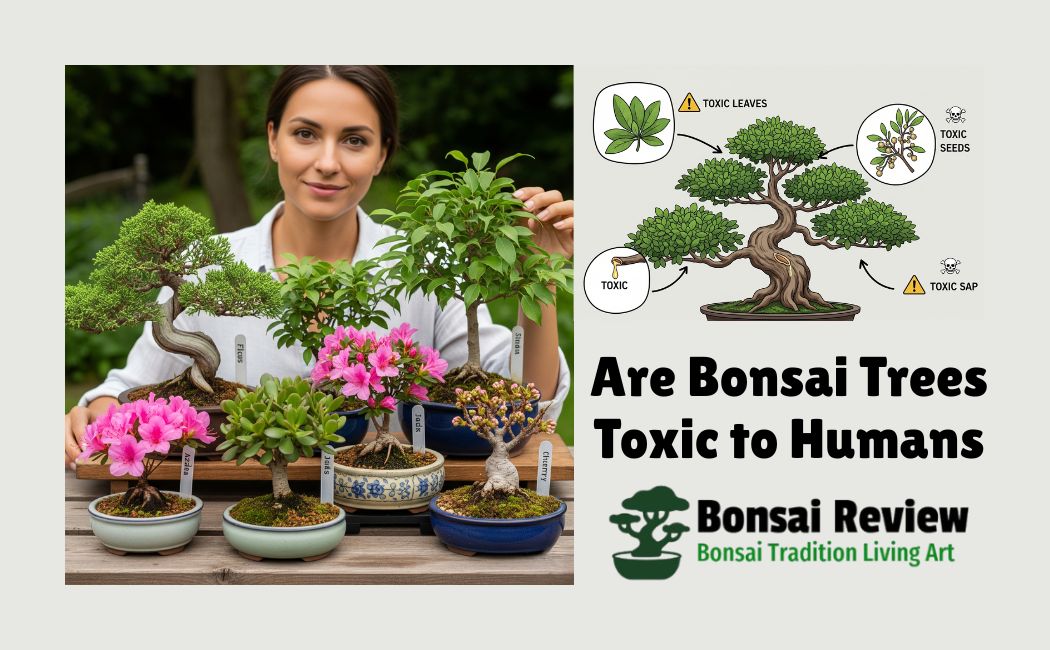
Are Bonsai Trees Toxic to Humans? Understanding Bonsai & Toxicity.
Bonsai is not a special kind of tiny tree for your indoor species. It’s a way of training and shaping many different species into miniature form. This means the safety of a bonsai depends entirely on the plant used.
For example, a juniper bonsai is generally safe to touch, while a ficus bonsai contains milky latex sap that can irritate skin.
A Chinese elm or Japanese maple can be handled without worry, but an azalea bonsai carries grayanotoxins in every leaf, stem, and flower.
Even the jade plant, often grown as a bonsai for its thick, glossy leaves, can cause mild stomach upset if eaten.
Fruiting species like cherry and plum bonsai may look harmless, yet their wilted leaves and seeds can contain cyanide.
Some, like wisteria, have highly poisonous seed pods. This variety is why identifying your bonsai species is the first step in determining whether it’s toxic or safe.
Once you know the plant’s name, you can research its toxicity level, place it in a safe spot, and take simple precautions, so you can focus on enjoying its beauty and benefits, including the air-cleaning qualities found in ficus, juniper, and jade bonsai.
Which Bonsai Trees Are Safe for Kids and Pets?
Since bonsai can be made from many tree species, each one has its own safety profile. Some are harmless to touch, while others contain chemicals that can cause irritation or illness if eaten.
Are Bonsai Trees Toxic to Humans? The table below shows common bonsai species, their level of toxicity to humans, the parts that are dangerous, and the symptoms they might cause.
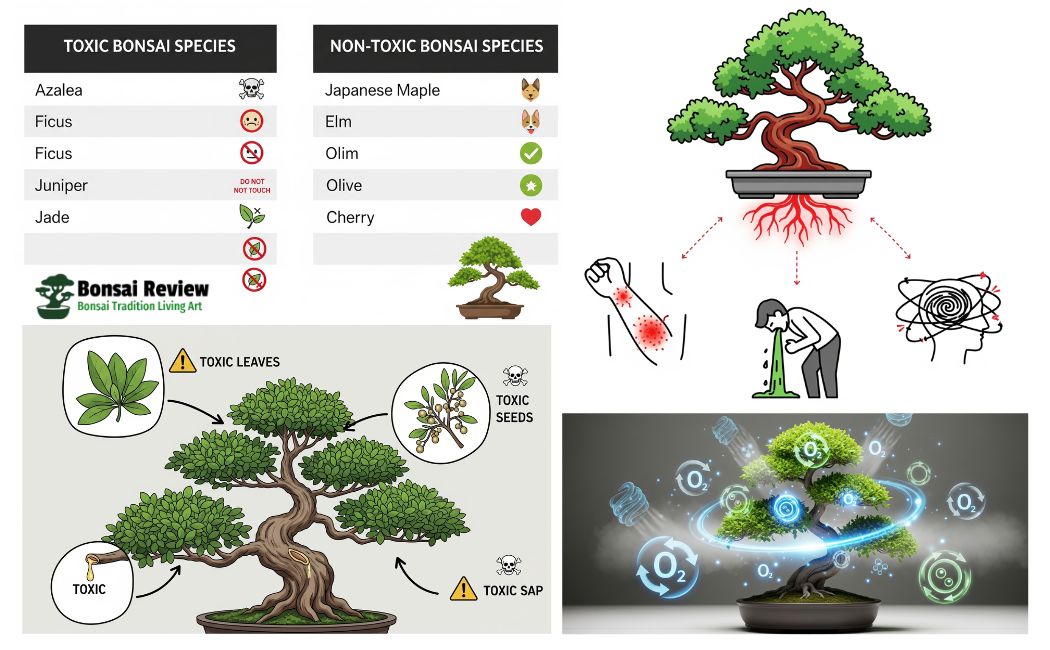
Are Bonsai Trees Toxic to Humans? Common Bonsai Species & Their Toxicity.
| Bonsai Species | Toxic to Humans? | Toxic Parts | Possible Symptoms | Safety Notes |
| Ficus (Ficus microcarpa, F. benjamina) | Mildly toxic | Milky latex sap | Skin irritation, nausea, vomiting | Wear gloves when pruning; wash hands |
| Azalea (Rhododendron spp.) | Highly toxic | All parts | Nausea, vomiting, irregular heartbeat | Keep out of reach of children |
| Jade Plant (Crassula spp.) | Mildly toxic | Leaves | Vomiting, stomach upset | Do not ingest |
| Cherry Bonsai (Prunus spp.) | Highly toxic | Wilted leaves, seeds | Cyanide poisoning symptoms | Avoid ingestion entirely |
| Plum Bonsai (Prunus spp.) | Highly toxic | Wilted leaves, stems, seeds | Cyanide poisoning symptoms | Keep away from kids/pets |
| Wisteria | Highly toxic | Seed pods | Severe nausea, vomiting | Avoid growing if you have toddlers |
| Juniper | Non-toxic | None | Safe to handle | Still, wash your hands after handling |
| Chinese Elm | Non-toxic | None | Safe to handle | Good for beginners |
| Japanese Maple | Non-toxic | None | Safe to handle | Indoor-safe option |
| Pine (Pinus spp.) | Non-toxic | None | Safe to handle | Keep needles away from your mouth |
| Fukien Tea (Carmona) | Non-toxic | None | Safe to handle | Attractive flowering bonsai |
| Serissa | Non-toxic | None | Safe to handle | Suitable for indoor display |
Tip: Are Bonsai Trees Toxic to Humans? Even with non-toxic bonsai, it’s best to avoid putting leaves or branches in your mouth and to wash your hands after care work.
Are Bonsai Trees Toxic to Humans? How Toxic Bonsai Affects Humans?
If you own a toxic bonsai, the danger usually comes when parts of the plant are eaten or the sap touches your skin. Many bonsai trees, like azalea or cherry bonsai, contain plant chemicals that can disrupt your body’s normal functions.
1. Ingestion: Eating toxic parts, such as the seeds of cherry bonsai or seed pods of wisteria, can release harmful compounds into your body.
For example, cherry and plum trees contain cyanogenic glycosides, which can turn into cyanide during digestion. Even a small amount can cause nausea, headache, confusion, and in severe cases, breathing problems.
Imagine a child playing with an azalea bonsai on the coffee table. The bright flowers look tempting, and they take a small bite. Within an hour, the child begins to feel dizzy and vomits repeatedly. This is because grayanotoxins in azalea block normal muscle and nerve function.
2. Skin Contact: Some bonsai species, such as ficus, produce a milky latex sap when branches are cut or damaged. If this sap touches your skin, it can cause redness, itching, or blisters. For sensitive people, even brief contact can be uncomfortable.
Example: A beginner trims a Ficus bonsai without gloves. A drop of sap touches their wrist. Within minutes, the skin turns red and itchy. Washing the area with soap and water helps, but it stays irritated for a day.
3. Eye Contact: Sap from bonsai like ficus can also harm your eyes. If sap splashes while pruning, it can cause burning, swelling, and blurry vision.
4. Allergic Reactions: Some people have allergic responses to bonsai pollen, especially from flowering types like fukien tea. This can cause sneezing, watery eyes, and a skin rash.
Safety Note: Always wash your hands after handling bonsai, avoid eating near them, and wear gloves when pruning toxic types.

Are Bonsai Trees Toxic to Humans? First Aid for Bonsai Poisoning in Humans.
If you suspect that you or someone else has been poisoned by a bonsai plant, quick action is vital. Here’s what you should do for different situations:
1. If Swallowed: Are Bonsai Trees Toxic to Humans?
- Stay calm but act fast. Do not wait for symptoms to get worse.
- Remove any plant parts from the mouth and rinse with clean water.
- Call your local poison control center or emergency number immediately. In the U.S., dial 1-800-222-1222. In other countries, keep your local emergency number handy.
- Do not try to make the person vomit unless a medical expert instructs you to.
Example: A child swallows part of a wisteria seed pod. You quickly rinse their mouth, call poison control, and follow their guidance while watching for signs like nausea or drowsiness.
2. If Sap Touches Skin;
- Wash the area with soap and cool water for at least 15 minutes.
- Remove contaminated clothing.
- Apply a mild lotion or aloe vera gel to soothe irritation.
Example: You prune a ficus bonsai, and sap drips on your arm. After washing it off thoroughly, the redness fades within a few hours.
3. If Sap Gets into the Eyes;
- Flush the eye with clean water for at least 15 minutes.
- Keep blinking while flushing to help remove toxins.
- Avoid rubbing the eye.
- Seek medical care if pain, redness, or blurred vision continues.
4. If an Allergic Reaction Occurs;
- Take an over-the-counter antihistamine if mild.
- For severe symptoms like difficulty breathing or swelling of the face, call emergency services immediately.
Important: Always keep bonsai out of reach of children and pets. Prevention is easier than treatment.
Which Dwarf Tree Causes the Most Allergies?
Oak, birch, and ash trees are often cited as the worst offenders for causing allergies, due to their abundant, lightweight pollen that easily disperses in the wind. Other trees like alder, cedar, and juniper can also trigger allergic reactions in sensitive individuals. Here’s that short, detailed breakdown: Are Bonsai Trees Toxic to Humans?
- Oak: The Oak trees are known for producing copious amounts of pollen, which can be especially problematic during their long pollen season.
- Birch: The Birch trees are another common culprit, particularly in cooler regions, and their pollen can trigger allergic reactions in many people.
- Ash: Ash trees are also a significant source of allergenic pollen, especially in the Eastern and Southeastern parts of the United States.
- Other notable trees: Alder, cedar, and juniper trees can also cause allergies, with some species being more problematic in certain regions.
- Wind-pollinated vs. insect-pollinated: Wind-pollinated trees like the ones listed above produce light, easily dispersed pollen, making them more likely to cause allergies than trees that rely on insects for pollination, like dogwoods and magnolias.
Toxic Bonsai and Pets: Keeping Cats, Dogs, and Birds Safe.
Pets are curious is a single nibble on a toxic bonsai leaf, seed, or root can cause serious illness or worse. Knowing which bonsai species are dangerous to animals is the first step to protecting your furry or feathered friends.
Common Toxic Bonsai for Pets: Are Bonsai Trees Toxic to Humans?
- Sago Palm (Cycas revoluta): Extremely toxic to cats and dogs, and even a few seeds can cause liver failure.
- Jade Plant (Crassula ovata): Causes vomiting, weakness, and loss of coordination in cats and dogs.
- Azalea (Rhododendron spp.): Can lead to drooling, diarrhea, and potentially fatal heart problems.
- Wisteria Bonsai Tree: The Wisteria dwarf plant seeds and pods can cause vomiting, diarrhea, and depression in pets.
- Cherry Blossom Bonsai (Prunus spp.): Leaves and seeds contain cyanogenic compounds, which can be deadly.
Signs of Bonsai Poisoning in Pets: Are Bonsai Trees Toxic to Humans?
- Drooling or excessive salivation
- Vomiting or diarrhea
- Lethargy or weakness
- Seizures
- Difficulty breathing
Example: A cat chews a few leaves from your azalea bonsai. Within an hour, it starts drooling and showing signs of weakness. A quick call to the vet and prompt treatment can save its life.
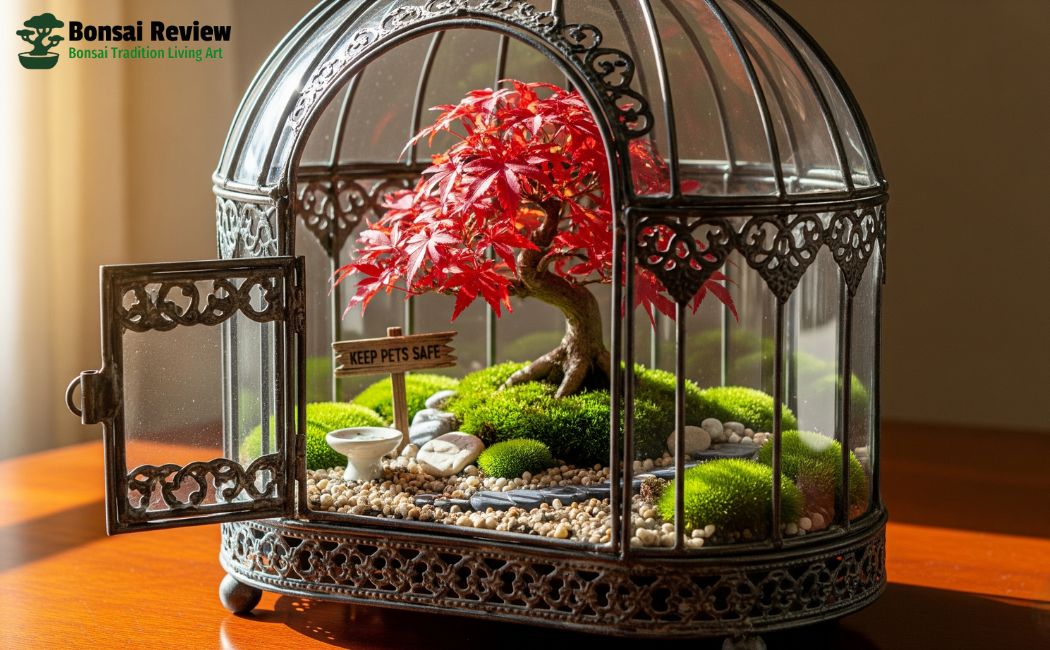
How to Protect Your Pets?
- Keep bonsai on high shelves or in rooms pets can’t enter.
- Use decorative cages or terrariums to cover small bonsai.
- Train pets to avoid plants by using safe deterrents, like citrus peels near pots.
- Practice with a beginner bonsai lover, the toxic tiny plant list from the ASPCA Poison Control website.
Vet Contact Tip: In the U.S., call the ASPCA (Animal Poison Control Center) at (888) 426-4435. Outside the U.S., store your local veterinary emergency contact number in your phone.
Safe Bonsai Alternatives for Homes with Children or Pets
Are Bonsai Trees Toxic to Humans? If you want the calming beauty of bonsai but worry about safety, choosing non-toxic species is key. These bonsai are generally safe to keep around kids and pets, but remember, no plant should ever be chewed or eaten.
Recommended Non-Toxic Bonsai Species:
- Juniper Bonsai: Known for its hardy nature and fresh pine scent, it’s safe to handle and makes a great indoor or outdoor bonsai.
- Chinese Elm Bonsai: A popular beginner-friendly tree that poses no known toxicity risks.
- Japanese Maple Bonsai: Beautiful and safe, though best placed out of reach to avoid accidental chewing.
- Pine Bonsai: A classic choice with non-toxic needles, but keep pets from chewing pine needles to avoid irritation.
- Fukien Tea Bonsai (Carmona): Safe and produces delicate white flowers, ideal for indoor display.
- Serissa Bonsai: Known as “Tree of a Thousand Stars” for its tiny flowers, it’s pet-safe and visually appealing.
Tips for Keeping Bonsai Safe: Are Bonsai Trees Toxic to Humans?
- Always place bonsai in areas that children and pets cannot access easily.
- Use hanging planters or display stands to keep bonsai off the floor.
- Educate family members, especially children, not to touch or eat plant parts.
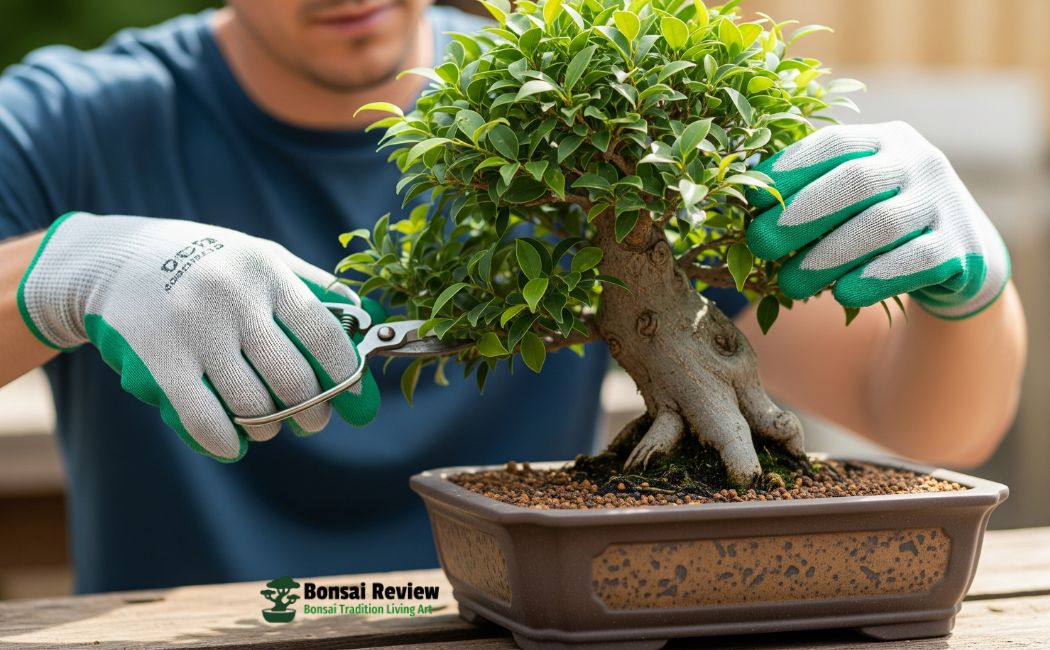
- Practice regular bonsai care with gloves and hand washing to prevent irritation.
By choosing the right species and taking simple safety steps, you can enjoy the beauty and peaceful presence of bonsai without worry.
Conclusion: How Dangerous Are Bonsai Trees for Humans?
Are bonsai trees toxic to humans? The answer depends on the species you choose. While many bonsai, like juniper, Chinese elm, and Japanese maple, are safe to handle and display, others, such as ficus, azalea, and cherry bonsai, contain toxins that can cause skin irritation or serious health issues if ingested. The key to enjoying bonsai safely lies in knowing your tree.
By identifying your bonsai species, keeping potentially toxic varieties out of reach of children and pets, wearing gloves when pruning, and practicing good hygiene, you can bring the calming beauty and air-purifying benefits of bonsai into your home without worry. With care and awareness, bonsai can be a safe and rewarding addition to your living space.
Helpful article: Bonsai Trees Health Benefits: Hype or Healing Potential?
FAQs: Are Bonsai Trees Toxic to Humans?
1. Are bonsai trees toxic to humans?
Most bonsai trees are safe to touch, but some species like ficus, azalea, and cherry can cause skin irritation or digestive problems if parts are eaten. Always know your bonsai species to stay safe.
2. Which bonsai trees are safe for homes with children and pets?
Juniper, Chinese elm, Japanese maple, pine, fukien tea, and serissa bonsai are generally safe choices. Even then, avoid letting kids or pets chew on leaves.
3. Can bonsai trees cause allergic reactions?
Yes, some bonsai, like Fukien tea, may trigger allergies in sensitive people, causing sneezing or skin irritation. Washing hands after handling helps reduce risk.
4. Is it safe to prune bonsai without gloves?
For non-toxic bonsai, pruning without gloves is usually fine. But with plants like ficus or azalea, gloves protect your skin from irritation caused by sap or toxins.
5. Do bonsai trees help clean indoor air?
Yes, species like ficus, juniper, and jade bonsai can improve indoor air quality by absorbing pollutants while adding beauty to your space.
6. Is it bad luck to have a bonsai tree in your house?
According to Vastu Shastra principles, Bonsai trees can positively influence well-being and prosperity when thoughtfully placed in homes. They bring positive energy, attract financial stability, symbolize growth and harmony, improve focus and concentration, balance Feng Shui energies, and enhance aesthetic appeal.
7. Is an air purifier scientifically proven?
One study cited several reports that HEPA air purifiers can benefit people with various allergies by reducing the concentration of indoor allergens, including pollen, House Dust Mite (HDM) allergens, and dog dander. But not all research agrees, especially when it comes to dust mites and animal dander.
8. Why did NASA create air purifiers?
Updated versions of the device were subsequently flown on several missions to the International Space Station. While NASA’s primary objective in developing the technology was to eliminate ethylene, the scrubbers were capable of removing all kinds of unwanted organic particles from the air.
9. Is bonsai safe?
Bonsai trees are generally safe for pets as they do not produce toxic substances that pose a threat to cats and dogs. It’s crucial to consider the specific needs and behaviors of your pets to ensure a seamless integration.