


Bonsai Leaf Drop Winter Prevention in the US is what you start searching for when you see your tree losing leaves, and you feel scared it may die.
In cold American winters, dry heater air, weak sunlight, and sudden temperature changes make many bonsai weak, especially Ficus bonsai indoors and Chinese elm bonsai or Juniper bonsai outdoors.
Experts from Bonsai Empire explain that winter leaf drop often comes from stress, not death. The Cleveland Bonsai Club also says frozen roots and dry air are major problems in US homes.
According to Bonsai4Me, most winter damage happens when watering, light, and protection are wrong.
If your bonsai is dropping leaves right now, here will show you how to fix these problems step by step, protect your tree in winter, and help it grow strong again in spring.
Is Leaf Drop in Winter Normal for Bonsai Trees?
When your bonsai starts losing leaves in winter, your first thought is often, “Is my tree dying?” In most cases, the answer is no. Leaf drop is a natural reaction to cold, low light, and dry air, especially in US homes.
According to Bonsai Learning Center, many bonsai trees slow down in winter and enter a resting phase called dormancy. During this time, some trees drop part or all of their leaves to save energy. This is normal for outdoor and deciduous bonsai.
Experts from Bonsai Tonight explain that indoor tropical bonsai also lose leaves in winter when they do not get enough sunlight or humidity. This does not mean the tree is dead. It means the tree is stressed and asking for better care.
The team at Sun Green Bonsai says that healthy roots, proper watering, and stable temperature are the main signs that your bonsai is still alive, even if leaves are falling.
So, if your bonsai is dropping leaves right now, stay calm. In most US winters, this is a warning sign, not the end. When you fix the light, water, and placement, your tiny indoor or outdoor tree can recover and grow again.
Why Your Bonsai Drops Leaves in the US Winter?
When winter starts in the US, your home and outdoor space change fast. These changes make your bonsai stressed. Stress is the main reason leaves begin to fall.
According to Brussels Bonsai, most winter leaf drop comes from sudden climate changes around the tree. Your bonsai cannot adjust quickly, so it reacts by losing leaves.
Here are the main reasons this happens:
1. Cold Air from Windows and Doors
Cold air enters through windows and doors in winter. When your bonsai feels cold at night and warm in the day, it becomes weak. This temperature shock makes leaves fall.
2. Dry Heat from Heaters
Home heaters remove moisture from the air. Experts at Black River Bonsai say dry air is one of the biggest winter problems for indoor bonsai. Dry air makes leaves dry, curl, and drop.
3. Low Sunlight in Winter
Winter days are short. Sunlight is weak. According to Graham Potter Bonsai, low light stops the tree from making enough food. Without energy, leaves cannot stay healthy.
4. Overwatering and Root Rot
In winter, the soil dries slowly. If you water too much, roots stay wet. This causes root rot. When roots are damaged, leaves fall quickly.
5. Sudden Moving and Placement Changes
Moving your bonsai from window to table, or from room to room, confuses the tree. The team at Midori Bonsai explains that frequent moving increases stress and leads to leaf loss.
6. Wrong Winter Care Habits
According to Miyagi Bonsai, many beginners lose leaves in winter because they keep using summer care methods. Winter needs less water, more light, and more protection.
So, when your bonsai drops leaves in winter, it is usually because of cold air, dry heat, low light, or wrong watering. The good news is that bonsai leaf drop winter prevention in the US, which Mr. Thomas Shoji ensures that once you fix these problems, your tree can become healthy again.

Indoor vs Outdoor Bonsai in US Winter: Where Your Tree Should Stay?
In winter, where you keep your bonsai is very important. Many trees lose leaves because they are placed in the wrong spot, inside or outside the home.
According to the Portland Bonsai Society, most winter problems happen when indoor and outdoor bonsai are treated the same way. But they need very different care.
Let’s understand this clearly.
1. Indoor Bonsai in Winter: Ficus and Tropical Trees
If you grow indoor bonsai like Ficus, they stay active all year. They do not sleep in winter. But cold air and dry heat can hurt them fast.
Experts from Bonsai Bar explain that indoor bonsai need stable warmth, good light, and moisture in winter.
For indoor bonsai, you should:
- Keep near a bright south-facing window
- Stay away from heaters and fireplaces
- Use a humidity tray
- Avoid cold drafts
If indoor bonsai do not get enough light and moisture, their leaves turn yellow and fall.
2. Outdoor Bonsai in Winter: Juniper, Elm, Maple Tiny Plants
Outdoor bonsai are different. Trees like juniper and Chinese elm need cold weather. They rest in winter. This rest is called dormancy.
According to Sun Green Bonsai, outdoor bonsai should not be kept inside warm homes during winter. Warm air can confuse the tree and weaken it.
For outdoor bonsai, you should:
- Protect roots from freezing
- Use mulch or soil insulation
- Place near a wall for wind protection
- Use a cold frame or garage if needed
Outdoor trees lose strength when their roots freeze too much. This causes heavy leaf drop in spring.
Indoor vs Outdoor Bonsai: Can Bonsai Survive a US Winter Without Losing Leaves?
| Type | Example Trees | Main Winter Risk | Best Winter Place |
| Indoor Bonsai | Ficus, Ficus Ginseng | Dry air, low light | Bright warm window |
| Outdoor Bonsai | Juniper, Elm, Maple | Frozen roots | Sheltered outdoor area |
When you match your bonsai type with the right place, you remove half of the winter problem. Many US growers save their trees just by fixing placement.
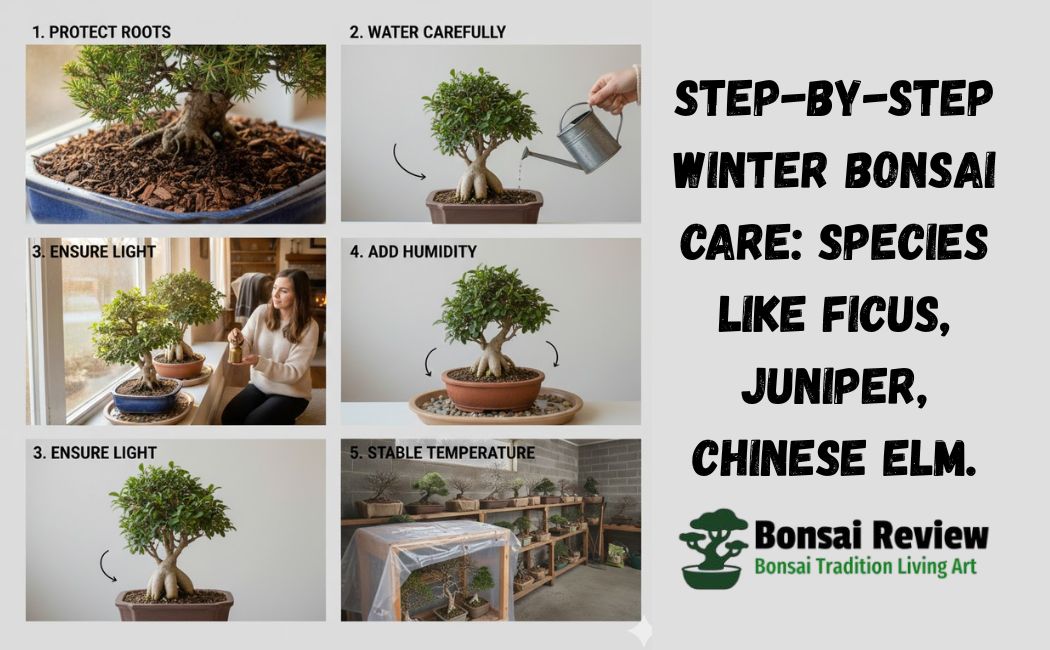
Step-by-Step Care: How You Can Stop Bonsai Leaf Drop in the US Winter?
Now that you know why your bonsai is losing leaves and where it should stay, it is time to fix the problem. When you follow these simple steps, you can protect your tree and help it stay healthy all winter.
According to Bonsai Empire, most winter leaf drop can be stopped when light, water, temperature, and root care are balanced. Experts from Bonsai4Me also say that small daily habits make the biggest difference in winter survival.
Follow these steps carefully.
Step 1: Protect the Roots First
In winter, roots get cold faster than branches. Cold roots stop water and food from moving inside the tree.
To protect roots:
- Place outdoor pots on the ground
- Use mulch, dry leaves, or bark chips
- Avoid leaving pots on cold concrete
- Use a cold frame or insulated box
When roots stay safe, leaf drop reduces naturally.
Step 2: Give Your Bonsai Enough Light
Winter sunlight is weak in the US. Without light, your bonsai cannot make energy.
To improve light:
- Place near a south-facing window
- Clean window glass
- Rotate the pot weekly
- Use a grow light if needed
Good light helps leaves stay green and strong.
Step 3: Water Only When the Soil Needs It
Overwatering is a big winter killer. Soil stays wet longer in cold weather.
Before watering:
- Touch the top soil
- Water only if it feels dry
- Check drainage holes
- Never let water sit in trays
Healthy roots mean fewer falling leaves.
Step 4: Increase Humidity in Dry Homes
Heating systems remove moisture from the air. Dry air dries leaves.
To add moisture:
- Use a humidity tray
- Place water bowls nearby
- Mist lightly in the morning
- Group plants together
More humidity keeps leaves soft and alive.
Step 5: Keep Temperature Stable
Sudden heat and cold confuse your bonsai. Stress leads to leaf loss.
To control temperature:
- Keep away from heaters
- Avoid cold drafts
- Do not move daily
- Choose one stable spot
A calm environment helps your tree rest safely.
Step 6: Reduce Care, Not Attention
In winter, your bonsai grows slowly. It needs less action, not neglect.
Do this:
- Stop heavy fertilizing
- Prune only if needed
- Check the soil weekly
- Watch the leaf color
Gentle care helps recovery.
When you protect roots, control water, improve light, and keep air moist, your bonsai stops panicking. Leaves stay longer, and new buds appear in spring.

Best Overwintering Methods for Bonsai in the US
In many parts of the United States, winter becomes too cold for bonsai roots to survive without protection. According to Bonsai Tonight and Black River Bonsai, choosing the right overwintering method is one of the most important steps to stop leaf drop.
Use this table to choose the best option for your situation.
Bonsai Overwintering Methods in the US Winter
| Method | Best For | Temperature Range | Main Benefit | Important Tip |
| Cold Frame | Outdoor bonsai (Juniper, Elm, Maple) | 25°F to 40°F (-4°C to 4°C) | Protects from wind and deep frost | Open on warm days for air |
| Garage Storage | Very cold areas | 32°F to 45°F (0°C to 7°C) | Prevents root freezing | Provide some light |
| Mulch Bed | Mild winter zones | 28°F to 38°F (-2°C to 3°C) | Keeps roots insulated | Use dry leaves or bark |
| Ground Burying | Heavy frost regions | 30°F to 40°F (-1°C to 4°C) | Natural soil warmth | Cover up to the first branch |
| Shed / Basement | Small collections | 35°F to 45°F (2°C to 7°C) | Stable temperature | Avoid total darkness |
| Indoor Window | Tropical bonsai (Ficus) | 60°F to 75°F (16°C to 24°C) | Keeps the tree active | Add humidity |
How to Use This Table for Bonsai Leaf Drop Winter Prevention in the US?
- If you live in a very cold state, choose garage or shed storage
- If winters are mild, mulch beds and cold frames work well
- Never leave unprotected pots in open wind and snow
- If you grow tropical bonsai, use bright indoor windows
Choosing the right overwintering method protects roots, reduces stress, and stops heavy leaf drop in winter.
5 Most Signs Your Bonsai Is in Real Trouble During Winter?
Even when you follow all care steps, sometimes bonsais show early warning signs that indicate serious stress. Recognizing these signs early helps you act before your tree suffers permanent damage.
According to Midori Bonsai, observing your bonsai weekly in winter is crucial. Both indoor and outdoor trees can show stress differently.
Here are the main signs to watch for:
1. Yellowing or Browning Leaves: Leaves turning yellow or brown, especially on Ficus bonsai and Ficus ginseng, indicate either overwatering, underwatering, or low humidity.
2. Soft or Weak Branches: Branches that bend easily without breaking suggest the tree is losing strength. Experts at Bonsai4Me note that this can happen when roots are cold or damaged.
3. No Buds or Growth: If your Chinese elm bonsai or Juniper bonsai shows no bud swelling or new growth in late winter, it is stressed and may need additional protection or root care.
4. Wet or Smelly Soil
Standing water in trays or soil that smells bad signals root rot, which often causes rapid leaf drop.
5. Dying Bonsai Signs
When leaves drop completely and branches become brittle, your bonsai is at serious risk. This is more common in outdoor trees exposed to freezing temperatures without insulation.
Tip: Early detection is the key. If you see one or two warning signs, adjust water, humidity, and temperature immediately. Quick action can save your bonsai before winter ends.
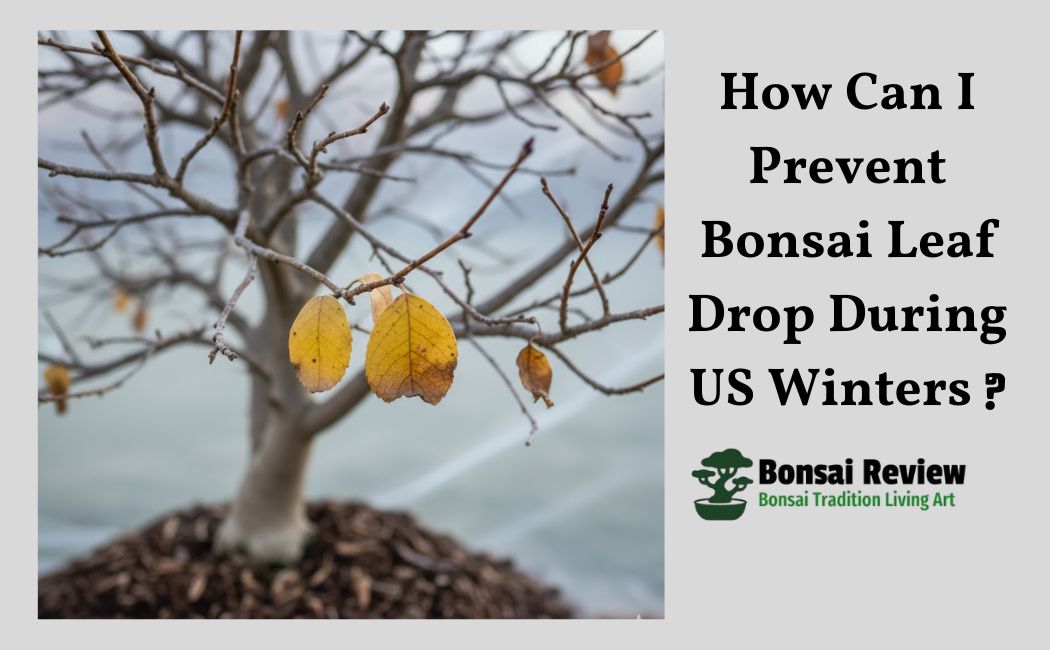
6 Basic Winter Mistakes That Make Bonsai Lose Leaves
Even experienced bonsai growers sometimes make simple mistakes that cause unnecessary leaf drop in winter. According to Bonsai Empire and Bonsai Learning Center, these errors are easy to fix once you know what to avoid.
Here are the most common winter mistakes in the US:
1. Placing Bonsai Near Heaters or Fireplaces: Heat dries the air too quickly, especially for indoor Ficus bonsai. Leaves curl, dry, and fall off.
2. Overwatering in Cold Weather: Many beginners continue summer watering routines. In winter, soil stays wet longer, causing root rot and leaf drop.
3. Not Providing Enough Light: Low winter sunlight weakens both indoor tropical bonsai and outdoor deciduous bonsai, leading to yellowing and leaf loss.
4. Moving Bonsai Too Often: Changing placement frequently confuses the tree. Sudden temperature changes cause stress that leads to leaf drop.
5. Ignoring Humidity: Dry indoor air from heaters is deadly for Ficus ginseng or other tropical bonsai. Not using humidity trays or misting regularly accelerates leaf loss.
6. Skipping Root Protection for Outdoor Bonsai: Juniper, Chinese elm, and Japanese maple bonsai need insulation or cold frames. Leaving roots exposed to freezing temperatures often results in heavy leaf drop and weakened trees.
Tip: The best way to prevent winter leaf drop is to combine proper placement, root protection, careful watering, and stable temperature. Avoid these common mistakes, and your bonsai will survive winter in the US safely.
Best Bonsai Trees for US Winters
Choosing the right bonsai species makes winter care much easier. Some trees handle cold, low light, and short days better than others, while tropical bonsai need careful indoor care. According to Bonsai Empire and Bonsai4Me, selecting hardy species reduces leaf drop and winter stress.
Here are some of the best bonsai trees for US winters:
1. Outdoor Hardy Bonsai
| Species | Notes |
| Juniper Bonsai | Very cold-hardy; tolerates snow if roots are insulated; ideal for outdoor winter care. |
| Chinese Elm Bonsai | Deciduous; drops leaves naturally in winter; requires root insulation in cold climates. |
| Japanese Maple Bonsai | Needs protection from extreme cold; leaf drop is normal; mulch roots to prevent freezing. |
2. Indoor Tropical Bonsai Leaf Drop Winter Prevention US
| Species | Notes |
| Ficus Bonsai | Indoor tropical plants sensitive to dry air and low light require a south-facing window and a humidity tray. |
| Ficus Ginseng | Popular beginner bonsai needs warm, stable temperatures and bright indoor light during US winters. |
Tip: If you live in colder US regions, focus on hardy outdoor bonsai for winter survival. For indoor collections, choose tropical species and give them consistent light, warmth, and humidity.
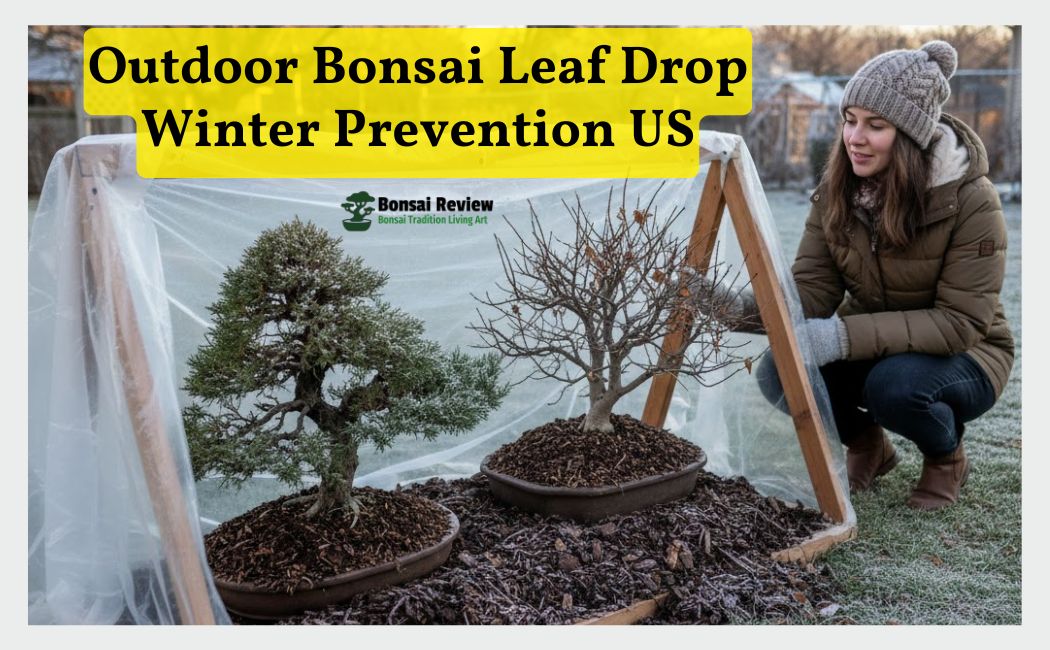
When to Start Winter Protection for Your Bonsai
Timing is critical to prevent leaf drop and winter stress in US climates. According to the Cleveland Bonsai Club and Bonsai Tonight, protective measures should begin before the first hard frost and after deciduous trees have naturally lost most of their leaves.
Here’s how to know when to act: Is My Bonsai Dying? Leaf Drop Solutions for US Winters:
1. Late Autumn Preparation
- Start preparing bonsai when daytime temperatures drop below 50°F (10°C).
- Outdoor trees like Juniper, Chinese Elm, and Japanese Maple should have mulch or a cold frame ready.
- Indoor tropical bonsai, such as Ficus Bonsai and Ficus Ginseng, should be kept away from cold drafts and heaters.
2. First Frost Indicator
- Once nights regularly fall below freezing (32°F / 0°C), outdoor bonsai need root insulation immediately.
- Cold frames, mulch beds, or garage storage become necessary to protect roots from freezing.
3. Check Leaf and Bud Status
- If leaves are still green but weak, it’s the perfect time to begin winter protection.
- If buds have already started swelling, adjust care carefully to avoid shocking the tree.
Tip: In most US regions, late October through early November is the window to implement full winter protection. Starting too late risks root freeze, excessive leaf drop, and weakened bonsai.
Conclusion: Can Your Bonsai Survive Winter and Thrive?
Bonsai leaf drop in winter does not mean your tree is dying. With the right care, your bonsai can survive US winters and grow strong again in spring. According to Bonsai Empire, most leaf loss is a sign of stress, not death.
By understanding why leaves fall from cold air, dry indoor heat, or frozen roots, you can take simple, effective actions. Protect the roots with mulch, cold frames, or garage storage.
Control light exposure and humidity for indoor tropical bonsai like Ficus Bonsai and Ficus Ginseng. Adjust watering to prevent overwatering or underwatering. Keep outdoor hardy bonsai like Juniper Bonsai, Chinese Elm Bonsai, and Japanese Maple Bonsai sheltered from wind and freezing temperatures. Even if your bonsai loses some leaves, healthy roots and stable care will allow new buds to appear when temperatures rise.
Following these steps ensures your bonsai will not only survive winter but also return in spring with stronger growth, vibrant leaves, and renewed energy. Taking action now is the key protect your bonsai today, and it will reward you with beauty and life for years to come.
More relevant article: What Makes a Bonsai Tree Cold-Ready Indoors?
FAQs: Why is my bonsai losing leaves in winter, and how can I save it in the US climate?
1. Is it normal for bonsai to lose leaves in winter?
Yes. Deciduous bonsai, such as Chinese Elm Bonsai and Japanese Maple Bonsai, naturally lose leaves as part of dormancy. Tropical bonsai like Ficus Bonsai may also drop leaves due to stress from dry indoor air, low light, or sudden temperature changes. Leaf drop does not automatically mean your bonsai is dead.
2. Can a bonsai recover after losing all leaves?
Absolutely. As long as the roots are healthy and the tree is protected from extreme cold, it can grow new leaves in spring. Focus on proper winter care: stable temperature, correct watering, humidity for indoor tropical bonsai, and root insulation for outdoor species like Juniper Bonsai.
3. How often should I water my bonsai in winter?
Water less frequently than in summer. Check soil moisture weekly. For indoor bonsai, water when the top layer of soil feels dry. For outdoor bonsai, reduce watering and ensure proper drainage to prevent root rot caused by frozen or waterlogged soil.
4. Can I leave my bonsai outside in the snow?
Only hardy outdoor bonsai, such as Juniper Bonsai or Chinese Elm Bonsai, can tolerate snow if roots are insulated with mulch or placed in a cold frame. Tropical bonsai like Ficus Ginseng must be moved indoors to avoid leaf drop and stress.
5. What temperature is too cold for bonsai?
Tropical bonsai should stay above 55°F (13°C) indoors. Outdoor hardy bonsai can survive down to 25°F (-4°C) if roots are insulated. Temperatures below this without protection risk root freeze, stress, and leaf drop.
6. Should I mist my bonsai in winter?
Yes, for indoor tropical bonsai. Misting or using a humidity tray increases air moisture, preventing dry air from causing leaf drop. Avoid over-misting outdoor bonsai, as wet leaves in freezing temperatures can cause damage.