


Bonsai root rot treatment is what you search for when your bonsai trees look weak, and something feels wrong below the soil.
You may see yellowing leaves, wilting foliage, leaf drop, stunted growth, or even a soft trunk on your bonsai trunk. The soil may smell sour or foul.
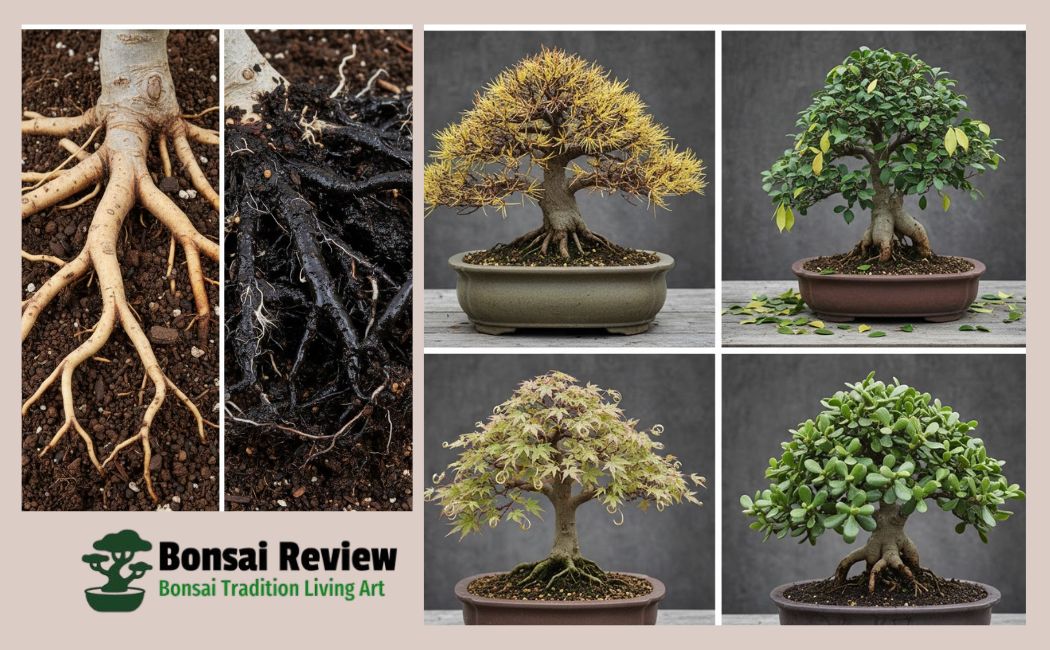
When you lift the bonsai pot and check the bonsai root ball, you may find black roots, dark brown roots, slimy roots, or fully dead bonsai roots instead of healthy bonsai roots that should be firm, white, or light tan.
This is the clear difference in root rot vs healthy roots, and it shows unhealthy bonsai roots inside your bonsai plant’s root system.
Different Bonsai Species: What is the Basic Reason for Bonsai Root Rot Treatment?
Bonsai root rot usually starts from an overwatered bonsai sitting in waterlogged soil. When drainage holes are blocked, drainage mesh is missing, or soil compaction builds up, oxygen deprivation in roots begins.
Tree roots cannot breathe in anaerobic soil conditions. Root suffocation follows. Soil-borne pathogens and fungal infection then spread fast.
Organisms like Pythium and Phytophthora thrive in standing water and can lead to secondary bacterial infection. This can affect your exposed root bonsai, damage root flare health, and reduce overall tree vigor, especially during the dormant period.
How Save Your Juniper, Ficus, Maple, and Ginseng Bonsai from Root Rot?
Different species react in different ways. An overwatered Juniper bonsai may decline quickly, and juniper bonsai root rot can be hard to reverse.
A Ficus bonsai or Ficus ginseng may show ficus bonsai root rot after heavy watering indoors. A Maple bonsai can weaken during spring repotting if the soil stays wet.
Even Crassula ovata, Japanese black pine, and Japanese red pine are not safe from bonsai root rot symptoms when watering habits are poor.
What are the most common questions about Bonsai Root Rot Treatment?
- Is root rot caused by overwatering?
- What does an overwatered bonsai tree look like?
- What does root rot look like?
- Can root rot correct itself?
- Can hydrogen peroxide cure root rot?
- Can cinnamon help with root rot?
- Should you water your bonsai every day?
- Can you save your plant if it has root rot?
- How do you bring a dying bonsai tree back to life or nurse it back to health?
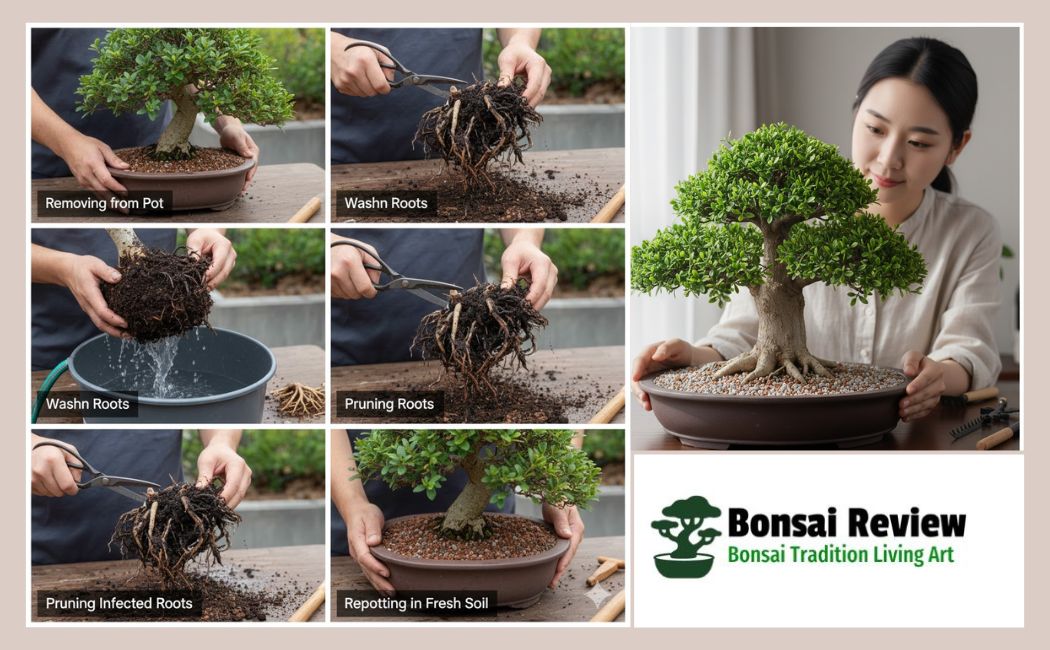
The answer starts with action. You remove the tree from the pot to inspect the bonsai root spread and wash the root ball clean. You begin careful root pruning with sterilized shears or disinfected scissors, cutting away all mushy roots.
If many roots are removed, you prune foliage to match reduced root capacity and lower stress. You disinfect the container or choose a clean bonsai pot with clear drainage holes and proper mesh screens.
Then you repot using fresh bonsai soil made from inorganic substrate like pumice, lava rock, and akadama to improve root aeration and prevent waterlogged soil.
Some growers use a hydrogen peroxide solution, cinnamon antifungal treatment, or fungicide drench to reduce fungal infection during emergency repotting.
After repotting, you place the tree in bright indirect light, avoid direct sun, improve air circulation, and follow a better watering schedule by checking soil moisture before watering again.
You allow the soil to dry slightly between watering to stop root rot bonsai problems from returning. With balanced foliage pruning, proper drainage, and correct soil composition, your bonsai rehabilitation can begin, and your bonsai roots can grow strong again.
Clear Diagnosis Before You Act: What Does Bonsai Root Rot Look Like?
Before you start any bonsai root rot treatment, you need to confirm the problem. Many bonsai trees look weak from stress, but root rot has very specific signs. Look at the surface. An overwatered bonsai tree often shows:
- Yellowing leaves
- Drooping or wilting foliage
- Sudden leaf drop
- Slow or stunted growth
- Weak energy in the bonsai trunk
Now check the soil. If it stays wet for many days, smells sour, or feels heavy and compacted, that is a warning sign of waterlogged soil and poor root aeration.
Next, gently remove the tree from the bonsai pot and inspect the bonsai root ball.
Healthy Bonsai Roots;
- Firm texture
- White or light tan color
- No bad smell
- Fine feeder tree roots are spreading evenly
Bonsai Root Rot Symptoms and Treatment: Keep Your Roots Healthy
- Black roots
- Dark brown roots
- Slimy or mushy roots
- Foul odor
- Roots breaking apart easily
This is the real difference between root rot and healthy roots. Healthy bonsai roots feel strong. Rotten roots feel soft and weak.
If you see mostly white roots with only small patches of damage, your bonsai plant root system still has a strong survival chance. If you see mostly dead bonsai roots, heavy fungal infection, or signs of secondary bacterial infection, you must act fast.
Some species show faster decline. An overwatered juniper bonsai root rot case may cause quick needle browning. Ficus bonsai root rot may show gradual leaf drop indoors. During spring repotting season, compact soil and blocked drainage holes can increase the risk for maple or pine varieties.
This inspection step tells you one important thing: Are you dealing with early root stress or advanced root suffocation?
Step-by-Step Treatment Plan: How to Fix Bonsai Root Rot?
Now that you confirmed the problem, you must act calmly and quickly. Root rot will not correct itself. The goal is to remove infection, restore oxygen flow, and rebuild a healthy bonsai root system.
Step 1: Remove the Tree From the Pot
Carefully lift your bonsai from the bonsai pot. Support the bonsai trunk while sliding the root ball out. If roots are tightly packed due to soil compaction, loosen them gently. Check the drainage holes and drainage mesh. If they are blocked, that likely caused the waterlogged soil.
Step 2: Wash and Inspect the Root Ball
Rinse the bonsai root ball with clean water. This helps you clearly see the bonsai plant’s root condition.
You are looking for:
- Firm white or tan roots (keep these)
- Black roots
- Dark brown roots
- Slimy roots
- Mushy roots
- Foul smell
Remove all soil that smells sour or looks compacted. This improves root aeration immediately.
Step 3: Root Pruning (Remove All Rot)
Use sterilized shears or disinfected scissors. This is critical to stop fungal infection from spreading.
Cut away:
- All dead bonsai roots
- All soft and rotten sections
- Any root that breaks apart easily
Cut back to clean, firm tissue only.
If you remove a large portion of the bonsai root spread, reduce foliage as well. This balances reduced root capacity and lowers stress on the tree roots.
Step 4: Disinfect and Protect
You can treat the remaining roots with:
- A diluted hydrogen peroxide solution
- A mild fungicide drench
- Light cinnamon antifungal treatment
These help slow soil-borne pathogens such as Pythium and Phytophthora, which thrive in anaerobic soil conditions.
Either clean the container thoroughly or choose a fresh bonsai pot before repotting.
Step 5: Repot in Proper Bonsai Soil
Do not reuse old soil. Use a fast-draining, inorganic substrate such as:
- Pumice
- Lava rock
- Akadama
This type of soil improves oxygen flow and prevents root suffocation. Ensure:
- Clear drainage holes
- Proper mesh screens
- No standing water
This is essential whether you are treating a juniper bonsai, ficus bonsai, maple bonsai, Japanese black pine, Japanese red pine, or even Crassula ovata.
At this point, the infection source is removed. Now the focus shifts to recovery and rebuilding tree vigor safely.
Post-Treatment Care: Help Your Bonsai Recover Safely
After you complete the bonsai root rot treatment, your tree is weak. Its bonsai root system is smaller. Its energy is low. Now your job is to reduce stress and support bonsai rehabilitation.
1️. Place It in the Right Light
Move your bonsai to bright indirect light. Avoid direct sun for now. Strong sun can dry the foliage too fast, while the reduced root capacity cannot supply enough water.
This is especially important for:
- Ficus bonsai indoors
- Juniper bonsai recovering outdoors
- Maple bonsai during spring repotting
Good light supports photosynthesis without adding heat stress.
2️. Fix Your Watering Habits
Do not return to old watering habits.
- Do not water on a fixed schedule.
- Check soil moisture first.
- Allow the soil to dry slightly between watering.
This prevents waterlogged soil and stops anaerobic soil conditions from returning. Healthy bonsai roots need oxygen. Root aeration is now your priority.
3️. Improve Air Circulation
Avoid stagnant, humid air. Good airflow reduces fungal infection risk and prevents secondary bacterial infection. This is very important for indoor ficus bonsai root rot cases.
4️. Watch for Recovery Signs
In the first 2–4 weeks, monitor:
- New buds forming
- Stronger leaf color
- No foul odor from the soil
- No new black roots
If you see steady growth, your tree’s vigor is returning. If leaves continue to drop heavily and the bonsai trunk feels soft, root damage may have been too severe.
5️. Be Patient During Dormant Periods
If your tree is in a dormant period, recovery may look slow. Species like Japanese black pine or Japanese red pine may take longer to show visible improvement. Do not overwater out of fear. Overwatering often restarts the root rot cycle.
Right now, your bonsai does not need fertilizer. It needs stable moisture, airflow, and time.
How to Prevent Bonsai Root Rot From Coming Back?
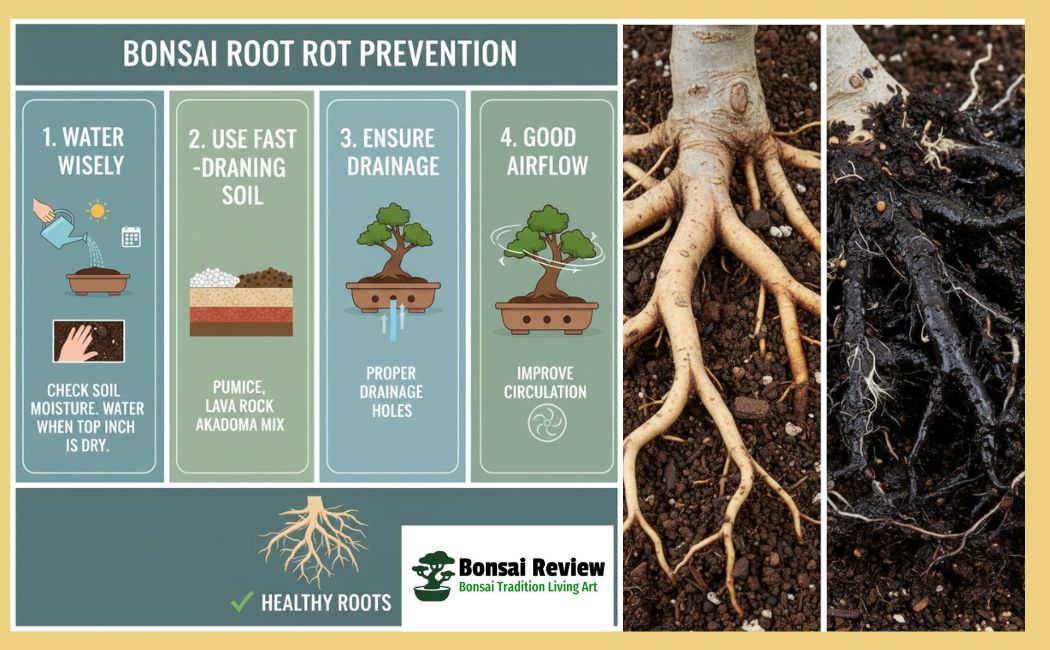
Once you save your tree, you never want to face bonsai root rot again. Prevention is simple when you control water, soil, and airflow.
1️. Water Only When the Soil Needs It
The biggest cause of bonsai root rot is overwatering.
- Do not water every day.
- Do not water because the top looks dry.
Instead, Bonsai Root Rot Treatment:
- Insert your finger into the soil.
- Check soil moisture below the surface.
- Water only when it feels slightly dry.
This prevents waterlogged soil and protects the bonsai root system from oxygen deprivation. If you ever ask, “Should I water my bonsai every day?” the answer is no. Water based on need, not habit.
2️. Use the Right Soil Composition
Regular potting soil holds too much water. That leads to anaerobic soil conditions and root suffocation. Use a fast-draining bonsai soil mix made from:
- Pumice
- Lava rock
- Akadama
This inorganic substrate improves root aeration and reduces fungal infection risk. Good soil keeps healthy bonsai roots firm and white instead of turning into dark brown roots or mushy roots.
3️. Check Drainage Every Time You Repot
During spring repotting or emergency repotting:
- Clean the bonsai pot fully.
- Make sure drainage holes are open.
- Install proper drainage mesh.
Blocked drainage traps standing water and restarts the root rot cycle. Also, check for soil compaction inside the bonsai root ball. Compacted soil reduces airflow around tree roots.
4️. Adjust Care by Species
Different bonsai trees react differently.
- Juniper bonsai root rot happens quickly in wet soil.
- Ficus bonsai root rot often develops indoors with poor airflow.
- Maple bonsai and pine species like Japanese black pine or Japanese red pine need balanced watering during growth and dormancy.
- Crassula ovata needs extra caution because succulent roots store water.
Knowing your species prevents stress mistakes.
5️. Keep Air Moving
Good air circulation prevents fungal infection and secondary bacterial infection. Avoid placing your bonsai in stagnant, humid corners. Healthy airflow supports tree vigor and keeps the bonsai trunk strong.
Prevention Rule for Bonsai Root Rot Treatment
Root rot never starts from nowhere. It starts from trapped water and trapped air. If you control drainage, soil, and watering habits, your bonsai roots stay healthy, your exposed root bonsai stays firm at the base, and your tree remains strong season after season.
Conclusion: Save Your Lovely Tiny Plant & Protect Its Roots
Bonsai root rot treatment may feel scary, but acting quickly can save your tree. By recognizing early signs, such as yellow leaves, drooping foliage, foul-smelling soil, and mushy roots, you take control before the damage spreads.
Carefully inspecting the bonsai root ball, removing dead bonsai roots with sterilized shears, repotting in fast-draining pumice, lava, or akadama soil, and adjusting watering habits gives your bonsai a real chance to recover.
Different species like Juniper bonsai, Ficus bonsai, Ficus ginseng, Maple bonsai, and Crassula ovata all have unique needs, but the core principle is the same for healthy bonsai roots, and proper drainage and controlled watering prevent fungal infection and root suffocation.
With careful post-treatment care, bright indirect light, moderate moisture, good airflow, and patient monitoring, your bonsai trunk regains strength, foliage balances with root capacity, and your bonsai plant root system can thrive again.
Prevention is just as important as treatment: check soil composition, ensure drainage, and avoid overwatering.
By following these steps, you not only treat root rot effectively but also protect your bonsai trees for the long term, keeping your miniature green companion healthy, strong, and beautiful for years to come.
Helpful article: Step-by-Step Guide: How to Repot a Bonsai Ficus for Beginners?
FAQ: High-Intent Questions About Bonsai Root Rot Treatment.
1️. Can hydrogen peroxide cure root rot in bonsai?
Hydrogen peroxide does not cure root rot by itself, but it helps reduce fungal infection when applied carefully to the roots during repotting. It should be used alongside root pruning, disinfected shears, and fresh, fast-draining soil.
2️ What does an overwatered bonsai look like?
An overwatered bonsai often has yellowing or drooping leaves, soft branches, and wet, compacted soil. Roots may become black, dark brown, slimy, or mushy, which signals early bonsai root rot symptoms.
3️. How do you save a dying bonsai tree from root rot?
A. Remove the tree from its pot.
B. Wash the bonsai root ball to see the roots clearly.
C. Prune all rotten or dead bonsai roots with sterilized shears.
D. Repot in fresh, well-draining soil like pumice, lava rock, or akadama.
E. Adjust watering and place in bright indirect light.
4️. Can root rot correct itself?
No. Root rot cannot correct itself because fungal infection continues in wet, oxygen-poor soil. Early detection and action are essential.
5️. Can cinnamon help with root rot?
Cinnamon can act as a mild antifungal treatment on freshly pruned roots, but it is not a full solution. It should be combined with root pruning, disinfection, and proper repotting.
6️. Should I water my bonsai every day?
No. Water based on soil moisture. Always check below the surface bonsai roots need oxygen, and constant water leads to root suffocation and fungal infection.
7️. How do you nurse a bonsai tree back to health?
After pruning rotten roots and repotting:
1. Balance foliage with remaining root capacity.
2. Maintain moderate moisture.
3. Provide bright indirect light.
4. Ensure airflow around the bonsai.
5. Monitor recovery signs like new buds and strong leaf color.