


Yes, you can! The soil and climate adaptation for bonsai in Canada is the key to keeping your tree alive through the country’s harsh winters, dry indoor air, and changing regional climates.
If you live in the freezing Prairies of Alberta and Manitoba, the humid summers of Ontario and Quebec, the rainy coast of British Columbia, or the cold Atlantic winds of Nova Scotia, your bonsai faces challenges that trees in Japan or California never do.
The good news is that you can solve these problems with the right soil mix and proper seasonal climate care. A well-draining blend of akadama, pumice, lava rock, and pine bark or coco coir protects roots from rot in wet winters and from frost damage in subzero nights.
At the same time, smart climate adaptation, like using a cold frame, mulch, snow cover, or an unheated greenhouse, helps hardy species such as Junipers, Scots Pine, Amur Maple, Tamarack, White Spruce, and Eastern White Cedar survive dormancy outdoors.
For tropical bonsai like Ficus, Jade, or Schefflera, the solution is moving them indoors before the temperature drops below 10°C, then balancing the low indoor humidity with a humidity tray, misting, or a small humidifier.
By adjusting your soil properties for drainage and frost resistance, and by matching your species choice to your Canadian climate zone, you give your bonsai the same natural tools of adaptation and dormancy that full-sized trees use to thrive.
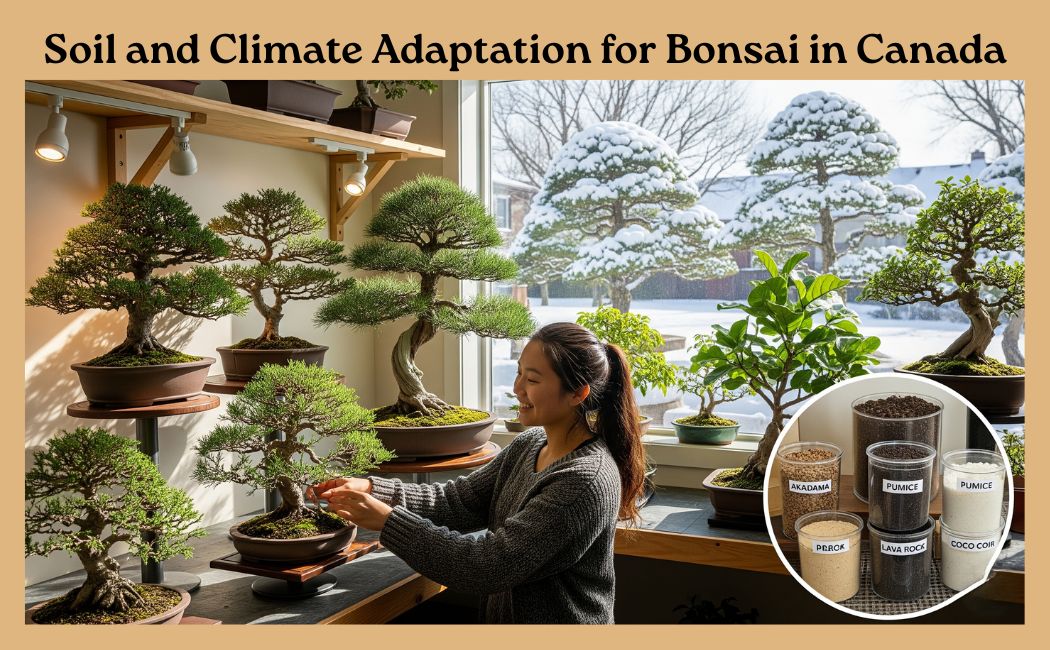
Do Bonsai Trees Need Different Soil in Different Provinces?
Soil and climate adaptation for bonsai in Canada is what decides if your tree thrives or struggles. The best soil for bonsai in Canada is a custom inorganic mix, as most trees thrive in loose, well-draining soil that prevents root rot and allows for air circulation, unlike typical potting soil.
Common components include Akadama, pumice, lava rock, and haydite, often mixed with organic materials like coconut coir or pine bark. You can often find these specialized bonsai soil components or ready-made blends from Canadian bonsai suppliers
Canada’s weather is tough freezing Prairie winters, humid Ontario summers, wet British Columbia coasts, and Atlantic winds all stressing bonsai in different ways.
The solution starts with the right soil mix: a well-draining blend of akadama, pumice, lava rock, and pine bark or coco coir to protect roots from rot and frost damage.
Next comes climate care. Hardy species like Junipers, Scots Pine, Amur Maple, Tamarack, White Spruce, and Eastern White Cedar can stay outdoors if you use a cold frame, mulch, snow cover, or an unheated greenhouse.
But tropical bonsai such as Ficus, Jade, and Schefflera must be moved indoors before they drop below 10°C, with humidity trays or misting to handle dry furnace air.
By matching soil drainage and frost resistance with your climate zone and species choice, you give your bonsai the natural adaptation and dormancy tools it needs to survive in Canada.
What Makes Soil So Important for Bonsai Survival in Canada?
The biggest challenge for bonsai in Canada isn’t just the cold; it’s what happens in the soil when the climate shifts. In the Prairies, compacted soil can freeze solid and suffocate roots. On the West Coast, constant rain can cause root rot if water can’t drain fast enough.
In Ontario and Quebec, summer heat dries soil quickly, leaving roots stressed. Regular garden soil doesn’t work for bonsai here because it compacts too much, holding either too much water or too little air.
The solution is to use a bonsai substrate that balances drainage, aeration, and moisture retention. A mix of akadama (for structure and nutrient exchange), pumice (to hold water lightly), lava rock (to keep soil open), and a small amount of organic matter like pine bark or coco coir gives your tree a safe home for its roots year-round.
This type of soil not only prevents problems like frost damage, root rot, and soil compaction, but also mimics the natural conditions trees use to survive in the wild. When you get the soil right, you give your bonsai the first line of defense against Canada’s climate extremes.
What are the best trees for bonsai in Canada?
The best bonsai for Canada depends on whether it will be an outdoor or indoor tree, but generally, hardy outdoor species like Juniper, Pine, and Maple are popular choices, while Chinese Elm is excellent for its adaptability to both indoor and outdoor conditions.
For indoor bonsai in Canadian homes, consider hardy options like the Ficus or Dwarf Jade, which can tolerate drier indoor climates and need protection from freezing temperatures outdoors.
Some popular outdoor trees include: Eastern Larch (Tamarack), Jack Pine, Scots Pine, White Spruce, White Eastern Cedar, Mugo Pine, Dwarf Alberta spruce, various Junipers, Amur Maple, Cotoneaster, Dwarf Lilac, Crabapple, Wild Plum, Hawthorn, and Potentilla.
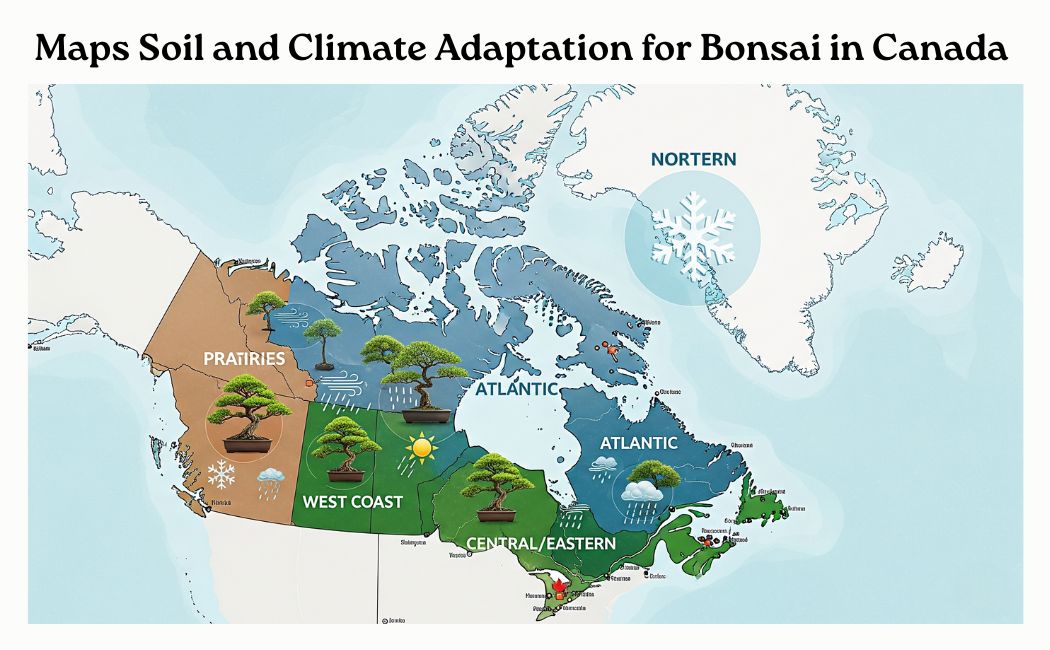
Which Part of the Best Outdoor Bonsai for Canadian Climates?
For Canadian climates, focus on hardy species like Junipers, Pines, Spruces, Maples, and Elms that require a cold winter dormancy period.
Plant these in a sheltered outdoor location, protected from extreme wind and harsh winter elements by burying or mulching the pots.
In winter, move these trees to an unheated but cold-protected area like a garage or cold room to shield their exposed roots from freezing temperatures. Recommended species for Canadian climates;
- Juniper: A popular and cold-hardy choice for beginners.
- Pines (e.g., Scots Pine, Mugo Pine): Many pine species are cold-resistant and thrive outdoors.
- Spruce: Varieties like White Spruce and Dwarf Alberta Spruce are suitable for outdoor bonsai.
- Maples: Many maple varieties are well-suited to temperate climates with cold winters.
- Elms (e.g., Chinese Elm): Can be kept outdoors during the growing season but need winter protection.
- Other hardy options: Also consider Larch, Cedar, Hawthorn, and Crabapple.
Key Considerations for Canadian Winters: Soil & Climate Adaptation for Bonsai in Canada.
1. Dormancy is Essential: Outdoor deciduous and coniferous bonsai need a period of cold dormancy to survive and thrive, just as they would in their native environments.
2. Protect the Roots: The biggest risk for bonsai in winter is the exposed root system in a pot, which freezes more easily than roots in the ground.
3. Overwintering: Soil and climate adaptation for bonsai in Canada.
- Bury the pots in the ground in a sheltered, shaded location.
- Use a cold room, an unheated garage, or a three-season room to store the trees.
- You can pile mulch around the pots for extra insulation.
4. Wind Protection: Wind is your enemy in winter, as it can dry out the soil and the tree’s needles.
5. Acclimation: Before moving trees outdoors in the spring or bringing them in for winter, slowly acclimate them to the changing temperatures.
Outdoor Bonsai for Canadian Climates
These trees require exposure to seasonal changes, including the cold dormant period of winter, and must be brought into a protected, unheated area (like a garage or cold room) to safeguard their roots from extreme temperatures.
- Juniper: Hardy and adaptable, with aesthetic deadwood features and flexible branches for wiring.
- Pine: Resilient and visually striking with iconic foliage.
- Maple: Including Japanese and field maples, these deciduous trees thrive outdoors and tolerate cold temperatures, losing their leaves in winter.
- Oak: A robust choice for colder climates, growing outdoors in the warmer months and dormant in winter.
- Spruce, Cedar, Larch, Hornbeam, and Beech: These are also excellent hardy choices for outdoor bonsai in temperate climates.
Indoor or Indoor/Outdoor Bonsai: Soil and climate adaptation for bonsai in Canada.
These trees can be kept indoors year-round or moved outdoors in milder weather, as long as they are protected from freezing temperatures.
- Chinese Elm: A versatile and easy-to-maintain choice for both indoor and outdoor environments.
- Ficus (Fig): A resilient and low-maintenance option, ideal for beginners.
- Dwarf Jade (Portulacaria afra): A forgiving succulent that can tolerate periods without water.
Key Considerations for Canada.
- Winter Protection: All outdoor bonsai must be moved to a protected, unheated area, such as a cold room or garage, to shield their roots from freezing and dying.
- Local vs. Non-Local Species: For beginners, locally sourced species like elms and maples are excellent options as they are already suited to the Canadian environment.
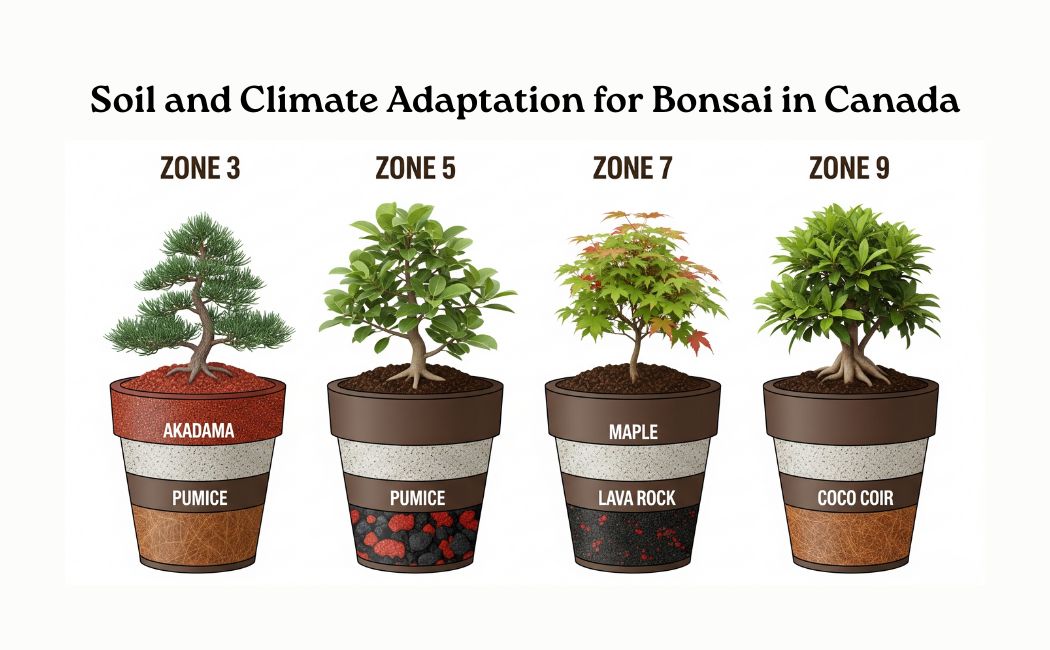
Best Bonsai Soil Mixes for Canadian Growers
Not all bonsai need the same soil. A Prairie juniper faces different challenges than a Ficus on a Toronto windowsill. Use the chart below to match your region, species type, and soil mix so your tree has the right balance of drainage, aeration, and frost resistance.
| Region / Climate Zone | Suitable Species | Recommended Soil Mix | Why It Works |
| Prairies (Alberta, Saskatchewan, Manitoba) have very cold winters, dry air | Scots Pine, Mugo Pine, Junipers, Tamarack (Larch) | 40% pumice + 30% lava rock + 20% akadama + 10% pine bark | Excellent drainage prevents root freeze; pumice holds light moisture for dry summers |
| West Coast (British Columbia) mild, wet winters | Amur Maple, White Spruce, Eastern White Cedar | 40% lava rock + 30% akadama + 20% pumice + 10% coco coir | Resists heavy rain; akadama balances nutrients; coir prevents soil from drying in rare heat |
| Central & Eastern Canada (Ontario, Quebec) has humid summers, cold winters | Junipers, Spruce, Hawthorn, Wild Plum, Potentilla | 30% pumice + 30% lava rock + 30% akadama + 10% pine bark | Handles humidity, prevents compaction, keeps roots safe in fluctuating temps |
| Atlantic Canada (Nova Scotia, New Brunswick) is windy, damp | Scots Pine, Eastern White Cedar, Amur Maple | 40% akadama + 30% pumice + 20% lava rock + 10% pine bark | Akadama buffers moisture; pumice drains excess water from coastal rains |
| Indoor (all regions, tropical bonsai) heated homes, dry air | Ficus, Jade, Schefflera | 40% akadama + 30% pumice + 20% lava rock + 10% coco coir | Indoor mix balances water retention and air flow; coco coir helps in low-humidity conditions |
Climate Challenges for Bonsai in Canada
Soil is only half the story. Your bonsai also has to face Canada’s extreme climates, and each region brings a different challenge:
1. Prairies (Alberta, Saskatchewan, Manitoba): Winters can drop below –30°C, and dry winds pull moisture from both soil and leaves. Bonsai roots risk freezing solid without protection.
2. West Coast (British Columbia): Milder, but constant rain can waterlog soil. Trees like maples and cedars here need strong drainage and protection from root rot.
3. Central & Eastern Canada (Ontario, Quebec): Humid summers and icy winters cause stress from temperature swings. Bonsai here need both summer watering discipline and winter frost shields.
4. Atlantic provinces (Nova Scotia, New Brunswick, Newfoundland): Cold winds and salty coastal air dry soil quickly. Mulch and wind protection keep roots stable.
5. Northern Canada (subarctic regions): Bonsai outdoors is nearly impossible; only the most cold-hardy species survive, and most growers must keep trees in cold frames or indoors.
How to Adapt Bonsai to Canada’s Climate?
- Use cold frames, unheated greenhouses, garages, or even snow cover to protect hardy outdoor bonsai while letting them stay in dormancy.
- Move tropical bonsai like Ficus and Jade indoors before temperatures drop below 10°C, and use humidity trays, misting, or humidifiers to fight furnace dryness.
- In hot summers, give partial shade and steady watering so the soil doesn’t bake dry.
By adjusting your bonsai’s environment to match your climate zone, you mimic the natural adaptations and dormancy cycles trees rely on in the wild.
Choosing Bonsai Species That Can Adapt in Canada
Not every bonsai tree can handle Canada’s weather. Some species are naturally cold-hardy and can survive outdoors with winter protection, while others are tropical and must stay indoors year-round.
Choosing the right species for your climate zone is one of the biggest factors in long-term success.
Cold-Hardy Outdoor Bonsai Best for Canadian Winters
These species can withstand freezing temperatures if their roots are protected with mulch, snow cover, or a cold frame:
- Scots Pine and Mugo Pine thrive in Prairie and Central climates.
- Junipers (Common and Chinese) are tough evergreens that tolerate frost.
- The Amur Maple, native to northern Asia, is perfectly adapted to cold winters.
- Tamarack (Larch), a native Canadian tree, sheds needles in winter and loves dormancy.
- White Spruce and Norway Spruce withstand harsh cold and adapt well in Eastern and Prairie provinces.
- Eastern White Cedar, another Canadian native, is hardy and resilient.
- Wild Plum, Hawthorn, Potentilla, and smaller native trees, perfect for natural-looking bonsai.
Indoor Tropical Bonsai Best for Heated Canadian Homes
These species cannot tolerate frost and must be brought inside before temperatures drop below 10°C:
- Ficus (Ficus retusa, Ficus benjamina): one of the easiest indoor bonsai, tolerant of dry homes.
- Jade (Crassula ovata): a succulent bonsai that stores water, ideal for beginners.
- Schefflera: a hardy tropical that adapts well to Canadian indoor conditions.
How to Decide Soil And Climate Adaptation for Bonsai in Canada?
- If you want an outdoor bonsai in Canada, pick cold-hardy trees like Juniper, Scots Pine, or Tamarack and prepare for winter protection.
- If you prefer an indoor bonsai, go with Ficus or Jade, and plan for humidity trays or misting to handle dry furnace air.
By choosing species that match your climate zone and indoor environment, you set up your bonsai for survival, not struggle.
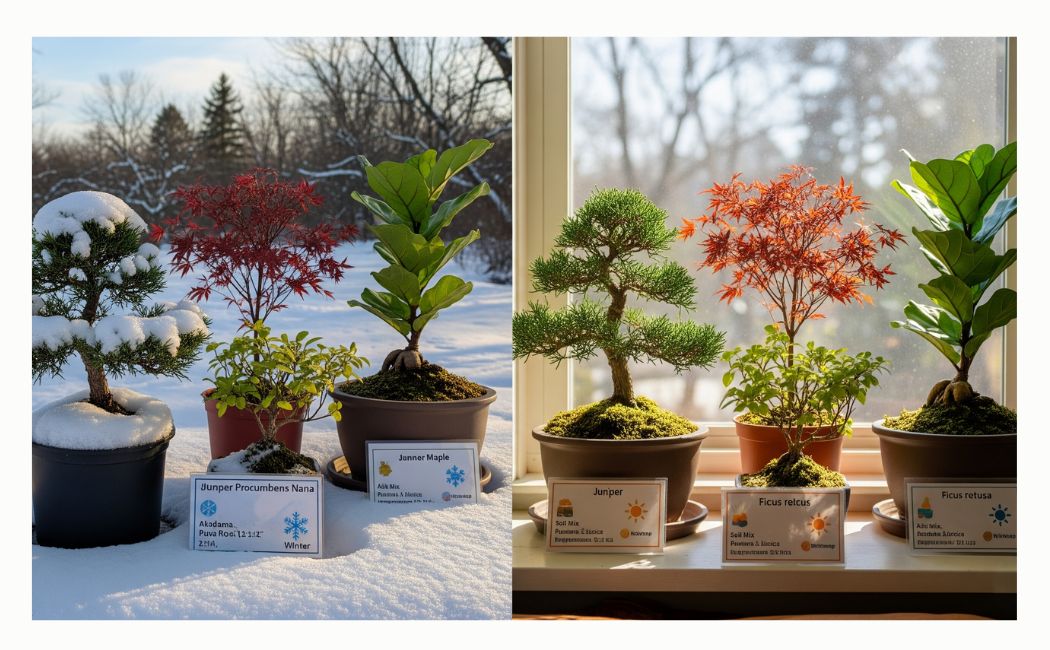
4 Seasonal Care and Adaptation Tips for Bonsai in Canada.
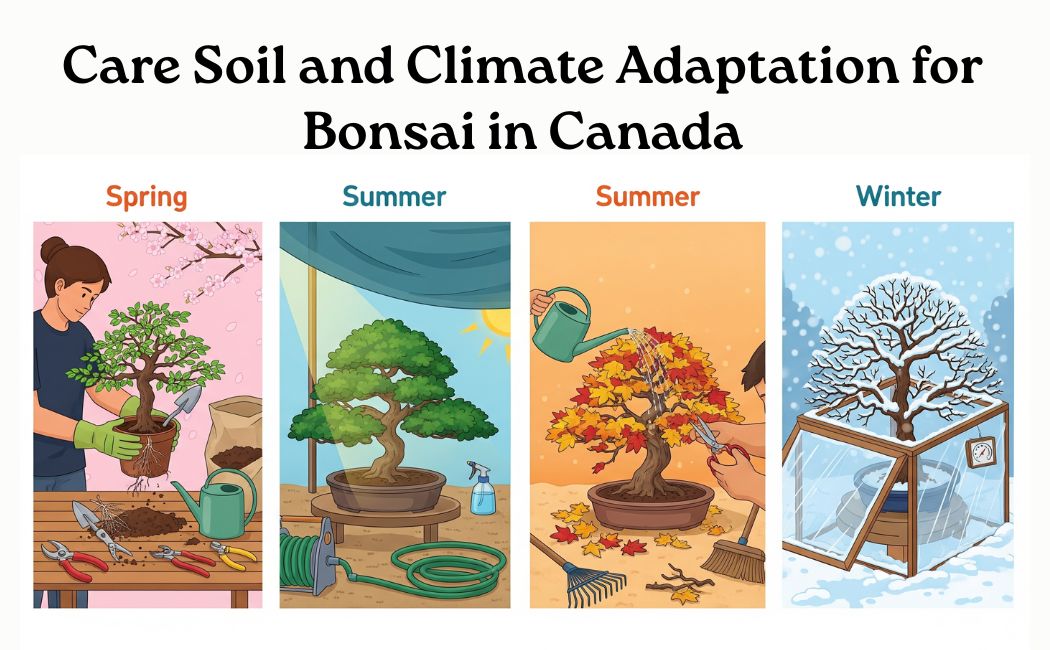
Your bonsai will only stay healthy if you adjust its care to match Canada’s changing seasons. Each season brings its own challenge, from frozen roots in winter to dry heat in summer. Here’s how to adapt step by step:
1. Spring (Wake-Up Season): Soil and climate adaptation for bonsai in Canada.
Problem: Roots are thawing, and sudden warm spells can trigger early growth before frost has fully passed.
Solution:
- Wait until nighttime temperatures stay above 5°C before moving outdoor bonsai out of winter storage.
- Repot and refresh soil (akadama + pumice + lava rock mix) while new buds are swelling.
- Fertilize lightly to support new growth.
2. Summer Heat and Growth Season: Soil and climate adaptation for bonsai in Canada.
Problem: Hot sun dries soil quickly; heatwaves can scorch leaves or dry out roots.
Solution:
- Water daily, sometimes twice on very hot days.
- Give partial shade during mid-day to prevent leaf burn.
- Use humidity trays or misting for indoor bonsai, like Ficus or Jade.
- Watch for pests (spider mites thrive in hot, dry air).
3. Fall (Prepare for Dormancy)
Problem: Temperature swings stress trees; roots need to prepare for winter.
Solution:
- Reduce nitrogen fertilizer to slow down new growth.
- Protect bonsai from sudden frost by moving them to sheltered spots at night.
- Clean dead leaves and check soil for pests before winter storage.
- For indoor bonsai, reduce watering slightly as light hours shorten.
4. Winter (Dormancy and Survival)
Problem: Freezing temps can kill roots; indoor bonsai face dry furnace air.
Solution:
- Keep hardy bonsai in a cold frame, unheated garage, or under snow cover (acts as insulation).
- Never let soil dry out completely. Water sparingly but consistently.
- For indoor bonsai, place near bright south-facing windows and use grow lights + humidifiers to fight dry air.
- Rotate trees weekly to keep growth balanced.
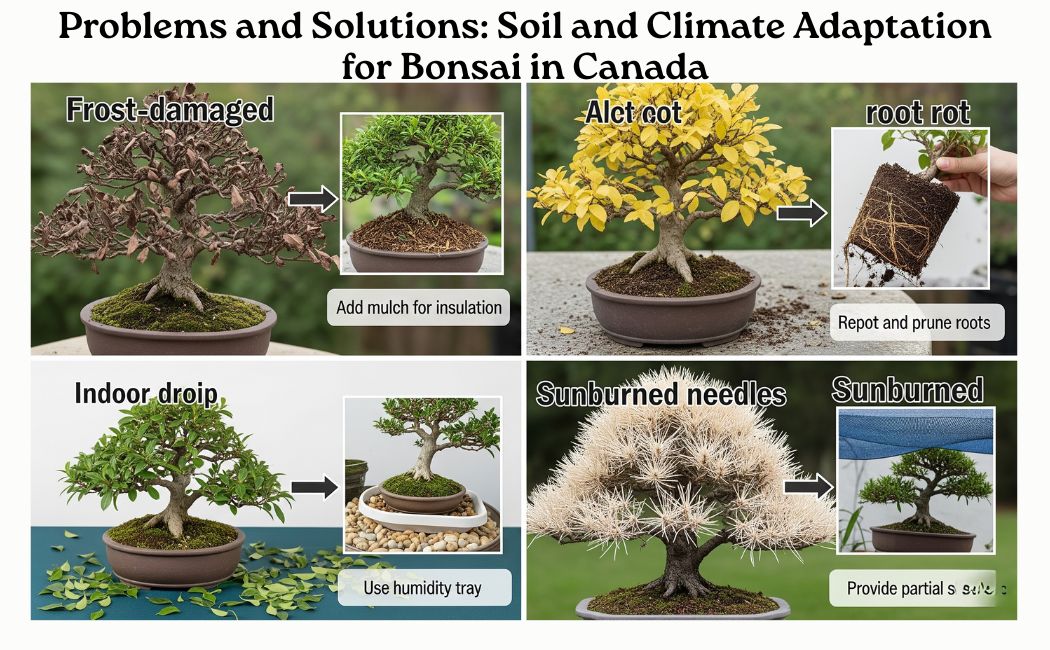
Troubleshooting Common Bonsai Problems in Canada
Even if you follow the right soil mix and seasonal care, your bonsai may still show stress in Canada’s extreme weather. Here’s how to recognize issues early and fix them fast:
Frost Damage:
- Problem: New buds or leaves turn brown after a late spring frost.
- Fix: Trim away damaged growth and move the bonsai to a sheltered spot. Protect with frost cloth if a cold snap is forecast.
Root Rot from Wet Soil: Best Soil and Climate Adaptation for Bonsai in Canada.
- Problem: Roots stay soggy due to heavy rain or poor drainage, leading to yellow leaves and weak growth.
- Fix: Repot using a fast-draining mix (akadama + pumice + lava rock). Elevate pots slightly to improve drainage.
Leaf Drop Indoors;
- Problem: Ficus or Schefflera drop leaves when brought inside in fall.
- Fix: Place near a south-facing window or use grow lights. Mist leaves daily or use a humidity tray to counteract furnace dryness.
Summer Leaf Burn;
- Problem: Pine needles or maple leaves get crispy edges in the July heat.
- Fix: Provide mid-day shade using a shade cloth. Water deeply in the morning to prevent the soil from drying out too quickly.
Pest Infestations;
- Problem: Spider mites, aphids, or scale insects thrive in dry or stressed bonsai.
- Fix: Spray with neem oil or insecticidal soap. Increase humidity to discourage mites. Always inspect before bringing outdoor bonsai inside for winter.
Conclusion: Growing Bonsai in Canada Is Possible with the Right Adaptation.
Keeping bonsai in Canada may feel like a struggle at first, with long winters, sudden frosts, heavy rains, and hot summers.
But when you understand how soil, climate, and seasonal care work together, you remove the biggest risks. By using a balanced soil mix of akadama, pumice, lava rock, and organic matter.
Choosing species like Juniper, Pine, Maple, or Ficus, and adjusting care each season from winter dormancy protection to summer shading and watering, your bonsai can not only survive, but thrive in Canadian conditions.
Every challenge, from root rot to frost damage, has a simple solution when you prepare ahead. Think of your bonsai as a tree that learns with you: once you give it the right soil, light, and shelter, it rewards you with health, beauty, and balance all year round.
Your bonsai journey in Canada doesn’t have to be about fighting the climate; it’s about working with it. With the right adaptations, your bonsai will grow strong roots in Canadian soil, just like you.
Helpful article: Bonsai Tree Problems: How to Spot and Treat Pests and Diseases?
FAQs: How do you prevent bonsai root rot in Canadian climates?
1. Can you grow bonsai trees in Canada?
Yes, you can grow bonsai trees in Canada by choosing cold-hardy species like Junipers, Pines, Spruce, and Maples for outdoors. Tropical species such as Ficus can also be grown, but they must be kept indoors during the winter.
2. What soil is best for bonsai in Canada?
The best bonsai soil in Canada is a well-draining mix of akadama, pumice, and lava rock, with some organic matter such as pine bark or coco coir. This prevents root rot in wet Canadian climates while still holding enough nutrients for healthy growth.
3. How do you overwinter bonsai trees in Canada?
To overwinter bonsai in Canada, place temperate species in a cold frame, unheated greenhouse, or sheltered area to protect them from extreme frost while allowing dormancy. Tropical bonsai should be moved indoors before the first freeze.
4. Do bonsai trees need special care in Canadian summers?
Yes. Canadian summers can be hot and dry, so bonsai soil may dry quickly. You should water daily, provide partial shade, and use a soil mix with good water retention, like akadama or coco coir, to prevent stress.
5. What are the best bonsai trees for beginners in Canada?
Some of the easiest bonsai species for Canadian growers include:
1. Juniper bonsai (hardy and forgiving)
2. Mugo Pine and Scots Pine (cold-tolerant)
3. Amur Maple (adapted to Canadian winters)
4. Ficus bonsai (great for indoor beginners)
6. How do bonsai trees adapt to Canada’s climate?
Bonsai adapt through soil selection, seasonal care, and species choice. Cold-hardy species survive frost with proper dormancy, while tropical species adapt by being grown indoors. Using the right soil mix ensures drainage in wet conditions and moisture retention during dry summers.
7. Can you grow bonsai trees in Canada?
Soil and climate adaptation for bonsai in Canada, unlike their ground-grown equivalents, Bonsai don’t thrive outdoors in our Canadian Winters. Some very mature conifers could survive, depending on the exact location, sheltering from wind, age, and the size of the pot. But let’s just stick to no Bonsai should be outside during Canadian winters, just to be on the safe side.
8. How do you overwinter a bonsai tree in Canada?
Keeping your trees in a greenhouse or cold frame during the winter is recommended for those living in cold areas, where temperatures often drop below 15 °F (-10 °C). A cold frame helps to reduce fluctuations in temperature and protects your trees from big temperature drops at night.
Looking forward to further bonsai articles and places to buy same.
Thank you, inspired me to write the next.