


Easiest Bonsai Beginners: Starting your first bonsai can feel confusing. You see beautiful bonsai trees for beginners everywhere, but you may wonder.
Simple care tips, avoid common mistakes, and find the best indoor and outdoor bonsai to start your bonsai journey successfully.
Which one is truly easy to care for? Will it survive indoors? Can I handle pruning without killing it? The truth is, not all bonsai are tricky. Some species are forgiving, resilient, and made for beginners.
The easiest bonsai trees for beginners include Ficus bonsai (Ficus microcarpa, Weeping fig, and fig trees), Chinese Elm bonsai, and Juniper bonsai. These are hardy, adaptable, and forgiving of common mistakes like overwatering or missed pruning.
NASA’s Air-purifying study popularized indoor plants known for their air-purifying qualities. Some of the best include the Spider plant (Chlorophytum comosum), peace lily, spider plant (Chlorophytum comosum), and aloe vera.
Other effective choices include English ivy, Boston fern, and bamboo palm. These plants can help remove common indoor air pollutants like formaldehyde, benzene, and xylene.
If you want a low-maintenance option, Jade bonsai, also called Jade plant or Dwarf Jade bonsai, is perfect because it stores water in its leaves. For those who want something striking, the Japanese Maple bonsai, Japanese Red Maple.
And even indoor-friendly Schefflera bonsai (Dwarf Umbrella Tree, Umbrella Bonsai) are excellent choices.
You’ll also find many other beginner-friendly trees such as Azalea bonsai (Satsuki azalea), Boxwood, Rosemary, Cotoneaster, Carmona bonsai (Fukien Tea), Bald Cypress, and Bougainvillea.
Chinese Sweet Plum indoor bonsai, Desert Rose, Money Tree bonsai, and even Ponytail Palm bonsai in a pot. Each of these trees has unique strengths, but all are known to be forgiving to first-time growers.
Why starting with an easy bonsai matters, which species are best, and how to care for them step by step. You’ll know exactly which bonsai tree is right for you and how to keep it alive without stress.
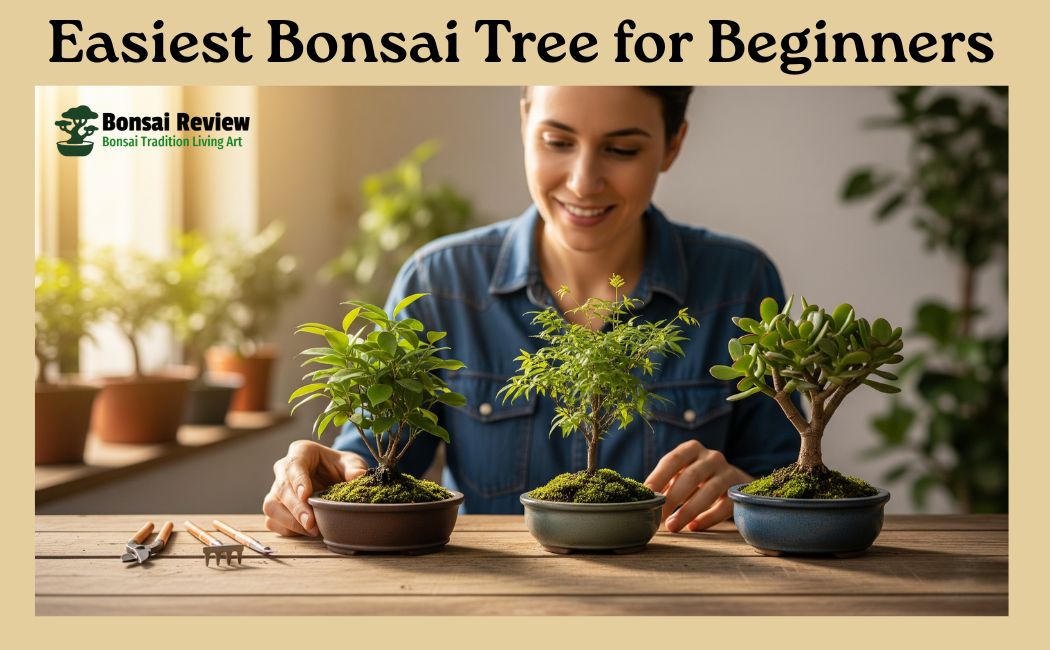
Why Should Beginners Start With Easy Bonsai Trees?
The easiest bonsai tree for beginners is generally agreed to be the Ficus. Other good options include Chinese Elm and Dwarf Jade, Air-purifying Snake plant, Peace lily, English ivy, Spider plant.
These trees are relatively forgiving, tolerate some neglect, and are readily available. The easiest bonsai beginners tiny plants include Ficus, Chinese Elm, and Dwarf Jade plant:
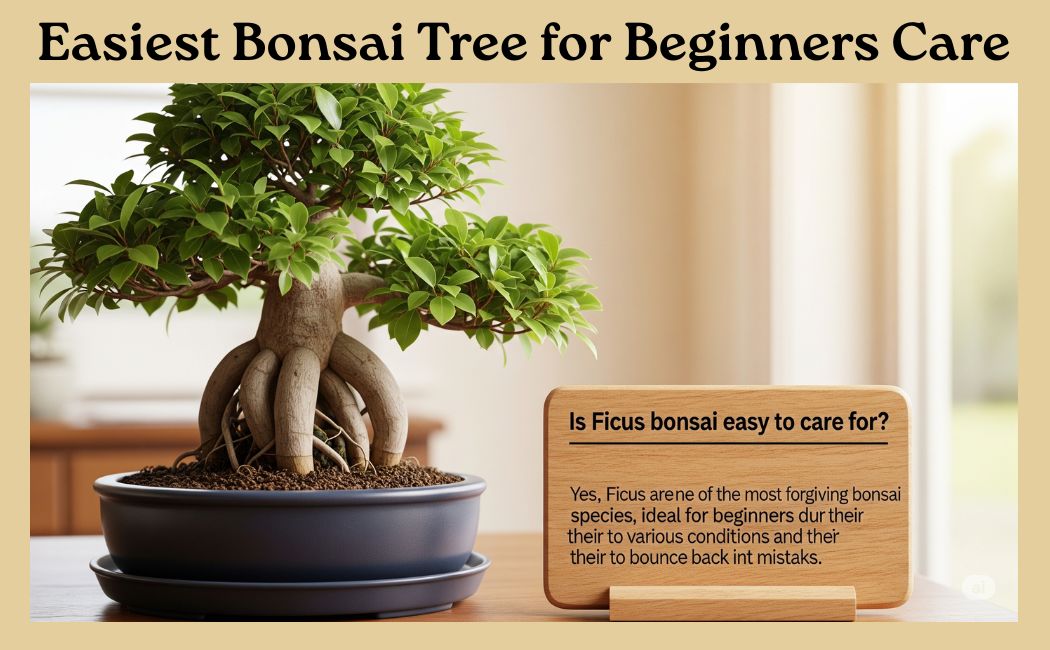
Is Ficus a good choice?
- Indoor Friendly: Ficus bonsai can tolerate low light and inconsistent watering, making them ideal for beginners who may not have a lot of experience with bonsai care.
- Resilient: They are relatively forgiving of beginner mistakes, like infrequent watering.
- Easy to Prune: Ficus bonsai back buds readily, meaning new leaves will sprout from the branches near where you prune them, making pruning simple.
- Popular: Ficus bonsai are widely available and commonly sold in nurseries and online.
Why Ficus is a great beginner choice?
The easiest bonsai beginners is generally considered to be the Ficus dwarf plant. Ficus bonsai are known for being hardy, adaptable, and relatively low-maintenance, making them a good choice for those new to the traditional art of bonsai. Here’s why Ficus is a great beginner choice:
- Forgiving: Ficus trees can tolerate a range of conditions, including occasional underwatering, which is common for beginners to bonsai.
- Adaptable: They can be grown both indoors and outdoors, though they typically thrive indoors in most climates.
- Low-maintenance: Ficus bonsai require less frequent watering and pruning compared to some other bonsai species.
- Attractive: They have beautiful aerial roots and glossy green leaves, adding to their visual appeal.
- Versatile: Ficus can be styled in various bonsai techniques.
Other Good Beginner Bonsai Options Include:
- Juniper: Known for its hardiness and ability to withstand various conditions.
- Jade Plant: Very tolerant of neglect and bright, indirect light.
- Chinese Elm: A fast-growing option that can be trained relatively easily.
Why Do Beginners Need Easy Bonsai Trees?
Starting with bonsai is exciting, but it also comes with worry. Many beginners think bonsai trees are fragile, hard to water, and easy to kill.
If you pick a sensitive tree like a Japanese Maple bonsai or a Satsuki azalea right away, you may struggle with sunlight needs, humidity, or pruning styles. This can lead to frustration and sometimes even losing your first bonsai.
That’s why choosing easy bonsai trees makes such a difference. Species like Ficus bonsai, Chinese Elm, and Juniper bonsai are strong and adaptable.
They forgive common beginner mistakes such as overwatering, skipping a pruning session, or keeping them in slightly less-than-perfect light.
Even plants like the Jade bonsai or Ponytail palm bonsai are perfect for busy people, because they can survive longer without water.
When you begin with forgiving trees, you get the chance to learn the basics of watering, shaping, wiring, and repotting without fear. Instead of worrying about keeping your tree alive, you focus on enjoying the art of bonsai.
This early success builds your confidence and prepares you to try more delicate species later, like the Japanese Red Maple, Bougainvillea, or Chinese Sweet Plum indoor bonsai.
However, the Easiest Bonsai Beginners are like teachers. They let you make mistakes, recover quickly, and keep growing. That’s the best way to start your bonsai journey with joy, not stress.
How Do You Care for an Easy Bonsai Tree as a Beginner?
Best bonsai beginners with care tips. Not every bonsai tree is the same. Some need more light, while others need less water. To make your choice easier, here’s a table of the most beginner-friendly bonsai trees, their strengths, and simple care examples.
| Bonsai Tree | Why It’s Easy for Beginners | Best Environment | Example Care Tip |
| Ficus Bonsai (Ficus microcarpa, Weeping Fig, Fig Trees) | Very hardy, tolerates indoor light and occasional neglect | Indoor with bright, indirect light | If you forget to water once, Ficus will still bounce back. |
| Chinese Elm Bonsai | Forgives heavy pruning, grows fast | Indoor or outdoor | Trim extra shoots often; they will regrow quickly. |
| Juniper Bonsai | Classic starter, very hardy outdoors | Outdoor sun | Place it outside all year; don’t try to keep it indoors. |
| Jade Bonsai (Jade Plant, Dwarf Jade Bonsai) | Stores water, needs little care | Indoor sunny spot | Water only when the soil is dry, like a succulent. |
| Japanese Maple Bonsai (Japanese Red Maple) | Beautiful leaves, good for pruning practice | Outdoor with seasonal care | Protect in winter; practice shaping branches in spring. |
| Schefflera Bonsai (Dwarf Umbrella Tree, Umbrella Bonsai) | Handles low humidity, resistant to pests | Indoor | Great for homes with dry air; just keep near a window. |
| Azalea Bonsai (Satsuki Azalea) | Bright flowers, forgiving with trimming | Outdoor with filtered light | After flowers fade, prune lightly for next season’s growth. |
| Boxwood Bonsai | Tough evergreen, easy to style | Outdoor or patio | Good for beginners who want a tree-like look quickly. |
| Rosemary Bonsai | Doubles as an herb, hardy, with small leaves | Outdoor sun | Clip small branches to use in cooking easy pruning practice. |
| Cotoneaster Bonsai | Grows berries, small leaves, simple to shape | Outdoor | Great for learning wiring since branches bend easily. |
| Carmona Bonsai (Fukien Tea) | Indoor flowering bonsai | Indoor warm spot | Keep it near a bright light; prune small leaves often. |
| Bald Cypress Bonsai | Strong, grows fast | Outdoor with moist soil | Place in a tray of water to mimic swamp conditions. |
| Bougainvillea Bonsai | Bright, colorful blooms, easy outdoors | Outdoor warm climate | Let it dry slightly between watering for more flowers. |
| Chinese Sweet Plum Bonsai | Indoor-friendly, fruits and flowers | Indoor bright light | Keep humidity high with a tray of water. |
| Desert Rose Bonsai (Adenium obesum) | Succulent trunk stores water | Indoor sunny windows | Water less often, especially in winter. |
| Money Tree Bonsai (Pachira aquatica) | Symbol of luck, forgiving | Indoor indirect light | Water once a week; don’t let roots sit in water. |
| Ponytail Palm Bonsai | Stores water in trunk, fun look | Indoor sunny spot | Perfect for travelers, water every 2–3 weeks. |
Easiest Bonsai Beginners Example: Ficus vs Juniper Beginner Experience.
Imagine you buy two trees: a Ficus bonsai and a Juniper bonsai.
- If you keep the Ficus indoors and forget to water it once, it will forgive you and stay healthy.
- But if you try the same with a Juniper and keep it inside, the tree will weaken fast. That’s why Ficus is often called the easiest bonsai for beginners, while Juniper is better if you have outdoor space.
Which Bonsai Trees Are Best for Beginners?
If you are just starting, you may ask: Which bonsai tree is best for me as a beginner? The truth is, not all bonsai are equal. Some species are more forgiving, while others need special care.
Here are the most beginner-friendly bonsai trees that give you the best chance to succeed.
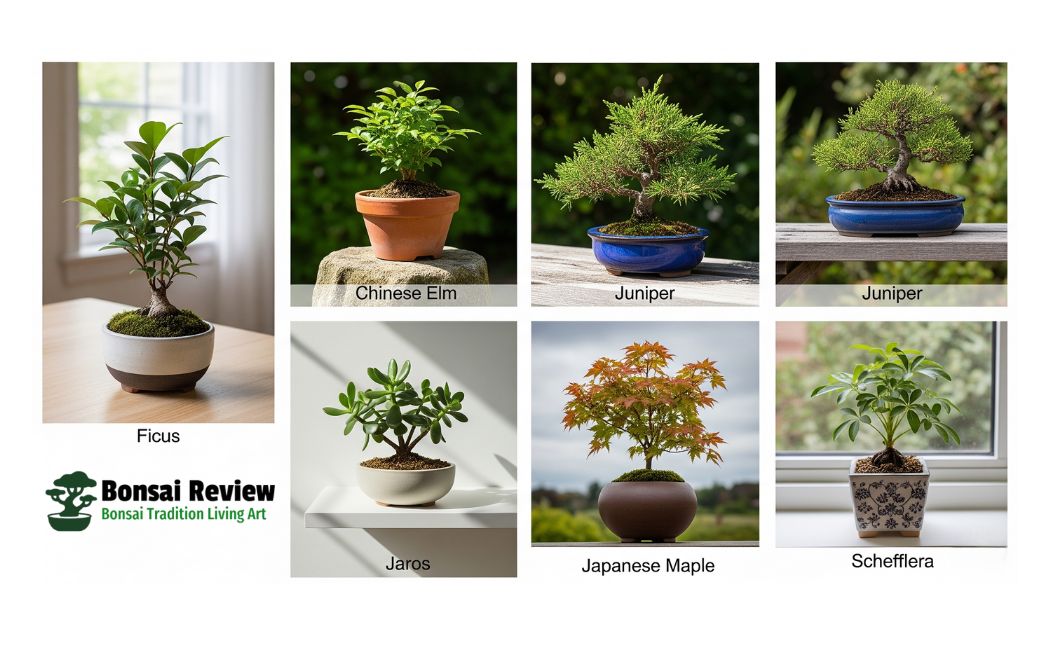
1. Ficus Bonsai (Ficus microcarpa, Weeping Fig, Fig Trees)
Ficus is often called the easiest bonsai for beginners. It is hardy, grows quickly, and adapts to indoor life better than most species. Even if you miss a watering, the tree can recover. Its flexible branches make pruning and wiring simple, so you can practice bonsai shaping without fear.
Ficus microcarpa, also known as the Weeping Fig, is especially popular for first-time growers because it stays healthy in normal home conditions.
2. Chinese Elm Plant: Easiest Bonsai Beginners Plants.
The Chinese Elm is another top choice for beginners. It forgives mistakes, grows strong, and responds well to heavy pruning. This makes it perfect for practicing styling and branch training.
A unique benefit is its adaptability; you can grow it indoors near a bright window or outdoors in mild climates. Its small leaves also give it a natural “tree-like” look, which many beginners love.
3. Juniper Plant: Easiest Bonsai for Beginners.
Juniper is the classic bonsai tree you often see in photos. It’s hardy and strong, but it does need outdoor sunlight to thrive. Many beginners make the mistake of keeping Juniper indoors, which weakens the tree.
If you have a balcony, garden, or outdoor space, Juniper is a fantastic beginner bonsai. Its needles are easy to care for, and its branches can be shaped into classic bonsai styles.
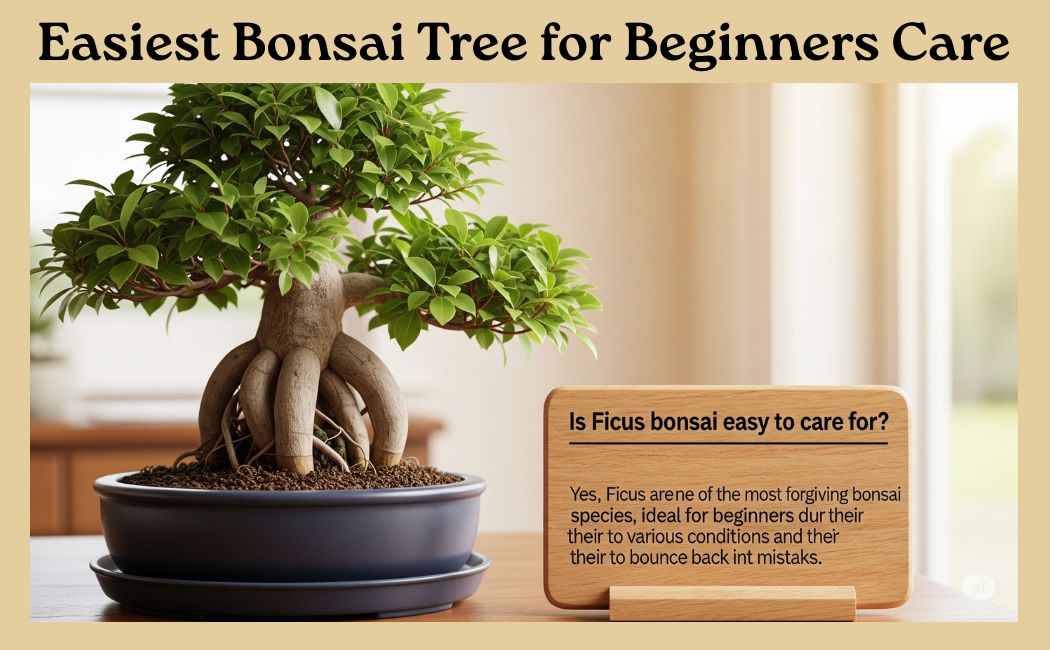
4. Dwarf Jade: Easiest Bonsai for Beginners
If you tend to forget watering, the Jade bonsai is perfect. This succulent stores water in its thick leaves, so it needs less frequent care. Beginners love it because the Jade Plant, Dwarf Jade Bonsai, can survive longer dry spells and still look healthy.
It also grows strong, with thick branches that are easy to prune. The Dwarf Jade bonsai is especially popular for small indoor spaces.
5. Japanese Maple Bonsai (Red Maple, Indoor Maple Bonsai)
The Japanese Maple bonsai is known for its beautiful red and green leaves. While it is a little more seasonal, it’s still manageable for beginners who want a colorful and artistic bonsai.
It grows best outdoors, where it gets fresh air and changing seasons. Beginners can learn about pruning and shaping through its fast-growing branches. Protect it from extreme cold, and it will reward you with stunning foliage.
6. Schefflera Bonsai (Dwarf Umbrella Tree, Umbrella Bonsai)
Schefflera, or the Dwarf Umbrella bonsai, is one of the most forgiving indoor bonsai trees. It tolerates low humidity, resists pests, and thrives in normal household conditions.
This makes it perfect for apartments or offices. Its glossy leaves form umbrella-like clusters, giving it a unique look. Beginners often choose it because it grows fast and doesn’t demand strict watering schedules.
These six bonsai species, Ficus, Chinese Elm, Juniper, Jade, Japanese Maple, and Schefflera, are the top beginner picks. Each one offers different strengths, so you can choose based on your lifestyle and environment.
How Do You Care for an Easy Bonsai as a Beginner?
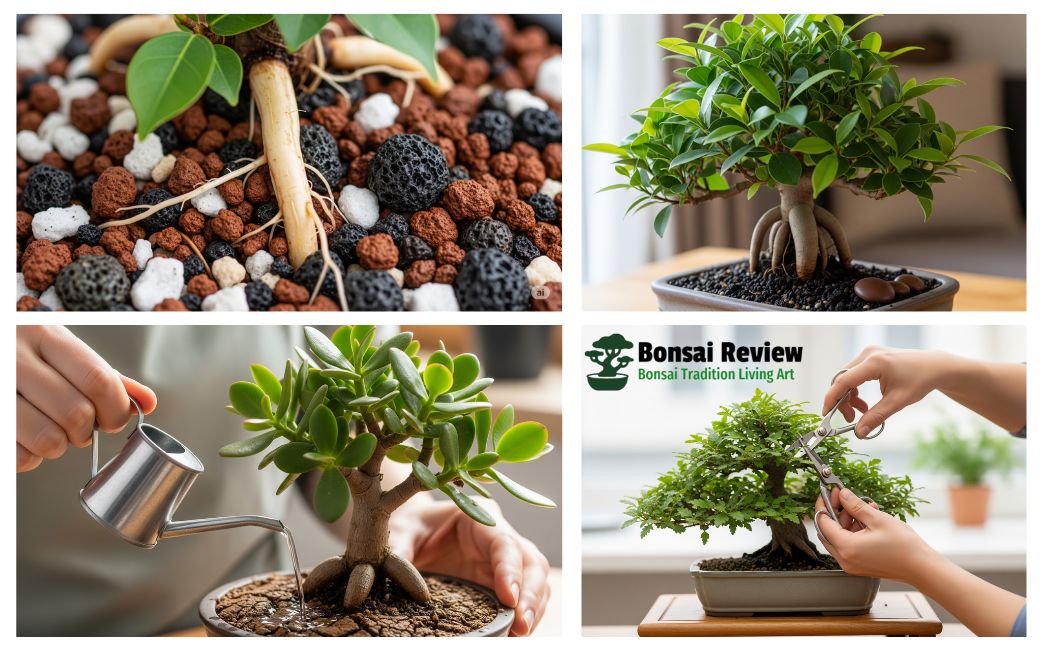
Caring for a bonsai may sound difficult, but once you know the basics, it becomes simple. The key is to focus on five main areas: light, water, soil, pruning, and repotting. Here’s how you can keep beginner-friendly trees like Ficus, Chinese Elm, Juniper, Jade, Japanese Maple, and Schefflera healthy from the start.
Step 1: Give the Right Light
Bonsai trees need sunlight to grow strong.
- Indoor bonsai like Ficus, Jade, and Schefflera do best near a bright window with indirect light.
- Outdoor bonsai like Juniper, Chinese Elm, and Japanese Maple need fresh air and direct sun for part of the day.
Example for Easiest Bonsai Beginners: Place a Juniper bonsai outside on a balcony where it can get at least 4–6 hours of sunlight daily.
Step 2: Water at the Right Time
Overwatering is the biggest beginner mistake.
- Check the soil with your finger if the top feels dry, it’s time to water.
- Jade bonsai and Ponytail Palm store water, so they need less frequent watering.
- Ficus and Chinese Elm need more regular watering, but will forgive if you miss once.
Example: A Jade bonsai may only need water once a week, while a Ficus may need it every 2–3 days depending on the climate.
Step 3: Use the Right Soil for the Easiest Bonsai for Beginners.
Bonsai don’t like sitting in soggy soil.
- Use fast-draining bonsai soil, not regular garden dirt.
- For Desert Rose or Jade bonsai, add more sand or grit to mimic dry climates.
Example: A mix of akadama, pumice, and lava rock keeps your Ficus bonsai roots healthy.
Step 4: Learn Simple Pruning
Pruning helps keep bonsai small and beautiful.
- Chinese Elm and Ficus respond well to heavy pruning, so they’re great for practice.
- Japanese Maple needs lighter pruning during the growing season.
Example: Trim back new shoots on a Chinese Elm bonsai; it will sprout fresh leaves quickly.
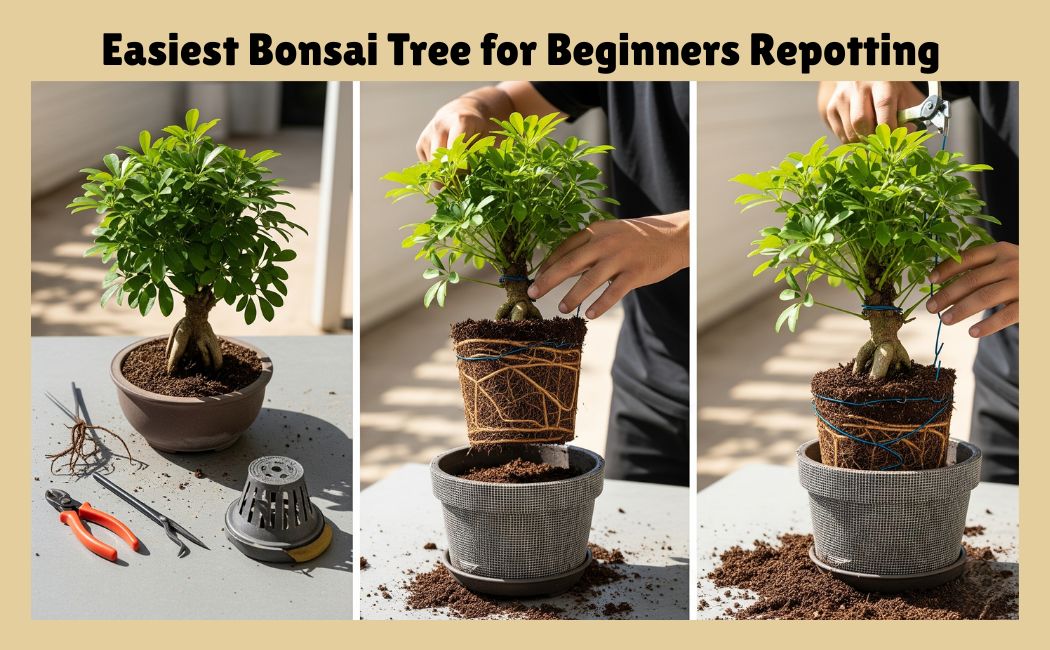
Step 5: Repot Every Few Years
Roots need space, or your tree will stop growing.
- Young bonsai: repot every 1–2 years.
- Older bonsai: repot every 3–4 years.
Easiest Bonsai Beginners Example: A Schefflera bonsai will keep growing strong if you repot it every two years with fresh soil.
With these 5 steps, easiest bonsai beginners can light, water, soil, prune, and repot them can keep almost any beginner bonsai alive and healthy. Once you master these basics, you’ll feel ready to try more advanced species like Azalea, Bougainvillea, or Chinese Sweet Plum bonsai.
What Mistakes Should Beginners Avoid When Growing Bonsai?
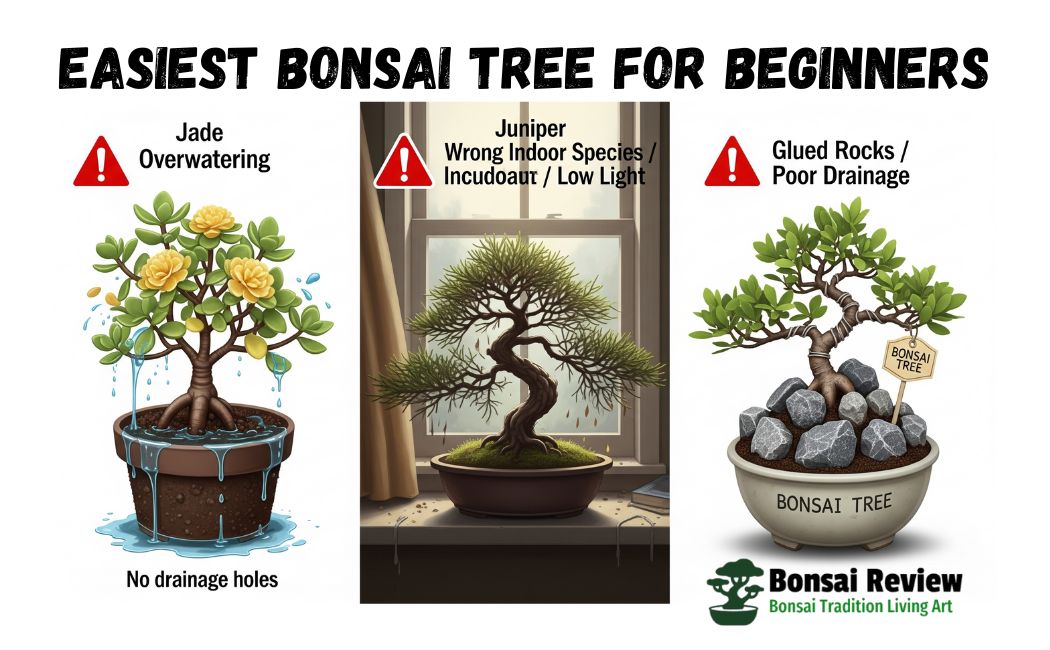
Even if you pick the easiest bonsai, small mistakes can cause problems. Many beginners lose their first tree because they don’t know what to avoid. Here are the most common errors and how you can prevent them.
Keeping Outdoor Bonsai Indoors: Easiest Bonsai for Beginners
One of the biggest mistakes is placing outdoor species inside.
- Juniper bonsai, Japanese Maple, Chinese Elm, and Azalea bonsai all need outdoor light and fresh air.
- If you keep them indoors, they slowly weaken and die.
- Solution: Only choose indoor bonsai like Ficus, Jade, Schefflera, or Money Tree if you don’t have outdoor space.
Easiest Bonsai Beginners: Overwatering or Underwatering
Easiest Bonsai Beginners often water too much or too little.
- Jade bonsai and Ponytail Palm don’t like constant water; their roots rot if soil stays wet.
- Ficus and Chinese Elm dry faster and need more regular watering.
- Solution: Always check soil moisture before watering. Use a chopstick test or finger test.
Buying “Gift Shop Bonsai”
Many stores sell cheap bonsai with glued rocks, painted trunks, or poor soil.
- These often include weak trees like Fukien Tea (Carmona bonsai) in tiny pots with bad drainage.
- Solution: Buy from trusted nurseries or bonsai specialists, where you’ll find healthy Ficus, Juniper, or Jade bonsai.
Skipping Pruning and Root Care For Easiest Bonsai Beginners.
Bonsai stay small only with regular trimming.
- If you never prune, species like Chinese Elm or Boxwood grow messy and lose shape.
- Roots also need trimming during repotting.
- Solution: Practice simple pruning, start with cutting back new shoots on Ficus or Chinese Elm, which regrow easily.
Ignoring Seasonal Needs for Easiest Bonsai Beginners
Some bonsai need protection during certain times.
- Japanese Maple needs winter protection in very cold areas.
- Bougainvillea and Desert Rose need warmth to stay alive.
- Solution: Match the bonsai to your climate, or be ready to bring it indoors only during extreme weather.
By avoiding these mistakes, wrong placement, poor watering, bad store choices, skipped pruning, and ignoring seasons, you’ll save yourself frustration and keep your bonsai thriving.
Conclusion: Which Bonsai Should You Start With?
Starting bonsai may feel hard, but the truth is, you don’t need rare or tricky trees to enjoy it. The best path for beginners is choosing easy, forgiving species like Ficus bonsai, Chinese Elm, or Jade bonsai.
These trees adapt well, survive small mistakes, and let you practice the joy of shaping without stress.
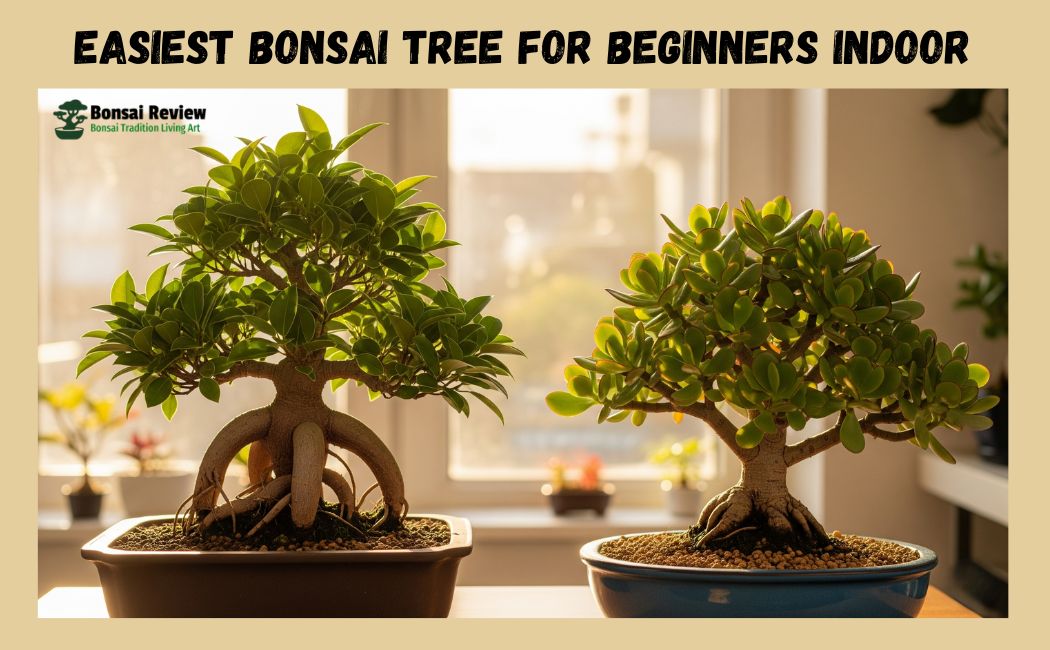
If you want an indoor bonsai, go for Ficus, Jade, Schefflera, or Money Tree. If you have an outdoor space, pick Juniper or Chinese Elm for a classic bonsai look.
The real secret? Pick just one tree, start small, and learn its rhythm. Indoor room Nasa Air-purifying study Snake Plant (Sansevieria trifasciata), Peace lily, English ivy, Spider plant (Chlorophytum comosum), etc.
With the right beginner bonsai, you’ll build confidence, avoid frustration, and enjoy a living art form that can grow with you for years.
Interested in more articles: Which is the best bonsai tree for beginners?
FAQs: What Is the Easiest Bonsai Tree for Beginners?
1. What is the easiest bonsai tree for beginners?
The easiest bonsai are Ficus bonsai, Chinese Elm, and Jade bonsai. They are hardy, forgiving, and can survive common beginner mistakes, such as missed watering or over-pruning.
2. What is the best indoor bonsai tree for beginners?
The best indoor choices are Ficus (Ficus microcarpa, Weeping Fig), Jade Plant (Dwarf Jade bonsai), Snake plant, Schefflera (Dwarf Umbrella bonsai), and Money Tree bonsai. These adapt well to indoor light and dry air.
3. Which bonsai tree needs the least care?
Jade bonsai and Ponytail Palm bonsai need the least care. Both store water in their trunks or leaves, so you don’t have to water them often.
4. Can a beginner grow a bonsai tree from seed?
Yes, but it takes a long time. Growing from seed (called misho) can take years before the tree looks like a bonsai. Beginners usually do better starting with a young tree such as Ficus, Chinese Elm, or Juniper.
5. What bonsai tree is best for kids or first-time growers?
Ficus bonsai and Chinese Elm bonsai are best for kids or absolute beginners. Snake plant best Air purifier for 24hours in indoor rooms. They grow fast, survive mistakes, and respond well to pruning.
6. Can bonsai trees live indoors all year?
Only some species can. Ficus, Jade, Snake plant, Schefflera, Carmona (Fukien Tea), and Money Tree can live indoors full-time. Outdoor trees outside.
7. Do bonsai trees live long?
Yes, bonsai can live for decades or even centuries with proper care. Even beginner trees like Ficus, Chinese Elm, and Juniper can live for many years if watered, pruned, and repotted correctly.
8. How many hours a day does a bonsai tree need?
Bonsai need direct sunlight, from which they make their food. A lack of direct sunlight will damage them, causing weak foliage and other problems. They like to receive 5-6 hours of sunlight daily, whether inside or outside.
9. Which bonsai is best for indoors?
The most common and the easiest to care for is the Ficus Bonsai. The Ficus is tolerant of low humidity and is very resilient, making it an excellent choice for beginners.
Other popular indoor Bonsai include the Dwarf jade, Snake plant, the Fukien tea (Carmona), the Hawaiian umbrella (Schefflera), and the Sweet plum (Sageretia).