


If you live in California and dream of owning a piece of history, the Dawn Redwood bonsai tree (Metasequoia glyptostroboides) may be the answer.
Known as a living fossil, this tree has existed since the time of the dinosaurs, long before the Redwood forests of Northern California, the Giant Sequoia (Sequoiadendron giganteum), or the Coast Redwood (Sequoia sempervirens) grew into today’s towering legends.
Unlike the massive California redwoods, the Dawn Redwood can be trained into a graceful bonsai forest, grown from Metasequoia bonsai seeds or purchased as a pre-trained tree.
Bonsai lovers admire its feathery foliage, fast growth rate, and fiery fall colors. But here’s the challenge for indoor beginner lovers, and how do you give this prehistoric beauty the right bonsai care, from watering and pruning to winter care, especially in California’s mix of climates?
You’ll practice not only the history and origin of redwoods, but also how to bonsai a Dawn Redwood, where to find one for sale in California, and the exact steps for fertilizing, pruning, and protecting it so your own miniature redwood grove thrives for years to come.
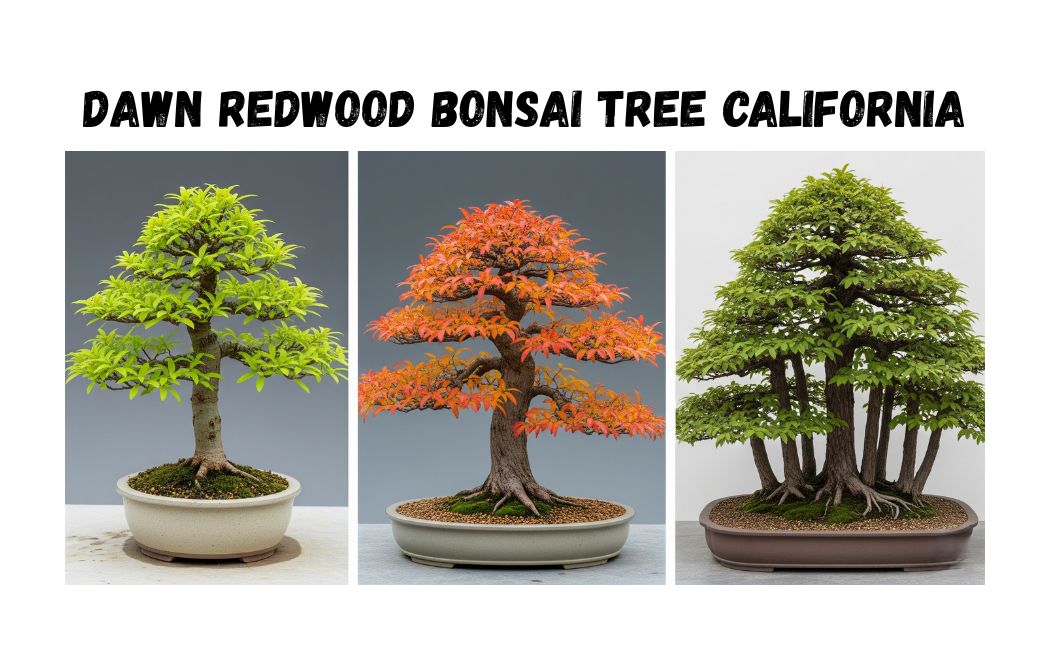
Why Dawn Redwood Bonsai Tree in California?
Have you ever wanted to grow a tree that feels like it came from another world? The Dawn Redwood bonsai tree (Metasequoia glyptostroboides) gives you that chance. This tree is called a living fossil because it has been around since the time of the dinosaurs, long before people ever walked the earth.
While the famous Coast Redwood (Sequoia sempervirens) and Giant Sequoia (Sequoiadendron giganteum) grow as towering giants in California’s redwood forests, the Dawn Redwood can live on a much smaller scale, right in your garden or balcony, shaped into a delicate bonsai forest.
Bonsai lovers admire the Dawn Redwood for its soft, feathery leaves, its fiery orange-red fall color, and its quick growth rate. You can grow one from Metasequoia bonsai seeds, or you might look for a trained Dawn Redwood bonsai for sale in California through nurseries or even online sellers like eBay.
But here’s the real question: how do you care for such an ancient tree in modern-day California? With its mix of coastal fog, sunny valleys, and dry southern heat, not every redwood does well here.
In this guide, you’ll discover the history of redwoods, the difference between California redwoods and the Dawn Redwood, and practical steps for bonsai care from watering and fertilizing to pruning and winter care.
You’ll also learn where to buy one in California, what size and price to expect, and how to keep your own miniature redwood grove healthy for years.
The History and Meaning of Redwoods in California
Redwoods are more than just beautiful trees are living pieces of history. The Dawn Redwood (Metasequoia glyptostroboides) belongs to the same family as California’s iconic redwoods: the Coast Redwood (Sequoia sempervirens) and the Giant Sequoia (Sequoiadendron giganteum).
Fossil records show that redwoods have existed for over 240 million years, making them almost as old as dinosaurs.
The Dawn Redwood was once thought extinct until a small grove was rediscovered in China in the 1940s. Today, it allows gardeners worldwide to grow a “living fossil” in miniature form.
In California, redwoods have a special cultural and ecological significance. They dominate Redwood National and State Parks, forming ancient redwood groves that provide habitat for wildlife and act as natural carbon sinks.
The name “redwood” comes from the reddish-brown color of the bark, which is highly resistant to rot and insects.
Historically, redwood wood was used for building, furniture, and even decorative features in gardens. When you grow a Dawn Redwood bonsai, you are connecting with millions of years of natural history and California’s iconic forests all in a small, manageable form.
This historical perspective helps you appreciate not only the tree’s beauty but also its remarkable survival story, making every pruning and seasonal change feel part of something much larger than yourself.
What Makes the Dawn Redwood Special?
The Dawn Redwood (Metasequoia glyptostroboides) is not just another bonsai species. It is one of the most ancient trees on Earth, often described as “almost as old as the dinosaurs.”
Fossil records show that redwoods have been around for more than 240 million years, long before flowers, birds, or even spiders appeared.
For a long time, scientists believed this species was extinct, but in the 1940s, a small grove was rediscovered in China.
That moment made the Dawn Redwood a true living fossil and a treasure for tree lovers worldwide.
Unlike the massive California redwoods, the Coast Redwood (Sequoia sempervirens) and the Giant Sequoia (Sequoiadendron giganteum), the Dawn Redwood grows more gracefully and can adapt to small containers.
It drops its leaves in winter, unlike most conifers, which makes it unique in the bonsai world. During spring, you see fresh green needles; in summer, it grows quickly; and in fall, it glows in bright orange-red shades before becoming bare.
This seasonal rhythm is why many bonsai artists create Dawn Redwood forest bonsai, also known as bonsai groves, to showcase their beauty across the year.
Whether grown from Metasequoia bonsai seeds or shaped from a nursery sapling, the tree’s fast growth rate makes it a rewarding choice for both beginners and advanced growers.
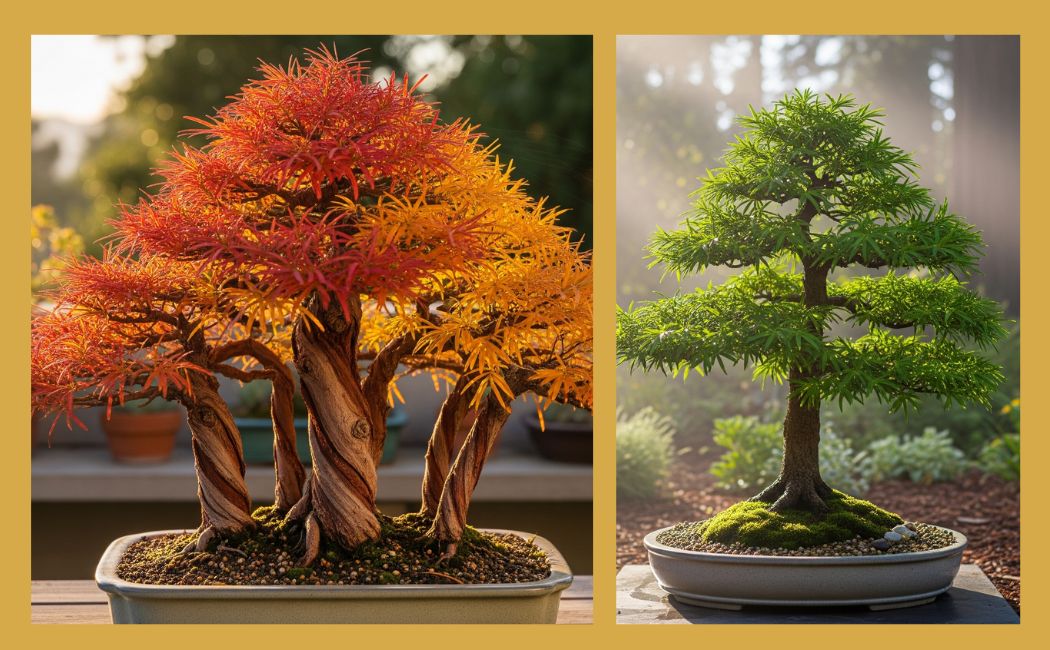
Can You Bonsai a Redwood Tree in California?
Many people wonder, “Can you bonsai a redwood tree?” The answer is yes, but the type of redwood you choose matters. The giant species native to California, the Coast Redwood (Sequoia sempervirens) and the Giant Sequoia (Sequoiadendron Giganteum), are awe-inspiring in nature but are not the easiest to manage as bonsai. They grow extremely tall and require special care.
This is where the Dawn Redwood (Metasequoia glyptostroboides) shines. Unlike its California cousins, the Dawn Redwood adapts well to bonsai containers. Its rapid growth rate, soft foliage, and ability to handle shaping make it a favorite among bonsai artists.
But how does it handle California’s climate?
- Northern California: The mild, moist air and cooler winters make it nearly perfect for Dawn Redwood bonsai. The tree thrives in full sun, especially near the coast, where fog keeps humidity high.
- Central California: With hotter summers, you’ll need to provide extra watering and partial shade during peak heat.
- Southern California: The biggest challenge is drought and dry air. The tree will need daily watering in summer, humidity trays, and sometimes light shade to avoid scorching.
- Winter in California: In most regions, Dawn Redwoods can stay outdoors since they are hardy. Only in areas with frost risk would you need to protect them.
So yes, you can bonsai a redwood tree in California, but the Dawn Redwood is the best choice. It combines the ancient beauty of the redwood family with the practical adaptability needed for bonsai care.
Guide California Growing Tips: Dawn Redwood Bonsai Care.
Caring for a Dawn Redwood bonsai (Metasequoia glyptostroboides) in California is not hard, but you need to understand its needs. Unlike many bonsai that prefer drier soil, this tree loves water and grows quickly. Here’s how you can keep it healthy:
Soil: Dawn Redwood Bonsai Tree in California
- Use well-draining bonsai soil that can still hold moisture.
- A mix of akadama, pumice, and organic soil works well.
- Avoid heavy clay, which can cause root rot.
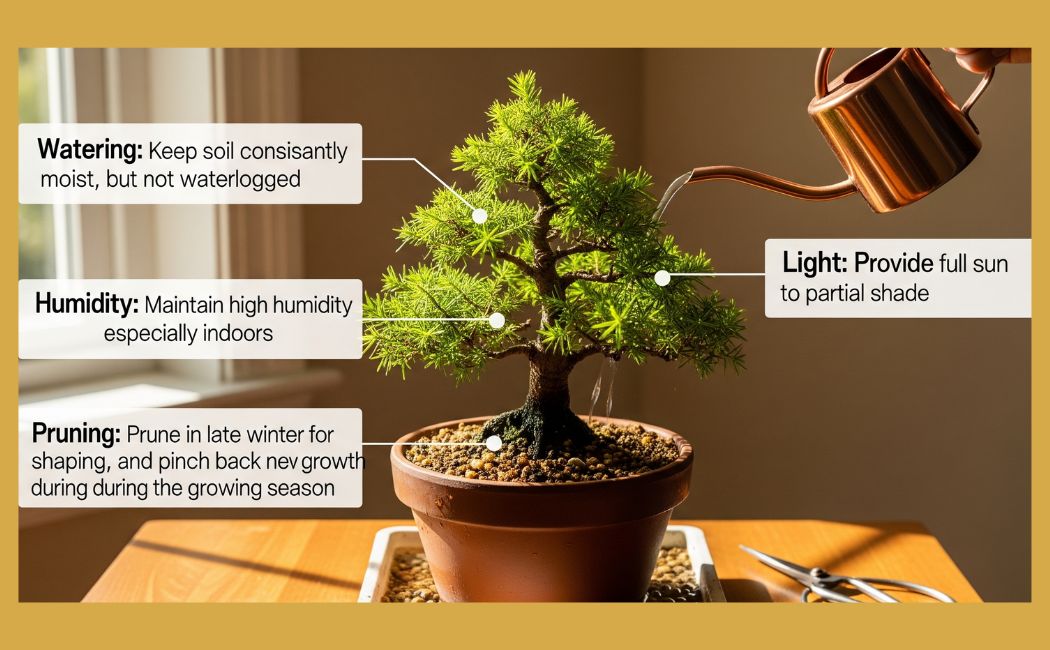
Watering: Dawn Redwood Bonsai Tree in California.
- The Dawn Redwood thrives on plenty of water. In California’s hot summers, you may need to water daily, sometimes twice a day.
- Use a humidity tray to keep moisture around the tree, especially in Southern California.
- Never let the soil completely dry out.
Sunlight: Dawn Redwood Bonsai Tree in California.
- In Northern California, full sun is perfect.
- In Central and Southern California, give partial shade during peak summer heat to avoid leaf scorch.
- Indoors is not ideal; the Dawn Redwood needs outdoor light and airflow.
Pruning & Styling: Dawn Redwood Bonsai Tree in California
- Pruning: Trim new shoots during the growing season to keep a balanced shape (Dawn Redwood bonsai pruning).
- Styling: Many growers prefer creating a bonsai forest (grove) with multiple trees to show seasonal changes.
- Remove dense inner branches to allow airflow.
Fertilizer: Dawn Redwood Bonsai Tree in California.
- Feed with a balanced bonsai fertilizer every 2–3 weeks during the growing season (spring through fall).
- Slow-release pellets or liquid fertilizer both work. (Dawn Redwood bonsai fertilizer)
Winter Care: Dawn Redwood Bonsai Tree in California
- In most parts of California, you can keep the tree outdoors year-round.
- In colder mountain or inland valleys, protect it from frost by moving it to a sheltered spot. (Dawn Redwood bonsai winter care)
With proper soil, water, sunlight, pruning, and feeding, your Dawn Redwood bonsai will reward you with graceful growth and stunning seasonal colors.
Growth Rate and Styling Options for Dawn Redwood Bonsai
One reason people love the Dawn Redwood bonsai (Metasequoia glyptostroboides) is its fast growth rate. In the right conditions, new shoots can appear almost weekly during spring and summer.
This quick growth makes it easier to style, since you can see results much faster than with slower-growing bonsai species.
Growth Rate:
- Dawn Redwoods can grow several feet per year in nature. As bonsai, their growth is still faster than many conifers.
- Regular pruning is needed to keep the tree balanced. (Dawn Redwood bonsai pruning)
- Because of this, beginners often enjoy working with it and respond quickly to care.
Styling Choices:
- Single Trunk Style: You can train the tree into a strong central trunk with layered branches, mimicking the tall shape of California redwoods.
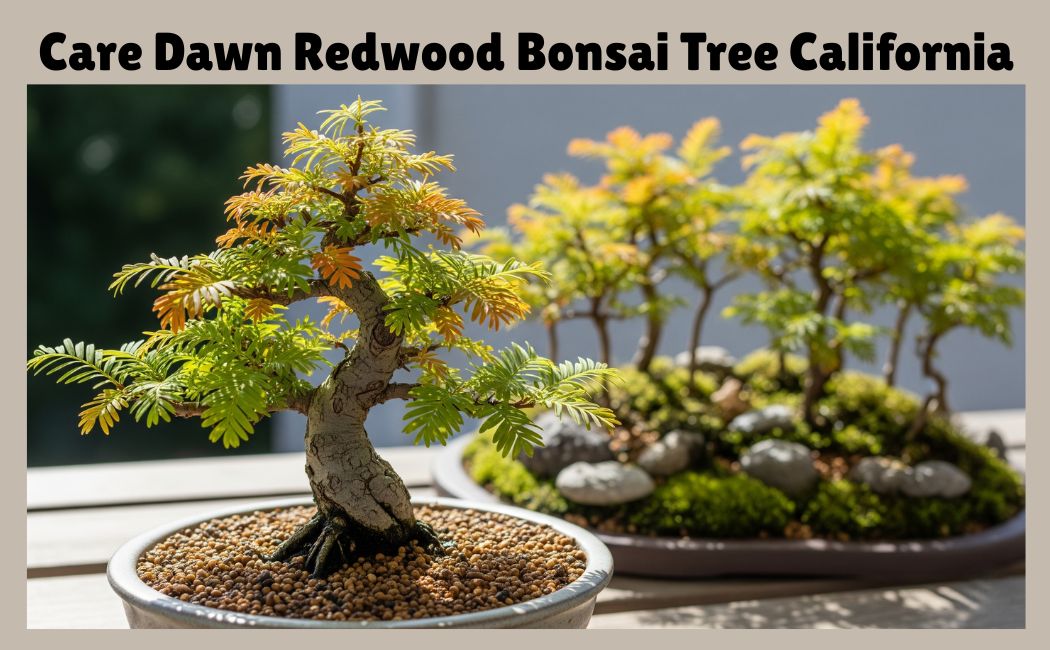
- Bonsai Forest (Grove): Many growers plant 3–7 Dawn Redwoods together in a shallow pot to create a miniature redwood forest. This style is popular because the trees’ seasonal leaf color changes look stunning as a group. (Dawn Redwood forest bonsai, Bonsai forest, Redwood grove)
- Natural Look: Since the Dawn Redwood drops its leaves in winter, leaving bare branches, you can highlight its trunk texture and winter silhouette.
Seasonal Beauty:
- Spring: Fresh, light-green leaves.
- Summer: Thick, feathery foliage with rapid growth.
- Fall: Fiery orange-red color (redwood dawn bonsai).
- Winter: Deciduous leaves drop, giving a bare, elegant look.
This natural cycle sets it apart from evergreen bonsai like pines or junipers. The Dawn Redwood shows you the full drama of the seasons, making it one of the most rewarding bonsai species for display in California.
Buying a Dawn Redwood Bonsai in California.
If you’re ready to grow your own Dawn Redwood bonsai tree (Metasequoia glyptostroboides), the next step is finding the right source. In California, you have several options depending on your budget and skill level.
Seeds vs. Saplings vs. Pre-Trained Bonsai:
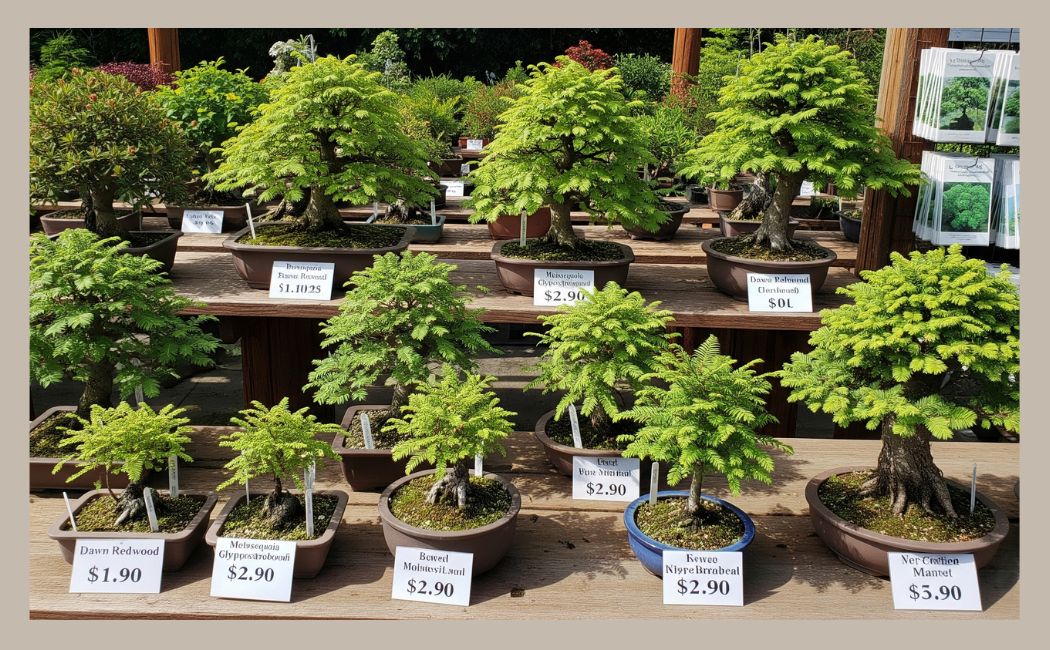
- Metasequoia Bonsai Seeds: The most affordable option, often sold on eBay and online bonsai shops. Perfect if you enjoy growing from scratch, but it takes years before you can shape it into a bonsai. (Redwood seeds, feature trees)
- Saplings (Young Trees): Many nurseries and garden centers in California offer small Dawn Redwoods. These give you a head start and are easier to train.
- Pre-Trained Bonsai: For those who want instant beauty, look for sellers offering shaped Dawn Redwood bonsai for sale. These can be found at bonsai nurseries, specialty stores, or online marketplaces.
Where to Buy Dawn Redwood Bonsai Tree California:
- Local Nurseries: Some California bonsai nurseries carry Dawn Redwoods or can special-order them.
- Bonsai Shops Online: Websites like Bonsai Mirai and Bonsai-Shop.com sometimes list redwood bonsai species.
- Ebay & Etsy: Many hobbyists sell Dawn Redwood bonsai trees for sale in California, along with seeds and starter kits.
Price and Size: Dawn Redwood Bonsai Tree California.
- Seed packets: $5–$15.
- Saplings (1–3 years old): $20–$60 depending on size.
- Pre-trained bonsai (5+ years old): $80–$300+, with larger display trees costing even more.
- Search queries show people often look for “Dawn Redwood bonsai tree California price” and “Dawn Redwood bonsai tree California size,” so it’s good to know what to expect before buying.
Buying wisely is important. Whether you start from seeds, saplings, or pre-trained bonsai, make sure the plant is healthy and comes from a trusted source.
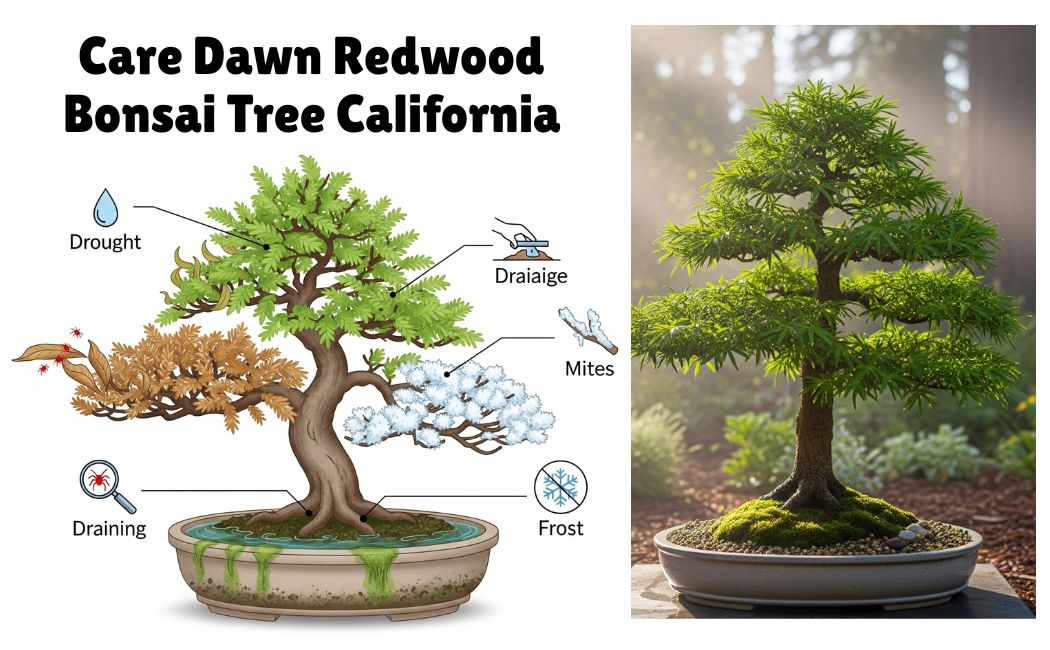
Common Problems and Solutions for Dawn Redwood Bonsai in California
Even though the Dawn Redwood bonsai (Metasequoia glyptostroboides) is hardy and fast-growing, it faces some challenges in California’s varied climate. Here are the most common issues and how to solve them:
Problem 1: Heat and Drought Stress
- In Southern California and hotter inland valleys, the dry air and high summer heat can stress the tree.
- Solution: Water daily, sometimes twice a day in summer. Use a humidity tray and place the bonsai where it gets morning sun but afternoon shade.
Problem 2: Root Rot from Overwatering
- Since this tree loves water, beginners sometimes keep the soil soggy. If the potting mix doesn’t drain well, roots may rot.
- Solution: Use well-draining bonsai soil and a pot with drainage holes. Keep soil moist, but never waterlog it.
Problem 3: Pests affecting Dawn Redwood Bonsai Tree in California.
- Spider mites and aphids can attack the soft, feathery foliage, especially in dry climates.
- Solution: Regularly inspect leaves. Mist the tree to raise humidity and use natural sprays like neem oil if pests appear.
Problem 4: Winter Frost in Cold Areas
- In most of California, winters are mild, but in mountain or valley areas, frost can damage young trees.
- Solution: Protect with a frost cloth or move to a sheltered, unheated space during freezing nights. (Dawn Redwood bonsai winter care)
Problem 5: Overgrowth Without Pruning
- Because of its fast growth rate, the Dawn Redwood can quickly become messy.
- Solution: Regular pruning of new shoots keeps the shape balanced. Cut back after new growth hardens but before branches get woody.
By handling these problems early, you’ll keep your Dawn Redwood bonsai healthy and beautiful through California’s seasons.
Conclusion: Create a Miniature Redwood Forest with Dawn Redwood Bonsai.
The Dawn Redwood bonsai (Metasequoia glyptostroboides) is more than just a tree; it’s a living fossil that connects you to millions of years of natural history.
The towering California redwoods, Coast Redwoods (Sequoia sempervirens), and Giant Sequoias (Sequoiadendron giganteum) dominate forests.
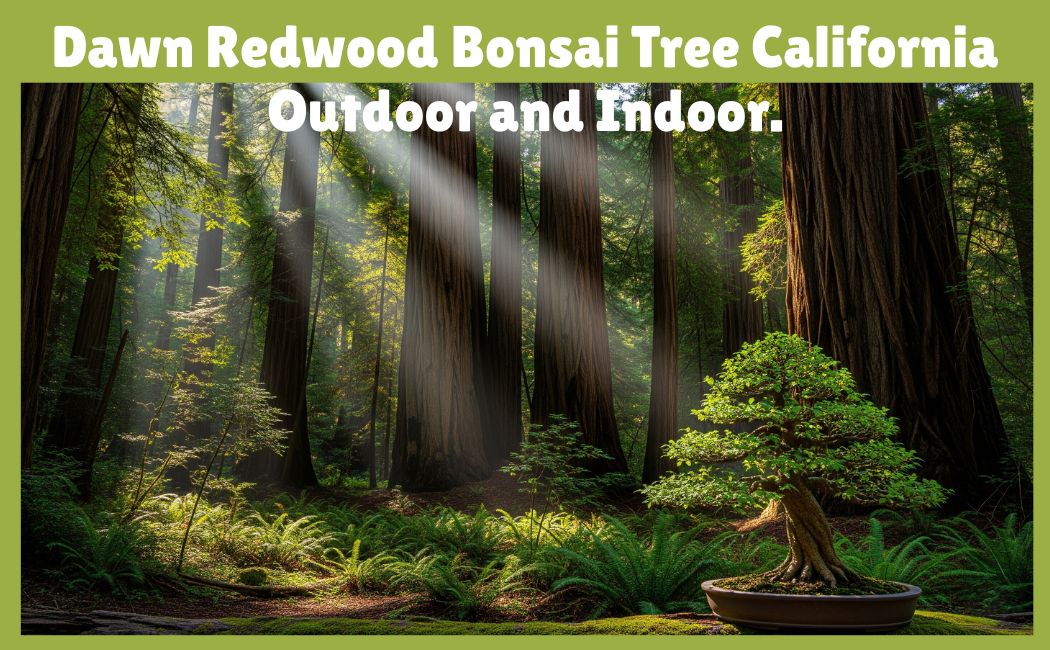
The Dawn Redwood allows you to enjoy the same prehistoric beauty in a bonsai forest on your balcony, patio, or garden.
With the right soil, watering, sunlight, pruning, and winter care, this tree thrives in California’s diverse climates from the misty coasts of Northern California to the warmer valleys of Central and Southern California.
If you start from Metasequoia bonsai seeds, a young sapling, or a pre-trained bonsai, the fast growth rate and stunning seasonal colors make it a rewarding choice for beginners and experienced bonsai enthusiasts alike.
By understanding the history of redwoods, learning proper bonsai care, and sourcing your tree from trusted nurseries or online sellers, you can create your own miniature redwood grove that will thrive for years.
The Dawn Redwood bonsai is not just a plant connected to nature, history, and beauty, all scaled down to fit perfectly in your California home.
Helpful article: What Is the Oldest Bonsai Tree in the World?
FAQs: Dawn Redwood Bonsai: Fast Growth, Stunning Colors, and Easy Care.
1. How do you take care of a Dawn Redwood bonsai tree?
Caring for a Dawn Redwood bonsai (Metasequoia glyptostroboides) involves well-draining soil, regular watering, full sun in cooler areas, partial shade in hot summers, and pruning to maintain its shape. Fertilize every 2–3 weeks during the growing season and protect young trees from frost in cold spots.
2. Where can Dawn Redwoods grow?
They can grow outdoors in most of California, thriving in Northern California’s mild, moist climate, and adapting to Central and Southern California with extra care (watering, partial shade). Avoid keeping them indoors, as they need natural sunlight and airflow.
3. Can Dawn Redwood bonsai be kept indoors?
It’s not recommended. Dawn Redwoods need plenty of sunlight, fresh air, and seasonal changes to thrive. Indoor environments usually don’t provide enough light or humidity, which can stunt growth or cause health issues.
4. How fast does a Dawn Redwood bonsai grow?
Dawn Redwoods have a fast growth rate. In bonsai form, you’ll see new shoots appear regularly during spring and summer. This makes them responsive to pruning and enjoyable for both beginners and experienced growers.
5. How do you bonsai a Dawn Redwood?
You can start from Metasequoia bonsai seeds, young saplings, or pre-trained bonsai trees. Use well-draining soil, regular watering, seasonal fertilization, and pruning to shape the tree. Popular styles include single trunk and bonsai forest (grove) setups.
6. What’s the difference between Coast Redwood and Dawn Redwood bonsai?
Coast Redwood (Sequoia sempervirens) grows extremely tall, is slower to adapt to bonsai, evergreen foliage. Dawn Redwood (Metasequoia glyptostroboides) fast-growing, deciduous, responds well to bonsai pruning, suitable for California bonsai lovers.
7. How do you care for a Dawn Redwood bonsai in winter?
In most California regions, Dawn Redwoods can stay outdoors. In areas with frost, move the bonsai to a sheltered location or use a frost cloth. Reduce watering slightly during winter dormancy.