


Indoor bonsai is harmful for kids. Is it toxic for pets? What every parent should know!
While bonsai trees themselves are generally not harmful to children, some species can cause skin irritation or gastrointestinal issues if ingested.
It’s crucial to be aware of the specific tree species and its potential toxicity before bringing a bonsai indoors, especially if you have young children or pets.
Many bonsai lovers or parents love the look of tiny bonsai trees or a low-maintenance and budget-friendly bonsai. Ficus (especially Ficus ginseng or Ficus microcarpa) and Jade plants (Portulacaria afra) are excellent choices.
They are known for being relatively easy to care for, tolerant of beginner mistakes, and can be found at reasonable prices.
Other options include miniature trees; the juniper plant is known for being hardy and adaptable, making it particularly suitable for outdoor bonsai.
Chinese Elm is another popular choice for beginners due to its adaptability and relatively low maintenance. Pachira or Money Tree is easy to care for and visually appealing with its interwoven trunks.
From skin rashes caused by Ficus sap to upset stomachs after chewing a Jade leaf (Crassula ovata), or Azalea, without realizing that some of them can pose quite health risks to young children. Even more serious symptoms from plants like Wisteria, Cherry bonsai, or Japanese Yew, etc.
These dwarf trees can carry big problems. But don’t worry. There are also safe bonsai options, such as Fukien Tea, Juniper, Chinese Elm, and Serissa, that are perfect for family homes.
Indoor bonsai is harmful for kids & pets, guide will help you spot which bonsais to avoid, which ones to keep, and how to create a peaceful indoor plant space without putting your child at risk.
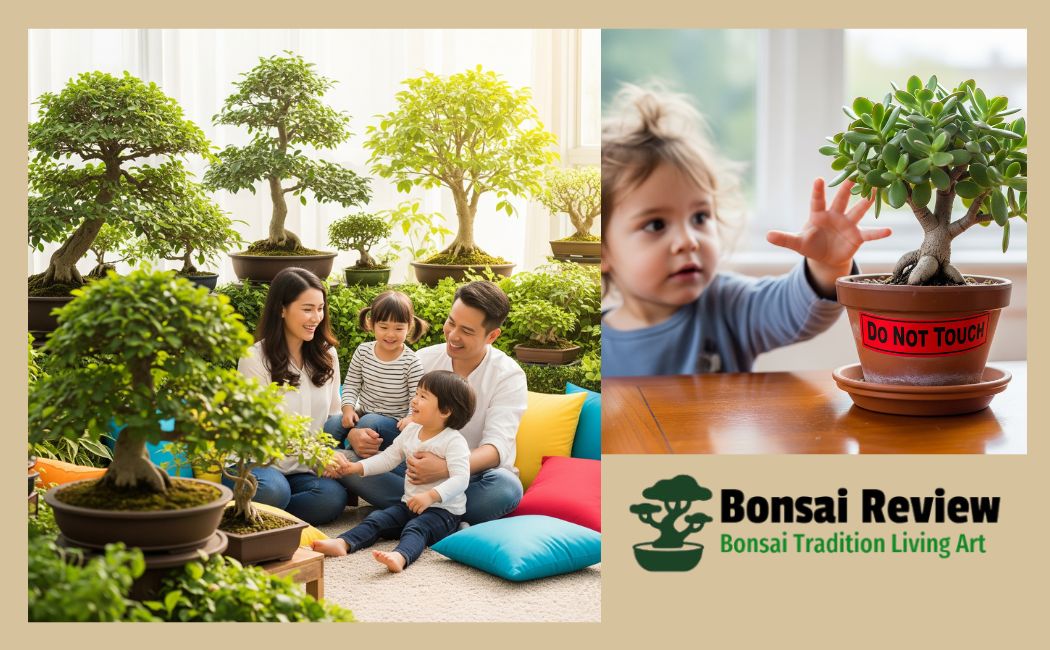
Why Some Indoor Bonsai Can Be Harmful for Kids?
Stop! These common indoor bonsai could hurt your Kids. What To Do? Not all bonsai trees are safe. Some have toxic sap, poisonous leaves, or dangerous seeds that can harm your child if touched, chewed, or swallowed. A child doesn’t know the difference between a leaf and a snack. Even a small bite can lead to rashes, vomiting, or worse.
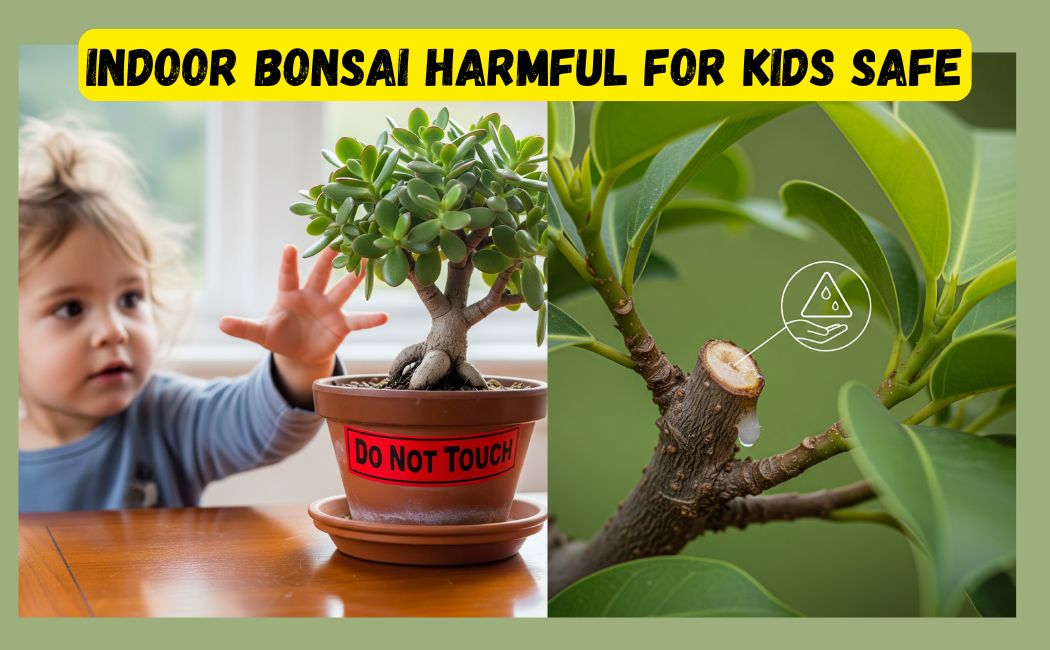
Bonsai trees like Ficus release a sticky white sap when cut. That sap can burn the skin or make the mouth sore. Jade plants may cause tummy pain, drooling, or diarrhea if eaten. Azaleas are more serious; just a few petals or leaves can upset the whole body.
And if you keep a Wisteria, Cherry bonsai, or Japanese Yew, the danger is much higher. These trees carry strong poisons that may affect the heart, stomach, or brain.
Even though bonsai are small, their toxins are real. And children are more sensitive than adults. That’s why knowing which bonsai to avoid is so important when you have little ones around.
What Toxic Bonsai Trees to Avoid Around Kids?
Are your indoor bonsai trees safe for children? Find out now!
Some bonsai trees may look pretty and peaceful, but they can be toxic if touched or chewed by curious little hands.
Below is a list of common indoor bonsai species that are not safe for children and pets. Each one comes with its own risk, from skin irritation to dangerous poisoning.
| Bonsai Tree | Toxic Part | What It Can Do to Kids |
| Ficus (Weeping Fig) | Sap | Skin rash, mouth burn, eye irritation |
| Jade (Crassula ovata) | Leaves | Vomiting, diarrhea, tiredness |
| Azalea (Rhododendron) | Leaves, flowers | Serious stomach pain, drooling, weakness |
| Cherry Bonsai (Prunus) | Leaves, fruit pits | Can cause nausea, dizziness |
| Wisteria | Seeds, pods | Poisonous; may cause vomiting and confusion |
| Japanese Yew (Taxus) | All parts | Extremely toxic; affects the heart and brain |
These bonsai types might seem harmless on a shelf or table, but for a child, even one quick touch or taste can cause real harm. Are bonsai trees toxic to dogs or pets? If you already own one of these, don’t worry, the next section will help you handle them safely or suggest better alternatives.
Indoor Bonsai is Harmful for Kids: Which Trees Can Cause Toxicity to Kids or Pets?
You don’t have to give up bonsai just because you have kids at home. Some bonsai trees are known to be non-toxic and much safer for families. These trees are just as beautiful, easy to care for, and don’t come with the same health risks. Here are the top child-safe bonsai picks:
| Safe Bonsai Tree | Why It’s Safer |
| Fukien Tea (Carmona) | No known toxins; used in herbal remedies |
| Juniper Bonsai | Non-toxic and popular among beginners |
| Chinese Elm | Hardy and safe; no harmful sap or parts |
| Serissa (Snow Rose) | Gentle leaves and flowers; no toxic effects noted |
| Spruce Bonsai | Pet-safe and kid-safe; easy to maintain indoors |
These trees are safer to keep on low shelves, coffee tables, or even near windows where children might explore. Of course, even safe plants should be treated with care. Protect your little ones’ indoor bonsai so that it doesn’t become Dangerous. Teach your child not to pick leaves or touch soil, and always supervise younger kids around any plant.
Already Own a Toxic Bonsai? Are Indoor Bonsai is Harmful for Kids to Stay Safe?
If you already have a bonsai like Ficus, Azalea, Jade, or Wisteria at home, don’t worry, you don’t need to throw it out right away. There are simple ways to make your space safe for your child while still enjoying your bonsai. Here’s what you can do:
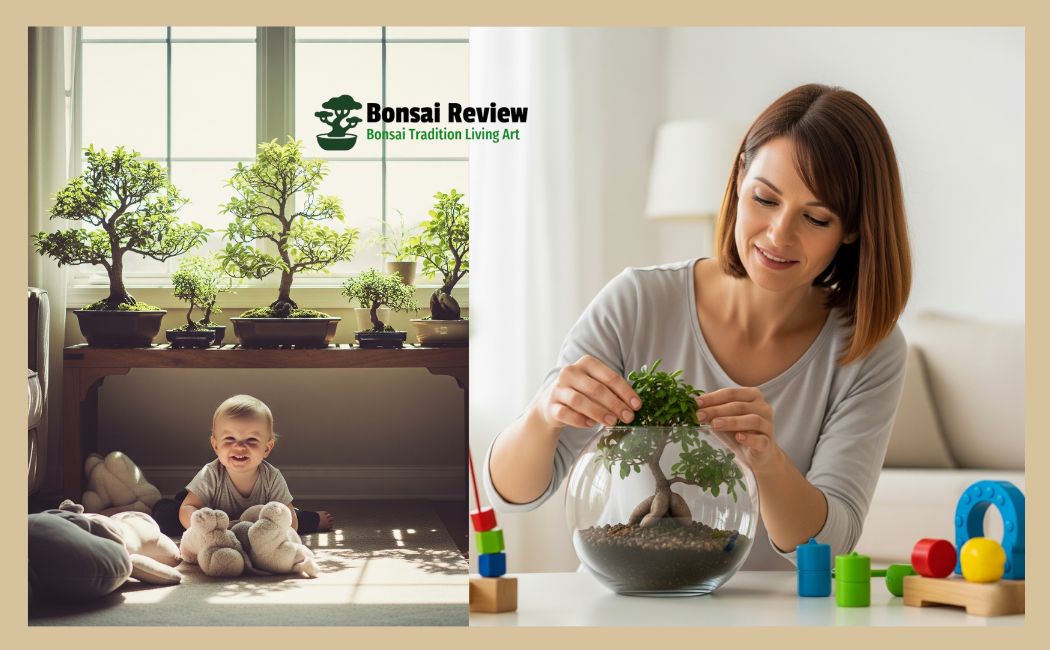
- Keep it out of reach. Place your bonsai on a high shelf, wall bracket, or closed cabinet where little hands can’t get to it.
- Use clear labels. Tag toxic bonsai with a small sticker or label that says “Do Not Touch.” This helps you and your guests stay alert.
- Choose a closed terrarium. Some bonsai can grow inside a sealed glass case. This keeps kids from touching soil, leaves, or sap.
- Teach safe plant habits. If your child is old enough, explain which plants are just for looking, not touching, or tasting.
- Wear gloves when trimming. If you prune or repot a toxic bonsai, wear gloves and wash your hands right after.
- Consider rehoming. If your child is very young or the bonsai is too risky, give the plant to a friend, relative, or bonsai club.
A little awareness goes a long way. With a few changes, indoor bonsai is harmful for kids and cats or dogs, you can keep both your bonsai and your family safe at the same time.
Indoor Bonsai is Harmful for Kids: What to Do If a Child Touches or Eats a Toxic Bonsai?
What every parent must know. Accidents can happen fast, a leaf in the mouth, sticky sap on fingers, or a chewed petal. If your child touches or eats any part of a toxic bonsai, stay calm but act quickly. Here’s what you need to do:
If Your Kids or Pets Chew or Swallow a Leaf or Flower:
- Take the plant away immediately.
- Wipe the child’s mouth gently with a clean, damp cloth.
- Give a small sip of water, but don’t force it.
- Do not make them vomit, and this can make things worse.
- Call your local poison control center or go to the nearest hospital.
Keep the plant name with you when calling or visiting the doctor, even a picture helps.
If They Touch Sap or Leaves: Indoor Bonsai is Harmful for Kids or Pets.
- Wash your hands or skin with soap and water right away.
- Watch for signs like redness, rashes, or eye rubbing.
- If sap gets in the eyes, flush with clean water for 10 minutes.
- If irritation continues, contact your pediatrician.
Signs to Watch For After Contact or Ingestion:
- Nausea or vomiting
- Diarrhea
- Drooling
- Trouble breathing
- Skin rashes
- Weakness or drowsiness
- Confusion or dizziness
If you notice any of these, seek medical help immediately.
Keeping emergency numbers visible at home, like Poison Control or your child’s doctor, is a smart step every parent should take, especially if you keep indoor plants. Safe Indoor Bonsai Options for Homes with Children.
Conclusion: Don’t Risk It! Which Indoor Bonsai is Harmful for Kids and How to Stay Safe?
Urgently, are your indoor bonsai poisoning your kids? Are bonsai trees toxic to dogs? Now you know which indoor bonsai is harmful for kids and pets, more importantly, how to keep your little ones safe while enjoying these beautiful trees.
Some bonsai like Ficus, Jade, and Azalea can cause skin or stomach problems, but safer options like Fukien Tea, Juniper, and Chinese Elm let you bring nature indoors worry-free.
If you already have a toxic bonsai or are choosing a new one, simple steps like keeping plants out of reach, labeling, and teaching your children about plant safety go a long way.
With the right knowledge and care, you can create a green, happy home where both bonsai and kids thrive together. Are bonsai trees toxic to dogs or pets?
You don’t have to choose between your love for bonsai and your child’s safety, and they can both grow beautifully side by side. Enjoy your bonsai, keep your kids and pets safe.
Best informative article: How can DIY Bonsai Care Supplies be Purchased Online in the USA?
FAQs: Toxic Indoor Bonsai is Harmful For Kids to Avoid Your Home.
1. Can I keep bonsai trees in my child’s bedroom?
It’s best to avoid placing bonsai trees in a child’s bedroom, especially if they are toxic species like Ficus or Azalea. Even safe bonsai should be out of reach to prevent touching or chewing.
2. Are bonsai trees harmful to babies and toddlers?
Yes, babies and toddlers are more vulnerable because they tend to put things in their mouths. Toxic bonsai can cause skin irritation or stomach problems, so always choose safe species and supervise closely.
3. What are the negative effects of bonsai trees?
Just like other plants, bonsai trees can trigger allergies. The specific soil, fertilizers, or even the tree species itself might cause allergic reactions in susceptible individuals. If you have a history of plant-related allergies, this could pose a significant disadvantage.
4. Are all Ficus bonsai harmful to kids?
Most Ficus bonsai release sap that can irritate skin and mouth, so it’s safer to keep them away from children. However, Indoor Bonsai is Harmful for Kids and pets, is the risk depends on the extent of contact.
5. Are bonsai trees that are safe for pets also safe for kids?
Usually yes, indoor bonsai harmful for kids and pets, but always check the specific species. Some plants safe for pets might still irritate sensitive skin or cause mild upset in children.
6. Is pruning bonsai dangerous for pregnant or breastfeeding moms?
Pruning can expose you to sap or dust that might irritate your skin or lungs. Wearing gloves and working in a well-ventilated area is a good idea to stay safe.
7. Are bonsai plants toxic to pets?
Bonsais are miniature trees, and some varieties of these plants are extremely toxic to dogs and cats. Check out before buying plants. Are bonsai trees toxic to dogs? on the toxicity of different species of miniature trees, or better yet, choose another plant if you have pets.
8. What are the disadvantages of a bonsai tree?
Keeping a Bonsai Tree inside the house may not be favourable for your pets, as they are toxic to both cats and dogs. Ingesting Bonsai can cause respiratory problems in pets. Mite infestation and other insects can easily harm Bonsai, which is another reason why it is not so beneficial to keep them at home.