


Common bonsai tree diseases and prevention: How can a beginner dwarf plant lover easily identify those traditional tree diseases, such as fungus, bugs, and root rot?
Find out simple ideas, safe treatment, and prevention tips to keep your tiny bonsai plant healthy and beautiful.
Your bonsai might look fine one day, then suddenly show white spots on the trunk or tiny black bugs crawling in the soil. These are early signs of trouble, often caused by fungus, spider mites, or fungus gnats.
If you see white fungus on the trunk, it’s likely powdery mildew, especially if your bonsai sits in a humid spot with little airflow. Safe treatment and prevention of your bonsai, and easy ways to identify and prevent common diseases.
Look closely: are there tiny webs or yellow dots on the leaves? That could mean bonsai spider mites are feeding on it. Check the soil too. Tiny black bugs in bonsai soil typically indicate overwatering, which attracts fungus gnats.
To fix this, spray neem oil on the leaves and soil once a week for three weeks. If you spot hard shell bumps or cotton-like bugs, you may be dealing with scale insects or mealybugs. Gently wipe them off with a brush dipped in alcohol.
These pests and diseases are common, but if you catch them early and act fast using safe bonsai insecticides or home fixes like insecticidal soap, your bonsai can recover.

What Are Common Bonsai Tree Diseases and Prevention Matters?
Your bonsai tree is small, but the problems it faces can grow fast. The most common bonsai tree diseases come from fungus, root rot, and pests, all caused by things like too much water, poor airflow, or dirty soil.
Here’s what usually goes wrong:
- White fungus or white spots on the trunk = Powdery mildew
- Yellow leaves + soggy soil = Root rot
- Black or brown leaf spots = Leaf spot fungus
- Tiny black bugs in soil = Fungus gnats
- Sticky leaves or fluffy bugs = Aphids or mealybugs
- Webs and yellow dots on leaves = Spider mites
These problems show up when your bonsai doesn’t get the care it needs. But don’t worry, each one has a simple fix.
To prevent these diseases, you need to:
- Use fast-draining bonsai soil
- Water only when the topsoil is dry
- Place your tree where it gets light and fresh air
- Clean fallen leaves and dead roots
- Check for bugs or spots every week
- Keep new bonsai trees away until you check them
Prevention keeps your bonsai strong. And when trouble shows up, fast action brings it back to life.
How to Keep Your Bonsai Healthy: Common Problems and Solutions?
Traditional bonsai tree diseases include fungal infections like powdery mildew and black spot, as well as bacterial leaf spot disease and root rot. Control focuses on proper watering, drainage, and ventilation to avoid creating environments conducive to disease. Fungicides can be used to treat active infections.
Common Bonsai Diseases: Fungal Diseases
- Powdery Mildew: Appears as a white, powdery coating on leaves, often in humid conditions.
- Black Spot: Characterized by small, dark spots on the leaves.
- Bacterial Leaf Spot: Causes small, dark spots on leaves, potentially leading to leaf drop and weakened trees.
- Root Rot: Occurs when roots are constantly waterlogged due to overwatering or poor drainage.
Traditional Problems Prevention Strategies:
- Proper Watering: Avoid overwatering and ensure the soil drains well. Allow the soil to dry slightly between waterings.
- Good Ventilation: Ensure good airflow around the bonsai to help prevent fungal diseases.
- Regular Inspection: Regularly check leaves and branches for signs of disease or pests.
- Sanitation: Remove and dispose of affected leaves promptly to prevent disease spread.
- Fungicide Application: Use appropriate fungicides to treat active fungal infections as directed.
Additional Tips:
- Nutrient Balance: Maintaining proper nutrient levels in the soil can help improve the tree’s overall health and resistance to diseases.
- Early Intervention: Address any signs of disease or pest infestation promptly to prevent them from spreading.

Why Is My Bonsai Tree Turning Yellow, Spotty, or Moldy?
Your bonsai tree used to look healthy. Now it has white spots, tiny black bugs, or maybe the leaves are turning yellow and dropping. You’re probably wondering Is my bonsai tree sick? Can I still save it?”
Yes, and you’re not alone about this situation. Most beginner bonsai lovers face these problems. These signs typically indicate that your tree has a fungal disease, root rot, or a pest problem, such as spider mites or scale insects.
Fungal Diseases: Common Bonsai Tree Diseases
- Powdery Mildew: Characterized by a white, powdery coating on leaves, it thrives in damp, poorly ventilated conditions.
- Leaf Spot: Appears as spots (various colors) on leaves and can be caused by various fungi or bacteria.
- Rust: Produces orange or brown spots on leaves, resembling rust on metal.
- Needle Cast: A fungal disease affecting pine needles, causing them to turn brown and fall off.
Pests: Bonsai Tree Diseases
- Aphids: Small, pear-shaped insects that suck sap from the plant.
- Spider Mites: Tiny arachnids that can cause yellowing and stippling of leaves.
- Scale Insects: Small, oval-shaped insects that attach to the bark and leaves.
- Mealybugs: Small, oval-shaped insects that can hide in soil or leaf joints.
- Vine Weevils: Adults eat leaves, while larvae feed on roots.
Other Issues: Bonsai Tree Diseases
- Root Rot: Caused by overwatering and poor drainage, leading to mushy, foul-smelling roots.
- Chlorosis: Yellowing of leaves with green veins, often indicating iron deficiency.
- Dieback: The gradual dying of shoots and leaves, sometimes due to root issues or stress.
Prevention and Treatment: Common Bonsai Tree Diseases Recovery.
Bonsai trees, like all dwarf indoor plants, can be susceptible to various diseases and pests. Common issues include fungal infections, such as powdery mildew and leaf spot, as well as pests like aphids, spider mites, and scale insects. Root rot, often caused by overwatering, can also be a serious problem. The good news? These conditions are all treatable if detected early.
- Regular Monitoring: Check your bonsai regularly for signs of pests or diseases.
- Proper Watering: Avoid overwatering and ensure good drainage.
- Good Air Circulation: Ensure adequate ventilation to prevent fungal growth.
- Fungicides and Insecticides: Use appropriate treatments for fungal infections and pests.
- Pruning: Remove affected leaves or branches to prevent the spread of disease.
- Nutrient Management: Ensure your bonsai receives adequate nutrients, including iron for chlorosis.
- Environmental Control: Maintain a suitable environment for your bonsai, including temperature and humidity.
If you’re unsure about the cause of a problem or the best treatment, consult with a bonsai expert or refer to reputable bonsai resources.
What is this bug, spot, or color on my bonsai tree? Spot the Problem And Find the Fix.
| What You See | What It Means | What To Do Now |
| White powder on leaves/trunk | Powdery mildew (fungus) | Spray neem oil once a week (3 weeks) |
| Black or brown leaf spots | Leaf spot fungus / black spot | Cut infected leaves + use fungicide |
| Yellow leaves, mushy roots | Root rot | Unpot the tree, cut the bad roots, and repot in dry soil |
| Tiny black bugs in the soil | Fungus gnats | Let the soil dry + use neem oil in the soil |
| Webbing + yellow leaf dots | Spider mites | Use insecticidal soap or neem oil |
| Sticky leaves + tiny green bugs | Aphids | Spray soap water or rinse with a hose |
| Cotton fluff on stems or bumps | Mealybugs or scale insects | Unpot the tree, cut bad roots, and repot in dry soil |
What Is That White Fungus on My Bonsai Tree Trunk?
If you’re unsure, take a clear photo and compare it to trusted bonsai disease pictures online. Then come back here to find the right fix.
That soft white stuff on your bonsai’s trunk or leaves?
It’s called powdery mildew, a type of fungus. It looks like baby powder or flour dust, and it usually spreads fast when there’s too much humidity and not enough airflow.
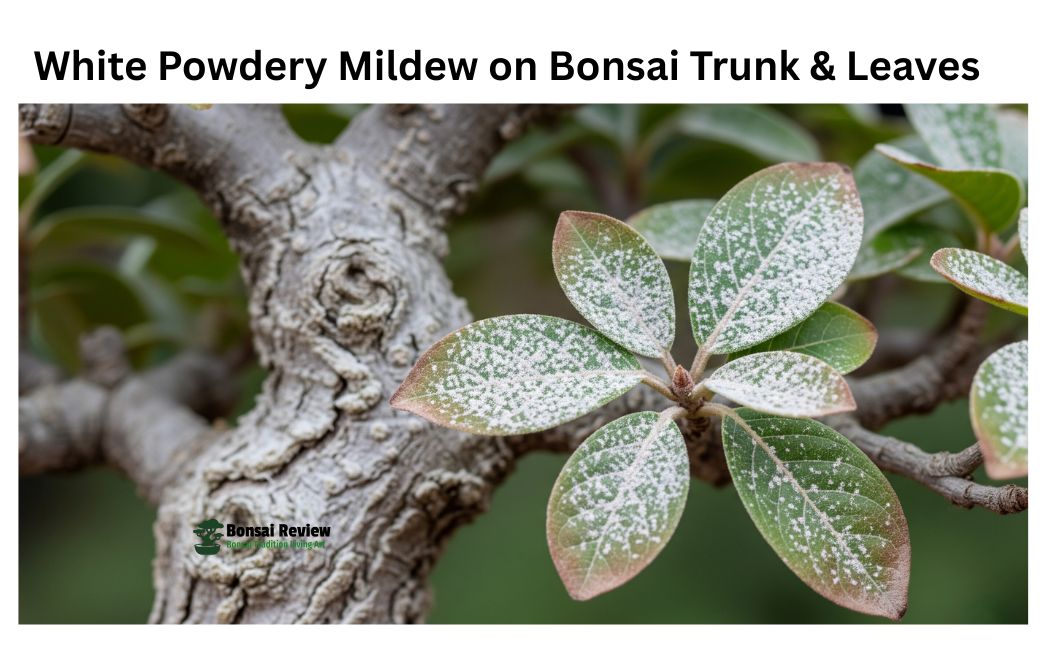
What You’ll See:
- White or gray powder patches on trunk, branches, or leaves
- Leaves may curl, dry, or fall off
- The tree looks dusty or chalky even after wiping
Real Example: A user had a Ficus bonsai near the bathroom window. After a few rainy days, the trunk showed white patches. It turned out to be mildew. Once they trimmed a few leaves and opened the window daily, it dried up.
How To Fix Common Bonsai Tree Diseases and Prevention:
- Move your bonsai to a dry, airy spot
- Wipe off mildew gently with a soft cloth
- Spray with neem oil or a baking soda mix (1 tsp baking soda + 1 quart water)
- Repeat spray once a week for 3 weeks
How To Stop Common Bonsai Tree Diseases and Prevention:
- Never mist the leaves too much
- Keep the tree in bright, indirect light
- Trim crowded branches to improve airflow
Why Are There Tiny Black Bugs in My Bonsai Soil?
If you see tiny black bugs crawling in or flying out of your bonsai soil, don’t panic. These are most likely fungus gnats, not deadly, but annoying, and a sign of overwatering or poor soil drainage.
What You’ll See:
- Tiny black bugs, like fruit flies, are around the base of the tree
- Bugs fly out when you water
- Soil feels wet or mushy all the time
- Young bonsai leaves look weak or droopy
Real Example: One grower kept their Chinese Elm bonsai indoors near a humidifier. Within days, small bugs showed up around the pot. The soil was always damp. They stopped watering for a few days, added gravel on top, and the bugs disappeared.
How To Fix Common Bonsai Tree Diseases and Prevention:
- Stop watering for a few days, let the top inch of soil dry
- Add a thin layer of gravel or sand on top of the soil
- Use a neem oil soil drench (1 tsp per quart of water)
- For serious cases, repot in fresh, fast-draining bonsai soil
How To Stop Common Bonsai Tree Diseases and Prevention:
- Always check the soil before watering, and water only when the pot feels dry
- Use bonsai pots with drainage holes
- Avoid using regular houseplant soil it holds too much moisture
What’s Causing Sticky Leaves or Cotton-Like Bugs on My Bonsai?
If your bonsai’s leaves feel sticky or you see white fluffy patches on the branches, you probably have aphids or mealybugs. These pests suck sap from your tree and leave behind a sticky substance called honeydew, which can attract ants and cause mold.
What You’ll See:
- Leaves or branches with a sticky film
- Small green, white, or black bugs clustering on new growth
- White cotton-like clumps around leaf joints or stems
- Leaves may curl, yellow, or drop prematurely
Real Example: A beginner bonsai owner noticed sticky leaves on their Juniper bonsai. On closer look, there were tiny green bugs and fuzzy white spots. After spraying with insecticidal soap and wiping the bugs off, the bonsai bounced back in a couple of weeks.
How To Fix Common Bonsai Tree Diseases and Prevention:
- Spray the bonsai with a mix of water and mild dish soap (1 tsp soap per quart of water)
- Gently wipe off bugs and honeydew with a soft cloth or cotton swab
- Repeat spraying every 5–7 days until bugs disappear
- For heavy infestations, use neem oil spray or insecticidal soap from garden centers
How To Stop Common Bonsai Tree Diseases and Prevention:
- Check the new bonsai carefully before bringing it home
- Inspect leaves weekly for early signs
- Keep bonsai healthy with good light and airflow to resist pests

Why Are There Tiny Webs and Yellow Dots on My Bonsai Leaves?
If your bonsai’s leaves have tiny yellow spots and you notice fine webbing, it’s likely being attacked by spider mites. These tiny pests suck the sap from leaves, causing damage that can make your bonsai look weak and unhealthy.
What You’ll See:
- Fine, almost invisible webs on the undersides of leaves and between branches
- Tiny yellow or white dots where the mites feed
- Leaves may turn yellow, dry out, and fall off
- The tree looks dusty or dull
Real Example: A bonsai lover found fine webs on their Japanese Maple leaves. After a few weeks, the leaves started yellowing and dropping. They treated it with insecticidal soap spray every week and improved air circulation, which cleared the mites.
How To Fix Common Bonsai Tree Diseases and Prevention:
- Spray the bonsai thoroughly with insecticidal soap or neem oil
- Repeat spraying every 7 days for at least 3 weeks to catch all mites
- Wipe leaves gently to remove webs and mites
- Increase airflow around your bonsai and avoid overly humid spots
How To Stop Common Bonsai Tree Diseases and Prevention:
- Inspect leaves regularly, especially under the leaves
- Avoid overwatering and keep good air circulation
- Keep the bonsai in bright light to strengthen it against pests
Why Are My Bonsai’s Leaves Yellowing and Soil Mushy? Could It Be Root Rot?
If your bonsai’s leaves are turning yellow or dropping, and the soil feels soggy or smells bad, you might be dealing with root rot. This happens when roots stay wet too long and start to die, stopping the tree from getting water and nutrients.

What You’ll See:
- Yellowing or wilting leaves, even though you water regularly
- Soil that stays wet and feels soft or smelly
- Roots that look black, mushy, or rotten when you check
- The tree looks weak and loses leaves fast
Real Example: A bonsai grower kept watering their Chinese Elm every day. After a while, the leaves turned yellow, and the bonsai drooped. When repotted, they found many rotten roots. After trimming the bad roots and repotting in dry soil, the bonsai slowly recovered.
How To Fix It:
- Carefully remove the bonsai from its pot
- Trim away all black, mushy roots with clean scissors
- Repot the bonsai in fresh, fast-draining bonsai soil
- Water only when the top inch of soil feels dry
- Improve airflow and avoid watering leaves directly
How To Stop Common Bonsai Tree Diseases and Prevention:
- Use pots with drainage holes
- Water only as needed, and never let the bonsai sit in water
- Use a fast-draining bonsai soil mix
- Avoid misting leaves excessively
How Can I Treat Bonsai Diseases and Pests Safely at Home?
When you spot pests or diseases on your bonsai, it’s easy to feel overwhelmed. But many treatments are simple, safe, and don’t need harsh chemicals. Here’s what works best for common bonsai issues.
Treatments You Can Use: Common Bonsai Tree Diseases and Prevention
- Neem Oil Spray: Kills fungus, spider mites, aphids, and fungus gnats. Spray leaves and soil once a week for 3 weeks.
- Example: A bonsai owner stopped powdery mildew and mites by using neem oil regularly.
- Insecticidal Soap: Works well on soft bugs like aphids and spider mites. Spray bugs directly, repeat every 5–7 days.
Tip: Test on a small leaf first to make sure your bonsai doesn’t react badly. - Rubbing Alcohol + Brush: Great for removing scale insects and mealybugs. Dip a cotton swab in alcohol and gently brush pests off stems and leaves.
- Fungicide Sprays: For leaf spot and other fungal diseases. Follow package instructions carefully to avoid damage.
- Hydrogen Peroxide Soil Drench: Dilute (3%) hydrogen peroxide mixed with water can help kill fungus in soil and promote root health. Use sparingly.
How to Apply Treatments: Common Bonsai Tree Diseases and Prevention
- Spray early in the morning or late afternoon to avoid leaf burn
- Cover all leaf surfaces, including undersides
- Repeat treatments regularly until pests or fungus disappear
- Quarantine treated bonsai away from others to prevent spreading
What to Avoid: Common Bonsai Tree Diseases and Prevention
- Don’t use harsh chemical pesticides made for large plants, as bonsais are delicate
- Avoid overwatering during treatment
- Don’t spray in direct, hot sunlight
This simple routine keeps your bonsai healthy without stress.

How Can I Prevent Bonsai Diseases and Pests From Coming Back?
Save your bonsai by acting early and caring smart way, and stopping problems before they start is the best way to keep your bonsai happy. Here’s what you must do to prevent diseases and pests.
Key Prevention Tips:
- Use Fast-Draining Soil: Bonsai soil needs to dry quickly to avoid soggy roots that cause root rot and attract fungus gnats.
- Water Only When Needed: Check the top inch of soil. If it’s dry, water. If it’s still moist, wait. Overwatering is the biggest cause of bonsai sickness.
- Keep Good Airflow: Place your bonsai where air moves freely to stop mold and mildew from growing.
- Provide Bright, Indirect Light: Healthy trees resist pests better. Avoid dark or crowded spots.
- Clean Tools and Pots: Always disinfect pruning tools to stop spreading diseases.
- Inspect Your Bonsai Weekly: Look closely at leaves, branches, and soil for bugs or spots.
- Quarantine New Bonsai: Keep new trees separate for a few weeks before introducing them to your collection.
- Remove Fallen Leaves and Debris: Clean up old leaves around your bonsai to prevent fungus growth.
- Why Prevention Works: When your bonsai has the right soil, water, light, and care, pests and diseases struggle to take hold. It saves you time, money, and heartache later.
Conclusion: How to Keep Your Bonsai Healthy: Common Problems and Solutions?
Your bonsai tree may face common problems like white fungus on the trunk, tiny black bugs in the soil, yellowing leaves from root rot, or pests such as aphids, spider mites, and mealybugs. These issues start small but can quickly harm your tree if ignored.
The good news is, with the right care, like using fast-draining bonsai soil, watering only when the topsoil is dry, and applying safe treatments like neem oil or insecticidal soap, you can stop diseases and pests before they take over.
Regularly inspecting your bonsai, keeping good airflow, and cleaning tools also help prevent these problems. Early detection and quick action are your best tools to keep your bonsai healthy and beautiful for years to come.
Helpful article: The Art of Bonsai Tree Care: Revamp Beginner’s Guidance to Ancient Origins and Modern Review.
FAQs: Why Is My Bonsai Tree Sick? Common Diseases and How to Fix Them.
1. What causes white spots or white fungus on my bonsai tree?
Most often, white spots are caused by powdery mildew, a fungus that grows in humid conditions with poor airflow. Treat it with neem oil and improve air circulation.
2. How do I get rid of tiny black bugs in bonsai soil?
These are usually fungus gnats, attracted by overwatering. Let the soil dry out between waterings and use neem oil soil drench to control them.
3. What is the best insecticide for bonsai pests like aphids and spider mites?
Safe options include neem oil and insecticidal soap, which effectively control soft-bodied pests without harming your bonsai.
4. Can my bonsai recover from root rot?
Yes, by carefully trimming away rotten roots and repotting in fresh, well-draining bonsai soil. Avoid overwatering to prevent it from returning.
5. How often should I check my bonsai for diseases and pests?
Inspect your bonsai at least once a week, paying close attention to the leaves, trunk, and soil surface for early signs of trouble.
6. How to prune a bonsai?
Use branch or knob cutters to cut back twigs so each only has 3-4 nodes. Prune in spring and summer for maintenance, and in winter for structure and style.
7. Should you water bonsai from the top or the bottom?
Keep watering until water runs out of the bottom drainage holes, and possibly repeat the process a few minutes later. Pour water from above using a watering can with a fine nozzle to prevent the soil from being washed away.