


Unique bonsai species design rules confuse you when your tree follows every rule but still looks wrong. You trim, wire, and shape, yet the bonsai does not feel alive. This happens when you copy bonsai styles instead of understanding bonsai design principles.
Bonsai is not just about making miniature trees or small indoor bonsai for a table. It is a form of bonsai art rooted in Japanese bonsai thinking, where balance, asymmetry, and negative space matter more than perfect shapes. When you ignore the tree’s natural growth habit, even the best bonsai style chart cannot help you.
Your problem often starts at the base. Weak nebari and a poor front view choice make the tree look unstable. A trunk with no trunk taper or wrong trunk movement breaks the aged look and creates inverse taper. Branches placed opposite each other cause bar branching, while crowded growth forms wheel-spoke branches, crossing branches, and sharp eye-poking branches.
True design uses the rule of three, builds a scalene triangle, and leaves space so “the birds can fly through.” These rules guide all bonsai design ideas, from informal upright bonsai (Moyogi) to formal upright (Chokkan), slanting (Shakan), and cascade (Kengai).
But here is the solution you need rules change with species. Japanese maple bonsai, pine bonsai, ficus, cherry bonsai tree, and even fruit bonsai trees do not grow the same way. Deciduous bonsai, conifer bonsai, and tropical indoor bonsai trees each demand species-specific design.
When you match the right rules to the right tree, choose proper bonsai pots, and understand when tradition allows flexibility, you stop forcing shapes and start creating real bonsai that feels calm, balanced, and natural.
What Are the Basic Bonsai Design Rules for Each Species?
Start from the base nebari and front view rules. Before you think about bonsai styles or branch shapes, you must look at the base.
Stop forcing your trees to look like Japanese illustrations. Here’s why ‘ugly’ species are winning gold medals. In the world of traditional bonsai, the “rules” of the Nippon Bonsai Association often dictate the ideal tapering trunk, a balanced triangular silhouette, and precise branch placement. However, a modern shift toward the Naturalistic Style is gaining momentum.
Instead of forcing a tree to fit a mathematical ideal, many bonsai lovers are choosing unique species that prioritize biological authenticity over human imposition. These trees don’t just bend the rules; they rewrite them.
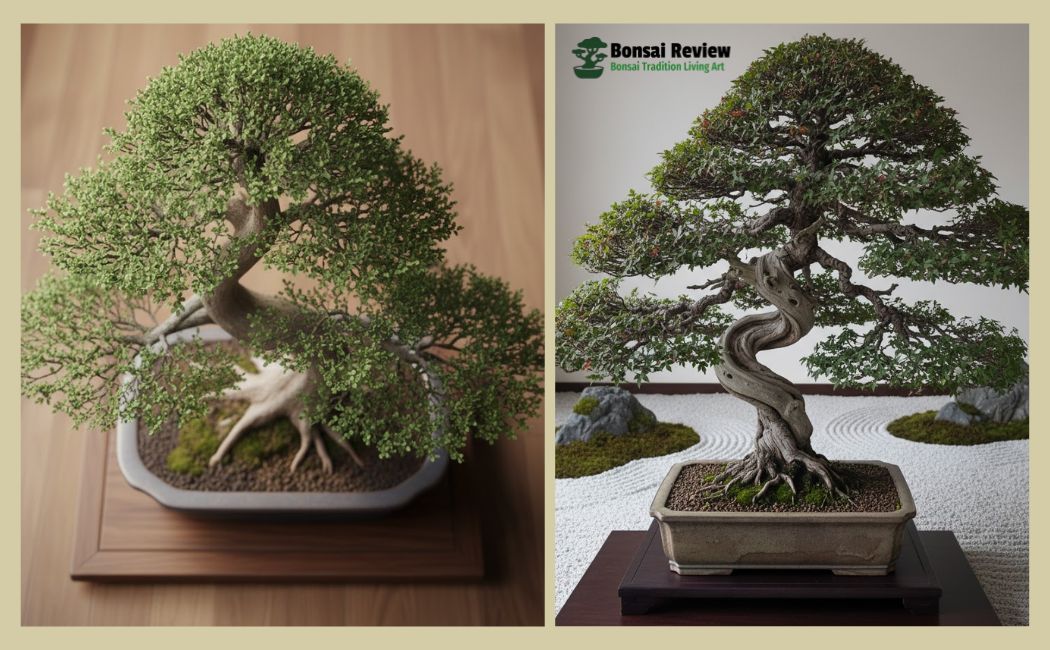
This is where many designs fail. A bonsai feels weak when the nebari is hidden or uneven. Good nebari shows strong surface roots that spread out from the trunk. This makes your miniature tree look old and stable, like it has stood there for years.
You choose the front view. This is not random. The front is the angle where the trunk movement looks smooth, the trunk taper is clear, and the roots look balanced. From this view, you should not see thick roots crossing each other or branches pointing straight at you. Those create eye-poking branches and break the calm balance.
A correct front view also helps avoid inverse taper. When the trunk looks thinner at the base, the tree feels young and weak. By turning the tree and choosing the right angle, you often fix this problem without cutting anything. This rule applies to all bonsai design ideas, from indoor bonsai to outdoor trees in a bonsai garden.
When you respect nebari and front view first, every other bonsai design principle becomes easier. Branch placement improves. Styles fit better. The tree starts to look natural before you even wire a single branch.
Why Bonsai Design Rules Change With Species?
You feel stuck because you treat every tree the same. That is the root of the problem. Bonsai design principles were never meant to lock all bonsai species into one shape. In Japanese bonsai, rules exist to protect natural beauty, not to erase it. A bonsai should look like an old tree in nature, only smaller. That goal changes with each species.
Every tree grows with its own natural growth habit. Some grow upright. Some twist. Some spread wide. Deciduous bonsai, like Japanese maple bonsai, grow soft branches and wide canopies.
They need open space, fine ramification, and visible negative space. Conifer bonsai, such as pine bonsai, grow stiff and slow. They need strong trunk movement, heavy trunk taper, and compact foliage. Tropical and indoor bonsai trees like ficus grow fast and forgive bending, but they still demand balance and clear structure.
Design rules shift because leaf size, branch flexibility, and growth speed are different. A style that works in a bonsai style chart may fit one species and fail another. Forcing formal upright (Chokkan) on a tree that naturally curves breaks harmony. Using informal upright bonsai (Moyogi) on a species that grows straight feels fake.
When you learn this, the bonsai styles for beginners stop feeling confusing. You stop copying shapes and start reading the tree. That is how bonsai art becomes calm, natural, and true.
Trunk Rules Create Age and Power: What Is the Correct Way to Shape a Bonsai Tree?
Once the base feels strong, your eyes move up the trunk. This is where age is born. A bonsai without clear trunk taper looks young, even if it is tall. The trunk must be thick at the bottom and slowly become thinner as it rises to the apex. When the top is heavier than the base, you create inverse taper, and the tree loses its natural strength.
You also need gentle trunk movement. In nature, trees do not grow like poles. Wind, light, and time push them into soft curves. This is why straight lines feel fake in bonsai art. In informal upright bonsai (Moyogi), the trunk bends in a calm S-shape. Each curve gives space for branches and adds life. In a formal upright (Chokkan), the trunk stays straight, but taper and balance still show age.
Different species change how you use these rules. Japanese maple bonsai accepts smooth curves and lighter movement. Pine bonsai needs stronger bends and a heavier base to feel powerful. Fast-growing indoor bonsai like ficus forgive shaping, but they still need a clear trunk line to avoid chaos.
When you design the trunk with taper, movement, and a clean apex, your miniature tree starts to feel old and calm. At this stage, the bonsai already looks right, even before you focus on branches or detailed styling.
Branch Placement Rules You Should Never Ignore
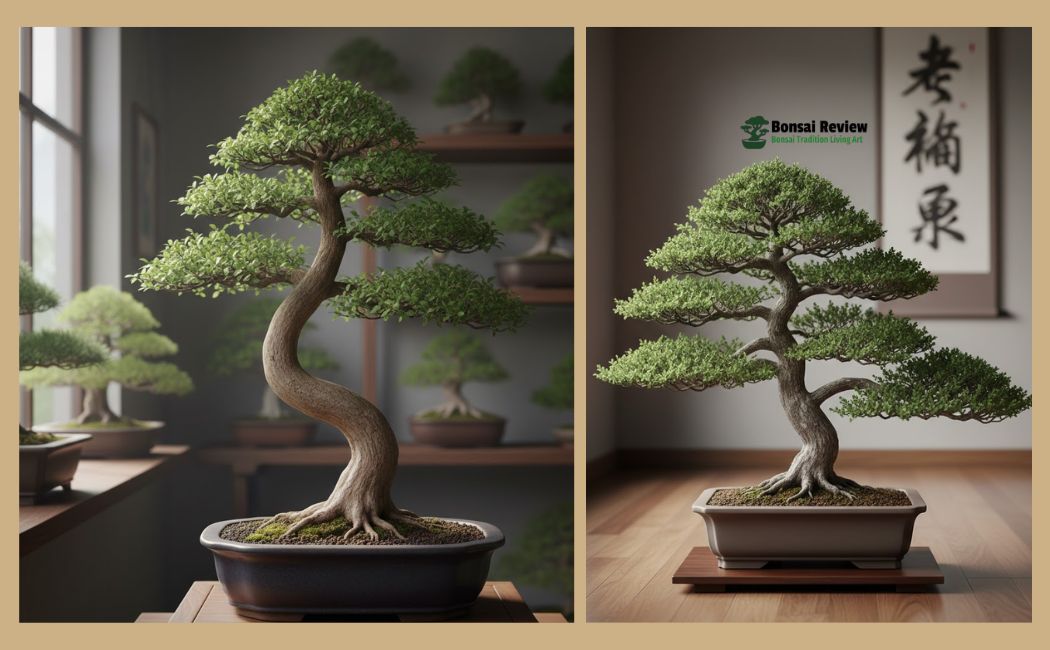
Branches decide whether your bonsai feels calm or messy. Even with a good trunk, wrong branches can ruin the design. The first rule is alternation. Branches should not grow directly across from each other. When they do, you create bar branching, which looks stiff and unnatural. In real trees, branches take turns as they grow up the trunk.
You also must avoid wheel-spoke branching. This happens when many branches grow from the same point. It makes the trunk look swollen and destroys trunk taper. Branches should be spaced apart, getting smaller as they move upward. This spacing creates negative space, allowing light and air to pass through. Many bonsai artists call this “letting the birds fly through.”
Direction matters too. Branches should never point straight at the viewer. These eye-poking branches break depth and feel aggressive. Crossing branches also confuses the eye and hides the trunk line. A clean design keeps each branch visible and purposeful.
These rules apply across all bonsai styles, from slanting (Shakan) to cascade (Kengai) and even bonsai forest plantings. Species still matter. Deciduous bonsai, like Japanese maple bonsai, need lighter, more open branching. Conifer bonsai, like pine, need fewer, stronger branches. When you follow these branch rules, your bonsai stops looking crowded and starts to feel natural and alive.
The Triangle Rule: How Bonsai Creates Balance Without Symmetry?
A bonsai should never look perfectly even. Nature does not work that way. This is why bonsai design principles rely on the scalene triangle instead of a perfect shape. When you look at a well-designed bonsai, the branches and trunk form three uneven points. This creates balance without strict symmetry and keeps the eye moving.
This idea connects to the rule of three. In bonsai art, odd numbers feel natural and calm. One main trunk, one strong first branch, and one supporting branch create a visual rhythm. When everything lines up or matches in size, the tree feels stiff and artificial. The goal is quiet harmony, not mirror images.
The triangle rule also protects negative space. Empty areas between branches give depth and make the tree feel larger than it is. This is often explained as “letting the birds fly through.” Without this space, even a healthy tree looks heavy and flat.
You see this rule across all bonsai styles, from informal upright bonsai (Moyogi) to formal upright (Chokkan) and slanting (Shakan). The shape changes, but the balance stays. When you use the triangle rule, your miniature tree feels stable, natural, and easy to look at, even without perfect lines.
How Design Rules Change With Bonsai Species
This is where most confusion ends. Bonsai design rules do not fail you. They change because trees are different. Each species grows with its own strengths, speeds, and shapes. When you understand this, your bonsai finally starts to make sense.
Deciduous bonsai, like Japanese maple bonsai, grow soft branches and wide crowns. They need open branching, gentle trunk movement, and clear negative space to show seasonal beauty. For these trees, heavy bends and tight pads look forced. The design should feel light and spread.
Conifer bonsai, such as pine bonsai, grow slowly and strongly. They demand a thick base, powerful nebari, and bold trunk taper. Branches stay fewer but stronger. Too many branches weaken the aged look. Compact structure gives pine its calm power.
Indoor bonsai trees and tropical species like ficus grow fast and forgive shaping. But freedom can create chaos. These trees still need clear branch order, controlled height, and a strong trunk line. Without structure, they lose balance and depth.
This is why a single bonsai style chart cannot guide every tree. Species-specific design is the real rule. When you match the design to how the tree wants to grow, you stop fighting it. You begin shaping a true miniature tree, not just a styled plant.
Which Bonsai Best Fits the Species With the Matching Right Styles?
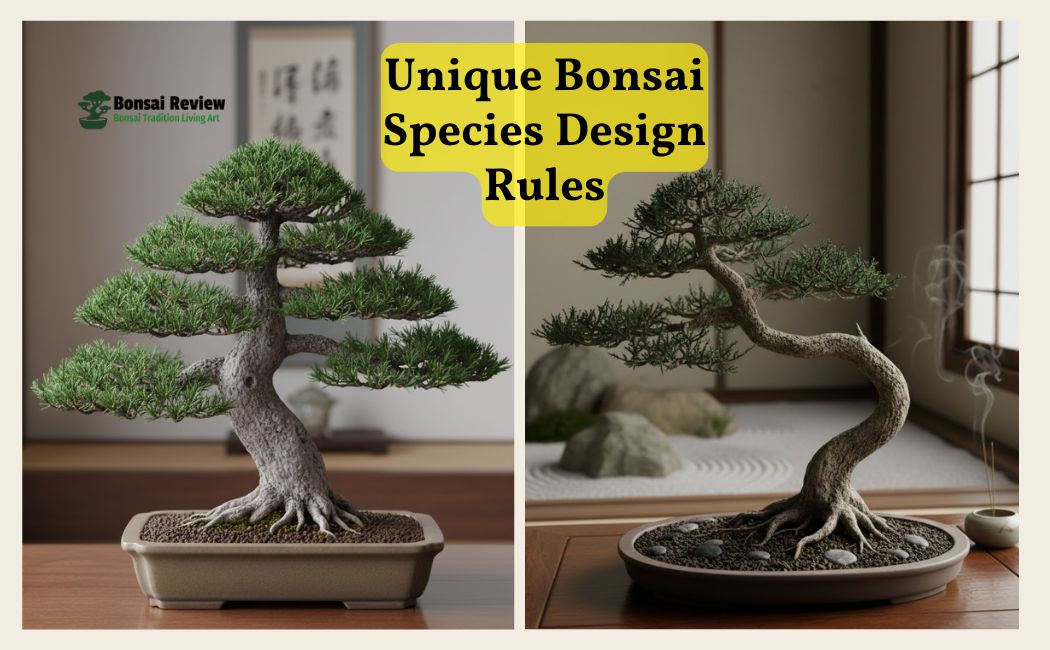
Once you understand species behavior, choosing bonsai styles becomes simple. A style should support the tree’s natural story, not hide it. When style and species agree, the bonsai looks calm without effort.
- Informal upright bonsai (Moyogi) fits many species because most trees grow with gentle movement. It works well for Japanese maple bonsai, ficus, and many indoor bonsai. The soft curves allow natural trunk movement and balanced branching.
- Formal upright (Chokkan) suits trees that grow straight and strong. Many conifer bonsai, especially pine, look natural in this style. The straight trunk shows age through trunk taper, clean nebari, and simple branch structure.
- Slanting (Shakan) matches trees shaped by wind or light. The roots on one side grip the soil while the trunk leans away. This style works well for species with flexible trunks and strong surface roots.
- Cascade (Kengai) and semi-cascade fit species that bend without breaking. These styles copy trees clinging to cliffs. They demand careful balance, strong roots, and controlled branch flow.
A bonsai style chart can guide you, but it cannot decide for you. When you choose styles based on species, not trends, your bonsai design ideas feel natural and true.
When You Can Break Bonsai Design Rules Safely
Once you understand the rules, you earn the right to bend them. Bonsai design principles are not cages. They are tools. In Japanese bonsai, rules exist to protect nature, not to limit creativity. Breaking them without knowledge creates chaos. Breaking them with purpose creates art.
You can bend rules when the tree already feels balanced. A mature miniature tree with strong nebari, clear trunk taper, and stable branch structure can handle small changes. At this stage, slight asymmetry or unusual spacing can add character instead of harm.
Some artists follow the thinking taught at Bonsai Mirai, where natural realism comes first. If a wild tree bends a rule, a bonsai can too. This is common with collected trees, or yamadori bonsai, where nature already shaped the form. For these trees, forcing textbook styles removes their story.
You may also break rules when the bonsai is for personal joy, not display. Exhibition trees follow a stricter balance and form. Personal trees can show emotion and freedom. What matters is intention.
When you know why a rule exists, you know when it can be ignored. That is the step where bonsai art becomes personal and alive, not just correct.

What Are the Most Common Bonsai Design Mistakes?
Many bonsai fail not because of poor care, but because of poor design choices. Common design mistakes that ruin good tiny plant When you avoid these mistakes and respect species-specific design, your bonsai stops feeling “off.” It starts to look calm, balanced, and natural, like a real tree shaped by time.
| Mistake | What Happens | How It Affects the Bonsai | Tip to Fix |
| Forced Symmetry | Both sides of the tree look the same | The tree feels stiff and lifeless; loses natural flow | Follow bonsai design principles: favor asymmetry and natural curves |
| Over-Styling | Too much wiring, bending, or pruning | Removes the tree’s natural story; species-specific beauty is lost | Respect the species; avoid forcing styles from a bonsai style chart |
| Poor Branch Decisions | Bar branching, wheel-spoke branching, crossing branches, eye-poking branches | Hides the trunk, reduces depth, and makes the tree look flat and crowded | Space branches properly; leave negative space for light and depth |
| Wrong Pot Choice | Pot too deep, too shallow, or wrong color | Breaks visual harmony; the tree and pot compete | Choose a bonsai pot that complements the tree’s size, style, and species |
| Ignoring Species-Specific Design | Applying the same style to all trees | The tree looks unnatural; its growth habit is compromised | Match style and branch structure to species; observe natural growth habit |
Final Takeaway: Do Bonsai Styles Depend on Tree Type?
Design the tree the species wants to become. Your bonsai improves the moment you stop forcing it to follow shapes. Bonsai design rules exist to guide your eyes, not to control your hands. When you begin with strong nebari, choose a clear front view, and build age through trunk taper and gentle trunk movement, the tree already feels right.
Branches should take turns, not fight for space. Negative space, the rule of three, and the scalene triangle bring quiet balance without symmetry. But the most important rule is respect for the species. Deciduous bonsai, conifer bonsai, and indoor bonsai trees each speak a different design language.
When you match bonsai styles to natural growth, you stop copying charts and start reading trees. At that point, bonsai art becomes calm, personal, and alive. You are no longer shaping a plant. You are guiding a miniature tree toward the form it already wants to be.
Relevant article: How to Create Stunning Common Bonsai Styles?
FAQs: How Do You Choose the Right Bonsai Style for Beginners?
1. What are the basic bonsai design rules you should always follow?
You should start with a strong nebari, clear trunk taper, and smooth trunk movement. Branches must alternate, never grow opposite each other, and leave negative space for depth. These bonsai design principles create balance and age in every miniature tree.
2. Do bonsai design rules change with species?
Yes. Species-specific design is essential. Deciduous bonsai, like Japanese maple bonsai, need open branching and a light structure. Conifer bonsai, like pine, need strong bases and compact form. Indoor bonsai trees grow fast and need control to avoid chaos.
3. What is the best bonsai style for beginners?
Informal upright bonsai (Moyogi) is best for beginners. It works with many species and allows natural trunk movement. It also follows most bonsai styles for beginners’ guidelines without forcing strict symmetry.
4. Why does my bonsai look unnatural even after styling?
This often happens due to bar branching, wheel-spoke branching, eye-poking branches, or poor front-view selection. Another common reason is forcing the wrong bonsai style on a species that does not grow that way in nature.
5. Can you break bonsai design rules?
You can, but only after understanding them. Mature trees, yamadori bonsai, and personal projects allow more freedom. Many artists influenced by Bonsai Mirai break rules to keep natural realism. Beginners should follow the rules before bending them.
6. Does pot choice affect bonsai design?
Yes. Bonsai pots affect balance and harmony. The pot should match the tree’s size, style, and character. A wrong pot can break the visual balance, even if the tree is well designed.
7. Is a bonsai-style chart enough to design a bonsai?
No. A bonsai style chart is a guide, not a solution. Real design comes from reading the tree’s natural growth habit and applying the right rules for that species.
8. What is the biggest design mistake beginners make?
The biggest mistake is copying shapes without understanding the tree. This leads to forced symmetry, over-styling, and style–species mismatch. Good bonsai art starts with observation, not imitation.