


Jade bonsai watering schedule feels confusing when you look at your tiny plant and don’t know what to do next may have a Jade bonsai, or even a Dwarf jade bonsai, and you keep asking yourself, ” Should you water it today or wait”?
If you water too often, you can cause Overwatering, which may lead to Root rot, yellow leaves, and sudden leaf drop. But if you wait too long, your indoor plant suffers from Underwatering, showing Wrinkled leaves and weak growth.
The simple truth you need to understand. Your tiny plant, like Crassula ovata or Portulacaria afra a Succulent plant.
It stores water inside its Fleshy leaves, so it does not need frequent watering like other Houseplants. That is why a fixed Watering schedule often fails. You carefully watch the Soil moisture and use a simple Dry soil check before watering.
When you grow your plant in an Indoor environment, factors like Sunlight exposure, Temperature, and Humidity change how fast the soil dries. You should plant Well-draining soil, such as Cactus mix soil, inside a pot with Drainage holes.
This basic setup helps you use the right method, deep watering, and keeps your plant safe during both the Active growing season and the resting period of Dormancy.
Once you understand this simple system, your watering becomes easy. You stop guessing. You follow your dwarf plant, which is how you keep jade bonsai healthy, strong, and growing properly.
How to Keep Your Jade Bonsai Alive: Simple Watering Guide?
You may still ask, “Just tell me how often to water.” Simple answer you can trust: You water your Jade bonsai only when the soil is dry. That’s your real Watering schedule for a simple guide: how often to water Jade bonsai?
| Condition | What You Should Do | Why Jade Bonsai Watering Schedule Matters |
| Growing Season (Spring/Summer) | Water every 7–14 days (only if the soil is dry) | Your plant is in an active growing season, uses more water due to higher temperatures and strong Sunlight exposure |
| Dormant Season (Winter) | Water every 3–4 weeks | Your plant is in dormancy and needs very little water |
| Indoor Environment | Water less often | In an Indoor environment, low airflow and changing Humidity slow down soil drying |
| Soil Check Rule | Water only when the soil is dry | Use a dry soil check to check the soil moisture before watering |
| Plant Type | Needs less frequent watering | Your Jade bonsai (like Crassula ovata or Portulacaria afra) is a Succulent plant with Fleshy leaves |
| Overwatering Risk | Avoid watering too often | Can cause Overwatering and lead to Root rot |
| Underwatering Risk | Do not let the plant stay dry too long | Leads to Underwatering and Wrinkled Leaves |
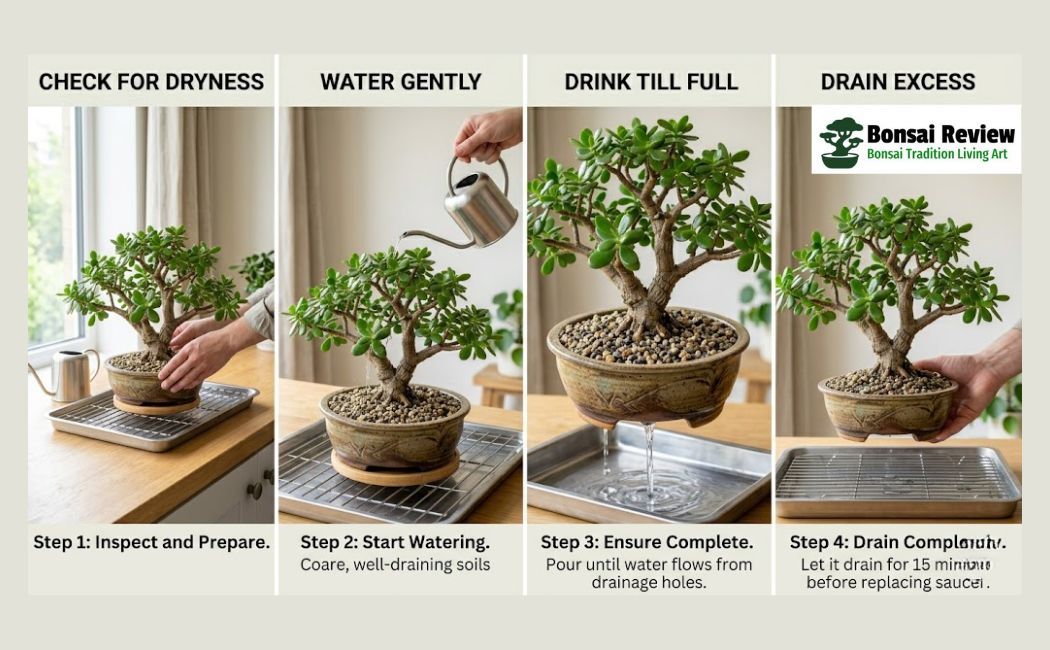
Step-by-Step Watering Method: How to Water Your Jade Bonsai?
Now you know when to water, and you must learn how to water the right way. If you water incorrectly, even a perfect schedule can still harm your Jade bonsai.
| Step | What You Do | Why It Works |
| 1. Check Soil First | Use a dry soil check | Confirms that the Soil moisture is low before watering |
| 2. Water Slowly | Pour water gently over the soil | Helps even absorption and avoids surface runoff |
| 3. Soak the Soil Fully | Use Deep watering | Ensures roots get enough water |
| 4. Let Water Drain Out | Use a pot with Drainage holes | Prevents water from staying at the bottom |
| 5. Empty the Tray | Remove extra water under the pot | Stops overwatering and protects roots |
Use the Right Soil: It’s Very Important for Plant Care.
Your plant needs:
- Well-draining soil
- Like Cactus mix soil
This allows fast drying and protects from Root rot.
Why Jade bonsai watering schedule Method Works?
Your plant, like Crassula ovata or Portulacaria afra, is a Succulent plant. It stores water in its Fleshy leaves.
That means:
- You water deeply
- Then you wait until the soil dries again
What You Should NOT Do?
| Mistake | What Happens |
| Water a little every day | Roots stay wet- Overwatering |
| Use pots without drainage | Water gets trapped- root damage |
| Keep the soil always wet | Leads to Root rot |
Simple takeaway: You don’t water often. You water deeply, then let the soil dry.
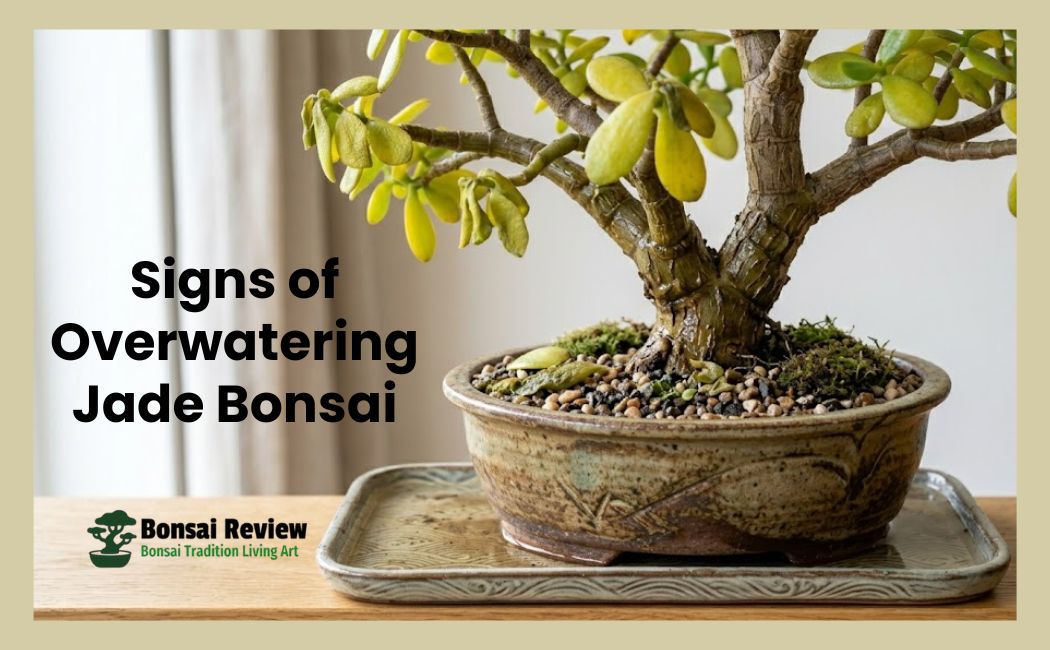
Simple Signs to Check: Are You Overwatering Your Jade Bonsai?
Signs your Jade bonsai needs water and read your plant easily. You don’t need to guess anymore. Your Jade bonsai will clearly show when it needs water. You just need to know what to look for.
Clear Signs Your Plant Needs Water
| Sign You See | What It Means | What You Should Do |
| Wrinkled leaves | The plant is losing stored water | Water deeply now |
| Soft or thin leaves | Water storage is low | Check soil and water |
| Dry soil (1–2 inches deep) | Low Soil moisture | Follow Deep watering |
| Leaves look less shiny | Early dryness sign | Monitor and water soon |
What a Healthy Plant Looks Like?
| Healthy Sign | Meaning |
| Healthy jade plant | Proper watering balance |
| Firm, plump leaves | Good water storage |
| Steady growth | The plant is happy |
Why These Signs Work?
Your plant, like Crassula ovata or Portulacaria afra, is a Succulent plant. It stores water inside its Fleshy leaves. So instead of checking a calendar, you check the leaves.
Important Tip You Should Follow
Always confirm with soil and use a dry soil check.
- Leaves wrinkled and soil dry, water now
- Leaves normal soil, wet weather
Simple takeaway: Your plant speaks through its leaves. When you learn to read it, you never overwater or underwater again.
Most Common Problem: Signs You Are Overwatering Your Jade Bonsai
Overwatering is the biggest mistake you can make with your Jade bonsai happens slowly. You may not notice it at first. But once it starts, it can damage your plant fast.
Clear Signs of Overwatering
| What You See | What It Means | What Is Happening |
| Yellow leaves | Too much water in the soil | Roots cannot breathe |
| Soft, mushy stem | Waterlogged roots | Early root damage |
| Leaf drop | Stress from excess water | The plant starts shutting down |
| Wet soil for many days | Poor drying | High risk of damage |
The Real Danger Behind Overwatering
The biggest risk is that root rot happens when:
- Soil stays wet too long
- Roots sit in water
- Oxygen cannot reach the roots
Why This Happens to Your Plant
Your plant, like Crassula ovata or Portulacaria afra, is a Succulent plant. It stores water in its Fleshy leaves. That means it needs less water, not more.
Common Causes You Should Avoid
| Mistake | Result |
| Watering too often | Leads to Overwatering |
| No Drainage holes | Water gets trapped |
| Using heavy soil | Poor Drainage |
| Ignoring Soil moisture | Soil stays wet too long |
What You Should Do Right Now?
If you see these signs:
- Stop watering immediately
- Let the soil dry completely
- Make sure you use Well-draining soil
- Switch to Cactus mix soil if needed
Simple takeaway: Too much care can harm your plant. When in doubt, wait before watering.
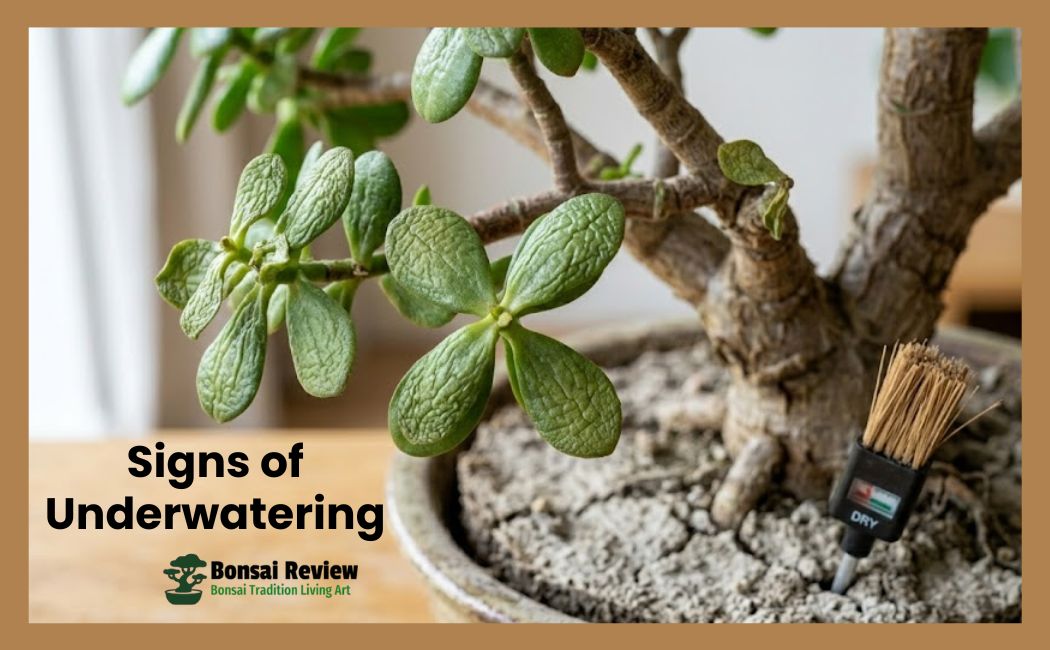
Easy to Fix Signs of Underwatering Your Jade Bonsai Plants
Even though overwatering is more common, underwatering can also harm your Jade bonsai. The good news is, it’s easy to spot and fix before serious damage occurs.
Common Signs of Underwatering: Wrinkled leaf edges indicate extreme dryness in the root zone.
Why Your Plant Shows These Signs: Your plant, whether Crassula ovata or Portulacaria afra, is a Succulent plant. It stores water in its Fleshy leaves, so the leaves are the first place you notice dryness.
How to Fix Underwatering Quickly?
- Check soil depth: Use the Dry soil check to see if the soil is dry 1–2 inches deep.
- Water deeply: Follow the Deep watering method to ensure water reaches all roots.
- Avoid frequent small sips: Let the soil soak and drain completely.
- Monitor leaves: They should plump up within 24–48 hours if the plant responds well.
So, Underwatering is a temporary warning from your plant. When you watch the leaves and soil carefully, your Jade bonsai recovers quickly and stays strong.
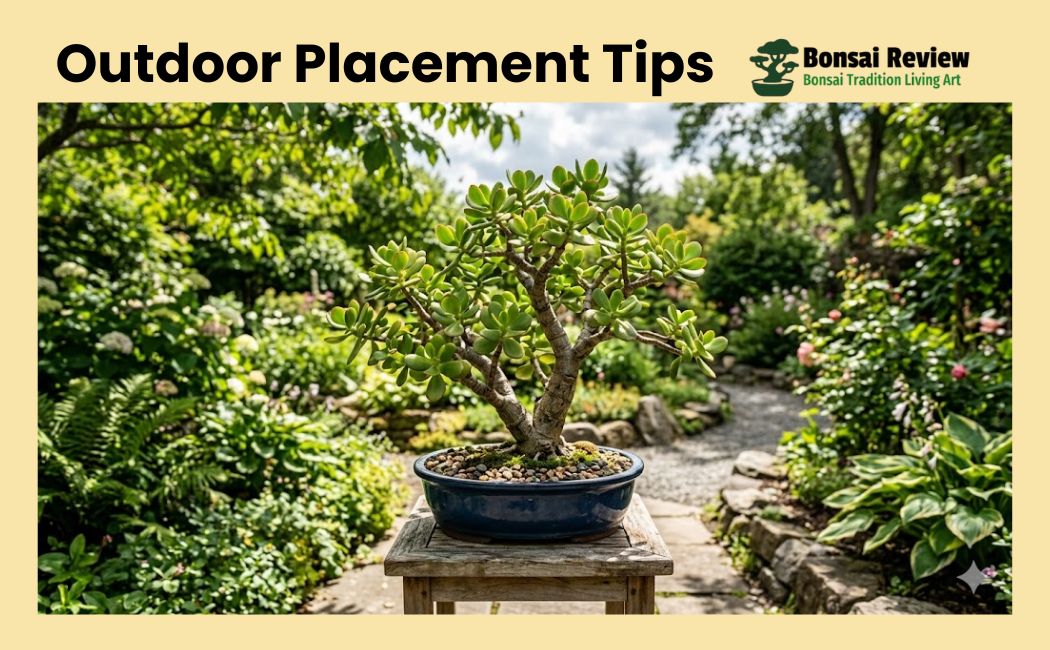
Indoor vs Outdoor Watering Differences
| Environment | Watering Frequency | Key Factors | Tips for Healthy Jade Bonsai |
| Indoor | Less often than outdoors | Low airflow, variable Humidity, indirect bright indirect light | Use Well-draining soil like Cactus mix soil. Check the soil with a dry soil check before watering. Ensure the pot has Drainage holes. |
| Outdoor | More frequent than indoor | Higher Sunlight exposure and wind increase drying, higher Temperature | Water deeply when the soil is dry 1–2 inches. Monitor Fleshy leaves for signs of dryness. Adjust watering after rain or hot days. |
| Common Issue | Both environments | Ignoring soil moisture | Overwatering or underwatering occurs if you don’t check the soil regularly. Follow Soil moisture and leaf signals. |
Simple takeaway: Indoor plants need less water because of lower drying conditions. Outdoor plants need more attention due to the sun, wind, and heat. Always check your Jade bonsai leaves and soil first.
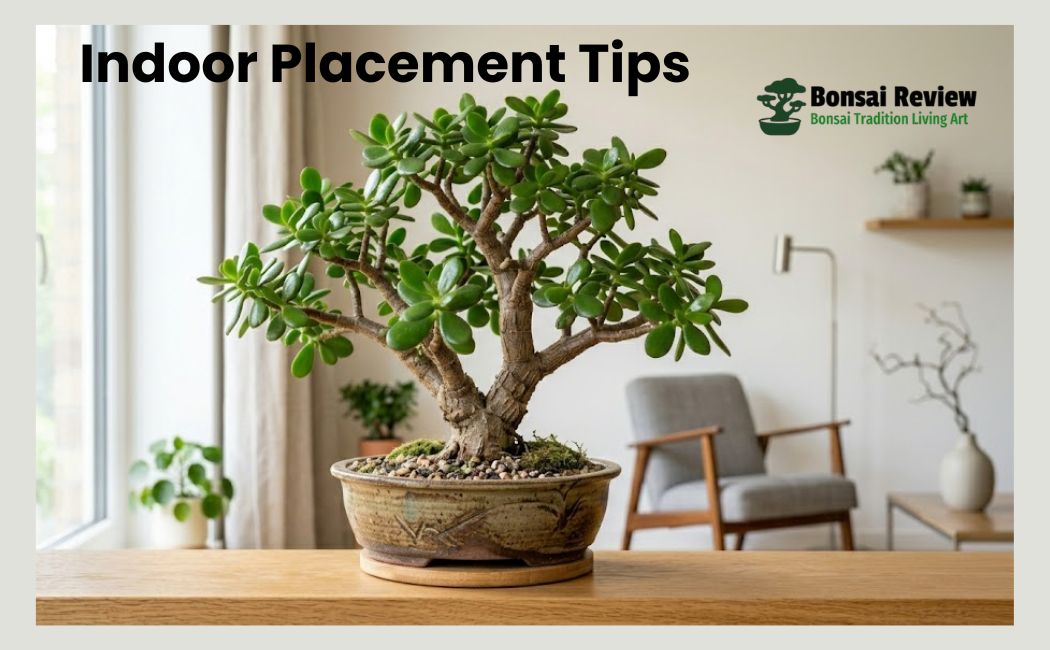
Lighting & Position Tips: Best Place to Keep Your Jade Bonsai Trees.
Where you place your Jade bonsai makes a huge difference in how often it needs water and how healthy it grows.
1. Ideal Lighting
- Your plant thrives in Bright indirect light.
- Direct sunlight can be too strong indoors and may burn the Fleshy leaves.
- Low light slows growth and can make leaves softer, increasing the risk of Overwatering.
2. Indoor Placement Tips
- Place near a window that gets plenty of morning or filtered light.
- Avoid areas with constant drafts or heating vents, as these affect Humidity and soil drying.
- Rotate the plant occasionally so all sides get equal light.
3. Outdoor Placement Tips
- Keep in partial sun or filtered light.
- Avoiding full afternoon sun in hot climates can overheat the leaves.
- Shelter from strong winds to prevent rapid water loss from leaves.
Quick Takeaway Lighting & Position Tips for Jade Bonsai Watering Schedule
- Indoors: Bright indirect light, check soil regularly.
- Outdoors: Partial sun, adjust watering to weather conditions.
- Always consider Temperature and Humidity to keep your plant happy.
User-Friendly Guide Quick Watering Checklist for Your Jade Bonsai Plants
Keeping your Jade bonsai healthy becomes easy when you follow a simple, repeatable checklist.
1. Daily or Before You Water
- Check the soil with a dry soil check.
- Inspect Fleshy leaves for signs of wrinkling or softening.
- Ensure the pot has Drainage holes.
2. Watering Steps for Jade Bonsai Plants
A. Water Deeply: Use the Deep watering method until water drains from the bottom.
B. Remove Excess Water: Empty any water remaining in the tray to prevent Overwatering.
C. Adjust Frequency: Grow season (spring/summer): every 7–14 days. Dormant season (winter): every 3–4 weeks. Always confirm with the soil first.
D. Observe Plant Response: Plump leaves indicate proper hydration; wrinkled leaves mean water is needed.
E. Additional Tips
- Use Well-draining soil such as Cactus mix soil.
- Avoid watering on a fixed schedule and follow your plant instead.
- Rotate your plant regularly for even exposure to bright, indirect light.
Follow this checklist every time you water, and your Jade bonsai will thrive without over- or underwatering.
Common Jade Bonsai Problems & How to Fix Them?
Even when you follow the perfect watering schedule, your Jade bonsai may show signs of stress. Knowing the most common problems and solutions keeps your plant healthy.
Problem 1: Leaf Drop
| Symptom | Cause | Solution |
| Leaves falling unexpectedly | Overwatering, sudden temperature changes, or low light | Check soil moisture, move the plant to a stable Indoor environment with consistent Temperature, and ensure enough Bright indirect light |
Problem 2: Yellow Leaves
| Symptom | Cause | Solution |
| Leaves turning yellow | Too much water or poor drainage | Use well-draining Cactus mix soil, check Drainage holes, water only when the soil is dry |
Problem 3: Soft or Mushy Leaves
| Symptom | Cause | Solution |
| Leaves feel soft or mushy | Overwatering, root rot | Stop watering, let the soil dry, repot in fresh, well-draining soil if necessary |
Problem 4: Wrinkled or Shriveled Leaves
| Symptom | Cause | Solution |
| Leaves appear wrinkled or thin | Underwatering | Water deeply, following Deep watering. Check the soil regularly, and monitor leaves for recovery |
Quick Takeaway: Are You Watering Your Jade Bonsai the Wrong Way? Fix It Now
- Always check the soil first using the Dry soil check.
- Adjust watering frequency depending on season and environment.
- Healthy, fleshy leaves mean your plant is thriving.
Pruning & Maintenance Tips for Healthy Jade Bonsai Watering Schedule
Pruning and regular maintenance help your Jade bonsai grow stronger, fuller, and more beautiful. Proper care also makes watering easier to manage.
Why Pruning Matters?
- Encourages new growth and fuller foliage.
- Helps maintain the desired Dwarf jade bonsai style or shape.
- Removes dead or weak branches that can drain water and nutrients.
- Reduces the risk of overwatering stressed branches.
Pruning Tips for Dwarf Plants
| Tip | How to Do It | Benefit |
| Remove dead or yellow leaves | Use clean, sharp scissors to snip at the base | Keeps the plant healthy and prevents disease |
| Thin out crowded branches | Cut back small, weak branches | Improves air circulation and light exposure |
| Shape the canopy | Trim long branches gradually | Maintains your Traditional jade bonsai shapes |
| Prune roots (occasionally) | During repotting, trim roots slightly | Promotes root health and prevents Overwatering |
Maintenance Tips: Jade Bonsai Watering Schedule
- Rotate the plant for even Bright indirect light.
- Dust leaves gently to allow better light absorption.
- Monitor for pests regularly; mealybugs are common.
- Repot every 2–3 years using Well-draining soil.
Quick Takeaway: Pruning and maintenance aren’t just for looks; they make your Jade bonsai healthier, improve watering efficiency, and help your plant thrive through all seasons.
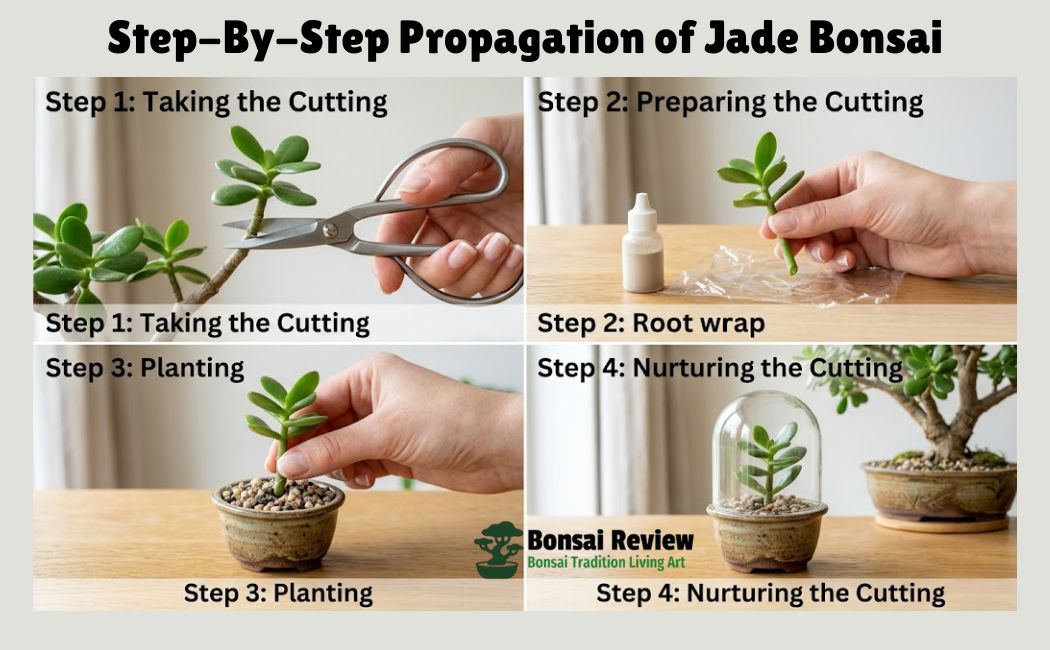
Propagating Jade Bonsai Watering Schedule Step-by-Step Guide for Beginners.
Propagating your Jade bonsai is easier than you think. With the right steps, you can grow new plants from cuttings while maintaining healthy growth for the parent plant.
Step 1: Choose a Healthy Branch
- Look for a strong branch with Fleshy leaves.
- Avoid branches that are weak, damaged, or yellow.
- Use a clean, sharp tool to prevent infections.
Step 2: Make the Cutting Plants
- Cut 2–4 inches long from the branch.
- Let the cut dry for a few days until the cut forms a callus.
- This prevents Root rot when planted.
Step 3: Prepare the Soil
- Use Well-draining soil such as Cactus mix soil.
- Fill a small pot with the soil and make a small hole for the cutting.
Step 4: Plant the Cutting
- Insert the cutting gently into the soil.
- Press lightly to ensure it stands upright.
- Water sparingly at first, only when the soil is dry.
Step 5: Care for the New Plant
- Keep in Bright indirect light.
- Avoid overwatering; the cutting stores water in its Fleshy leaves.
- Roots will form in a few weeks; you’ll see new growth signaling success.
Quick Takeaway: Propagation is a safe, simple way to multiply your Jade bonsai while practicing proper watering and maintenance.
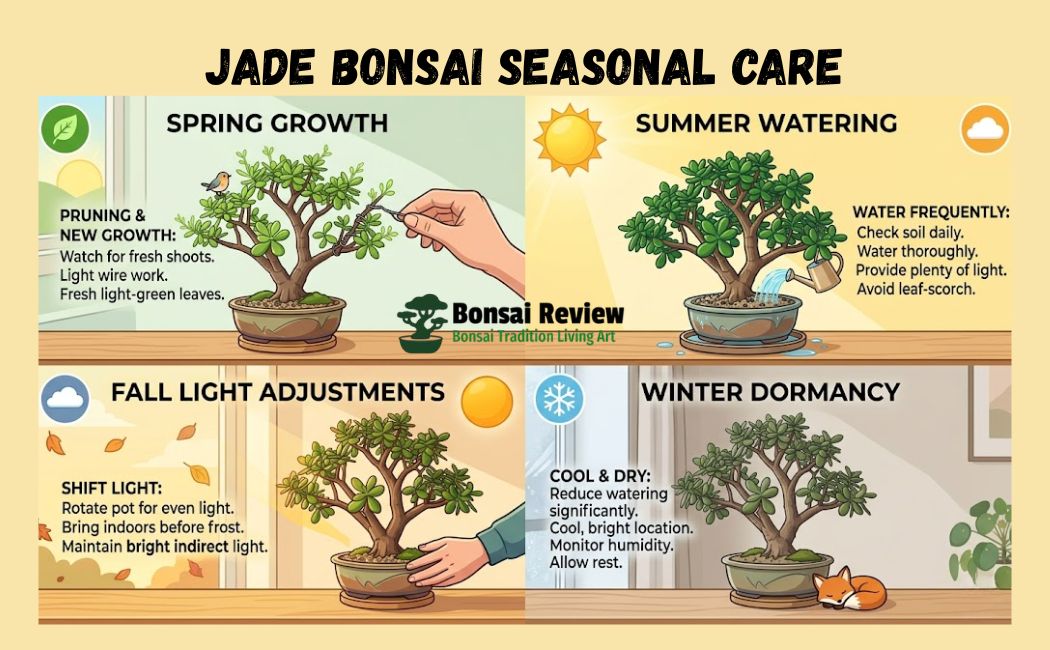
Seasonal Watering Adjustments for Your Jade Bonsai
Your Jade bonsai needs different care depending on the season. Adjusting watering keeps your plant healthy all year round.
Spring & Summer Growing Season
- Water every 7–14 days, only when the soil moisture is low.
- Strong Sunlight exposure and warm temperatures make the soil dry faster.
- Check leaves: Wrinkled or soft leaves mean water is needed.
- Use well-draining Cactus mix soil to prevent overwatering every 1–2 weeks before watering.
- Rotate the plant for even Bright indirect light.
Winter (Dormant Season)
- Water every 3–4 weeks or less.
- Leaves store water, so the plant survives longer without extra moisture.
- Avoid watering if the soil is still damp, as there is a risk of root rot and root disease.
- Keep the plant in a stable Indoor environment away from drafts or heat vents.
Quick Takeaway: Your watering schedule should follow your plant, not a calendar. Checking soil and leaves in each season ensures your Jade bonsai stays hydrated without overwatering or underwatering.
Conclusion: Stop Killing Your Jade Bonsai: Learn the Correct Watering Schedule
Keep your Jade bonsai thriving, and caring for your Jade bonsai is simpler than it seems when you understand its needs.
By following the right watering schedule, checking the soil, and observing your plant’s Fleshy leaves, you prevent common problems like overwatering, underwatering, and leaf drop.
Adjust watering for each season, use well-draining Cactus mix soil, provide adequate Bright indirect light, and prune carefully to encourage healthy growth.
With these simple steps, you’ll enjoy a strong, beautiful, and long-lasting Jade bonsai that thrives indoors or outdoors, giving you a rewarding bonsai experience year after year.
Helpful article: Bonsai Watering Schedule: Essential Tips for Healthy Growth.
FAQs: Jade Bonsai Watering Simple Trick Tells You When and How To Do?
1. How Often Should I Water a Mini Jade Bonsai?
Water every 7–14 days during the growing season. Reduce to every 3–4 weeks in the dormant season. Always check the soil with a dry soil check before watering.
2. Can I Water My Jade Plant with Tap Water?
Yes, but avoid water high in salts or chemicals. Let tap water sit for a few hours to remove chlorine if needed.
3. What Does an Overwatered Jade Look Like?
Yellow, soft, or mushy leaves. Leaf drop may occur. Soil remains wet for days, risk of Root rot. Leaves are healthy. Always check the soil and leaves. Succulents store water in Fleshy leaves.
4. How to Make a Jade Plant Fuller?
Prune selectively to encourage branching. Rotate for even Bright indirect light. Maintain consistent seasonal watering.
5. What Not to Do with a Jade Plant?
Overwater or move in standing water. Exposure to extreme temperatures or drafts. Ignore soil dryness or leaf signals.