


Ficus vs Chinese Elm bonsai is a choice many beginners struggle with. You want a bonsai that looks good and stays alive. You may live in an apartment or work in an office. You may worry about low light or missed watering.
This guide helps you decide fast. A Ficus bonsai is a popular indoor bonsai tree with glossy leaves and strong roots. It forgives mistakes and suits busy life. A Chinese Elm bonsai (Ulmus parvifolia) has small leaves and a classic tree look. It grows fast and loves pruning, but needs more care. By the end, you will know which bonsai fits your space, time, and comfort level.
What Is a Ficus Bonsai?
A Ficus bonsai is a tropical tree. It grows well indoors. It likes warm air and steady light. This makes it a strong choice for beginners.
You will notice its glossy green leaves right away. Many Ficus bonsai also grow aerial roots. These roots give the tree a bold, modern look. Some types, like Ficus microcarpa and Ficus benjamina, are very common.
Ficus bonsai is very forgiving. If you forget to water once, it often stays fine. It handles dry office air better than most indoor bonsai trees. This is why many people choose it as their first bonsai plant.
What Is a Chinese Elm Bonsai?
A Chinese Elm bonsai comes from the elm tree family. Its name is Ulmus parvifolia. It is a temperate bonsai. This means it likes fresh air and cooler seasons.
You will see its small, serrated leaves and fine branches. This gives the tree a classic bonsai look. Many people love it for its natural shape and soft details. It is one of the most popular bonsai trees for beginners.
Chinese Elm grows fast. It responds well to pruning and shaping. This makes it great for learning bonsai styling. It can live indoors for some time, but it grows best outdoors or in a cool indoor space.

Ficus vs Chinese Elm Bonsai: Key Differences
If you want an easy indoor bonsai, choose a Ficus bonsai. It handles low light, dry air, and missed watering. It works well on an office desk or in an apartment.
If you want a classic bonsai look, choose a Chinese Elm bonsai. It has small leaves and fine branches. It grows fast and is great for learning pruning. It does better outdoors or in a cool indoor place.
Simple rule:
- Busy life and indoor space: Ficus bonsai
- More time and outdoor air: Chinese Elm bonsai
Here’s a simple way to see how Ficus bonsai and Chinese Elm bonsai differ:
| Feature | Ficus Bonsai | Chinese Elm Bonsai |
| Best Location | Indoors (apartments, office desks) | Outdoors or cool indoor spaces |
| Light Needs | Low to bright light | Bright light preferred |
| Watering Needs | Forgiving; can miss a day or two | Needs regular watering |
| Leaf Size | Medium to large, glossy | Small, serrated |
| Growth Speed | Moderate | Fast |
| Key Features | Aerial roots, thick trunk | Fine branches, classic bonsai look |
| Ideal For | Beginners with limited space | Beginners who enjoy pruning and styling |
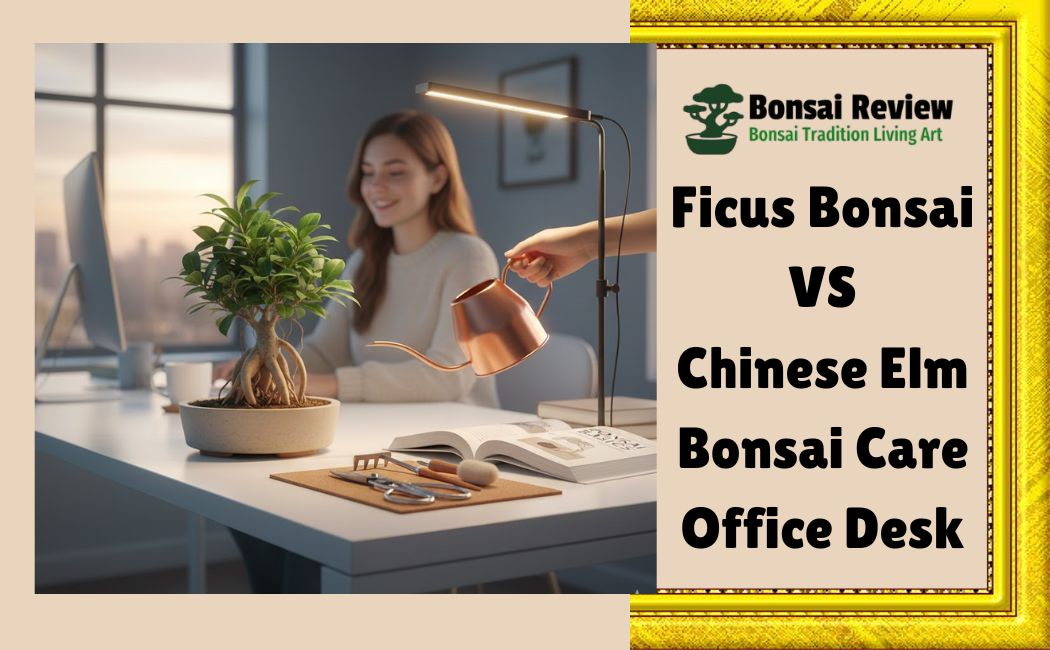
Which Bonsai Is Easier to Care For Indoor Plants?
If you want low-maintenance, a Ficus bonsai is the safest choice. It tolerates low light, dry office air, and even missed watering. Its glossy leaves and thick trunk make it strong. Beginners often find it forgiving and easy to keep alive indoors.
A Chinese Elm bonsai grows faster but needs more attention. It likes regular watering, pruning, and a cooler environment. Its small, delicate leaves make it more sensitive to neglect. However, this tree is perfect if you enjoy learning bonsai styling and clip-and-grow techniques.
Simple tip:
- Busy schedule or indoor space with Ficus.
- Enjoy pruning, shaping, and outdoor air support the Chinese Elm.
Both trees are beginner-friendly, but your lifestyle decides which is easier.
Ficus vs Chinese Elm Bonsai: Which One Should You Pick for Your Office or Home?
Best dwarf plants for indoor, office, and apartment use. If you want a bonsai for your apartment or office desk, a Ficus bonsai is ideal. It thrives in low-light rooms, tolerates air-conditioned spaces, and survives the occasional missed watering. Its bold trunk and glossy leaves make it a stylish addition to modern spaces. Some types even grow aerial roots, adding a unique, eye-catching look.
A Chinese Elm bonsai can also live indoors, but it needs more care. It prefers bright light and cooler indoor air. If you keep it inside, you must water and prune regularly. Many people find it easier to grow on a balcony, terrace, or garden, where they can enjoy fresh air and seasonal changes.
Key idea:
- For low maintenance and indoor beauty, the Ficus bonsai
- For a classic look with more care, the Chinese Elm bonsai
Appearance: Modern vs Traditional Bonsai Style
A Ficus bonsai, bold, modern, and easy, stands out with its thick trunk, glossy leaves, and sometimes aerial roots. Its bold and tropical look fits modern homes, offices, and apartments. It gives a strong, stylish presence on a desk or shelf.
A Chinese Elm bonsai is delicate, classic, and detailed, has small serrated leaves, and fine branching. Its delicate, natural shape gives a classic bonsai appearance. Many bonsai enthusiasts love it for its traditional styling and realistic miniature tree look.
Your choice depends on whether you want a modern decorative piece or a traditional miniature tree.
Common Problems to Watch For: Easy To Fix.
Even beginner-friendly bonsai can face issues. Knowing them helps you keep your tree healthy.
Ficus Bonsai Problems:
- Leaf drop if the air is too dry or watering is missed too often
- Root rot if overwatered
- Sensitive to sudden temperature changes
Chinese Elm Bonsai Problems:
- Leaf loss if indoor air is too dry or light is low
- Overwatering can cause root issues
- Needs a cooler winter period to stay healthy
Tip: Most problems are easy to fix. Ficus is generally more forgiving, while Chinese Elm needs a bit more attention.
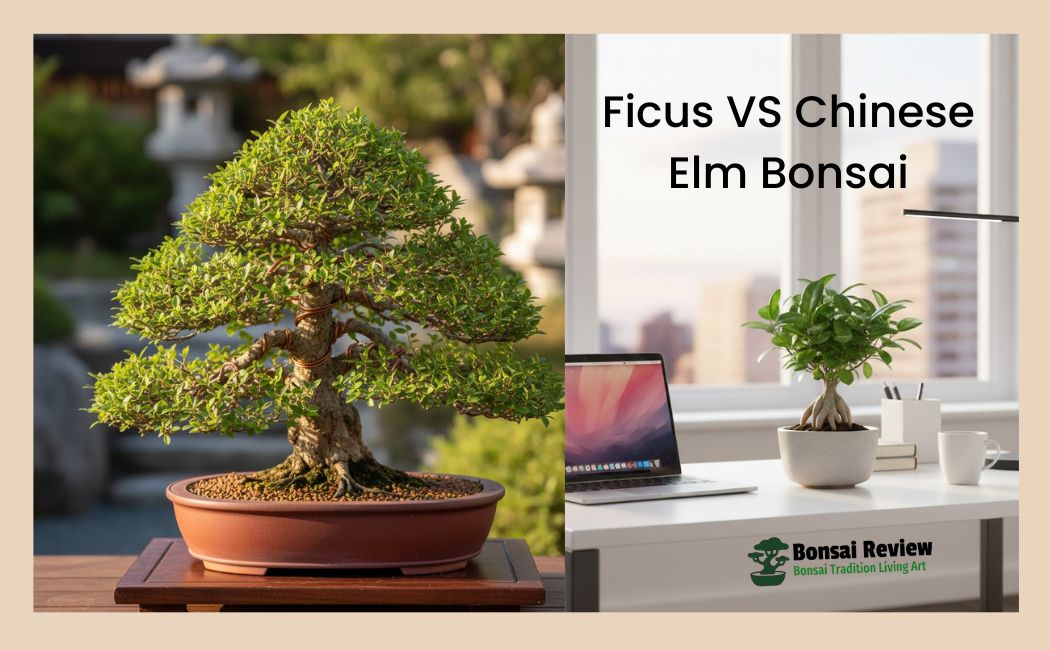
Ficus vs Chinese Elm Bonsai Price Comparison
| Feature | Ficus Bonsai | Chinese Elm Bonsai |
| Beginner Price | Affordable, ideal for beginners | Young trees are affordable |
| Mature Tree Price | Moderate; larger trunks or aerial roots cost more | Can be expensive for mature or award-winning trees |
| Indoor/Outdoor Suitability | Indoor-friendly, perfect for apartments and offices | Prefers outdoor or cooler indoor spaces |
| Value Factors | Trunk thickness, aerial roots | Age, leaf size, trunk shape |
| Best Choice For | Budget-friendly indoor bonsai | Investing in a classic bonsai look |
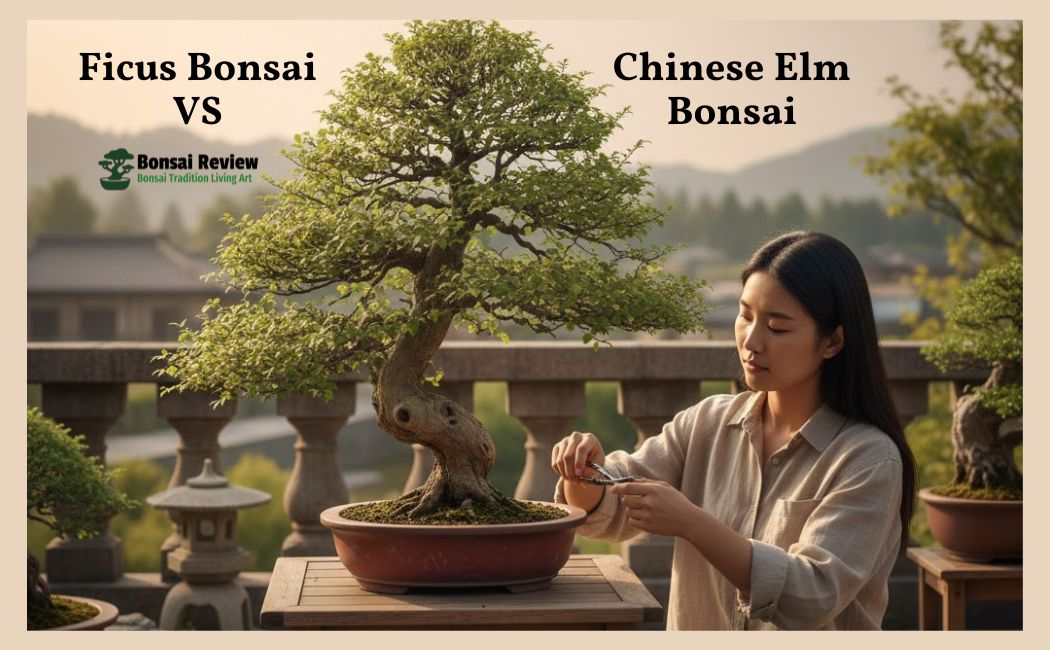
Choose Ficus or Chinese Elm Bonsai Based on Your Lifestyle
Picking the right bonsai depends on your space, time, and care ability. It helps you make a clear choice based on your daily life and environment.
Choose Ficus If:
- You live in an apartment or office
- You want low-maintenance indoor care
- May you forget to water sometimes
- You like a bold, modern bonsai
Choose Chinese Elm If:
- You have a balcony, garden, or outdoor space
- Also, you enjoy pruning and styling
- You want a classic, delicate bonsai look
- You can provide regular care and cooler winter air
Final Verdict: Ficus vs Chinese Elm Bonsai: Which Tree Fits Your Space and Lifestyle Best?
Both Ficus and Chinese Elm bonsai are suitable for beginners, but they cater to different lifestyles. A Ficus bonsai is perfect if you want an easy-care indoor tree. It handles low light, dry air, and missed watering. Its glossy leaves, thick trunk, and aerial roots make it stylish for apartments, offices, and modern spaces.
A Chinese Elm bonsai is ideal if you enjoy classic bonsai styling. It has small serrated leaves and fine branches that grow fast. It thrives outdoors or in a cool indoor space and responds well to pruning.
There is no wrong choice. Choose Ficus for convenience and indoor beauty. Choose Chinese Elm for traditional style and hands-on bonsai care. This helps you pick the bonsai that fits your space, time, and lifestyle.
Relevant article: Artificial or Real Bonsai: Which Is Best for Your Office Under $50?
FAQs for Beginners Ficus or Chinese Elm Bonsai: Which Is Easier to Care For Indoor Decor?
1. Is Chinese Elm a good bonsai tree?
Yes. Chinese Elm bonsai is beginner-friendly, grows fast, and responds well to pruning. It works best outdoors or in a cool indoor space. Its small serrated leaves and fine branches give it a classic bonsai look.
2. Do Ficus make good bonsai?
Absolutely. Ficus bonsai is perfect for beginners. It tolerates low light, dry air, and occasional missed watering. Its glossy leaves, thick trunk, and aerial roots make it ideal for indoor spaces like apartments and offices.
3. What is the easiest bonsai tree for beginners?
For indoor beginners, the Ficus bonsai is the easiest. For beginners who enjoy pruning and outdoor care, Chinese Elm bonsai is also excellent. Both are forgiving and beginner-friendly.
4. Can Chinese Elm bonsai be kept indoors?
Yes, but it needs bright light, regular watering, and a cool environment. It will grow best outdoors or in a space with seasonal air changes.
5. How do I identify a Ficus bonsai?
Look for glossy green leaves, a thick trunk, and sometimes aerial roots. Common types include Ficus microcarpa and Ficus benjamina. It is usually tropical and suited for indoor care.
6. Which bonsai is better for an office desk?
A Ficus bonsai is best for desks and small indoor spaces because it is low-maintenance, tolerates low light, and adds a modern tropical style.