


Office bonsai plants help you liven up your desk without adding more work to your day. You sit for long hours. Your desk feels plain. Big plants feel risky.
This is where a small indoor bonsai tree fits into your office life. You can place it on your office desk and enjoy a calm, green look right away.
Many people choose ficus bonsai, ficus ginseng, or Chinese elm bonsai because these indoor bonsai trees grow well in low-light offices and air-conditioned rooms.
If you are new, an indoor bonsai tree for beginners is easy to manage. It needs indirect sunlight, light watering, and little care.
You can even find office bonsai plants for sale online, often under $30, or choose an artificial bonsai for a windowless office. This simple plant helps you feel calm, focused, and more comfortable at work.
What Makes a Bonsai Good for Office Use?
A bonsai works well in your office because it matches your daily routine. You work long hours. You need a plant that stays calm and easy.
A good office bonsai plant grows in a small pot. It does not spread. It does not need deep soil. This keeps your office desk clean and neat.
Most indoor bonsai trees prefer indirect sunlight. You place them near a window or in a bright corner. They can handle air-conditioned rooms without stress.
If you are new, choose an indoor bonsai tree for beginners. Types like ficus ginseng and Chinese elm bonsai need less water and simple care. You water on a light watering schedule, not every day.
This makes bonsai a safe and low-stress plant for office life.

Why Office Bonsai Plants Work So Well in Offices?
Office bonsai plants fit your workspace better than most indoor plants. They stay small. They grow slowly. They look neat on an office desk. You do not need a big pot or daily care.
Most indoor bonsai trees, such as ficus and Chinese elm bonsai, handle indirect sunlight well. This makes them safe for a low-light office or a room with strong air flow from the AC. You do not need to move them often.
A desk bonsai plant also keeps your space clean. No long vines. No falling soil. Just a calm shape that sits in one place. If you want zero care, an artificial bonsai also works for a windowless office.
This is why many people say bonsai is the best bonsai for office desk use. It gives you green peace without stress.
Best Bonsai Plants for an Office Desk
The best office bonsai plants are small, strong, and easy to manage. They fit your desk and your busy workday.
1. Ficus bonsai is a top choice for offices. It grows well indoors. It handles low-light offices and air-conditioned rooms. It also needs little care. This makes it great for beginners.
2. Ficus ginseng is another safe option. It has thick roots and shiny leaves. It stores water well, so you do not need to water often. Many people use it as an indoor bonsai tree for beginners.
3. Chinese elm bonsai works well on an office desk, too. It stays neat. It likes indirect sunlight and keeps a clean shape with light trimming.
4. If you want color, a flowering bonsai or cherry bonsai tree can work in bright offices. If you want green all year, choose an evergreen bonsai.
5. For zero care, an artificial bonsai is useful in a windowless office. It requires no work.
These options help you pick the best bonsai for office desk use without stress.
Where to Place Bonsai in an Office
The right place helps your bonsai stay healthy. It also keeps your desk neat.
- Place your office bonsai plant on an office desk near a window. Soft light is best. Indirect sunlight helps indoor bonsai trees grow without stress.
- Do not place it under the strong sun.
- If your office has low light, choose a ficus bonsai or ficus ginseng. These types handle indoor light better than most plants.
- Keep the bonsai away from AC vents. Cold air can dry the soil fast. A calm corner works better.
- For a windowless office, an artificial bonsai is a safe choice. It gives a green look with no care.
A good spot helps your bonsai stay calm and healthy at work.
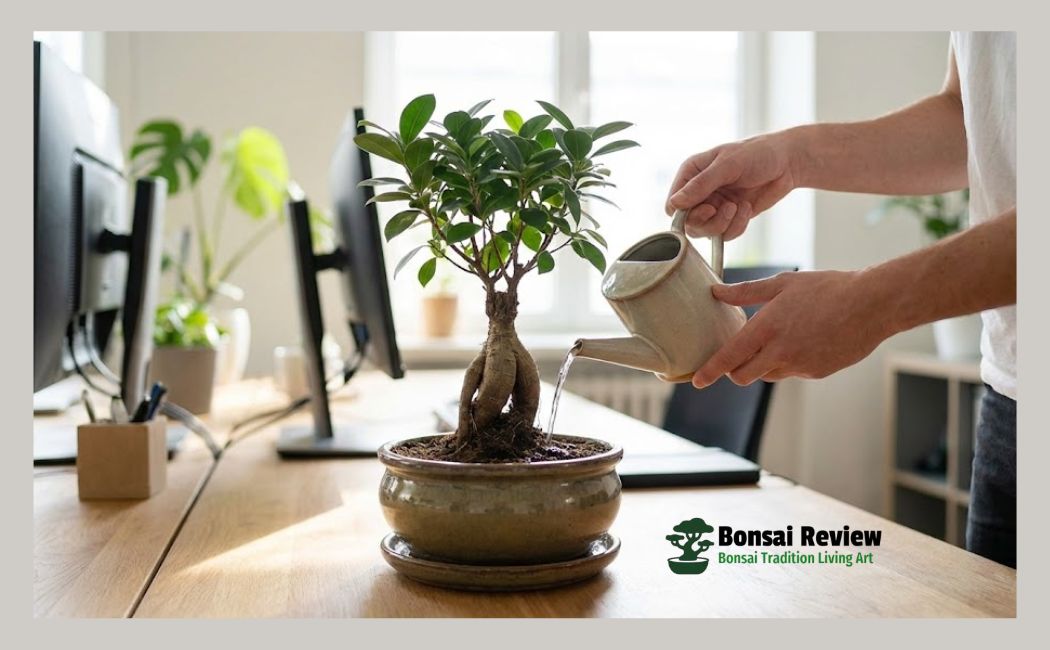
Easy Care Tips for Busy Office Workers
You do not need much time to care for office bonsai plants. Simple steps work best.
- Water your indoor bonsai tree only when the soil feels dry. Most desks need water once or twice a week. Too much water is the main mistake.
- Use a small pot with good drainage holes. This keeps roots healthy. A ficus bonsai or Chinese elm bonsai does not like wet soil.
- Place the plant where it gets indirect sunlight. Turn the pot once in a while so all sides get light.
- Trim only when needed. Light trimming helps your desk bonsai plant keep its shape. Do not cut too much.
- If you forget care for it often, an artificial bonsai works well in a low-light office.
These easy habits keep your bonsai healthy without stress.
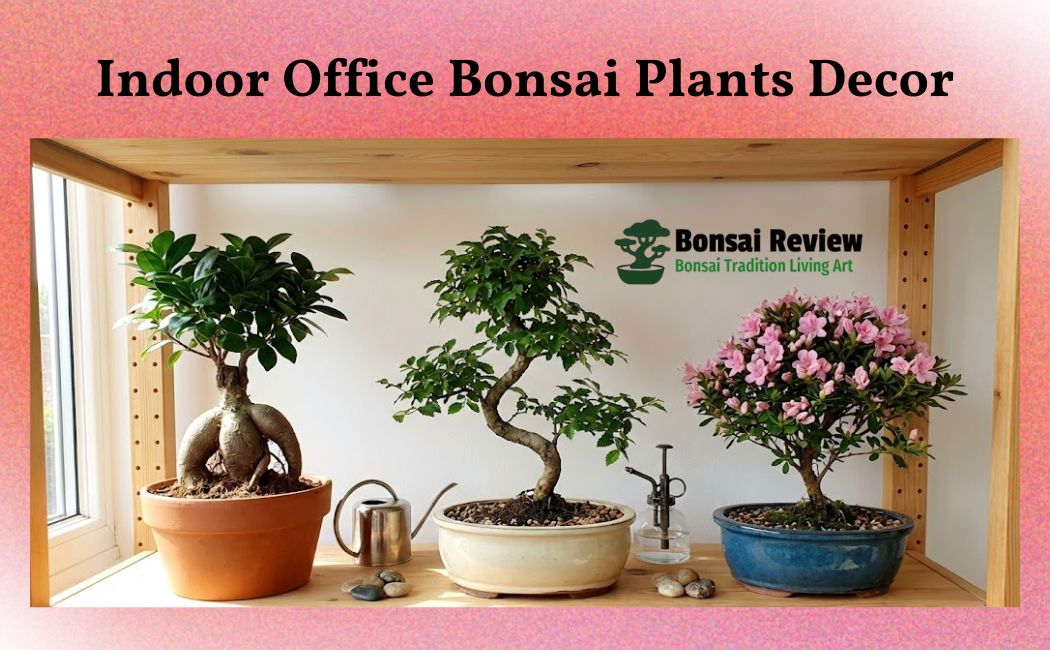
Real vs Artificial: Which Office Bonsai Plants Are Perfect for Your Desk?
You can choose real or artificial bonsai for your office. Both have good points. Real office bonsai plants give you fresh air and a natural look. Types like ficus bonsai, Chinese elm bonsai, and ficus ginseng help your workspace feel calm. They grow slowly and fit on your office desk. You just need indirect sunlight, a small pot, and light watering.
| Feature | Real Office Bonsai Plants | Artificial Bonsai Plants |
| Types | Ficus bonsai, Chinese elm bonsai, Ficus ginseng | Artificial flora office bonsai, 3D print bonsai |
| Care | Needs indirect sunlight, watering, and occasional pruning | No care needed |
| Office Fit | Best for desks with some light | Perfect for windowless offices or low-light spaces |
| Benefits | Fresh air, natural look, stress relief | Looks real, zero maintenance |
| Maintenance Effort | Low to moderate | None |
| Ideal For | Beginners who can water weekly | Busy workers or forgetful office spaces |
Artificial bonsai plants are perfect for a windowless office, or if you forget to water. They look real and need no care. You can find artificial flora office bonsai plants or 3D print bonsai for easy desk décor.
Choosing the right type depends on your office and how much care you can give. Both add green calm to your workspace.
Benefits of Office Bonsai Plants: Can They Really Make Your Working Desk Calmer?
Adding a bonsai to your office desk gives more than just green décor. Here are the main benefits:
- Reduces stress: looking at a bonsai helps you feel calm.
- Improves focus: a small green plant can make it easier to concentrate.
- Boosts productivity: a neat, natural desk can make work feel smoother.
- Cleans indoor air: Some bonsai, like ficus bonsai, help reduce dust and toxins.
- Fits any desk: small size works in cubicles, home offices, or large workspaces.
- Adds a professional look: enhances workspace style without clutter.
- Easy to manage: beginner-friendly species need little water and care.
These points show why a desk bonsai plant is more than decoration; it supports a calm, healthy, and focused work environment.
Buying Office Bonsai Plants: What Beginner-Friendly Bonsai Work Best in Workspaces?
When you want to add a bonsai to your office, it helps to know what to look for. You can buy office bonsai plants online or find office bonsai plants nearby. Check the size so it fits your office desk. Small bonsai work best for cubicles and home offices, while larger ones can suit bigger workspaces.
Look at the species carefully. Beginner-friendly types like ficus bonsai, ficus ginseng, and Chinese elm bonsai are easy to care for. If your office has no windows, consider an artificial bonsai.
Also, check the price. Many good options are available under $30. If you are buying online, check delivery times and quality. Some sellers offer evergreen bonsai, flowering bonsai, or fruit bonsai, depending on your style.
By paying attention to size, type, and care needs, you can pick the best bonsai foran office desk that fits your space and schedule.
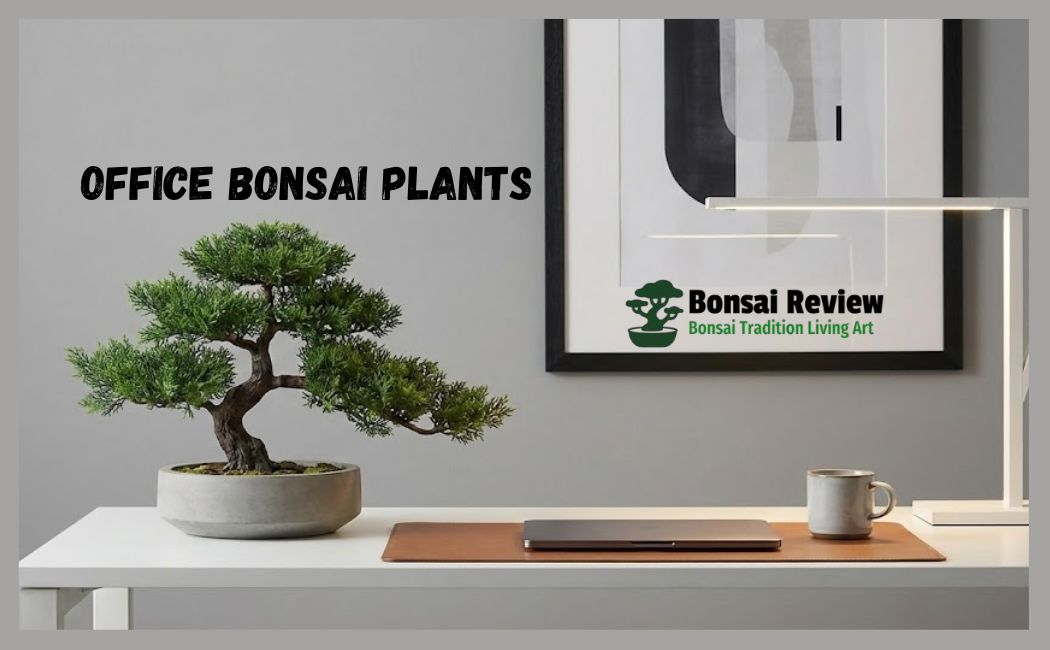
Common Mistakes to Avoid with Office Bonsai Desk
Even a small office bonsai plant can struggle if it is not cared for correctly. Here are the main mistakes to avoid:
- Overwatering: too much water can kill your bonsai. Wait until the soil is slightly dry.
- No light: Placing a bonsai in complete darkness will stop it from growing. Use indirect sunlight.
- Wrong species: Some bonsai, like outdoor pines, do not do well indoors. Stick to ficus bonsai, Chinese elm bonsai, or beginner-friendly indoor types.
- Neglecting pruning: light trimming keeps your desk bonsai plant neat. Ignoring it can make the plant look messy.
- Using the wrong pot: pots without drainage can cause root rot. Always choose a small pot with good drainage.
- Confusing real and artificial care: artificial bonsai need no watering, while real bonsai still need minimal care.
Avoiding these mistakes helps your indoor bonsai tree stay healthy, neat, and stress-free on your office desk.
Final Takeaway: What Are the Best Indoor Bonsai Trees for Busy Offices?
Adding a bonsai to your office desk is simple and rewarding. A small indoor bonsai tree, like ficus bonsai, ficus ginseng, or Chinese elm bonsai, fits most desks and office spaces. It brings green calm, improves focus, and adds a neat, professional look.
If your office has low light or no windows, consider an artificial bonsai. It gives the same visual appeal with zero care. Pay attention to the size, pot quality, and watering needs to keep your bonsai healthy.
With the right choice, a bonsai is more than decoration; it becomes a calm companion that makes your workspace feel peaceful and productive.
Related article: How Can Bonsai Trees Boost Your Office Mood and Productivity?
FAQs: Choosing the Right Office Bonsai Plant.
1. Is a bonsai a good office plant?
Yes. Bonsai are small, calm, and easy to care for. They fit on desks, improve focus, and reduce stress.
2. What is the best plant to bonsai indoors?
Beginner-friendly options, such as Ficus bonsai, Ficus ginseng, and Chinese elm bonsai, grow well indoors with indirect sunlight.
3. What is the best low-maintenance bonsai tree?
Ficus ginseng and Chinese elm bonsai are low-maintenance. They need light watering and minimal pruning.
4. Can bonsai survive in offices without windows?
Yes, but only with artificial bonsai or low-light indoor species like ficus bonsai placed near indirect light sources.
5. How often should I water an office bonsai?
Water the soil feels slightly dry. Most indoor bonsai trees need water once or twice a week.