


Choosing the right bonsai pot starts with three things: your tree’s roots, the pot’s drainage, and how you plan to grow your tree.
A plastic training pot works well while your bonsai is developing. A ceramic pot is often a better choice when you want to display a finished tree.
According to basic principles, a pot or container should not be more than two-thirds of the height of the tree, as size equals health.
Generally, rectangular or oval pots are versatile and suitable for many bonsai varieties, while round pots are often preferred for more informal styles.
You also need to consider the pot’s size, depth, shape, and material. The wrong choice can make watering harder or leave your tree unstable.
In this guide, you’ll learn how to choose a bonsai pot, measure the right size, compare common materials, and avoid mistakes when buying a pot in the United States.

How to Select the Right Bonsai Pot For a Beginner?
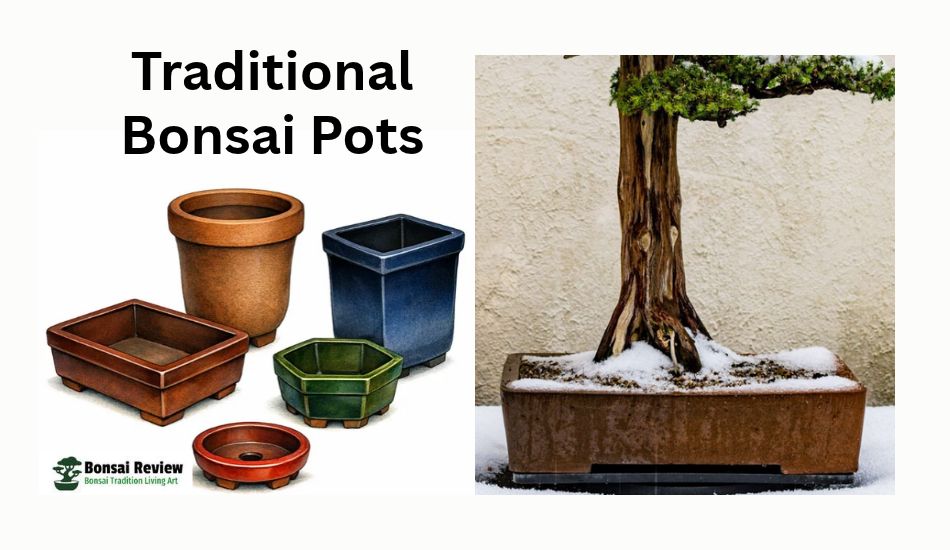
Bonsai pots are typically shallow, ceramic, or plastic pots designed to restrict root growth and encourage the tree to develop a more compact and natural appearance. They come in various shapes, including rectangular, oval, round, and square, each suited to different bonsai styles.
What Type of Bonsai Pot Should You Choose?
If you’re new to bonsai, start with a pot that suits your tree’s current needs rather than its final appearance.
- For a beginner: Choose a sturdy plastic training pot with good drainage.
- For a tree still growing: Use a training container that gives the roots enough room to develop.
- For a finished bonsai: Consider a ceramic pot that matches the tree’s shape and size.
- For outdoor bonsai in cold regions: Choose a pot rated for outdoor use and able to withstand your local winter conditions.
- For cascade-style bonsai: Look for a deeper pot that helps balance the hanging branches.
No single pot works best for every bonsai. Your tree’s species, root system, growth stage, and growing conditions should guide your choice.
How to Choose the Right Bonsai Pot Size
Pot size affects root space, water retention, stability, and the tree’s appearance. A pot that is too small can restrict the roots too much. A pot that is much larger than needed can hold excess soil and make watering harder to manage.
How wide should a bonsai pot be?
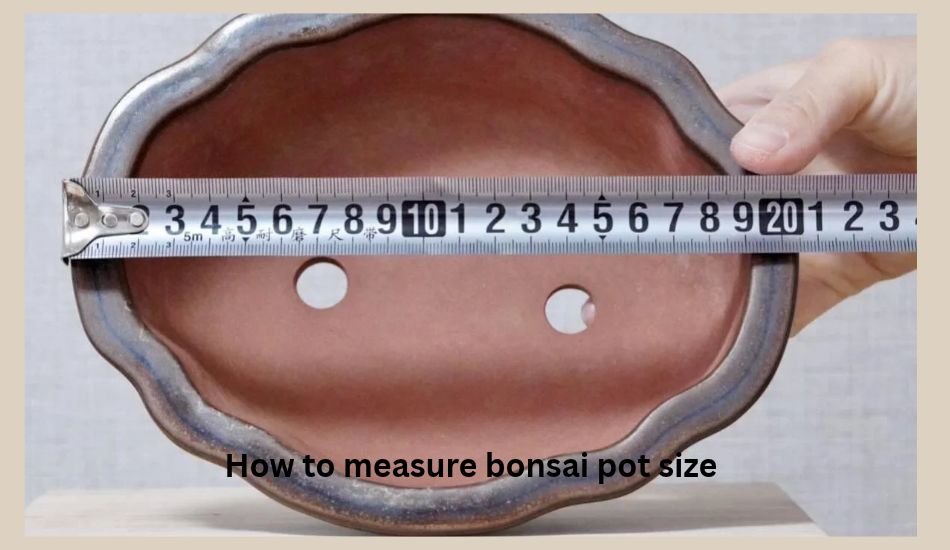
For many established bonsai, a useful starting point is a rectangular or oval pot about two-thirds the height of the tree. This is a guideline, not a strict rule.
For example, if your bonsai is 12 inches tall, you could begin by comparing rectangular or oval pots around 8 inches long. You may need a wider pot if the tree has a broad canopy or spreading surface roots.
Round and square pots use different proportions. The best fit also depends on the tree’s style and the space needed for its roots.
How deep should a bonsai pot be?
Look at the trunk, root system, and style of your tree before choosing the depth.
For many established bonsai, the pot’s depth is close to the thickness of the trunk just above the surface roots. However, this is only a starting point.
You may need a deeper container for a cascade bonsai, a tree with a large root system, or a tree that needs extra support. A young tree in development may also need a deeper training pot.
Do not choose a shallow pot simply because you want your tree to look smaller. The roots must have enough space to stay healthy.
What if your bonsai is still growing?
A young bonsai often needs a training pot before it is ready for a shallow display pot. A suitable training container gives you room to develop the trunk, branches, and roots.
As the tree matures, you can move it into a more refined pot when its roots and overall design are ready.
Can a bonsai pot be too big?
Yes, a pot can be larger than your tree needs. Extra soil may stay wet longer, depending on the soil mix, drainage, and growing conditions.
Choose a pot that supports the tree’s current stage of growth. Do not move a small bonsai into a much larger pot just to give it more room.

Types of Bonsai Pots by Shape
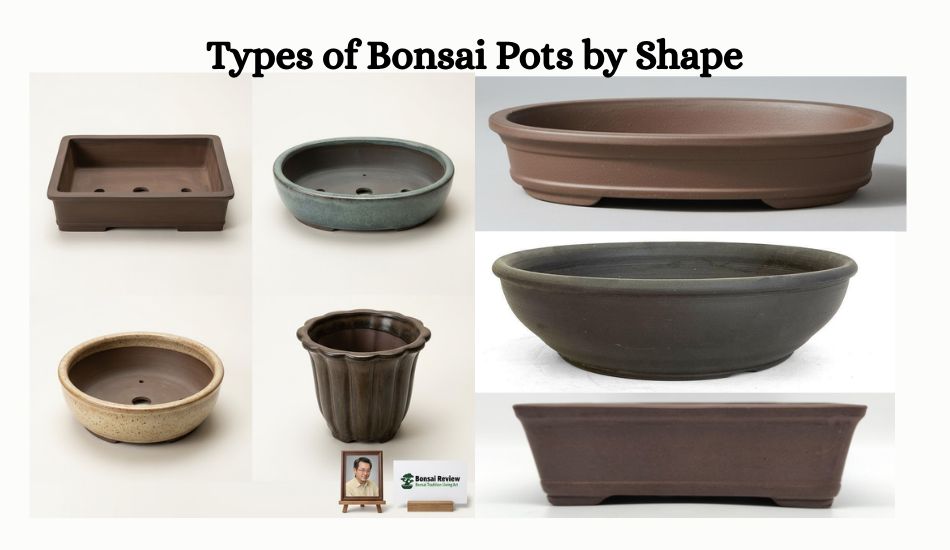
The shape of your bonsai pot should support the tree’s style and keep it stable. These common shapes work for different designs.
1. Rectangular bonsai pots
Rectangular pots are a common choice for upright bonsai. Their straight lines often suit trees with strong trunks and a balanced, formal shape.
Choose one when you want a clean, classic display for a tree such as a pine or an upright Chinese elm.
2. Oval bonsai pots
Oval pots have softer lines than rectangular pots. They often suit informal upright trees, rounded canopies, and group plantings.
If your bonsai has a gentle curve, an oval pot can balance its shape without drawing too much attention.
3. Round bonsai pots
Round pots work well for some informal designs, literati styles, and trees with movement in the trunk. They can also suit small bonsai where a softer outline looks more balanced.
The tree’s root spread and stability still matter. Do not select a round pot based on appearance alone.
4. Square bonsai pots
Square pots can suit strong trunks and compact trees. They provide a firm, structured look and may work well for some upright styles.
Check that the pot has enough space for the roots and that its shape supports the tree without making the overall design feel crowded.
5. Deep cascade bonsai pots
Cascade bonsai have branches that grow down past the edge of the pot. They often need a deeper container to balance the tree’s downward growth.
A regular shallow display pot may not provide the stability or root space your cascade bonsai needs.
6. Wide, shallow forest pots
If you are growing several trees together as a bonsai forest, look for a broad, shallow container. It gives the group room to spread while helping the planting look like a small landscape.
Make sure the pot can support the combined root system and has suitable drainage and tie-down holes.
Which Material Is Best for a Bonsai Pot?
Bonsai pots are made from several materials. Each has benefits and limits. Your choice should depend on whether you are training a tree, displaying it, or growing it outdoors.
| Pot material | Best use | What to consider |
| Plastic | Beginner bonsai and training | Light, affordable, and easy to handle |
| Mica | Training trees and practical outdoor use | Tough and useful, but less traditional in appearance |
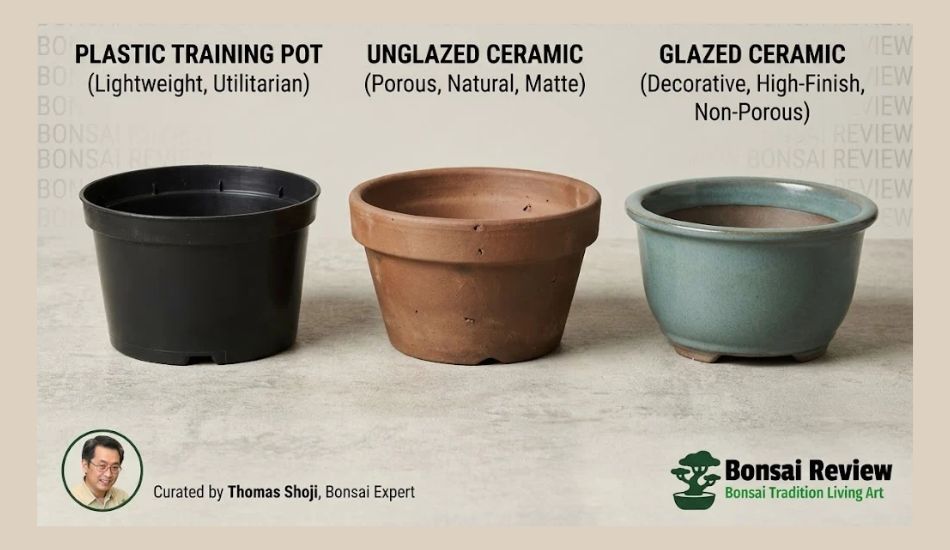
| Unglazed ceramic | Many conifers and traditional displays | Natural finish; heavy and can break if dropped |
| Glazed ceramic | Many deciduous, flowering, and tropical bonsai | Wide choice of colors; check the quality and drainage |
| High-fired stoneware | Long-term display | Durable when well made, but often heavy and costly |
| Terracotta | Some practice or growing containers | Can dry out faster and may crack in freezing weather |
Are plastic bonsai pots good for beginners?
Yes. Plastic pots are a practical choice when you are learning to water, prune, and repot your bonsai.
They are light and usually cost less than ceramic pots. They also work well when your tree needs time to develop before moving into a display container.
Check the pot for enough drainage holes and a strong base. For outdoor use, make sure the plastic can handle your weather and sunlight.
Are ceramic bonsai pots better than plastic?
Ceramic pots are often preferred for finished bonsai because they provide a traditional look and can add weight to help keep the tree stable.
Plastic pots are usually more practical for training. Ceramic pots are often better suited to display, but they are not automatically better for tree health.
A well-made plastic pot with proper drainage can support healthy growth. A poorly made ceramic pot with blocked drainage can cause problems.
Should you choose glazed or unglazed ceramic?
Unglazed pots have a natural, matte finish. They are often used for pines, junipers, and other conifers.
Glazed pots come in many colors and can complement flowering trees, fruiting bonsai, deciduous species, and tropical trees.
These are common design preferences, not strict rules. You can choose another finish if it suits your tree’s bark, foliage, flowers, and overall shape.
For outdoor bonsai, also check whether the pot is frost-resistant if your winters bring freezing temperatures.
Do Bonsai Pots Need Drainage Holes?
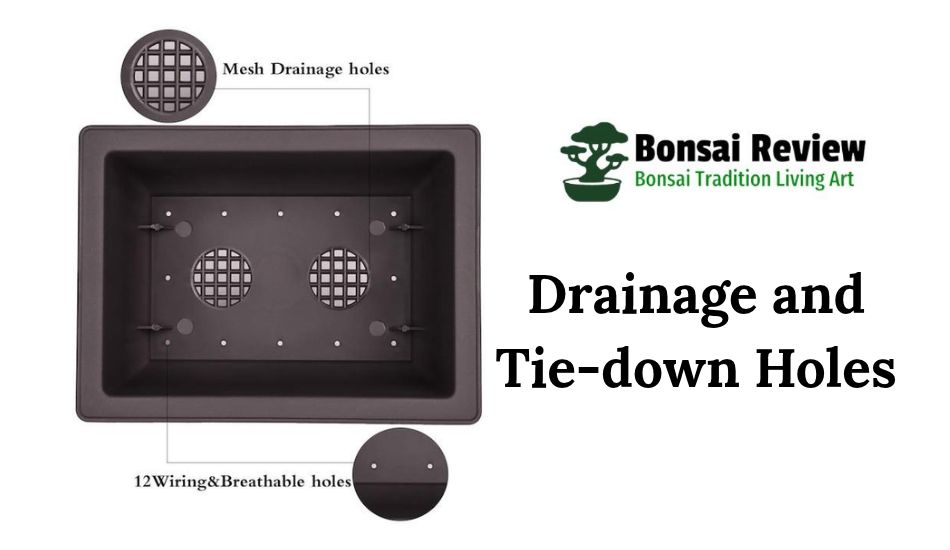
Yes. A bonsai pot needs drainage holes so excess water can escape. Without proper drainage, the soil may remain too wet and leave the roots short of oxygen.
Before you buy a pot, check the following features:
- Drainage holes: Look for openings large enough to let excess water flow out freely.
- Mesh screens: These cover the drainage holes and help stop soil particles from washing away.
- Tie-down holes: These let you secure the tree with wire so the root ball does not move after repotting.
- Raised feet: These create space under the pot and help water drain away instead of collecting beneath the base.
Not every pot needs the same number or arrangement of holes. What matters is that the pot drains freely and allows you to secure the tree when needed.
Why should you secure your bonsai in the pot?
A newly repotted bonsai can move if the root ball is loose. Movement may damage new roots and slow recovery.
Tie-down wire helps keep the tree steady while it settles into its new soil. This is especially useful after root pruning or when working with a tree that has a heavy trunk or an uneven shape.
Do you need a tray under your bonsai pot?
A tray can catch water and protect your shelf or table. However, do not let your bonsai sit in standing water.
After watering, empty the tray if water collects in it. This helps prevent the bottom of the root system from staying wet for too long.
How to Match Bonsai Pot Color to Your Tree
Choose a color that supports the tree rather than competes with it.
- Pines and junipers: Brown, gray, and other earthy colors often complement their bark and needles.
- Japanese maples: Muted green, brown, gray, or cream can work well with colorful leaves.
- Flowering bonsai: A glazed pot may bring out the color of the flowers.
- Tropical bonsai: Glazed or unglazed pots can both work, depending on the foliage, trunk, and overall design.
These are starting points, not fixed rules. Compare the pot with the tree in natural light before making your choice.
Training Pots vs. Display Pots: Which Do You Need?
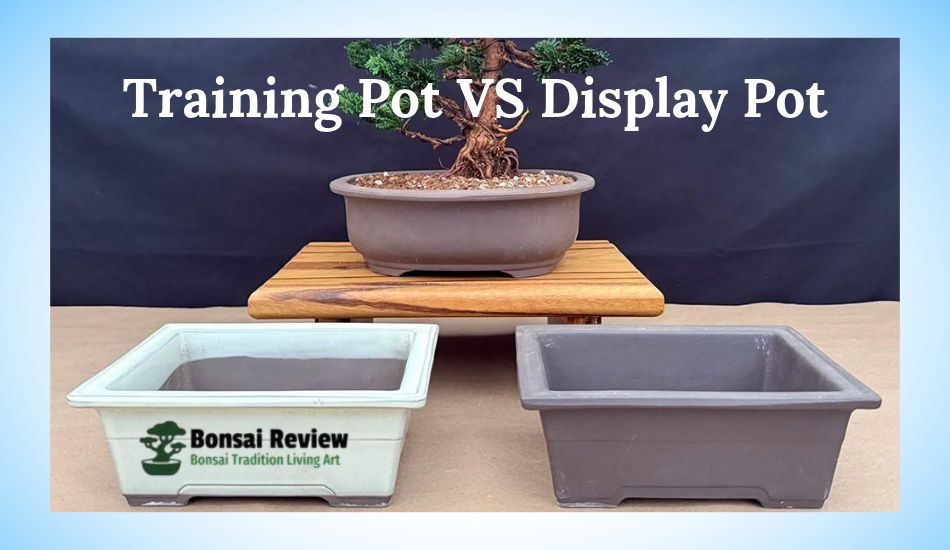
A training pot and a display pot serve different purposes. You should choose based on what your tree needs now.
| Feature | Training pot | Display pot |
| Main purpose | Develop roots, trunk, and branches | Present a more finished bonsai |
| Common materials | Plastic or mica | Ceramic or stoneware |
| Typical shape | Practical, with room for development | Chosen to complement the tree |
| Cost | Often lower | Can be much higher |
| Best time to use | During development | When the tree is ready for display |

When should you move your bonsai to a display pot?
Move your bonsai when the tree is healthy, its roots can fit the new container, and its design is ready for display.
Do not rush the change just because a shallow ceramic pot looks better. A tree that is still developing may benefit more from a suitable training pot.
If you are unsure, ask a bonsai grower or nursery to help you assess the roots and growth stage.
How to Buy the Right Bonsai Pot in the United States
When you shop online or visit a local bonsai nursery, check the pot’s measurements and construction before you buy.
Your bonsai pot buying checklist
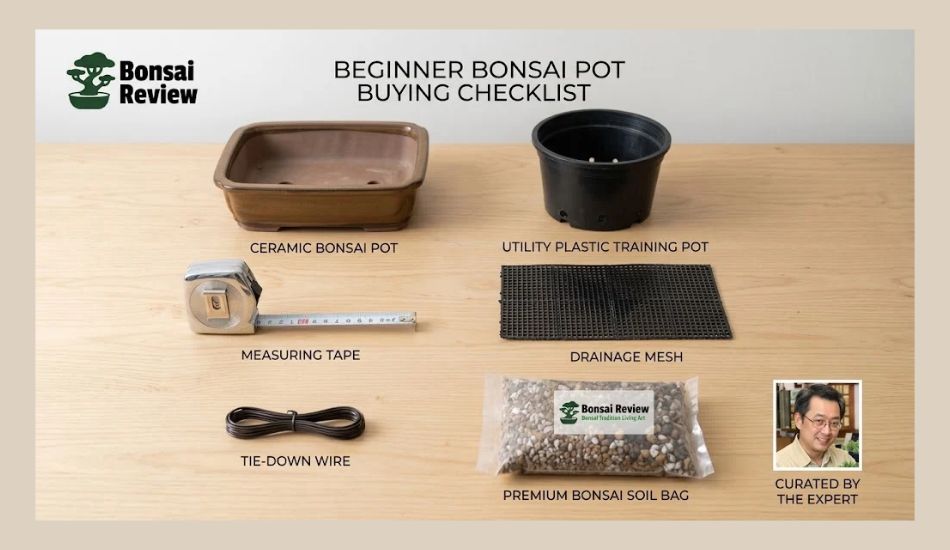
- Measure the tree’s height, trunk thickness, and root spread.
- Check the pot’s inside length, width, and depth.
- Confirm that the pot has proper drainage holes.
- Look for tie-down holes if you need to secure the tree.
- Check that the bottom is even and the pot sits securely.
- Choose a material that suits the tree’s growth stage.
- If the tree stays outdoors, check its frost resistance for your local climate.
- Inspect the pot for cracks, sharp edges, blocked holes, or poor workmanship.
- Compare the pot’s total cost, including shipping, before ordering.
If you buy online, check the seller’s actual product measurements. Photos can make a pot look larger or deeper than it is.
You should also confirm whether the listing includes a drainage mesh, a tray, or only the pot. These items may be sold separately.
Common Bonsai Pot Buying Mistakes to Avoid
- Buying a pot because it looks attractive: A beautiful pot is not the right choice if it cannot support the roots or drain water well.
- Choosing a pot that is too shallow: The tree needs enough room for its roots. Deep-rooted or cascading trees may need a deeper container.
- Using a pot without drainage holes: Excess water must have a way to escape.
- Putting a developing tree into a tiny display pot too soon: A tree that is still growing may need a training container to build its trunk and root system.
- Ignoring your local winter weather: A pot that works indoors may not hold up to freezing outdoor conditions.
- Following a fixed repotting date: The right time depends on the tree species, its health, its growth stage, and your local climate. Check species-specific guidance before repotting.
Conclusion: Choose a Pot That Fits Your Bonsai
The best bonsai pot fits your tree’s roots, supports its growth, and lets excess water drain away.
If you are still developing your tree, start with a practical training pot. If your bonsai is ready for display, choose a ceramic pot that complements its shape and foliage.
Measure before you buy, check the drainage holes, and consider your local climate. When you match the pot to your tree’s needs, you give your bonsai a better foundation for healthy growth.
Let the tree be the hero, and let the pot support its story quietly, beautifully, and just right.
Informative article: Discover the Traditional Art: What Is the Best Bonsai Style for Your Space?
FAQs About Choosing the Best Pot for Your Bonsai Tree.

1. What type of pot is best for a bonsai tree?
A plastic training pot is a practical choice for a beginner who is developing a tree. For a finished bonsai, a well-made ceramic pot may provide a better display. In both cases, good drainage and the right size matter most.
2. How big should a bonsai pot be?
For many established trees, a rectangular or oval pot about two-thirds of the tree’s height is a useful starting point. Adjust the size to suit the trunk, root spread, tree style, and growth stage.
3. How deep should a bonsai pot be?
The depth often relates to the trunk thickness above the surface roots, but this is not a fixed rule. Cascade bonsai, trees with larger roots, and trees still in development may need deeper pots.
4. Are plastic or ceramic bonsai pots better?
Plastic pots are light, affordable, and useful for training. Ceramic pots are often chosen for display because of their weight, finish, and range of styles. Neither material is best for every tree.
5. Do bonsai pots need drainage holes?
Yes. Drainage holes allow excess water to leave the pot. Mesh screens help stop soil from falling through, while tie-down holes help you secure the tree.
6. Should bonsai pots be glazed or unglazed?
Unglazed pots are common for conifers. Glazed pots are often used for flowering, fruiting, and deciduous trees. You can choose another finish if it suits your tree’s design and growing conditions.
7. Can you use a regular plant pot for bonsai?
Yes, a suitable regular plant pot can work, especially while you are developing a tree. Choose one with adequate drainage and enough room for the roots. Traditional shallow bonsai pots are more common for finished trees.
8. When should you repot a bonsai tree?
Repotting time depends on the species, climate, tree health, and stage of growth. Do not follow one date for every bonsai. Check guidance for your tree species before starting.
9. Can a bonsai stay in the same pot forever?
A bonsai can remain in a similar-sized pot for many years, but its roots and soil still need attention. Repotting may be needed when the roots become crowded, the soil structure declines, or the tree’s health calls for it.
10. Where can you buy bonsai pots?
You can buy bonsai pots from bonsai nurseries, specialist online stores, and garden retailers. Compare the exact dimensions, drainage features, material, outdoor suitability, and shipping cost before you order.